

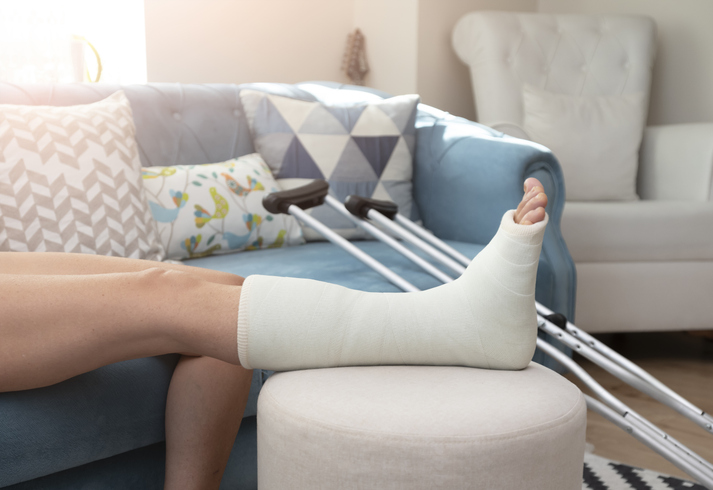
Car Accident Fractures After A Fort Myers Crash: Your Guide to Recovery
A broken bone feels like it should be a simple case. The X-ray shows the break, the orthopedist sets it, the cast comes off in six weeks, and the claim should resolve itself. After more than thirty years on these cases in Lee and Collier Counties, I can tell you it almost never works that way. Fractures from a car crash behave differently than fractures from a fall off a ladder or a sports injury — the forces are larger, the patterns more complicated, and the medical bills run up against Florida’s no-fault rules in ways that regularly catch families off guard. I want to lay out how these cases actually move, because the choices made in the first two to four weeks after the crash will shape both the medical recovery and whatever claim follows.
What I will cover: the four statutes that drive virtually every fracture file we handle, the crash-direction patterns that tell us which bones broke, where these cases go wrong, and a real case from our office that shows how a hit-and-run fracture case can still pay out in full.
What Florida law actually says about a fracture case
Four statutes drive almost every fracture case we handle, and each one has a wrinkle that matters.
Personal Injury Protection — §627.736. Every Florida driver carries $10,000 in PIP, which pays 80% of reasonable medical bills regardless of who caused the crash. The PIP statute also requires that you receive initial medical care within fourteen days of the crash, or the benefit goes away entirely. On a fracture case the $10,000 disappears quickly. One trip to Lee Health’s ER, a CT scan, and two orthopedic follow-ups, and you are looking at the back wall of the policy before surgery is even scheduled.
Statute of limitations — §95.11(4)(a). The 2023 tort reform cut the negligence filing window from four years to two. The current statute applies to every crash after the effective date. Fracture clients often spend a full year in physical therapy and a second year fighting through pain management, and by the time they are ready to think about a lawsuit, the deadline is six weeks out. We treat the two-year clock as a hard wall.
Modified comparative negligence — §768.81. Florida moved to a 50% bar in March 2023. Section 768.81 means that if a jury or adjuster assigns you 51% of the fault, you recover nothing. If you are at 49%, you recover with a reduction. In plain English: even a small shift in the fault percentage can wipe out a six-figure case, which is why we fight the fault assignment line by line on every fracture file.
Uninsured Motorist — §627.727. If the at-fault driver fled the scene, was uninsured, or carried a minimum policy that will not cover a surgery case, your own UM policy is the next line of coverage. UM is the most underrated coverage in Florida. I tell every client and every family member to carry it, and to carry it stacked if their carrier will write it that way.
Fracture patterns by crash direction — what we see in Fort Myers cases
After thousands of intake calls along the Daniels Parkway, Six Mile Cypress Parkway, and McGregor Boulevard corridors, the patterns sort into a short list. The crash direction tells you most of what you need to know about which bones are likely to be broken.
- Rear-end on Cleveland Avenue or US-41: cervical compression injuries and, in higher-speed strikes, sternum and rib fractures from the seatbelt loading the chest.
- Frontal collision on Colonial Boulevard or Summerlin Road: ankle, knee, hip, and wrist fractures from the body driving forward into the footwell and the steering column. Drivers shorter than 5’4″ take the worst of the lower-extremity damage because their feet sit closer to the firewall.
- T-bone at a Pine Island Road intersection: pelvic, rib, and clavicle fractures on the struck side, often with internal organ injuries that the ER catches before the orthopedic injuries.
- I-75 near Alico Road high-speed collisions: multi-system fractures — spine, hip, femur — with longer hospital admissions and a real chance of permanent impairment ratings.
- Side-airbag deployment in older sedans: humerus and forearm fractures when the airbag fires against an arm resting on the door. We see this enough that I now ask every client where their hands were on impact.
Fracture cases — what makes them harder than they look
The first complication is that PIP runs out before treatment is finished. Once the $10,000 is spent, the orthopedist’s billing office starts calling the client, and the client starts skipping appointments because they cannot afford the co-pays. Gaps in treatment are the single most damaging thing that can happen to a fracture case. Adjusters read a thirty-day gap in physical therapy as evidence that the injury has resolved, and the offer drops accordingly. We work with our clients’ providers to keep treatment continuous on a letter of protection if the carrier is dragging its feet.
The second complication is the imaging fight. Hairline fractures sometimes do not show up on the initial ER X-ray. Public health data on motor-vehicle injuries suggests that a meaningful share of suspected fractures require advanced imaging before they are confirmed. By the time the patient returns ten days later for an MRI that does catch the break, the defense will argue that the fracture happened in some intervening event. Documenting symptoms day by day from the date of the crash forward is what closes that door.
The third complication is the impairment rating. A bone that heals badly or heals with hardware leaves a permanent functional limitation, which translates into a percentage rating from the orthopedist. That rating drives the value of the case. We invest in a proper rating examination on every serious fracture file because the difference between a 5% rating and a 12% rating can be tens of thousands of dollars in case value.
How a hit-and-run fracture case came together in our office
One we worked recently involved a client who was rear-ended on US-41 in Fort Myers, not far from the Cleveland Avenue split. The driver who hit him took off northbound and was never identified. Our client was driving home from work, fully stopped at a light, and the impact pushed his vehicle a full car length into the intersection.
He went to the ER that night with neck pain that he described as a deep ache, not a sharp pain. X-rays did not show a fracture. He was discharged with muscle relaxers and a referral to physical therapy. Two weeks in, he was still waking up at night, and his therapist pushed for an MRI. The imaging came back showing a chronic cervical strain pattern that explained the symptoms, and pain management was added to the treatment plan.
Because the at-fault driver was a hit-and-run, the case rode entirely on our client’s uninsured motorist coverage. We pulled the §316.066 crash report, requested footage from two nearby businesses, and built the file as if we were going to file suit on day one. We did not file. The carrier paid the full UM policy limits once they saw the medical documentation, the consistent treatment record, and the wage-loss numbers laid out cleanly. The client closed his treatment, paid down his medical bills, and kept enough of the recovery to matter.
The lesson on a case like that one is simple. The driver who hit him was gone, the police had nothing, and the ER record on day one did not show a fracture. None of that stopped the recovery. What carried the case was the medical record built over the following nine months and the consistent paper trail the firm kept on the claims side.
What to do if you have a fracture after a Fort Myers crash
This is the action list I give clients in our first meeting. None of it is theoretical. Every item came out of a case where the absence of that step cost the client real money.
- Get imaging the same day, not a week later. If the ER did not order a CT or an MRI and you still hurt at the 72-hour mark, call your primary care doctor and push for one. The defense argument that the injury is from something else dies when the imaging is dated to the day of the crash.
- Photograph the bruising every day for the first two weeks. Bruising migrates and changes color in patterns that match the impact mechanism. I have used these photos in three separate cases to confirm a seatbelt fracture pattern that the initial ER record described in vague terms.
- Keep a one-line pain journal. Date, pain level zero to ten, what made it worse, what made it better. Three months of those entries is worth more at mediation than any letter from a doctor.
- Do not give a recorded statement to the other driver’s carrier. They will call within 48 hours. Politely decline and refer them to your lawyer or to your own carrier’s claims department.
- Save every co-pay receipt and every mileage entry to medical appointments. Florida law allows recovery of medical expenses and out-of-pocket costs, and the documentation has to exist before we can claim it.
- Tell your treating doctor that you were in a car accident at every visit. If the chart note does not link the symptom to the crash, the adjuster will argue the symptom was preexisting. Plain, simple, fixable.
Key Takeaways
- Florida’s $10,000 PIP benefit (§627.736) requires medical treatment within fourteen days and will not cover the full cost of a fracture case.
- The negligence filing deadline is now two years from the crash date under §95.11(4)(a), not the old four-year window.
- Uninsured motorist coverage (§627.727) is the primary recovery source in hit-and-run fracture cases on roads like US-41, McGregor, or Daniels Parkway.
- Florida’s 50% comparative-fault bar (§768.81) means a small shift in the fault assignment can erase the case entirely.
- Continuous treatment, day-one imaging, and a clean medical record are worth more to a fracture case than any argument made later in a demand letter.
Frequently Asked Questions
How soon after a Fort Myers crash do I need to see a doctor if I think I have a fracture?
Same day, ideally before you leave the scene by ambulance or within the first 24 hours at an urgent care or emergency room. Florida’s PIP statute (§627.736) requires medical treatment within fourteen days of the crash for the $10,000 in no-fault benefits to be available. Adrenaline masks pain, and hairline or non-displaced fractures can read as a deep bruise until imaging picks them up.
Will PIP cover the surgery and follow-up care for a broken bone from a car accident?
PIP pays the first $10,000 in medical bills regardless of fault, but that ceiling fills up fast on a fracture case. One CT scan, an ER visit, and an orthopedic consult can eat half the policy before you ever reach surgery. After PIP is exhausted, recovery shifts to the at-fault driver’s bodily injury coverage, your own uninsured motorist policy under §627.727, and health insurance with subrogation rights.
How long do I have to file a lawsuit for a fracture from a Fort Myers car accident?
Two years from the date of the crash under §95.11(4)(a) of the Florida Statutes, as amended in March 2023. The old four-year window is gone for any crash occurring after the reform’s effective date. Fracture cases often involve long treatment timelines, so the deadline can sneak up while you are still in physical therapy. Talk to a lawyer well before the two-year mark, not at month twenty-three.
What if the other driver was uninsured or fled the scene on US-41?
Your own uninsured motorist coverage (UM) becomes the primary recovery source under §627.727. Hit-and-run drivers and unidentified at-fault drivers are treated as uninsured for UM purposes. We also pull the §316.066 crash report, request traffic-camera footage along the corridor, and canvass nearby businesses for surveillance video. Most Florida UM disputes turn on the medical record, not on whether the other driver was ever identified.
Can I still recover money if the police report shows I was partly at fault?
Yes, as long as you are not assigned more than fifty percent of the fault. Florida moved to a modified comparative negligence rule in March 2023 under §768.81. At forty-nine percent you still recover, reduced by your share. At fifty-one percent the case is barred. Police reports are not binding in civil court, and we routinely retain a reconstruction engineer to challenge a fault assignment that does not match the physical evidence.
Talk to us before the two-year clock runs
If you or someone in your family is recovering from a fracture after a Fort Myers crash, the worst thing you can do is wait until treatment is finished to call a lawyer. The medical record we help you build during treatment is the same record that carries the case at settlement. Our office takes these calls personally, not through a screening service.
Call 239-992-8259 for a free consultation with our office. There is no fee unless we recover for you, and there is no obligation to sign anything on the first call. We will listen, give you a straight answer about whether you have a case worth pursuing, and tell you what to do next either way.
About the Author

David B. Pittman, Esq., the founder of Pittman Law Firm, P.L., has spent more than three decades representing injured Floridians in Fort Myers and across Lee County, with a sustained focus on serious-injury auto and complex-liability cases. The firm’s Fort Myers presence handles a steady stream of serious-injury work along the Daniels Parkway, Six Mile Cypress, McGregor Boulevard, Cleveland Avenue, and Summerlin Road corridors, and along I-75 between Estero and Bell Tower.
David’s professional background includes a JD from the University of South Carolina School of Law, an undergraduate degree from The Citadel, The Military College of South Carolina, an AV-Preeminent rating with Martindale-Hubbell, and membership in the Multi-Million Dollar Advocates Forum.
David has held a Florida real estate broker license for twenty-five years, a credential that shapes how the firm reads the property side of premises cases. The firm handles personal injury cases across Lee and Collier Counties, serving Fort Myers, Bonita Springs, Naples, Cape Coral, Estero, and Lehigh Acres, with offices at Windsor Place in Bonita Springs (main) and Fort Myers (satellite). Call 239-992-8259 for a free consultation.
The information on this page is general information and is not legal advice for any individual situation. Reading this page does not create an attorney-client relationship with Pittman Law Firm, P.L. Past results do not guarantee a similar outcome in any future case. This page is attorney advertising.