

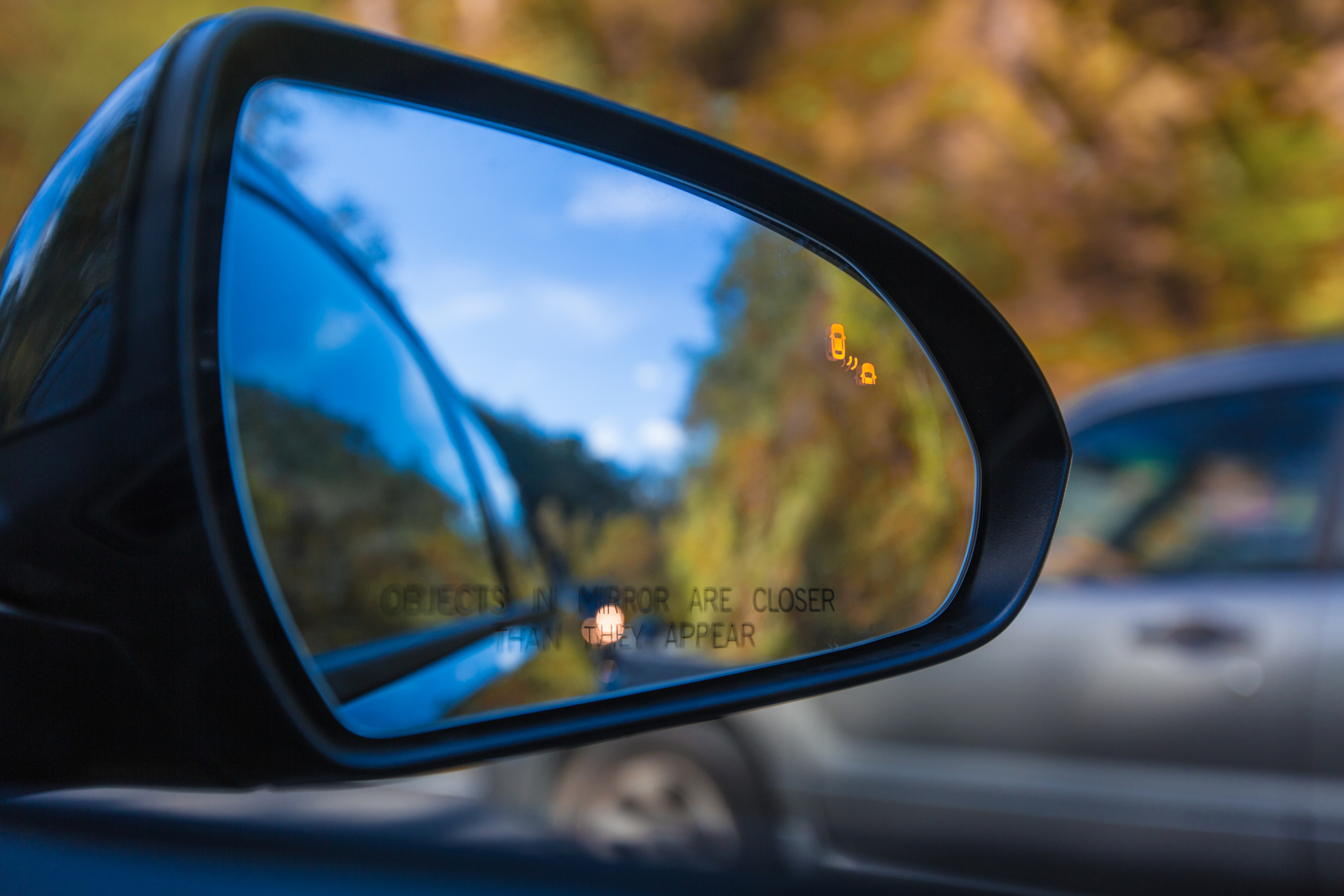
Blind Spot Monitors vs. Sideswipe Crashes: What Fort Myers Drivers Need to Know
A blind spot monitor is a warning tool. It is not a legal defense. That is the short answer to the question I get from clients who sit down at our office on Bonita Beach Road, slide a body-shop estimate across the table, and ask some version of: my car was supposed to beep, it didn’t beep, so whose fault is the sideswipe? Whether the light on the side mirror flashed or didn’t flash is one piece of evidence. The fault analysis under Florida law looks at what the driver actually did — and a driver who changed lanes without confirming the lane was clear is the driver who owns the crash, sensor or no sensor.
What follows is what Fort Myers drivers actually need to know about how Florida law treats these crashes, how insurers treat them, and what we see on these files in our office. I will keep the legal terms in plain English and reserve opinions for the spots where I have one.
What Florida law actually says about sideswipe crashes
Three statutes do most of the work in a Fort Myers sideswipe case, and a driver who knows them walks into a claim with a stronger position than one who does not.
Modified comparative negligence — §768.81, Florida Statutes. Since the 2023 tort reform, Florida is a modified comparative negligence state with a 50-percent bar. In plain English: if a jury decides you were 50 percent or less to blame, you recover — reduced by your share — and if the jury puts you at 51 percent or more, you recover nothing. Sideswipes are the textbook battleground for this rule. Two cars, two lanes, two drivers each saying the other one moved over first. The fight over that one percent is the whole case.
The two-year clock — §95.11(4)(a), Florida Statutes. The same 2023 reform cut the negligence statute of limitations from four years to two. Crashes on or after March 24, 2023 are on the two-year clock. I have already had calls from people who waited eighteen months and assumed they still had time. They did not have as much time as they thought.
PIP and UM — §627.736 and §627.727. Florida is a no-fault state. Your own PIP carrier pays the first $10,000 of medical and wage loss regardless of who caused the sideswipe. If the other driver flees the scene, or carries minimal insurance, your uninsured-motorist coverage is the line of defense between you and an unpaid hospital bill. I tell every client and every friend who asks: carry UM, and carry it stacked if your household has more than one car.
The crash report — §316.066, Florida Statutes. If there is injury, or property damage above the statutory threshold, the law requires a written report. On a sideswipe that report is sometimes the only contemporaneous record of which car was where. Skip it because the damage “looks minor” and you have given the other carrier the gift of a clean slate.
Five Fort Myers sideswipe fact patterns we handle regularly
Most of our Fort Myers sideswipe cases fall into one of these five fact patterns. The blind-spot-monitor question lands differently in each one.
- The merge on I-75. Northbound onto I-75 from Daniels Parkway or near Alico Road, a driver merges across two lanes in one motion, clips a sedan in the middle lane, and keeps going. The sensor on the merging car may or may not have lit up. The damage pattern on the driver’s-side rear quarter usually tells the story before any sensor data does.
- The Cleveland Avenue lane drift. Cleveland Avenue between Edison Mall and Page Field has four lanes that narrow and widen depending on the block. Drivers wander. A drift sideswipe at 40 mph creates a long paint smear, not a point of impact, and that is its own kind of evidence.
- The Summerlin Road simultaneous lane change. Two drivers reach for the same gap at the same moment, neither one signaling early enough. This is the classic 50/50 the insurers love. It is also where §768.81 lives or dies.
- The McGregor Boulevard parked-car clip. Older neighborhoods off McGregor have narrow on-street parking. A driver sideswipes a parked car and may or may not stop. When they don’t, it becomes a hit-and-run claim under the owner’s UM policy.
- The commercial-truck blind-side on Six Mile Cypress Parkway. A box truck or tractor changes lanes and the smaller car next to it gets pushed off the road. Blind-spot detection on commercial vehicles is a different conversation from passenger-car systems, and the federal rules through the FMCSA come into play.
Sideswipe cases — why these are harder than they look
People assume the rear-ender is the hard case and the sideswipe is the easy one. In our office it is usually the other way around. A rear-end crash has a presumption against the driver in the back. A sideswipe has no presumption. It has two drivers, two stories, and a fight over a few feet of lane.
Three things make these files harder than they read on paper.
The “I was already in the lane” problem. Both drivers say this. Both drivers believe it. The truth is usually that one of them started the lane change a half-second before the other. Damage geometry, paint transfer, and the angle of the scrape do more work here than any witness statement.
The technology argument cuts both ways. If the other driver had a blind-spot monitor and ignored its warning, you have a stronger argument. If you had a blind-spot monitor and the carrier can show you ignored the alert, the carrier will try that against you under §768.81. The defense bar has gotten very comfortable subpoenaing the infotainment-system event data on newer cars. We assume that data is in play and prepare accordingly.
Soft-tissue cervical injuries are real and undervalued. A side-impact transfer puts a different load on the neck than a rear-end. Insurers tend to discount the medical pictures from a sideswipe as “low-speed.” After thirty years of these I can tell you the speed at impact and the speed of the lane change are not the same number, and the resulting cervical strain can be chronic. Document early and document often.
A Fort Myers claim from our files
Some years back a client came in after a sideswipe on US-41 in Fort Myers. He had been heading south in the right lane in normal afternoon traffic when a vehicle in the center lane drifted into his door and kept going. He did the right thing — pulled off, called 911, took photographs of the paint smear running the length of his car. The other driver never stopped, and a search of the surrounding blocks did not turn up the vehicle that night.
He spent the evening in the emergency room. The crash had thrown his head sideways against the door pillar, and over the next few days the neck pain settled in and stayed. He went through physical therapy and a pain-management course that ran most of a year, with a diagnosis of chronic cervical strain that did not fully resolve.
Because the at-fault driver was never identified, we pursued the claim through his own uninsured-motorist coverage under §627.727. The case resolved at the full available policy limits, which fully funded the medical work and replaced the lost income.
Two things made the case. The 911 call within minutes of the crash, which the carrier could not call manufactured. And carrying UM at a level that actually matched his exposure as a working adult with a family. The blind-spot monitor on his own vehicle never entered the analysis. The phantom driver did.
What to do if you are sideswiped on a Fort Myers road
I have watched enough of these claims unfold to have a short list of moves that actually change outcomes. None of it is dramatic. All of it matters.
- Stop and call 911 even on a “minor” sideswipe. A report under §316.066 is the difference between a claim with a spine and a claim with none. Officers in Fort Myers will run the responding-officer narrative the same way whether the bumper is scuffed or shredded.
- Photograph the paint transfer along the full length of the car. Wide shots, close shots, both sides. The smear pattern tells a reconstruction witness which car moved into which lane and at what angle. A point-of-impact photo by itself does not.
- Get checked the same day, not the next week. Cervical strain from a side impact often masks for 48 to 72 hours while the adrenaline holds. A same-day urgent-care or ER visit anchors the medical timeline. Florida’s 14-day PIP rule under §627.736 cuts off most no-fault benefits if you wait past two weeks for initial care, and I have seen claimants lose the PIP cushion over a misunderstood symptom.
- Do not give a recorded statement to the other driver’s insurer. You are not legally required to. Adjusters know exactly which question to ask to get a five-percent shift in the comparative-fault number, and on a sideswipe that five percent can be the case.
- Save the car — or at least save the data. If your car has any kind of advanced driver-assistance system, the event data is on a clock. Body shops overwrite it. Storage lots send vehicles to auction. We have had files where pulling the event data the week of the crash made the case, and others where the data was gone before we were called.
- Call a lawyer who has tried a sideswipe before you sign anything. A quick consultation costs you nothing. Signing a property-damage release that also waives bodily injury — which carriers slip in routinely — costs you the case.
Key Takeaways
- Blind-spot monitors on either car do not change the underlying Florida negligence analysis. The driver who changed lanes unsafely is still the at-fault driver, sensor or no sensor.
- Under §768.81, your share of fault has to stay at or below 50 percent for you to recover anything. Sideswipes are the fact pattern where insurers push hardest to drive that number up.
- The 2023 reform cut the negligence statute of limitations to two years under §95.11(4)(a). Do not assume you have four.
- Your own PIP under §627.736 pays first, and uninsured-motorist coverage under §627.727 is what saves you when the other driver flees an I-75 or US-41 sideswipe. Carry UM, and carry enough of it.
- Same-day medical care, a §316.066 crash report, and full-length photos of the paint transfer are the three pieces of evidence that decide most Fort Myers sideswipe claims.
Frequently Asked Questions
Q1. If a blind spot monitor failed to warn me, can I still recover for a sideswipe crash in Fort Myers?
Yes, in most cases. Florida law looks at the conduct of the drivers first. If the other driver changed lanes into your vehicle on I-75 or Colonial Boulevard, that driver is the one whose negligence put your car in the hospital body shop. A non-functioning sensor on their car is not a defense for them. It can, in some narrow situations, open a second claim against a repair shop or a manufacturer, but that is a separate path on top of the auto claim, not a replacement for it.
Q2. What is the time limit to file a sideswipe lawsuit in Florida?
Two years from the date of the crash for most negligence cases under §95.11(4)(a), Florida Statutes, after the 2023 tort reform shortened it from four. There are exceptions for minors and for cases involving a government vehicle, where pre-suit notice rules apply. The safest answer is do not wait. Evidence on a sideswipe — paint transfer, sensor logs, dashcam clips — disappears fast.
Q3. If I was partly at fault, can I still recover?
Under §768.81, Florida Statutes, you can recover if your share of fault is 50 percent or less. Your award is reduced by your percentage. If a jury assigns you 51 percent or more, you recover nothing. Sideswipes are a common place where insurers try to push the at-fault number above 50, especially when both drivers were changing lanes at the same time. That is the fight on these files.
Q4. Will my own PIP cover me if the other driver fled?
Yes. Florida PIP under §627.736 pays up to $10,000 of medical and wage loss no matter who caused the crash, including a hit-and-run on US-41 or Daniels Parkway. PIP runs first. If you carry uninsured motorist coverage under §627.727, that policy steps in for the rest after PIP is exhausted, because a phantom driver who flees is treated like an uninsured driver.
Q5. Should I call the police after a low-speed sideswipe with no obvious injuries?
Yes, every time. Section 316.066 of the Florida Statutes requires a report on any crash with injury or with property damage above the small statutory threshold, which is most crashes. A sworn officer’s report, photos, and a citation against the other driver are the three pieces of paper that decide most sideswipe claims. Cervical strain from a sideswipe often shows up 24 to 72 hours later, after the adrenaline drops. By then it is hard to build a file from nothing.
Talk to our office before the carrier locks the file
If you were sideswiped anywhere from Daniels Parkway to McGregor Boulevard, or on I-75 anywhere through Lee County, the most useful thing you can do this week is have a short conversation with a lawyer who has handled these. Our consultations are free. We charge no fee unless we recover for you. Call our office at 239-992-8259 and we will sit down with you, look at the crash report and the photos, and tell you straight what we think the file is worth.
About the Author

More than thirty years of personal injury practice in Fort Myers and across Lee County stand behind every blog on this site. David B. Pittman, Esq. is the founder of Pittman Law Firm, P.L. The firm’s Fort Myers presence handles a steady stream of serious-injury work along the Daniels Parkway, Six Mile Cypress, McGregor Boulevard, Cleveland Avenue, and Summerlin Road corridors, and along I-75 between Estero and Bell Tower, with a sustained focus on serious-injury auto and complex-liability cases.
Between undergraduate at The Citadel, The Military College of South Carolina and a JD from the University of South Carolina School of Law, David built the foundation for a personal injury practice that now carries AV-Preeminent status with Martindale-Hubbell and membership in the Multi-Million Dollar Advocates Forum.
David has held a Florida real estate broker license for twenty-five years, a credential that shapes how the firm reads the property side of premises cases. The firm handles personal injury cases across Lee and Collier Counties, serving Fort Myers, Bonita Springs, Naples, Cape Coral, Estero, and Lehigh Acres, with offices at Windsor Place in Bonita Springs (main) and Fort Myers (satellite). Call 239-992-8259 for a free consultation.
Disclaimer: The hiring of a lawyer is an important decision that should not be based solely upon advertisements. This article is for general information only and is not legal advice. No attorney-client relationship is formed by reading it. Prior case results do not guarantee a similar outcome in any future matter. Pittman Law Firm, P.L., 3525 Bonita Beach Rd, Suite 107, Bonita Springs, FL 34134.