

Bill to raise Florida highway speed limit to 75 mph moves forward
SB 462 has moved further than any prior attempt to raise Florida’s highway cap, and if it lands the way its sponsors want, the posted limit on a lot of the road we drive every day in Lee and Collier Counties goes up by five miles per hour. Clients have been calling our Bonita Springs office for weeks asking what that means for them if they get hit. The posted number matters less than most people think. The statutes that decide who pays after a crash have not changed, and I want to walk through those before the new signs go up on I-75.
I want to address what the bill actually does, what Florida law already says about speeding and fault, and where I think the practical risks land for drivers on I-75, US-41, and the rest of the Southwest Florida road grid. After thirty years of personal injury practice in this part of the state, I have a fairly settled view about what happens when posted limits move up and crash speeds move with them.
What Florida law actually says about speed, fault, and recovery
SB 462 changes the posted cap. It does not change the underlying rules that decide who pays after a crash. Those rules sit in a handful of statutes, and they are the ones that actually drive the outcome of an injury case.
Reasonable speed regardless of the sign. Florida law has always required drivers to travel at a speed that is reasonable for road, weather, and traffic conditions. A posted 75 mph limit is a ceiling, not a permission slip. Driving 75 in a hard summer downpour on Alligator Alley is still negligence, and we plead it that way.
Modified comparative negligence — section 768.81, Florida Statutes. Florida changed this rule in March 2023. If a jury decides the injured plaintiff is more than 50 percent at fault, that plaintiff recovers nothing. Below 50 percent, the recovery is reduced by the plaintiff’s share. Plain English version: if you were going 82 in a 70 zone and the other driver drifted into your lane, the defense will argue your speed put you over the 50 percent line. If they win that argument, you go home with nothing. We see this fight more often in high-speed cases than in any other category.
Two-year deadline — section 95.11(4)(a), Florida Statutes. Negligence claims that accrue after March 24, 2023 must be filed within two years. The old four-year window is gone. Wrongful death runs on its own two-year clock. Miss it and the courthouse door closes.
PIP first — section 627.736, Florida Statutes. Florida is a no-fault state for the first $10,000 of medical bills and lost wages. You have to see a qualifying provider within fourteen days to keep that benefit alive. At highway speeds, $10,000 of PIP runs out before the second MRI.
Uninsured Motorist — section 627.727, Florida Statutes. When the at-fault driver carries the Florida minimum bodily injury policy and the crash happens at 75 mph, the at-fault policy will be exhausted before the ambulance bill clears. Your own UM policy is what carries the rest of the case. I have told clients for years to buy UM in higher limits than they think they need. A higher posted limit makes that advice more pointed.
Five highway crash patterns we handle in Southwest Florida
These are the patterns that come through our intake at the Windsor Place office. They are not hypothetical.
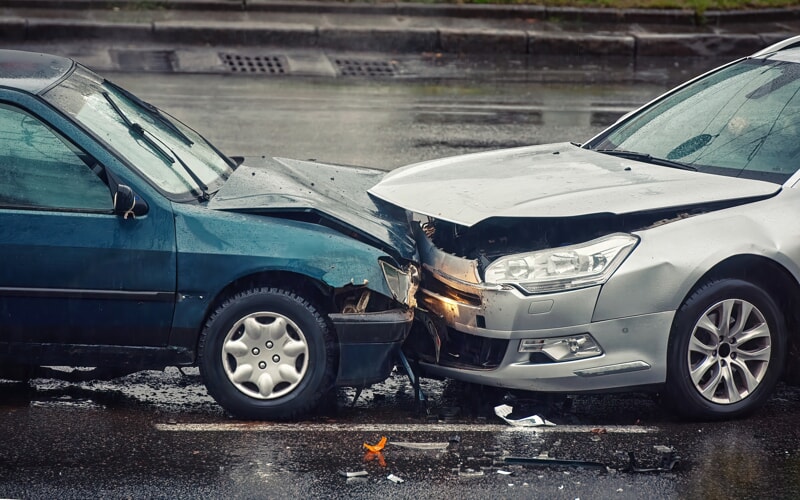
- Rear-end at speed differential. A driver doing the posted limit gets hit by someone doing 15 to 20 above. The energy difference between 70 and 90 is much larger than the energy difference between 55 and 70, and the injuries follow that math. Spine, brain, and shoulder injuries are the common picture.
- Out-of-state driver on I-75. Tourists from northern states often run at the limit they remember from home. Visitors on the I-75 corridor through Lee and Collier Counties are a routine source of high-speed rear-end cases through Estero and North Naples.
- Lane change into the left lane. A pickup or commercial van slides into the high-speed lane without clearing the blind spot. The car already there has less than a second to react. We pull dashcam and event-data-recorder downloads in almost every one of these.
- Rain on the Alley. The stretch of I-75 between Naples and the east coast turns slick within minutes of a summer storm. Drivers do not adjust. The crashes that follow are nearly always argued on comparative fault.
- Commercial truck on US-41 / Tamiami Trail. US-41 carries a steady volume of construction trucks, delivery vans, and tractor-trailers. The posted limit on most segments is lower than the interstate, but the speed differential between a loaded commercial vehicle and passenger traffic still produces the worst-injury crashes our firm handles south of Bonita Springs.
Why high-speed cases are harder than they look
People assume a faster crash is an easier case because the injuries are obvious. The injuries usually are obvious. The liability proof is not.
First, the comparative-fault fight gets harder. Defense lawyers spend most of their energy in a high-speed case trying to push the plaintiff over the 50 percent line. They will pull every cell phone record, every infotainment log, every social media post. They will hire a reconstruction engineer to argue your client was three feet over the line or two seconds late on the brake. The 2023 amendment to section 768.81 raised the stakes on that argument because a defense win above 50 percent is now a complete defense, not just a reduction.
Second, the policy stack runs out fast. The standard at-fault bodily injury policy in Florida is $10,000 per person. A serious highway crash blows through that in a single ambulance ride. The case turns into a hunt for additional coverage: UM on the injured driver’s policy, employer policies if the at-fault driver was on the clock, umbrella policies if the at-fault driver carries one. We start that search the day we sign the case.
Third, jurors get used to the new normal. Once a stretch of I-75 carries a 75 mph sign, jurors who drive that stretch will tell themselves 80 is fine. They will be less willing to assign fault to a defendant doing 82. That perception shift is real, and it is one of the reasons careful evidence work on speed and braking matters more in this category than in any other.
What to do if you are hit on I-75 or US-41 after a speed-limit change
Here is the action list I give clients who call me from the side of the road. None of it is generic. Each step exists because I have watched a case turn on it.
- Get the crash report number before you leave the scene. Florida requires a long-form crash report on any wreck with injury or significant damage under section 316.066, Florida Statutes. The report number controls everything downstream — the insurance claim, the dashcam pull from Florida Highway Patrol, the timeline. Get the number from the trooper.
- Photograph the final-rest positions before the cars are moved. Reconstruction work in a high-speed case starts with where the vehicles ended up. A clear set of phone photos taken from four corners of the scene is worth more than the police diagram. Get the photos. Then move the cars off the road.
- See a doctor within fourteen days, even if you think you are fine. Florida PIP under section 627.736 disappears if you do not establish care inside that window. I have watched clients lose $10,000 of guaranteed medical coverage by waiting two weeks because they did not want to make a fuss.
- Do not give a recorded statement to the at-fault driver’s carrier. They will call within forty-eight hours and ask three friendly-sounding questions designed to lock you into a story before you know the full picture. You owe them nothing. Refer them to a lawyer or to your own insurer.
- Save the vehicle. Do not let the salvage yard crush it. The event-data-recorder is inside, and in a high-speed case it tells us exactly what speed each car was doing in the five seconds before impact. We have lost cases because the EDR was scrapped before we got the call.
- Write down what you remember the day it happened. Memory degrades fast after a wreck. A one-page note typed into your phone that night beats a deposition answer six months later.
Key Takeaways
- SB 462 would raise the cap on Florida limited-access highways from 70 to 75 mph and let FDOT post higher limits on other roads, but the agency still has to study each segment before signs change.
- A higher posted limit does not change Florida’s rule that drivers must operate at a speed reasonable for conditions. Speeding in rain or heavy traffic is still negligence at 70, 75, or any other number.
- Under section 768.81 as amended in 2023, an injured plaintiff who is more than 50 percent at fault recovers nothing. High-speed cases live or die on that line.
- Negligence claims that accrue after March 24, 2023 must be filed within two years under section 95.11(4)(a). The pre-reform four-year window is gone.
- Florida minimum bodily injury limits run out fast in a 75 mph wreck. Carry meaningful uninsured-motorist coverage on your own policy. It is the line item that pays the rent when the at-fault driver’s policy is empty.
Frequently Asked Questions
If SB 462 becomes law, when would the 75 mph limit actually appear on I-75?
Passage of the bill does not automatically change signs. The Florida Department of Transportation has to study each segment for sight distance, curvature, and crash history before posting a new limit. On a long, straight stretch of I-75 the change could appear within a few months. On segments with heavier crash history the review takes longer, and FDOT can decline to raise the limit on a given segment even if the statewide cap goes up.
Does a higher posted speed limit make it harder to win an injury case against a speeder?
Not by itself. A driver doing 78 in a 75 zone is still negligent if conditions called for slower driving, and Florida law requires drivers to operate at a speed that is reasonable for road, weather, and traffic. The deeper issue is jury perception. Jurors who drive that stretch every day think 80 sounds normal, and proving fault for crashes near the new limit takes more proof, not less.
How does Florida’s modified comparative negligence rule affect a high-speed crash claim?
Under section 768.81, Florida Statutes, as amended in 2023, a plaintiff who is more than 50 percent at fault for a crash recovers nothing. In a high-speed wreck the defense almost always argues the injured driver contributed by following too closely, by changing lanes late, or by driving too fast for the rain. We line up reconstruction work early in the case so that bar gets cleared, because anything above 50 percent is a complete defense for the other side.
What is the deadline for filing a Florida injury lawsuit after a highway crash?
For negligence claims arising after March 24, 2023, the deadline is two years from the date of the crash under section 95.11(4)(a), Florida Statutes. The pre-reform rule was four years. Wrongful death is a separate two-year clock. Missing either deadline ends the case, so we calendar them on intake and again at every file review.
Will my PIP coverage still pay if I am hit at highway speed?
Yes. Personal Injury Protection under section 627.736, Florida Statutes, pays up to $10,000 in medical bills and lost wages regardless of who caused the crash, as long as you see a qualifying provider within fourteen days. PIP runs out fast in a serious highway wreck. After that, recovery depends on the at-fault driver’s bodily injury limits and your own uninsured motorist policy under section 627.727.
Talk to our office before the next deadline runs
If you or someone in your family has been hurt in a highway crash anywhere in Lee or Collier County, we will sit down with you, look at the police report, pull the policies, and tell you straight whether you have a case worth bringing. Call 239-992-8259 for a free consultation. There is no fee unless we recover for you.
About the Author

David B. Pittman, Esq. is the founding attorney of Pittman Law Firm, P.L., handling personal injury cases across Southwest Florida since the firm’s founding more than thirty years ago. The firm represents injured clients across Lee and Collier Counties — from the firm’s main office at Windsor Place on Bonita Beach Road through Fort Myers, Naples, Estero, Cape Coral, and Lehigh Acres, with a particular focus on commercial-vehicle, complex-liability, and serious-injury cases.
David completed his undergraduate work at The Citadel, The Military College of South Carolina, and earned his JD at the University of South Carolina School of Law. He is rated AV-Preeminent by Martindale-Hubbell and is a member of the Multi-Million Dollar Advocates Forum, a recognition for attorneys who have obtained million-dollar and multi-million-dollar verdicts and settlements for their clients.
David has held a Florida real estate broker license for twenty-five years, a credential that shapes how the firm reads the property side of premises cases. The firm handles personal injury cases across Lee and Collier Counties, serving Fort Myers, Bonita Springs, Naples, Cape Coral, Estero, and Lehigh Acres, with offices at Windsor Place in Bonita Springs (main) and Fort Myers (satellite). Call 239-992-8259 for a free consultation.
Attorney advertising. The information on this site is for general information purposes only and is not legal advice for any individual case. Reading this page does not create an attorney-client relationship with Pittman Law Firm, P.L. Prior results do not guarantee a similar outcome.