

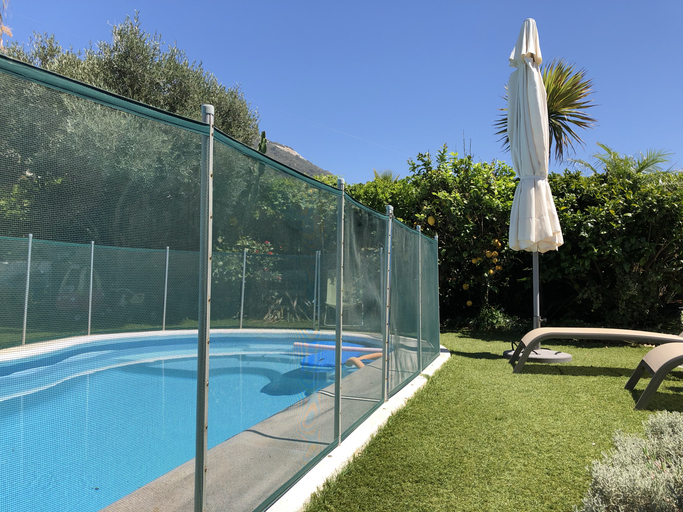
Are Swimming Pool Fences Legally Required in Fort Myers?
Two very different conversations bring people to our office with this question. The first is a homeowner along McGregor Boulevard or out near Daniels Parkway who is about to put in a pool and wants to know what the inspector is going to look for. The second is a family that has already lived through the worst day of their life, sitting across from me trying to understand whether the property owner did what Florida law required them to do.
Both conversations come back to the same body of statutes, the same county ordinances, and the same handful of practical patterns we have seen play out for over thirty years in Lee and Collier Counties. So let me lay it out the way I lay it out for clients in our office.
What Florida law actually says about residential pool barriers
The short answer is yes, Florida law requires a barrier around a residential swimming pool, and Fort Myers homeowners are bound by both the state rule and the local rule layered on top of it. The state rule lives in the Residential Swimming Pool Safety Act, Chapter 515, Florida Statutes. The act applies to residential pools built after October 1, 2000, and it gives homeowners a menu of four approved safety features. A property has to have at least one.
Those four options, in plain English, are:
- A four-foot-high barrier around the pool with a self-closing, self-latching gate.
- An approved safety pool cover that is in place when the pool is not in use.
- An exit alarm on every door and window that gives direct access from the home to the pool.
- A self-closing, self-latching device on every direct-access door, with the release at least fifty-four inches off the floor.
That is the floor. Section §768.81, Florida Statutes governs modified comparative negligence, which is the rule a jury uses to apportion fault if someone gets hurt in spite of those barriers. After the 2023 tort reform, a plaintiff who is found more than fifty percent at fault recovers nothing. For negligence claims tied to a pool injury, the clock under §95.11(4)(a), Florida Statutes runs for two years from the date of injury, also a post-2023 change. The old four-year window is gone, and we have already seen families miss claims because they were operating on outdated information.
Layered on top of the state act, the Florida Building Code Residential, Section R4501, sets the engineering details: gap sizes no larger than four inches between vertical members, a maximum two-inch clearance between the bottom of the barrier and the ground, and a hardware standard that requires the latch release to sit at least fifty-four inches above grade when the latch is less than fifty-four inches from the gate top. Lee County applies those provisions and inspects to them. Because we sit in a hurricane zone, the inspector also looks at wind-load on the barrier itself.
Six Fort Myers pool-case fact patterns from our files
If you took every residential pool incident we have worked on over thirty years and sorted the files into piles, you would end up with roughly six recurring patterns. Knowing the pattern matters because each one points to a different defendant and a different proof problem.
- The toddler who slips out through an unlatched sliding door. The parents thought the door was closed. There was no door alarm. The pool itself had no separate barrier. The home was built after 2000, so Chapter 515 applied, and the homeowner relied on the back door as their sole approved safety feature without keeping the self-closing hardware in working order.
- The visiting child at a Saturday cookout. Family is in the kitchen, the gate to the pool deck is propped open with a planter so the dogs can come and go, and a four-year-old wanders in. The gate hardware was code-compliant when installed; it just was not being used as designed that afternoon.
- The short-term rental. A family from out of state rents a home off Summerlin Road for the week. The pool barrier has been quietly modified for aesthetics: a horizontal climbing rail added, or a section of fence taken down to widen the view, or the self-latching gate replaced with a decorative hook. None of it would pass inspection. The host either did not know, or did and did not care.
- The community pool with broken hardware. An HOA pool gate latch has been broken for weeks. Maintenance was on a work order. A child gets through. The defense will argue the HOA had no notice; the maintenance log will tell a different story.
- The above-ground pool with an unsecured ladder. Above-ground pools with walls of at least forty-eight inches can satisfy the barrier requirement if the ladder is removable or lockable. Most are not.
- The spa or hot tub with no cover. A hot tub can satisfy Chapter 515 with an ASTM-rated locking cover. Too often the cover lives in the garage, not on the spa.
Each of these is a different theory of liability. The homeowner cases turn on Chapter 515 and the building code. The short-term rental cases pull in the host, the property manager, and sometimes a homeowners’ association that approved the modification. The community-pool cases turn on maintenance records and notice. When a family calls us, the first job is to figure out which pile the case sits in, because the evidence we need to preserve is different in each one.
Why pool injury cases draw more defense pressure than families expect
People are often surprised at how much defense pressure these cases attract. A drowning or a near-drowning sounds, in the abstract, like a straightforward liability story. In practice it is rarely that clean.
The first complication is the attractive-nuisance doctrine. Florida has long recognized that a residential pool is the classic attractive nuisance, meaning the property owner owes a duty to children who may be drawn to the water even without permission. That elevates the standard above ordinary trespasser law. The flip side is that the defense will work hard to argue that the parents knew the pool was there, knew the gate was unreliable, or knew their child was a wanderer, and they will run a comparative-fault argument under §768.81 against the family.
The second complication is what I call the after-the-fact compliance argument. A defendant who knew the gate hardware had been broken for months will hire a witness to swear the barrier system, taken as a whole, complied with Chapter 515 on the day of the incident. We have walked properties in Fort Myers where the screen-enclosure door, the deck gate, and the back-of-house sliders were all in some form of disrepair, and the defense was still going to make a paper case that the property met the four-feature minimum. Photographs, inspection records, and statements from the maintenance crew matter enormously, and they go stale fast.
The third complication is the real-estate side of the analysis. I have held a Florida real estate broker license for twenty-five years, in addition to running the firm, and one thing that experience has taught me is how short-term rental owners and HOAs actually document their properties. Short-term rental hosts often pull together a thin compliance binder that an insurance carrier accepts at face value but that does not stand up to a deposition. Knowing what to ask for, and which documents do not exist when they should, is a big part of the work.
The fourth complication is medical. Pool incidents that do not end in death often end with severe hypoxic brain injury, which means lifetime care economics, life-care planners, and economists. The damages workup on a serious pool case looks more like a catastrophic motor-vehicle case than a slip-and-fall.
What to do if your child or family member is injured in a Fort Myers pool
The advice I give families in the office, in roughly the order I give it, runs like this:
- Get the medical care first, and do not wait. Children who appear fine after a submersion can deteriorate from secondary drowning hours later. Lee Health and Golisano have the protocols and the imaging.
- Photograph the entire property before anything is repaired. The gate, the latch, the alarm panel, the door hardware, the cover, the ladder. From multiple angles. Time-and-date stamped. I have seen barriers replaced within forty-eight hours of an incident.
- Save the rental listing and the booking confirmation. If the incident happened at a short-term rental, screenshot the listing photos and the host’s safety claims before the host edits them. Hosts edit them.
- Write down who was present and what they said in the first hour. Not a formal statement. A note on your phone. Memories shift; the contemporaneous note is gold at deposition.
- Ask for the HOA or property manager’s incident report. Community pools usually generate one. You are entitled to know it exists.
- Call us before you talk to the property’s insurance carrier. The carrier’s first call is friendly. Their second call is a recorded statement. The two are not the same conversation, and the recorded one tends to follow you for years.
- Do not sign anything that mentions a release, a waiver, or a “courtesy payment.” Even a small early check from a homeowner’s carrier can be drafted to close out the entire claim.
One thing I have noticed with families who have lived through a near-drowning is that the emotional weight does not lift on a schedule. The legal piece needs to be handled, because the medical bills and life-care planning will not wait. But the family piece needs space. We try to give clients both.
Key Takeaways
- Florida’s Residential Swimming Pool Safety Act, Chapter 515, applies to most pools built after October 1, 2000, and Fort Myers homeowners must meet at least one of the four approved safety features it lists.
- A four-foot self-closing, self-latching barrier is the most common compliance option, with hardware that has to sit at least fifty-four inches off the deck.
- Florida is a modified comparative negligence state under §768.81 — a plaintiff more than fifty percent at fault recovers nothing — and the negligence statute of limitations is now two years under §95.11(4)(a).
- Short-term rentals, HOA pools, and community pools all carry duties beyond a homeowner’s, and the maintenance and inspection paper trail is usually where the case is won.
- Photograph everything, preserve the listing, and call counsel before talking to the property’s insurer.
Frequently Asked Questions
Does Florida law actually require a fence around my Fort Myers pool?
Yes. The Residential Swimming Pool Safety Act, Chapter 515, Florida Statutes, requires residential pools built after October 1, 2000 to have at least one of four approved safety features. A four-foot perimeter barrier with a self-closing, self-latching gate is the most common one. Lee County and the City of Fort Myers apply that baseline and add wind-load and inspection requirements on top of it.
If a neighbor’s child gets into my pool and is hurt, am I on the hook?
In Florida, you very likely are. A swimming pool is the textbook example of what courts call an attractive nuisance, meaning property owners owe a heightened duty to children who may be drawn to the water even without permission. If your barrier did not meet Chapter 515, the comparative negligence analysis under §768.81 will lean hard against you.
How long does a family have to bring a claim after a pool injury or drowning in Florida?
Two years for most negligence claims under §95.11(4)(a), Florida Statutes, after the 2023 tort reform shortened the old four-year window. Wrongful death claims also run on a two-year clock under §95.11(5)(e). The earlier you call, the more useful evidence we can preserve from the property.
What if the pool belonged to an Airbnb, a hotel, or an HOA-managed community?
Commercial and rental properties carry duties that go well beyond a homeowner’s. Short-term rental hosts, hotels, and community associations have to meet Florida Building Code pool barrier rules and routinely have to keep documented inspection and maintenance records. When those records are missing, that gap is often the case.
Do I have any defense if my fence met code but the child still got in?
Possibly, but it is fact-driven. Florida is now a modified comparative negligence state, so a plaintiff who is more than fifty percent at fault recovers nothing. With a small child, courts apply the Rule of Six and assign no fault to the child themselves. The analysis then turns on parents, supervisors, gate hardware, alarms, and whether your barrier was genuinely compliant on the day of the incident.
Talk to our office about your pool injury case
If your family has been through a drowning or a near-drowning at a Fort Myers home, short-term rental, or community pool, I would be glad to hear what happened. The consultation is free. There is no fee unless we recover for you. Call 239-992-8259 or reach our office through the contact page. The two-year clock under §95.11(4)(a) runs faster than families expect.
About the Author

Personal injury is the focus of David B. Pittman, Esq.’s practice in Fort Myers and across Lee County, and has been since he founded Pittman Law Firm, P.L. more than three decades ago. The firm’s Fort Myers presence handles a steady stream of serious-injury work along the Daniels Parkway, Six Mile Cypress, McGregor Boulevard, Cleveland Avenue, and Summerlin Road corridors, and along I-75 between Estero and Bell Tower. David represents injured clients across Lee and Collier Counties, with a particular focus on commercial-vehicle, complex-liability, and serious-injury cases, including residential and short-term-rental pool incidents.
After undergraduate work at The Citadel, The Military College of South Carolina, David earned his JD at the University of South Carolina School of Law. He is AV-Preeminent at Martindale-Hubbell and a member of the Multi-Million Dollar Advocates Forum. He has been admitted to practice before the courts of Florida for over thirty years and is in good standing with The Florida Bar.
David has held a Florida real estate broker license for twenty-five years, a credential that shapes how the firm reads the property side of premises cases. The firm handles personal injury cases across Lee and Collier Counties, serving Fort Myers, Bonita Springs, Naples, Cape Coral, Estero, and Lehigh Acres, with offices at Windsor Place in Bonita Springs (main) and Fort Myers (satellite). Call 239-992-8259 for a free consultation.
This article is provided for general information only and is not legal advice. Reading it does not create an attorney-client relationship with Pittman Law Firm, P.L. The hiring of a lawyer is an important decision that should not be based solely on advertisements. Past results do not guarantee a similar outcome in any future case.