

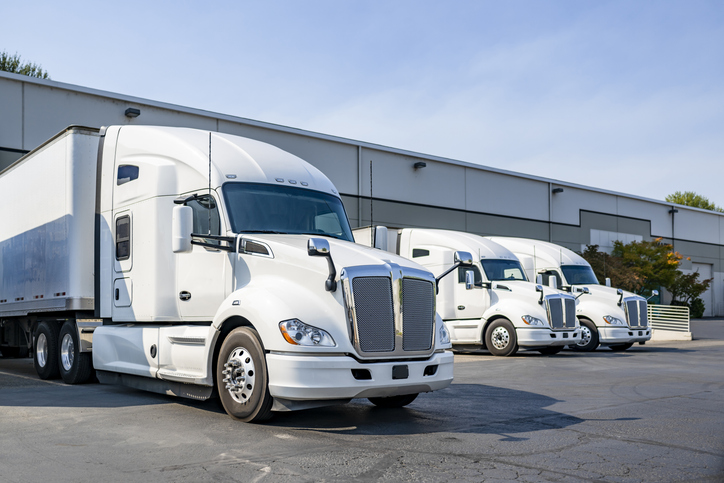
Alarming Rise in Commercial Vehicle and Truck Accidents on I-75: What Florida Drivers Need to Know
I can tell you from the cases coming into our office that yes, it has gotten worse on the I-75 corridor through Lee and Collier Counties, and the change is not subtle. Friends, former clients, even people I run into around Bonita Springs want to know if the wrecks are really increasing or if they are just noticing more flashing lights than they used to. The answer is the former.
What has changed is the mix of traffic. Tractor-trailers running same-day Amazon loads, regional carriers pulled into Florida by the hurricane recovery economy, and a fleet of newer drivers who have not put many miles under their belts have all landed on the same stretch of road at the same time. The wrecks we see coming into our office reflect that mix. They tend to be heavier, more often involve a fatality, and more often involve a carrier that resists turning over its records.
This piece is the plain-English version of what I tell families who call us the week after a semi has hit a relative on I-75. It covers what Florida law actually says about commercial trucks, the patterns we keep seeing in our case files, the practical reasons these cases are harder than they look, and a short list of things to do if it happens to your family.
What Florida law actually says about commercial trucks
Two layers of law sit on top of every tractor-trailer rolling down I-75: Florida statutes and the federal motor carrier regulations. Most clients do not know about the federal layer until we sit down at the conference table and start pulling the carrier’s file apart. That layer is where the cases are often won.
On the state side, §316.520, Florida Statutes, makes it unlawful to operate a vehicle with an unsecured load. The plain-English version: if your load can shift, slide, or fall off the truck, the driver and the company are already in violation before anything else happens. The companion statute, §316.525, lays out the state’s load-escape rules for commercial vehicles. Together, those two sections are how Florida turns “the I-beam fell off a flatbed and killed a family” into a clear-cut negligence-per-se case.
On the federal side, the rules that matter most fall under Title 49 of the Code of Federal Regulations:
- 49 CFR Part 393 — cargo securement. This is the federal version of Florida’s load statutes, with detailed requirements for tiedowns, working load limits, and how specific commodities have to be restrained.
- 49 CFR Part 395 — hours of service. The widely-known rule is the 11-hour driving limit inside a 14-hour on-duty window, with mandatory rest. Plain English: a long-haul driver cannot legally be behind the wheel for more than 11 of any 14 consecutive hours, and the work week is capped at 60 or 70 hours depending on the carrier’s schedule.
- 49 CFR Part 396 — vehicle inspection, repair, and maintenance. Carriers have to keep daily driver vehicle inspection reports and periodic inspection records. When those records are missing, a jury is allowed to draw an inference against the carrier.
Plain-English version of why those three parts matter: an hours-of-service violation, an unsecured load citation, or a missing inspection record turns the case from “we have to prove the driver was careless” into “the company already admits the truck was on the road in a condition it should not have been in.” That shifts the value of the case in a way carriers feel immediately.
I-75 truck crashes: four patterns we see in this office
Out of the truck cases that come through our office, four patterns account for the majority of the serious-injury and wrongful-death files:
- Rear-end by a semi in slowed or stopped traffic. A passenger car brakes for a backup near an exit ramp, a construction zone, or a weather slowdown. The tractor-trailer behind it cannot stop in time. At highway weight, even a low-speed impact from a loaded semi is catastrophic. These are the cases where the difference between life and death is often whether the trucker was on his phone, was over hours, or was following too closely.
- Lane-change and merge wrecks at high-traffic interchanges. The interchanges at Daniels Parkway, Alico Road, Corkscrew Road, and Immokalee Road see heavy passenger volume mixing with heavy freight. A trucker who does not check the right-side mirror long enough to clear the no-zone clips a car, and the passenger vehicle gets pushed across two lanes.
- Jackknife and rollover wrecks in weather. A summer thunderstorm rolls in off the Gulf and dumps an inch of water on the road in fifteen minutes. Drivers who do not slow down, or whose tires are bald in violation of Part 396, lose traction. We have handled a jackknife wreck near the Alico interchange where the trucker was running with two tires under the federal minimum tread depth.
- Unsecured cargo failures. The flatbed losing a steel coil, the dump truck losing rock, the equipment hauler losing a piece of construction equipment. These are §316.520 cases, and they are often the most legally clean of the four patterns, even when the human consequences are awful.
Truck wrecks — why these cases are harder than they look
Clients sometimes call us a few weeks after a semi crash and assume the case will be straightforward because the police report puts the trucker at fault. I wish that were the way it worked. In practice, commercial truck cases are harder than passenger-car cases for four reasons.
Evidence disappears fast. The engine control module on a modern tractor stores hard-braking and speed data, but it can be overwritten or downloaded and discarded inside a few weeks. The electronic logging device on the dash holds the hours-of-service record, and that data sits with the carrier, not with the driver. Dashcam footage is often on a thirty- to ninety-day loop. If a preservation letter does not go out from a lawyer’s office within days of the wreck, the company is legally free to follow its ordinary records-retention schedule, which often means the evidence is gone.
The carrier hires defense counsel within hours. The big carriers running I-75 have rapid-response teams. An adjuster and a defense investigator are sometimes on scene before the wrecker is. They are taking photos, talking to witnesses, and building the carrier’s version of events while the family is still at the hospital. A family without a lawyer in that window is at a real disadvantage.
Damages on a serious case have to be proved by professionals. A wrongful-death case where a wage earner is lost requires a forensic accountant to model future earnings, household services, and loss of companionship. A traumatic-brain-injury case requires a neuropsychologist and often a life-care planner. Carriers count on families not knowing how to assemble that proof, and they make low offers in the first ninety days hoping a family will take an early check.
Florida’s comparative-fault rules cut both ways. Under the 2023 changes to §768.81, a plaintiff who is more than 50% at fault recovers nothing. Carriers know this, and they fight to put fault on the passenger-car driver — sometimes by claiming a sudden brake check, sometimes by claiming the car was in the no-zone. That fight is one reason we work the scene reconstruction early.
A case worth walking through
One file from our office that stays with me involved a family whose son was killed when his car was rear-ended by a semi-truck near the Estero stretch of I-75. He was sitting in slowed traffic. The trucker, running for a regional carrier, did not slow down in time, and the impact at highway speed left no room for the family to recover anything but the case itself.
What that case turned on was not the police report, which was clear from the start. It turned on the carrier’s records. We brought in a forensic accountant to model what the young man’s earnings would have been over his career, what the family lost in household contribution, and what the loss of companionship piece looked like for his parents and his brother. We pulled the carrier’s hours-of-service logs and matched them against the fuel receipts and toll data, and what we found did not line up. The driver had been on the road longer than the logs claimed, in violation of 49 CFR Part 395.
The second piece was the corporate side. The company had not updated its safety policies in a way the federal regulations require, and its driver qualification file on this trucker had gaps. That gave us a negligent-supervision claim against the company itself, on top of the respondeat-superior claim against the driver. The corporation settled for a significant amount, enough that the family did not have to fight that fight again, and enough that the company felt the cost of the safety failures it had let stack up.
I think about that case because it is the pattern I see again and again on I-75. A driver who is over hours, a carrier whose paperwork has gaps, a family that did not know any of that was happening on the road behind them. The work is in the records.
What to do if a semi hits your family on I-75
This is the list I give families on the phone when they call us in the first day or two after a wreck. It is not generic advice. Each item is here because I have watched the absence of it hurt a real case.
- Get to a hospital, not an urgent care. A serious-injury case needs a CT or an MRI in the chart from day one. Urgent-care visits often do not order imaging, and a carrier will use a six-day gap between the wreck and the first MRI to argue the injury came from somewhere else.
- Photograph the trucker’s door and trailer. The DOT number, the carrier name, and the trailer license plate. If you are too hurt to do it yourself, ask the first relative who arrives at the scene to do it before the wrecker hauls the rig off.
- Do not give a recorded statement to the carrier’s adjuster. The adjuster who calls you within forty-eight hours is not on your side. Polite refusal is fine. Say you will be represented and that your lawyer will be in touch.
- Save the vehicle. Tell the body shop or the wrecker yard in writing that the vehicle is not to be released, scrapped, or repaired without notice to you. Our investigators often have to inspect the car for crush pattern and seatbelt evidence weeks after the wreck.
- Call a lawyer in the first week, not the first month. The ELD, ECM, and dashcam evidence on a commercial truck case has a short life. A preservation letter on firm letterhead, sent within days, locks that evidence in place. I have used this approach on every commercial-vehicle file in the last decade, and the cases where the letter went out early consistently produce better outcomes than the cases where it did not.
Key Takeaways
- The I-75 corridor through Lee and Collier Counties has seen a real, not imagined, rise in commercial-truck wrecks, driven by freight volume and a less-experienced driver pool.
- Two layers of law govern every commercial truck: Florida statutes §316.520 and §316.525 on cargo and load escape, and the federal FMCSA rules at 49 CFR Parts 393, 395, and 396.
- The cases that produce real recoveries are almost always built from the carrier’s own records, not from the police report alone.
- Evidence on a commercial-truck case has a short shelf life. ECM data, ELD logs, and dashcam footage can be lost inside thirty days without a preservation letter.
- Under Florida’s 2023 comparative-fault changes, a plaintiff who is more than 50% at fault recovers nothing, which is why carriers fight hard to put fault on the passenger-car driver early.
Frequently Asked Questions
Q1. Who pays when a semi rear-ends my car on I-75 in Florida?
In a clear rear-end semi crash, the trucking company is typically the responsible party through the driver’s employer. Under the doctrine of respondeat superior, the carrier is on the hook for the driver’s on-duty conduct. The carrier’s commercial auto policy is usually the first source of recovery, and policy limits on FMCSA-regulated rigs commonly start at $750,000 and run to several million dollars depending on the cargo and the company. Other defendants may include the cargo loader, a maintenance contractor, or a parts manufacturer if a brake or tire failure played a role.
Q2. Are FMCSA hours-of-service violations enough to win a truck case?
An hours-of-service violation under 49 CFR Part 395 is strong evidence of negligence, but it is not a guaranteed win. The driver’s logs, ELD data, fuel receipts, and toll records have to line up to show the driver was over hours when the wreck happened. Once that is established, the carrier is in a hard spot, because Part 395 violations also support a negligent-supervision claim against the company itself. That second claim often opens the door to higher policy limits than a simple driver-only theory.
Q3. What is the deadline to file a Florida truck accident lawsuit?
For crashes after March 24, 2023, the statute of limitations on a Florida negligence claim is two years. Wrongful-death claims also run on a two-year clock from the date of death. Older crashes may still be on the prior four-year clock. The deadline is shorter than most clients expect, and it is one reason we ask families to call the office early. Evidence on a commercial truck case, including the ECM data, the driver’s logs, and the dashcam footage, can be destroyed inside thirty days if no preservation letter goes out.
Q4. What evidence matters most in a Southwest Florida truck crash?
The five sources we go after first are the engine control module download, the electronic logging device data, the driver qualification file, the maintenance and inspection records under 49 CFR Part 396, and any forward-facing or driver-facing camera footage. Most carriers running I-75 today have at least one of those camera systems. Footage is often overwritten on a thirty- to ninety-day loop, which is why a spoliation letter has to go out within days of the wreck.
Q5. How long does a Florida commercial truck case usually take?
A clean liability case with full injuries documented can settle in six to twelve months. A case with disputed liability, multiple defendants, a corporate carrier fighting hard on the FMCSA claim, or a wrongful-death component where future-earnings damages have to be modeled by a forensic accountant often runs eighteen to thirty months. We tell families to plan for the longer end on serious-injury and wrongful-death matters, because pushing a case to settle before the medical picture is fully developed costs them money.
If a truck has hit your family on I-75, call us
I built our firm to handle the cases that are too heavy for a general practice. Commercial-vehicle, FMCSA-regulated, and wrongful-death matters get our direct attention from the first call. The consultation is free, and there is no fee unless we recover for you.
Call our office at 239-992-8259. We answer the phone. Our main office is at Windsor Place, 3525 Bonita Beach Road, Suite 107, in Bonita Springs, and we keep a satellite office in Fort Myers for clients on the north side of the county. We represent injured families along the I-75 corridor through Lee and Collier Counties, on US-41 / Tamiami Trail, and across Bonita Springs, Fort Myers, Naples, Estero, Cape Coral, and Lehigh Acres.
About the Author

Three decades of personal injury practice across Southwest Florida put David B. Pittman, Esq., the founder of Pittman Law Firm, P.L., in a position to write candidly about the cases that come into the office, with a sustained focus on commercial-vehicle, FMCSA-regulated, and serious-injury cases. The firm represents injured clients across Lee and Collier Counties, from the firm’s main office at Windsor Place on Bonita Beach Road through Fort Myers, Naples, Estero, Cape Coral, and Lehigh Acres.
David’s credentials include The Citadel, The Military College of South Carolina, for his undergraduate degree; the University of South Carolina School of Law for his JD; an AV-Preeminent rating from Martindale-Hubbell; and membership in the Multi-Million Dollar Advocates Forum.
David has held a Florida real estate broker license for twenty-five years, a credential that shapes how the firm reads the property side of premises cases. The firm handles personal injury cases across Lee and Collier Counties, serving Fort Myers, Bonita Springs, Naples, Cape Coral, Estero, and Lehigh Acres, with offices at Windsor Place in Bonita Springs (main) and Fort Myers (satellite). Call 239-992-8259 for a free consultation.
The information on this website is for general information purposes only. Nothing on this site should be taken as legal advice for any individual case or situation. This information is not intended to create, and receipt or viewing does not constitute, an attorney-client relationship.