

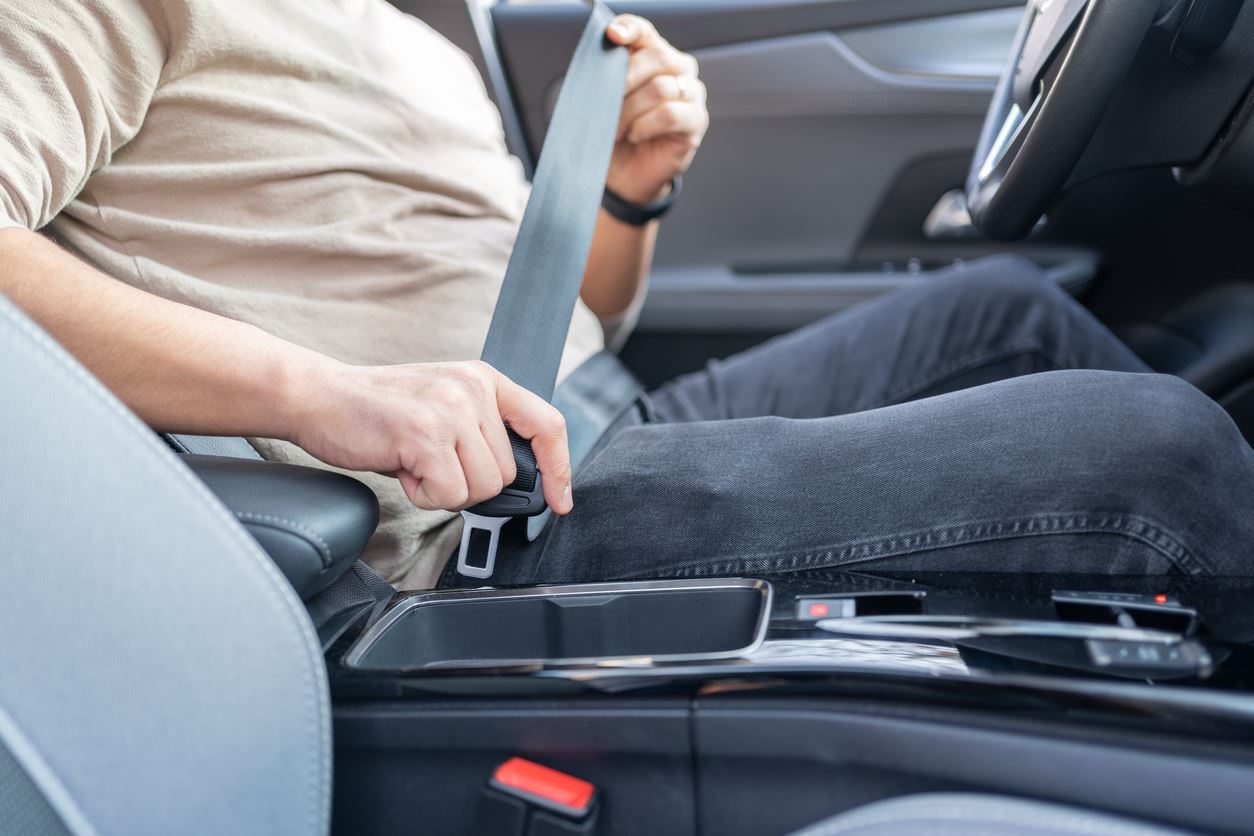
8 Myths About Driving Without a Seatbelt, Debunked
If you were not wearing your seatbelt when you were hit on US-41 or I-75, you still have a case. Let me be direct about that, because the first thing most callers tell me after a crash is that they were not buckled — and the second thing they say is “so I guess I have no claim.” That is not how Florida law works. An unbuckled belt affects the size of the damages argument; it does not extinguish the case.
Florida is a buckled-up state by law. The rules around what an unbelted client can and cannot recover are written into the statutes and the case law, and they are not as harsh as most drivers assume. Here is what I can tell you through thirty years of injury cases across Lee and Collier Counties, including clearing up the eight stories I hear told most often.
What Florida law actually says about seatbelts
Three pieces of Florida law govern almost every seatbelt question that lands in our office.
First, the safety statute itself. Florida requires the driver, front-seat passenger, and any passenger under eighteen to wear a properly adjusted seatbelt. Children under six need a child restraint or booster. A violation is a primary offense for the driver and front passenger, meaning an officer can stop the car for that reason alone.
Second, the seatbelt defense. Under Florida case law (the Supreme Court’s Ridley v. Safety Kleen line), a defense lawyer is allowed to argue that a plaintiff’s failure to wear an available, working seatbelt was unreasonable and that the failure caused or worsened the injuries. If the defense proves both pieces, the jury is told to reduce the plaintiff’s damages by the percentage attributable to the unbuckled belt. The defense does not erase the case. It chips away at the damages number.
Third, modified comparative negligence. §768.81, Florida Statutes, was rewritten by the 2023 tort reform. The rule now is that if you are more than 50 percent at fault for your own injuries, you take home nothing. Under 50 percent and you still recover, just reduced by your percentage. The seatbelt defense plays inside this framework. A jury that thinks the unbelted plaintiff is 20 percent responsible for the severity of her own injuries will reduce her award by 20 percent. A jury that thinks she is 60 percent responsible because she was unbelted at high speed in a rollover will zero her out. That is a real shift from the old pure-comparative system, and it is why early case work on the seatbelt question matters more now than it did three years ago.
Two more statutes round out the picture. §627.736 is the Personal Injury Protection statute, the $10,000 in no-fault medical and wage coverage every Florida driver carries. PIP pays regardless of seatbelt use. And §95.11(4)(a) gives a plaintiff two years from the crash to file a negligence lawsuit (down from four, post-reform), so the clock to investigate the belt facts and get the case filed is shorter than most people assume.
The 8 myths I hear most often
Myth 1: “The airbags will catch me.”
Airbags are designed to work with a seatbelt, not in place of one. Front airbags do not deploy in most rear-end collisions, and they generally do not deploy in rollovers either. Without a belt, the unrestrained body is already moving forward by the time the bag fires, and the bag itself, deploying at roughly two hundred miles an hour, becomes the injury. We have handled cases where the unbelted driver was struck by his own airbag and suffered facial fractures the belt would have prevented.
Myth 2: “Seatbelts are uncomfortable.”
Almost always the belt is uncomfortable because the seat is set wrong, the shoulder anchor is at the wrong height, or the lap belt is riding up onto the soft tissue of the abdomen instead of sitting low across the pelvis. Five minutes adjusting the seat and the anchor fixes most of it. A lap belt that sits on the belly is dangerous in a crash on its own, because the deceleration force loads into the abdomen and not the bony pelvis. That is a separate injury pattern we see, called seatbelt syndrome, and it is preventable.
Myth 3: “I forgot.”
I do not buy it. Every car built in the last twenty years chimes, beeps, lights up the dash, and in newer models cuts the radio until the driver buckles. Forgetting is choosing not to.
Myth 4: “I’m only going up the road.”
Most crashes happen close to home. NHTSA’s own data puts a majority of fatal crashes within twenty-five miles of the driver’s residence and a substantial share under five miles. The short trip to the grocery store is statistically the trip you are most likely to be hit on. The belt costs you nothing and takes one second.
Myth 5: “I drive carefully, so I’m fine.”
You cannot careful your way out of the other driver. I have represented careful drivers struck by drunk drivers on the I-75 corridor through Lee and Collier Counties, by distracted drivers on US-41 / Tamiami Trail, by commercial truck drivers who fell asleep at the wheel, by teenagers running red lights. The other driver is the variable you do not get to control. The belt is the variable you do.
Myth 6: “Low-speed crashes don’t hurt you.”
A substantial share of injury-producing crashes happen at speeds under forty miles per hour. The human body decelerates from thirty to zero in about a tenth of a second when it hits a windshield. The chest hits the steering wheel at the same force whether the speed is thirty or sixty; the only difference is how much further the body travels after impact. The belt holds the body to the seat through that tenth of a second and lets the crumple zone of the car do the work it is engineered to do.
Myth 7: “The belt will trap me or hurt me worse.”
The data goes the other way. NHTSA puts lap-and-shoulder belts at roughly a 45 percent reduction in fatal injury for front-seat occupants in passenger cars and around 60 percent in light trucks. The “trapped in a burning car” scenario is rare; the much more common scenario is ejection. An unbelted occupant in a rollover is roughly thirty times more likely to be ejected, and once a body leaves the vehicle, the survival rate collapses. Yes, belts cause bruises and the occasional sternal fracture. Bruises and a sternal fracture are not in the same conversation as ejection.
Myth 8: “It’s my body, my choice.”
Legally, in Florida, it is not. The state has chosen for you, and the choice is enforceable. Beyond the citation, the unbelted driver who survives a crash and tries to recover from the at-fault party will have the seatbelt defense waiting in the file. Beyond the legal piece, an unbelted driver in a multi-passenger car becomes a projectile inside the cabin in a crash. The choice affects the people you brought with you.
What we actually do when a client was not buckled
An unbelted-client case is harder than a belted-client case for one straightforward reason: the defense has a story to tell the jury before we ever get to the merits, and that story is about personal responsibility. Jurors in Lee and Collier Counties hear that story, and many of them are sympathetic to it. So our work starts early.
We bring in a biomechanical engineer to examine the injuries against the crash forces and answer one question: would the seatbelt have prevented these injuries, or would the injuries have happened anyway? Sometimes the answer is “the belt would not have changed this” — for example, in a side-impact T-bone where the intrusion put the door into the driver’s pelvis, the belt was not going to save the pelvis. When the engineer can say that on the stand, the seatbelt defense loses most of its force.
We also pull the vehicle’s event data recorder, the so-called black box, and we pull it fast, before the salvage yard crushes the car. The recorder tells us belt status, speed, brake application, and steering input in the seconds before impact. In one case we worked the recorder showed the belt was latched and the dash chime had not gone off, but a frayed anchor point had let the belt feed during the crash. That is a product case, not a comparative-fault case, and it changed the whole shape of the claim.
And we work the scene. The 2023 reforms shortened the statute of limitations to two years, which sounds like plenty until you try to chase down a witness who has since moved out of state. Florida’s crash report statute, §316.066, locks in the officer’s narrative within ten days, and that narrative often contains the first written statement about whether occupants were belted. Get to the report early; get to the witnesses earlier.
What to do if you were in a crash and you weren’t buckled
The advice I give clients in this situation is specific, not generic, because the generic version of this list is on every law firm website and the generic version is wrong.
- Tell the truth to the officer about the belt. Inconsistencies on this point destroy a case. The officer’s report will be read aloud in a deposition. The truth, plainly stated, is the only sustainable position.
- Get medical care the same day, even if you feel fine. Adrenaline masks injury for hours. PIP under §627.736 requires treatment within fourteen days of the crash or you forfeit it, and the gap between the crash and the first visit is the first thing the defense will hold up to the jury.
- Photograph the inside of the car before it leaves the scene. The belt itself, the latch, the seat position, the airbag. If there is belt-mark bruising on your chest or shoulder hours later, photograph that too. Belt-mark bruising is evidence the belt was on, and it is also evidence of the force of the crash.
- Do not give a recorded statement to the at-fault driver’s insurance company. Not on the day of the crash, not the next week, not until you have a lawyer. The adjuster’s first question will be about the belt. They are good at their job. The recording is forever.
- Save the car. Tell the tow yard, in writing, not to release or salvage the vehicle. The event data recorder lives in the airbag control module, and once the car is crushed, the recorder is gone with it.
- Call our office before the two-year clock runs. §95.11(4)(a) is unforgiving. Two years is shorter than people think, especially in a case that needs an engineering witness and a recorder pull.
Key Takeaways
- Florida law allows a seatbelt defense to reduce damages, but it does not erase the case. An unbelted client still has a claim against the at-fault driver.
- Under §768.81 as amended in 2023, a plaintiff who ends up 51% or more at fault recovers nothing. That makes early work on the seatbelt question (engineering, recorder data, scene investigation) more important than it used to be.
- PIP under §627.736 pays the first $10,000 of medical and wage loss regardless of belt status, but treatment has to start within fourteen days.
- The statute of limitations on Florida negligence is two years from the crash, per §95.11(4)(a), down from four. Old assumptions about timing are out of date.
- The strongest answer to the seatbelt defense at trial is to make the other driver’s conduct the center of the case, not the client’s belt.
Frequently Asked Questions
Q1: Does not wearing a seatbelt reduce what I can recover in a Florida injury case?
It can. Florida recognizes a seatbelt defense, and a jury is allowed to reduce your award by the percentage of fault assigned to your failure to buckle, if the defense proves the belt would have prevented or reduced your injuries. Under Florida’s modified comparative negligence rule, §768.81, if you end up 51% or more at fault overall, you recover nothing. That is why the seatbelt fact pattern is one we work hard early in the case.
Q2: If I was unbuckled, should I still file a claim?
Yes. An unbuckled passenger or driver still has a claim against the at-fault party. The seatbelt issue affects damages, not the existence of the case. We have handled cases where the client was not belted and still recovered meaningful compensation because the other driver’s conduct was the dominant cause of harm. Talk to a lawyer before assuming you have no case.
Q3: How long do I have to file a Florida car accident lawsuit?
Two years from the date of the crash for negligence claims, under §95.11(4)(a) as amended by the 2023 tort reform. Cases before March 24, 2023 still have the old four-year window. Wrongful death has its own two-year clock. Miss the deadline and the courthouse door closes, so call early.
Q4: Does PIP still pay if I was not wearing a seatbelt?
Yes. Florida’s no-fault Personal Injury Protection coverage under §627.736 pays up to $10,000 of medical bills and lost wages without regard to who caused the crash and without regard to whether you were belted. The seatbelt question shows up later, when we are pursuing the at-fault driver for damages above PIP.
Q5: What should I do at the scene if I was not buckled?
Tell the truth to the officer, get medical care that same day, photograph the inside of the vehicle including the belt and any belt-mark bruising you may have, and call a lawyer before you give a recorded statement to any insurance company. Anything you say about the belt will be used to argue the seatbelt defense, so be precise and be represented.
Talk to our office before you talk to the insurance company
If you or someone in your family was hurt in a Florida crash, call our office at 239-992-8259. The consultation is free, and there is no fee unless we recover for you. I will sit down with you, work through the belt question and the rest of the facts, and tell you straight whether we think the case is worth bringing. We handle car accident cases across Lee and Collier Counties — from Bonita Springs and Fort Myers up to Lehigh Acres, and south through Estero, Naples, and Cape Coral.
About the Author

David B. Pittman, Esq. is the founder of Pittman Law Firm, P.L., and has practiced personal injury law across Southwest Florida for more than thirty years. The firm represents injured clients across Lee and Collier Counties — Bonita Springs, Fort Myers, Naples, Estero, Cape Coral, and Lehigh Acres — with offices in Bonita Springs and Fort Myers, and a particular focus on commercial-vehicle, complex-liability, and serious-injury cases.
David’s professional credentials include a JD from the University of South Carolina School of Law, an undergraduate degree from The Citadel, The Military College of South Carolina, an AV-Preeminent rating with Martindale-Hubbell, and membership in the Multi-Million Dollar Advocates Forum.
David has held a Florida real estate broker license for twenty-five years, a credential that shapes how the firm reads the property side of premises cases. The firm handles personal injury cases across Lee and Collier Counties, serving Fort Myers, Bonita Springs, Naples, Cape Coral, Estero, and Lehigh Acres, with offices at Windsor Place in Bonita Springs (main) and Fort Myers (satellite). Call 239-992-8259 for a free consultation.
The information on this page is for general information only and is not legal advice for any individual case. Reading this page does not create an attorney-client relationship. Past results do not guarantee a similar outcome in any future case. Attorney advertising — Pittman Law Firm, P.L., 3525 Bonita Beach Rd, Suite 107, Bonita Springs, FL 34134.