

Rain And Road Conditions in Fort Myers Accidents: Who Is Liable?
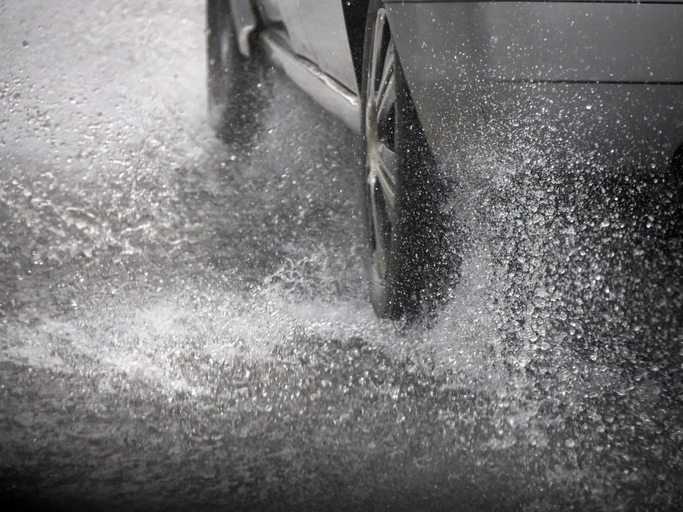
Rain is a condition, not a defense. That is the answer Florida law gives, and it is the answer I give on the first phone call when someone tells me the other driver’s carrier is pointing at the weather. Every driver on a Florida road has a legal duty to adjust speed and following distance for the conditions in front of them. A summer storm rolling across I-75 does not suspend that duty — it raises it. The afternoon rain that sheets across Daniels Parkway and stacks traffic near Six Mile Cypress is predictable in this part of the state, and the law treats it that way.
The summer pattern is predictable. The afternoon storm rolls across I-75, the pavement on Daniels Parkway turns to a sheet, and the calls start coming in the next morning. The carriers know this pattern too, and the wet-road denial letter is essentially a form letter at this point. The piece worth understanding before you sign anything is what Florida law actually says, what evidence actually matters, and where the insurance companies push the file in the first thirty days.
What Florida law actually says about wet-road liability
Three statutes do most of the work on a weather-related crash. None of them say anything special about rain. They apply the same way they apply on a clear day, which is exactly the point.
Modified comparative negligence — §768.81, Fla. Stat. Florida went to modified comparative negligence in March 2023. The plain-English version is this: if a jury puts you at 50% or less at fault, your damages are reduced by your percentage. If a jury puts you at 51% or more, you recover nothing. On a wet-road file the defense lawyer’s entire job is to push you across that 51% line by stacking up small allegations — you were going thirty-five in a forty, your tires had four thirty-seconds of tread, you did not have your headlights on. None of those on its own is fatal. Together, in front of a jury, they are a problem.
Statute of limitations — §95.11(4)(a), Fla. Stat. The same 2023 reform cut the deadline for filing a negligence lawsuit from four years to two years. If your crash happened after March 24, 2023, you are on the two-year clock. I still hear people quote the four-year number from a friend or a website that has not been updated. It is wrong, and missing this deadline does not get a do-over.
PIP — §627.736, Fla. Stat. Personal Injury Protection is no-fault. Your own PIP pays up to $10,000 of initial medical and a portion of wage loss regardless of who caused the crash. The piece that catches people on rain cases is the fourteen-day rule — if you do not see a doctor within fourteen days, the PIP medical benefit is gone. People are sore from a wet-road slide, they tell themselves it will pass, they wait three weeks, and the carrier closes PIP. We have unwound that on appeal in a few cases. It is not a fight you want to walk into.
Uninsured Motorist — §627.727, Fla. Stat. UM is the coverage that pays when the other driver carries no liability or not enough liability. Florida does not require UM, but your carrier is required to offer it to you in writing. A lot of drivers waive it on the renewal without reading the form. On a serious wet-road injury crash, UM is often the difference between a $10,000 file and a $250,000 file.
Crash report — §316.066, Fla. Stat. Florida requires a crash report any time there is injury, death, or apparent property damage over $500. The officer’s narrative and the weather field on the report become the first piece of paper the carrier reads. If the responding officer marks “rain” in the weather field and “no contributing action” for the at-fault driver, the carrier opens the file already leaning your way.
The five wet-road scenarios we actually see
The bulk of our wet-road files fall into one of these five patterns. The legal analysis is different in each one, and grouping them this way is how we triage a new case in the first phone call.
- Rear-end on slowing traffic. Traffic backs up on I-75 between the Alico Road exit and Corkscrew because of a storm cell ahead. The driver behind you is on cruise control, does not see the brake lights through the rain, and runs into the back of you at thirty. The duty-to-control-your-vehicle rule does not bend for weather, and this is the cleanest liability picture in the wet-road family.
- Hydroplane-and-cross. A driver hits standing water on Six Mile Cypress Parkway, loses contact with the pavement, crosses the center line, and clips an oncoming vehicle. The defense in these is almost always “I could not control the car.” Florida law does not treat that as a defense — the duty is to drive at a speed and in a manner that will not cause the loss of control in the first place.
- Intersection visibility. A driver runs a yellow-going-red at Colonial Boulevard and Summerlin during a hard rain because the wipers cannot keep up and they did not slow down. The carrier will float the idea that the rain made the light unreadable. The officer’s report and the signal timing data answer that one.
- Drainage and road condition. A road authority has been notified about pooling at a specific low spot — the McGregor Boulevard dip near the river is a classic example — and has not fixed it. These are harder cases because of sovereign immunity caps, but they exist, and they can be brought alongside the driver-negligence claim.
- Commercial vehicle in the rain. A box truck or tractor-trailer with a heavy load slides on Cleveland Avenue or Pine Island Road because the driver did not adjust for conditions. Commercial drivers are held to a higher standard under federal motor carrier rules. The investigation is bigger, the policy limits are larger, and the file moves differently from a private-passenger case.
Wet-road cases — why they are harder than they look
People assume a wet-road crash is a simple liability case because the other driver hit them. The piece they do not see is the carrier’s playbook on the back end. A few practical complications worth understanding before you sign a release or a recorded statement.
The “sudden emergency” doctrine. Florida defense lawyers love this one in rain cases. The argument is that a sudden, unforeseeable weather event excused the driver’s loss of control. Florida courts have narrowed the doctrine considerably — a rainstorm in summer in Fort Myers is foreseeable by definition. We have to be ready to brief that point on every wet-road file, and we have.
The tire-tread side-attack. The defense will demand inspection of your tires and pull the tread depth. If you are at four thirty-seconds or below, they will argue your stopping distance was the problem, not their driver. We address this by getting our own measurements early and, where it matters, retaining a reconstruction engineer to put the math in front of the jury — the at-fault driver’s stopping distance with proper tires at the speed they were going would still not have prevented the crash.
The recorded statement. The adjuster will call within forty-eight hours and ask for a recorded statement. The questions will be open-ended in a way that invites you to say “I should have been going slower” or “I was hydroplaning a little too.” Do not give a recorded statement before talking to a lawyer. The carrier is not required to have one, and Florida law does not require you to give one to the other driver’s carrier.
The medical-gap problem. Wet-road soft-tissue injuries — shoulder, neck, lower back — tend to develop over the first ten to fourteen days. The carrier counts every day between the crash and the first doctor visit and uses it to argue the injury was not from the crash. I tell clients on the first call to get to a physician within seventy-two hours even if they feel fine. It costs them nothing and it protects the file.
The two-year clock that does not feel like two years. Two years sounds like plenty of time. It is not. By the time PIP runs out, the carrier denies the third-party liability claim, the medical specials are finalized, and the demand is sent and rejected, you can easily be eighteen months in with no settlement. We file before then or we lose use in the negotiation.
A case we resolved — the Bonita cyclist
One we worked recently — a retired gentleman from Bonita Springs out on his road bike, the kind of morning ride he had been doing for years. A driver pulled out of a side street without looking and clipped him. He was thrown from the bike and went to the ground hard on his shoulder and hip. The paramedics took him straight to the hospital. The orthopedic picture was not good — the imaging showed enough damage that he needed pain management, two diagnostic MRIs, and a full course of physical therapy to get back to where he had any range of motion.
He called our office from the hospital. The driver’s carrier did what they always do — tried to push fault onto a man on a bicycle, asked questions about reflective clothing, asked about helmet position. None of it changed the basic picture: a driver pulled out without looking.
We settled the case in full inside of six months. He never had to deal with the adjuster directly, never had to argue about whether the MRI was reasonable, never had to wonder whether the bills were going to be paid. That is the version of the process that works when the file is built the right way from the first week.
What to do if you are hit on a wet road in Fort Myers
I give this short list to clients on the first call. None of it is theoretical — every item on this list has come up in a real file we have run.
- Call 911 and get a crash report on the scene. Do not let the other driver talk you into “just exchanging information.” Without the officer’s weather observation and narrative, the file gets a lot harder.
- Photograph the standing water and the sky. Take twenty pictures with your phone before you leave the scene. The standing water dries, the storm cell moves through, and that evidence is gone within an hour.
- Photograph the other vehicle’s tires. If the tread is gone, that is its own claim against the driver. I have had cases turn on a single phone photo of a worn rear tire.
- Get to a doctor within seventy-two hours. Not fourteen days — seventy-two hours. The earlier the medical record, the harder it is for the carrier to argue the injury came from somewhere else.
- Do not give a recorded statement. Not to your carrier, not to theirs, not before you have spoken to a lawyer. If your own carrier insists, ask them to put the demand in writing and call us.
- Save the gear and the clothes. If you were on a bike or a motorcycle, save the helmet, the jacket, the gloves, the shoes. If you were in a car, save the contents of the cabin. Reconstruction engineers can pull a lot from that material.
- Check your own UM coverage. Look at your declarations page. If you have UM, open that file on your own policy in parallel with the third-party liability claim. If you do not have it, that is a conversation for your next renewal.
- Mark the two-year date on a paper calendar. The deadline under §95.11(4)(a) does not move because you were in therapy. Put the date somewhere you will see it.
Key Takeaways
- Rain is a condition, not a defense. Florida drivers have a duty to drive for the conditions in front of them.
- Florida is now a modified comparative negligence state under §768.81 — 51% at fault means zero recovery.
- The statute of limitations on negligence is now two years under §95.11(4)(a), not four.
- Phone photos of standing water, sky, and the other vehicle’s tires win wet-road files more often than people think.
- Do not give a recorded statement to the other driver’s carrier before talking to a lawyer.
Frequently Asked Questions
Q1. If it was raining when the other driver hit me, can they still be at fault in Florida?
Yes. Rain is a condition, not a defense. Every driver in Florida has a duty to adjust speed and following distance to the conditions in front of them. If the driver who hit you was going too fast for wet pavement, following too closely, or running cruise control through standing water, that is their negligence, not the weather’s. We see insurance companies try to blame the rain in almost every wet-road file. The standard the jury applies is whether the at-fault driver behaved reasonably for the conditions on that road, at that hour, at that speed.
Q2. What does the 2023 negligence reform actually mean for a wet-road crash?
Florida moved to modified comparative negligence under §768.81. If you are found 50% or less at fault, your recovery is reduced by your percentage. If you are 51% or more at fault, you recover nothing. On wet-road cases this matters because the defense will push hard to get you to 51% — your speed, your tires, your following distance. The other big change is the statute of limitations. Negligence claims arising after March 24, 2023 carry a two-year deadline under §95.11(4)(a). Older four-year math is not your math anymore.
Q3. What evidence actually helps a weather-related crash case?
Time-stamped phone photos of standing water and visibility at the scene, the police crash report under §316.066, the 911 audio, weather data from the nearest station for that hour, the responding officer’s narrative, and any dash-cam or doorbell footage along the route. We also pull the tire condition on the at-fault vehicle, the speed at impact from the airbag control module when available, and any prior complaints to the road authority about drainage at that location. The phone photos are the piece most people forget — and they are usually the piece that wins the file.
Q4. Does my PIP still pay if the crash was “weather-related”?
Yes. Personal Injury Protection under §627.736 is no-fault. It pays your initial medical and a portion of lost wages up to the $10,000 limit regardless of who caused the crash and regardless of whether it was raining. The fourteen-day rule still applies — you must get to a doctor within fourteen days of the crash or PIP medical is gone. Rain does not reset that clock and the insurance company will not remind you about it.
Q5. What if the driver who hit me in the rain had no insurance?
This is where Uninsured Motorist coverage under §627.727 saves the case. UM rides on your own policy and steps in when the at-fault driver has no liability coverage or not enough of it. In Florida UM is not required, and the insurance company is required to offer it to you in writing — but a lot of drivers waive it without realizing what they waived. If you have UM, we open that claim alongside the liability claim. If you do not, we look at every other driver and entity that may share fault, including road-condition claims where standing water was a known issue.
If you were hurt in a wet-road crash in Fort Myers
Call our office. We take wet-road files seriously and we take them quickly, because the evidence on these cases is perishable and the two-year deadline is shorter than people think. The consultation is free, there is no fee unless we recover for you, and we will tell you on the first call whether we think you have a case worth bringing.
Pittman Law Firm, P.L. — 239-992-8259. Free consultation. No fee unless we recover.
About the Author

David B. Pittman, Esq. keeps an active personal injury practice in Fort Myers and across Lee County as the founder of Pittman Law Firm, P.L., now into his thirty-first year. The firm’s Fort Myers presence handles a steady stream of serious-injury work along the Daniels Parkway, Six Mile Cypress, McGregor Boulevard, Cleveland Avenue, and Summerlin Road corridors, and along I-75 between Estero and Bell Tower, representing injured clients across Lee and Collier Counties, with a particular focus on commercial-vehicle, complex-liability, and serious-injury cases.
After undergraduate work at The Citadel, The Military College of South Carolina, David earned his JD at the University of South Carolina School of Law. He is AV-Preeminent at Martindale-Hubbell and a member of the Multi-Million Dollar Advocates Forum.
David has held a Florida real estate broker license for twenty-five years, a credential that shapes how the firm reads the property side of premises cases. The firm handles personal injury cases across Lee and Collier Counties, serving Fort Myers, Bonita Springs, Naples, Cape Coral, Estero, and Lehigh Acres, with offices at Windsor Place in Bonita Springs (main) and Fort Myers (satellite). Call 239-992-8259 for a free consultation.
The information on this page is for general information only and is not legal advice for any individual case. Reading this page does not create an attorney-client relationship with Pittman Law Firm, P.L. Past results do not guarantee a similar outcome. This is attorney advertising.