

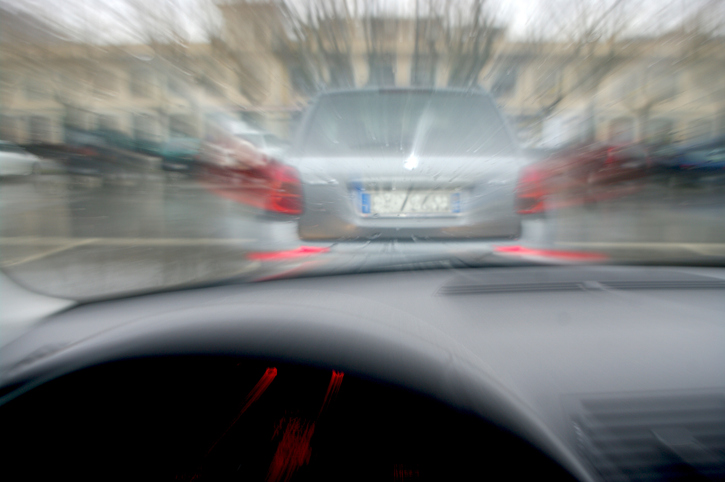
Tailgating Accidents in Fort Myers: A Driver’s Guide to Proving Fault
A client comes to my office, often still wearing the soft collar from the ER, and walks me through a story that ends the same way every time — they were stopped or slowing for traffic, and the next thing they remember is being shoved forward into the steering wheel. The driver behind them apologized at the scene, the police wrote up a report, and a week later the at-fault carrier is suddenly suggesting maybe my client braked too hard, or stopped for no reason, or had a broken taillight.
That pattern is not an accident. Florida law gives the driver who was rear-ended a real head start on proving fault, but that head start is not a guarantee. The carrier on the other side knows the playbook, and so does our office. What follows is the straight version of how these cases actually work — what the statutes say, what we see day after day, and what a Fort Myers driver should do in the hours and days after impact.
What Florida law actually says about tailgating
The core statute is §316.0895, Florida Statutes. It tells drivers they cannot follow another vehicle “more closely than is reasonable and prudent, having due regard for the speed of such vehicles and the traffic upon, and the condition of, the highway.” Plain English: leave enough room to stop. When a Lee County deputy or a Fort Myers patrol officer writes a citation for following too closely after a rear-ender, that citation is itself useful evidence, though it is not the end of the inquiry.
Three other Florida statutes do most of the heavy lifting in a tailgating injury case, and each one deserves a one-line plain-English unpacking before we go further:
- §768.81 — Modified comparative negligence. A jury assigns a percentage of fault to each driver, and your recovery is reduced by your percentage. As of the 2023 tort reform, anyone found 51% or more at fault recovers zero. That last part is new and matters: under the old pure-comparative rule, a driver 80% at fault still walked away with 20% of damages. No longer.
- §95.11(4)(a) — Statute of limitations. Two years from the date of the crash to file suit. The same 2023 reform cut the old four-year window in half. Anyone telling you “I have plenty of time” is going on a version of the law that no longer exists.
- §627.736 — PIP. Your own auto policy pays 80% of reasonable medical bills and 60% of lost wages up to $10,000, regardless of fault — but only if you treat with a qualified provider within 14 days. Miss the 14 days and that first $10,000 layer of coverage largely disappears.
- §627.727 — Uninsured Motorist. Florida does not require drivers to carry bodily injury coverage. UM on your own policy is what fills the gap when the at-fault driver cannot pay for the harm they caused.
- §316.066 — Crash report. Any injury, death, or vehicle damage of roughly $500 or more triggers a written long-form crash report. If officers do not investigate at the scene, the drivers must file a self-report within 10 days.
That is the legal scaffolding. The rear driver is presumed negligent in a Florida rear-ender, the injured driver has two years to file, PIP starts the medical clock at 14 days, and a jury can still write the whole recovery down to nothing if it places the injured driver at 51% or higher. Every tailgating case our firm handles lives inside that framework.
Rear-end crash patterns we see on Fort Myers roads
Most rear-enders that come through our office look like one of these. None of these are textbook fact patterns from a CLE — these are the calls we get on a Tuesday morning.
- The phone-in-the-lap rear-ender on Colonial Boulevard or Cleveland Avenue. Stop-and-go traffic at the lunch hour. The driver behind glances down at a text, looks up, and there is nowhere to go. The damage pattern on the bumpers tells the story before anyone says a word.
- The Daniels Parkway and Six Mile Cypress on-ramp surprise. Traffic is merging onto I-75 and the lead car has to brake for a slow truck. The trailing car was not paying attention to the ramp at all and assumed the lead would keep accelerating. We see this constantly during winter season.
- The McGregor Boulevard “I thought you were turning” hit. The lead driver slows for a turn into a side street or driveway without enough signal time. The driver behind misreads it and overcooks the close. These cases are harder — the at-fault carrier will push hard on a sudden-stop or no-signal defense.
- The Summerlin Road or Pine Island Road brake-and-chase rear-ender. Two drivers have been jockeying for position, one cuts in front of the other, and the driver who got cut off either brake-checks intentionally or panic-brakes. The aggression element makes these the messiest cases to sort out.
- The I-75 near Alico Road highway rear-ender. Traffic slows for a wreck up ahead, somebody at 75 mph does not slow with it, and a multi-car chain reaction follows. These are the ones with the worst injuries and the most carriers fighting over coverage.
The legal presumption favors the lead driver in all five, but the defenses look different in each one, and the evidence we need to lock in is different in each one. A McGregor turn-signal case lives or dies on whether somebody preserved the lead driver’s brake-light and turn-signal behavior on video. An I-75 chain case lives or dies on event-data-recorder downloads and the order of impacts.
Why tailgating cases are harder than they look
People assume a rear-ender is an easy case. Sometimes it is. Often it is not. A few of the complications we run into often enough that they should not surprise anyone:
The “sudden stop” defense. The driver behind tells the carrier that the lead car stopped for no reason. Florida courts have repeatedly held that the rear driver is responsible for maintaining a following distance that lets them stop for a reasonable hazard, including the lead car braking suddenly for a real obstacle. But “no reason” is a factual question, and a creative defense lawyer can drag the jury through whether the brake was justified.
The brake-light defense. If the lead car’s third brake light or one of the rear brake bulbs was burned out, the at-fault carrier will pin some percentage of fault on that. Under §768.81 as it now reads, even 10% or 20% of fault assigned to the injured driver writes the recovery down by that share. We routinely pull the bulb and inspect it before the body shop touches the car.
The pre-existing injury defense. Rear-enders cause whiplash, cervical strain, herniated discs, and post-concussive symptoms — all of which can be hard to distinguish from injuries the client already had. The carrier subpoenas decades of medical records and tries to argue that everything you feel today was already there. The fix is, contemporaneous medical documentation from a physician who treats trauma, not a chiropractor mill.
The low-property-damage defense. “Minor impact, soft tissue” — the carrier holds up a photo of an undamaged bumper and tells the adjuster the client could not possibly be hurt. Biomechanically that is wrong; modern bumpers are designed to absorb low-speed impact without deforming, which means the energy passes straight through to the occupant’s neck and back. Carriers know this. They argue it anyway.
The commercial-vehicle wrinkle. If the driver behind was on the clock — a delivery van, a contractor’s truck, a rideshare on a fare — the employer’s policy comes into play, and so do federal hours-of-service rules if it is a tractor-trailer. Bigger policies bring bigger fights, and bigger fights bring more aggressive defenses.
A Bonita Springs case that shows why employer liability changes everything
One case I think about often happened in Bonita Springs, just a few miles from our main office on Bonita Beach Road. A woman in her fifties was on foot at a job site, walking around the edge of an active construction area, when she was run over by a backhoe. The driver of the backhoe was distracted, did not check his blind spots, and reversed straight over her legs.
Her injuries were as severe as anything I have handled in thirty years. Crushing trauma to both lower extremities. Multiple emergency surgeries to install rods and screws to hold the bone together. Months of wound care with a focused physician afterward. There were stretches where the question was not whether she would walk again — it was whether she would keep both legs.
The defense wanted to make the case about the backhoe operator alone, hoping his individual liability policy would cap the exposure. We pushed past the operator and onto the construction company itself. The records showed they had not provided a spotter on a site where a spotter was the difference between life and death, and their operator training was thin enough that I could fit the entire program on two pages. The case resolved for a low seven-figure sum that gave our client the lifetime medical funding she needed.
I bring it up here because a tailgating case in Fort Myers can carry the same structural lesson: the obvious defendant is rarely the only defendant, and the bigger employer-side policies are often what actually pay for the harm.
What to do if you have been rear-ended in Fort Myers
This is the action list I give clients and family members when they call from the side of the road. None of these are theoretical — every one comes from cases we have actually handled.
- Stay in the car if traffic is still moving around you. On Daniels or Colonial at rush hour, getting out to swap information has gotten more than one person hit a second time. Pull onto the shoulder, hazards on, and wait for an officer.
- Call law enforcement and ask for a long-form crash report. §316.066 requires one in any injury rear-ender. Do not let a driver talk you into “just exchanging information” — if there is any chance you are hurt, you need the officer-written report.
- Photograph both bumpers in close-up, both rear brake lights, and the third brake light. If the at-fault carrier later argues a burned-out bulb, your phone photos taken before the tow truck arrived are the answer.
- Get the at-fault driver’s phone-in-hand status into the record. If you saw the phone in their lap or on the dash, tell the officer at the scene and ask that it be included in the narrative. Carriers settle distracted-driving cases on different terms than ordinary rear-enders.
- Treat with a real physician within 14 days. Not a marketing-driven walk-in pain clinic. A primary-care doctor, an ER follow-up, an orthopedist, a neurologist — whoever fits the symptoms. PIP under §627.736 disappears if you do not treat with a qualified provider in that window.
- Save the car as it sits until somebody has photographed it and pulled the event data recorder. Modern vehicles record speed, brake application, and seatbelt status in the five seconds before a crash. That recorder is often the cleanest piece of evidence in a disputed-fault case, and once the car is at the salvage yard the access window starts closing.
- Do not give a recorded statement to the at-fault carrier. Your own carrier, yes, with reasonable promptness. The other side, no — let a lawyer look at the file first. I have seen too many statements taken in the first 48 hours used to suggest the injured driver “felt fine” before symptoms set in.
- Pull the dashcam, the doorbell-camera, and the convenience-store-camera footage early. Most security DVRs overwrite themselves on a 24-to-72-hour loop. By the time a claim is opened in the normal course, the video is already gone.
Key Takeaways
- Florida presumes the rear driver was at fault. §316.0895 makes following too closely illegal, and Florida case law puts the burden on the rear driver to rebut the presumption. That presumption is your starting position — not your finish line.
- The two-year clock under §95.11(4)(a) is the new normal. After the 2023 reform, the negligence limitations period for a Florida car crash is two years from the date of the wreck. Anyone going on the old four-year rule is going on outdated law.
- PIP medical coverage requires treatment within 14 days under §627.736. Miss the 14-day window and the first $10,000 layer of no-fault coverage largely walks out the door, even if your injuries were real.
- UM coverage is what saves an uninsured-driver rear-ender. Florida does not mandate bodily-injury liability, so §627.727 UM on your own policy is often the only meaningful source of recovery when a low-coverage or no-coverage driver hits you.
- Modified comparative negligence is real money. Under §768.81 as amended in 2023, any fault percentage the jury assigns to you reduces the recovery dollar for dollar, and 51% or above wipes it out entirely. That is why the brake-light photo, the dashcam, and the witness statements matter.
Frequently Asked Questions
Q1. Is the rear driver always at fault in a Florida tailgating crash?
Usually, but not always. Florida applies a strong presumption that the rear driver was following too closely under §316.0895, and most rear-end cases resolve on that presumption. The front driver can shift some or all of the fault by showing the lead car cut in suddenly, brake-checked, or had no working brake lights. Under §768.81 — Florida’s modified comparative negligence statute as amended in 2023 — if a jury puts the injured driver at 51% or higher, that driver recovers nothing.
Q2. How long do I have to file a Fort Myers tailgating injury claim?
Two years from the date of the crash, under §95.11(4)(a) as rewritten in March 2023. Before that reform the window was four years for most car wrecks. The change is permanent for any crash on or after March 24, 2023, and we have already seen a number of would-be clients miss the new deadline by months because they were going on outdated information.
Q3. Does my PIP cover medical bills if the tailgater hit me?
Yes — at least the first layer. §627.736 gives every Florida driver $10,000 in Personal Injury Protection that pays 80% of reasonable medical bills and 60% of lost wages regardless of fault, but only if you treat with a qualified provider within 14 days of the crash. Miss that window and PIP largely goes away. Bills above $10,000 and any pain-and-suffering recovery come from the at-fault driver’s bodily injury liability coverage.
Q4. What if the driver who hit me had no insurance?
This is where Uninsured/Underinsured Motorist coverage matters. Florida does not require drivers to carry bodily injury liability, so a meaningful share of rear-enders are caused by drivers with no BI at all. §627.727 lets you stack UM coverage from your own policy to pay for injuries the at-fault driver cannot. If you rejected UM in writing when you bought the policy, that rejection is hard to undo after the fact — but it is worth letting us look at the application.
Q5. Do I have to file a crash report after a tailgating accident?
If there is an injury, a death, a hit-and-run, a DUI suspicion, a commercial vehicle, or roughly $500 or more in vehicle damage, §316.066 requires a long-form crash report from a law-enforcement officer. If officers do not investigate at the scene, the drivers themselves must file a self-report within 10 days. Tailgating rear-enders almost always meet the damage threshold even when injuries seem minor at first.
Talk to Pittman Law Firm Before You Talk to Their Adjuster
If you were rear-ended by a tailgater on Daniels Parkway, Six Mile Cypress, McGregor Boulevard, Cleveland Avenue, Summerlin Road, Colonial Boulevard, Pine Island Road, or out on I-75 near Alico Road, the at-fault carrier has already started building a file. Our family would like the chance to build yours first. Call our office at 239-992-8259 for a free consultation. We work on contingency — there is no fee unless we recover for you.
About the Author

Three decades into his personal injury career in Fort Myers and across Lee County, David B. Pittman, Esq. continues to lead Pittman Law Firm, P.L., the firm he founded, representing injured clients across Lee and Collier Counties, with a particular focus on commercial-vehicle, complex-liability, and serious-injury cases. The firm’s Fort Myers presence handles a steady stream of serious-injury work along the Daniels Parkway, Six Mile Cypress, McGregor Boulevard, Cleveland Avenue, and Summerlin Road corridors, and along I-75 between Estero and Bell Tower.
After undergraduate work at The Citadel, The Military College of South Carolina, David earned his JD at the University of South Carolina School of Law. He is AV-Preeminent at Martindale-Hubbell and a member of the Multi-Million Dollar Advocates Forum.
David has held a Florida real estate broker license for twenty-five years, a credential that shapes how the firm reads the property side of premises cases. The firm handles personal injury cases across Lee and Collier Counties, serving Fort Myers, Bonita Springs, Naples, Cape Coral, Estero, and Lehigh Acres, with offices at Windsor Place in Bonita Springs (main) and Fort Myers (satellite). Call 239-992-8259 for a free consultation.
Disclaimer: The information provided on this page is for general informational purposes only and is not legal advice. Reading this article does not create an attorney-client relationship with Pittman Law Firm, P.L. Past results do not guarantee a similar outcome in any future case. Every case turns on its own facts. For advice about your specific situation, contact a licensed Florida attorney.