

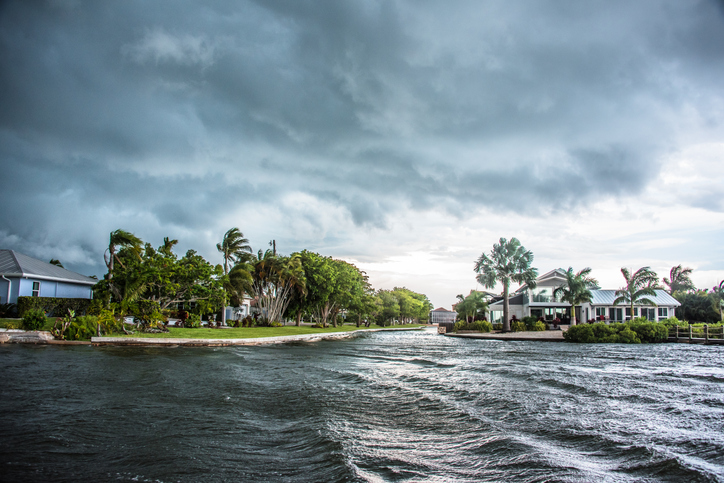
Why Car Crashes Spike When Southwest Florida Weather Turns
“The rain caused this” is the most common deflection in a Florida car-crash claim, and I can tell you after more than three decades of practice in Lee and Collier Counties that it almost never holds up the way the adjuster wants it to. Clients call from the side of the road, soaking wet, having already heard some version of that line from the other driver’s carrier. Florida law does not give a driver a pass for keeping their foot down when the road turns to glass.
Southwest Florida sees a real spike in crashes when the afternoon storms roll in off the Gulf. Anyone who has driven I-75 between Bonita Springs and Naples in a July downpour has seen it firsthand. But “the weather did it” is a story, not a defense. I want to walk through what the statutes actually say, what we see in our office when these cases come in the door, and what to do in the first hour after a rain wreck so that the at-fault driver’s carrier does not write you out of the case.
What Florida Law Actually Says About Weather-Related Crashes
Four Florida statutes do most of the heavy lifting in a weather case. None of them say “the rain wins.”
Modified comparative negligence — Florida Statute 768.81. In March 2023, Florida moved from pure comparative negligence to modified comparative negligence with a 50% bar. In plain English: a jury is allowed to assign a percentage of fault to each party, but if your share comes out at 51% or higher, you recover nothing. That is the rule that adjusters quietly aim for in a rain crash. If they can get the file to say you were 51% at fault for driving too fast for conditions, they pay zero. Our job is to keep that number down using the police report, the actual weather data, and the geometry of the wreck.
Statute of limitations — Florida Statute 95.11(4)(a). The same 2023 reform cut the negligence statute of limitations from four years to two. Anyone hurt in a Florida crash on or after March 24, 2023 has two years from the date of the wreck to file suit. People still tell me on the phone, “I have four years, right?” No. You have two. In a weather case where evidence gets stale fast, two years feels even shorter than it sounds.
Personal Injury Protection — Florida Statute 627.736. PIP is the $10,000 no-fault medical pool that every Florida auto policy is required to carry. It pays 80% of reasonable medical bills and 60% of lost wages whether the crash was the other driver’s fault, your fault, or nobody’s fault. The fourteen-day rule lives here too. If you do not get to a doctor within fourteen days of the wreck, PIP is gone. I have seen people lose the entire benefit because they thought they were “just sore” for a week and then their neck locked up on day sixteen.
Uninsured Motorist coverage — Florida Statute 627.727. UM is the coverage that pays your bodily-injury damages when the other driver has no insurance or not enough of it. Florida is full of drivers carrying the bare minimum, and in a serious-injury rain crash that minimum disappears in a single ER visit. UM follows the injured person, not the car, and it stacks if you bought the stacking option. We use it on weather cases all the time.
None of these statutes contain the word “weather.” That is the point. The law looks at what each driver did, not what the sky did.
Rain wrecks in SWFL — the six shapes they take
After three decades of these cases coming through our office, the rain wrecks fall into a handful of recurring patterns. The factual details change. The shapes do not.
- The first-ten-minutes hydroplane. The road has been dry for two weeks. The first hard rain hits at 3:45 in the afternoon. The oil that has been sitting on the asphalt floats up to the surface and turns the pavement into something close to sheet ice. The driver behind you was already too close, brakes too late, and rear-ends you on Bonita Beach Road or somewhere along US-41.
- The I-75 wall of water. A summer cell drops a curtain of rain across the interstate between Estero and the Naples exits. Visibility goes from a quarter mile to fifty feet in under a minute. Drivers who do not back off the throttle pile into the slowing traffic ahead of them. These are almost always rear-end chains and almost always serious.
- The driveway pull-out in fog. Early-morning fog along the Tamiami Trail and in low-lying areas around Estero and North Naples. A driver coming out of a side street or a parking lot misjudges the gap because they cannot see clearly and pulls into a vehicle that had the right of way.
- The intersection light-loss. Heavy rain combined with a power flicker takes a traffic signal dark. Drivers treat the intersection inconsistently — some as a four-way stop, some as their right of way — and a T-bone follows.
- The standing-water single-car. A driver hits a pocket of standing water at speed on a road that drains poorly. The car aquaplanes, leaves the roadway, and hits a tree or a pole. These are the cases where PIP and UM-stacking become the entire case, because there is no other driver to pursue.
- The commercial driver who did not slow down. Box trucks, delivery vans, and tractor-trailers on a deadline. Drivers under route pressure who keep doing the same speed in a downpour they would do in sunshine. The size of the vehicle plus the loss of traction plus the schedule equals a serious wreck.
The sixth pattern, the commercial driver, is the one that has produced some of the largest recoveries our office has handled. It is also the one carriers fight hardest, because the policy limits are higher and the dollars matter more.
Four reasons a rain crash is harder to litigate than it looks
A rain crash looks like an ordinary car wreck to the client. From the inside of the case file, it is not.
First, the evidence dies quickly. The puddle that aquaplaned the car is gone by sunset. The skid marks wash out. The intersection camera footage that would have shown the at-fault driver blowing through a flooded crosswalk usually gets overwritten within thirty days, sometimes faster. If we do not send a preservation letter inside the first week, the most useful frames are gone.
Second, the comparative-fault fight gets harder because there are two factual layers, not one. In a sunny-day rear-end, there is the wreck itself and that is it. In a rain rear-end, the carrier wants to argue about the wreck AND about whether you should have been on the road at all, whether your tires were good enough, whether you had your headlights on, whether you were driving “too fast for conditions” even at a posted speed under the limit. Every one of those side arguments is an attempt to push you over the 51% line under Florida Statute 768.81.
Third, the medical picture is often delayed. The bracing impact of a rain-slick rear-end produces a lot of soft-tissue injuries that do not announce themselves for a day or two. The shoulder you used to brace against the steering wheel feels stiff on day one and torn on day four. By then PIP wants documentation, the carrier wants a recorded statement, and the client is trying to make decisions while in pain. This is exactly the moment to slow down and call a lawyer before the recorded statement, not after.
Fourth, the “act of God” argument. Carriers like to float this in rain cases because it sounds intuitive to a juror. It rarely survives a real liability analysis. An act of God in Florida law is something the defendant could not have anticipated or guarded against. A summer thunderstorm in Southwest Florida between June and November is not unforeseeable. It is the most foreseeable weather event we have.
What we did for an Estero client
One we worked recently illustrates the commercial-driver pattern and how these claims actually play out from the carrier’s side. A branded delivery van was leaving a shopping center on US-41 near Coconut Point Mall in Estero. The driver was on a route, behind schedule, and pulled out of the lot directly into the path of our client, who was coming north on the Trail with the right of way and no opportunity to stop.
The bracing impact tore our client’s rotator cuff. The shoulder needed arthroscopic repair and a long course of occupational therapy. Our client lost months of normal use of the arm, could not work in their usual capacity during recovery, and went through the kind of physical rehab that resets a person’s whole year.
The defense started where defense always starts in these cases — the weather. It had been raining off and on that afternoon. The van driver’s company wanted the file to read as a wet-pavement issue. We pulled the precipitation data for that block of US-41 for the half-hour window around the wreck, the police report, and the witnesses who saw the van come out of the lot without yielding. The story that emerged was not a weather story. It was a route-pressure story. A driver who would have pulled the same maneuver on a dry day, with the rain serving only to make the consequences worse.
The case settled for a high-value recovery against the corporate carrier’s commercial policy. The settlement covered the surgery, the therapy, the lost income, and the pain-and-suffering component that a torn shoulder in the dominant arm justifies.
What to Do if You Are in a Rain Crash in Southwest Florida
The first hour after a weather crash is where most of the evidence is either captured or lost. Here is the order I want clients to think in. None of this is theoretical — it is what I have watched work and not work over thirty years.
- If you can move safely, move. Get the car off the travel lane onto the shoulder. Rain crashes turn into multi-vehicle pileups when the first wreck blocks the lane and the next driver cannot see it in time. Hazard lights on.
- Call 911 and stay until the deputy or trooper arrives. Under Florida Statute 316.066, the long-form crash report is required in any wreck with injury or significant property damage, and that report is the single most useful document in your file later.
- Photograph the standing water and the surface. Not just the cars. The puddle. The drainage. The sheen of oil on the wet asphalt. The angle of the sky. The same intersection in dry weather two days later will look completely different, and the contrast helps a jury understand what your driver was looking at.
- Note the exact minute. Weather radar archives are time-stamped to the minute. If we know your wreck happened at 3:47 PM at a given mile marker on I-75, we can pull the radar return for that exact cell and show the jury how hard it was raining. “Around 4 o’clock” is not enough.
- Get the names and phone numbers of two witnesses. Independent witnesses are worth ten times what the parties say. People scatter. Get the contact info before they do.
- Do not give a recorded statement to the other driver’s carrier. Their adjuster will call you within twenty-four hours and sound friendly. The recording is being made for the file, and any “I might have been going a little fast” you say becomes the cornerstone of the comparative-fault argument later.
- See a doctor inside fourteen days. Even if you feel fine. The fourteen-day window under Florida Statute 627.736 closes whether or not you knew about it. Urgent care counts. An emergency room visit counts. A “I’ll see how I feel” approach does not.
- Save the gear. The shoes you were wearing, the seat-belt that may have stretched, the child seat if a child was in the car. None of it should go in the trash.
- Call a lawyer before you call the carrier back. The order matters. The first call you make should be the one where you ask questions. The first call you give a statement on should be the one your attorney sits in on.
Key Takeaways
- The rain almost never wins a Florida liability case on its own. The law looks at what each driver chose to do for the conditions, not at the conditions themselves.
- Florida Statute 768.81 puts a 50% bar on recovery. If the carrier can push you to 51% at fault, they pay zero. That is the real game in a weather claim.
- The two-year statute of limitations under Florida Statute 95.11(4)(a) applies to crashes on or after March 24, 2023. Anyone still operating on the old four-year assumption is at risk of losing the case before it is filed.
- PIP under Florida Statute 627.736 pays no-fault up to $10,000 if you get to a doctor inside fourteen days. UM under Florida Statute 627.727 is the safety net when the at-fault driver has no real coverage.
- The evidence in a rain wreck disappears fast. Photographs of the surface, the exact minute of the crash, the names of two witnesses, and an early preservation letter to any business with a camera nearby are the four items that change cases.
Frequently Asked Questions
Does rain make my Florida car accident an act of God that nobody pays for?
Almost never. Florida courts ask whether each driver behaved reasonably for the conditions. A driver who kept doing sixty in a downpour on I-75 is not absolved by the rain. The weather is part of the story, not the whole story, and the at-fault driver and their carrier are still on the hook for the choices they made.
What if the insurance adjuster says I was partly at fault because I was driving in the rain?
Under Florida Statute 768.81, as amended in 2023, if you are found more than 50% at fault you recover nothing. That is why adjusters push the comparative-fault number up after a rain crash. We push back with the police report, the weather data for that exact location and minute, and witness testimony about how the other driver was actually behaving.
How long do I have to file a lawsuit after a Florida weather-related crash?
For most negligence claims arising after March 24, 2023, the deadline is two years under Florida Statute 95.11(4)(a). It used to be four. People still operate on the old four-year assumption, then call us at month thirty and find out their case is already gone. Treat the two-year clock as real.
Will my PIP cover me if I lose control on a wet road by myself?
Yes. Florida Statute 627.736 makes PIP no-fault, which means it pays 80% of reasonable medical bills and 60% of lost wages up to the $10,000 cap regardless of how the crash happened, including a single-car hydroplane on US-41. You still have to get to a doctor within fourteen days, or the benefit is gone.
What if the driver who hit me in the storm has no insurance?
This is where your own uninsured-motorist coverage under Florida Statute 627.727 becomes the case. UM follows you, not the car, and it pays the bodily-injury damages the other driver should have covered. If you carry it, we use it. If you stacked it across vehicles, we use the stack.
If You Have Been Hurt, Call Us
If you were hurt in a rain crash anywhere across Lee or Collier Counties — on I-75, on the Tamiami Trail, on Bonita Beach Road, in a Naples parking lot, on a North Fort Myers side street — our office wants to hear from you before the at-fault driver’s carrier writes the story for you. The call is free. The case is on a contingency. There is no fee unless we recover for you.
Call Pittman Law Firm, P.L. at 239-992-8259 for a free consultation. I and the rest of the team will sit down with you, look at what you have, and tell you straight whether we think there is a case.
About the Author

Pittman Law Firm, P.L., founded by David B. Pittman, Esq., has built thirty-plus years of personal injury practice across Southwest Florida. The firm represents injured clients across Lee and Collier Counties — from the firm’s main office at Windsor Place on Bonita Beach Road through Fort Myers, Naples, Estero, Cape Coral, and Lehigh Acres, with a sustained focus on serious-injury auto and complex-liability cases.
Two South Carolina institutions shaped David’s path: The Citadel, The Military College of South Carolina, for undergraduate, and the University of South Carolina School of Law for his JD. He is AV-Preeminent at Martindale-Hubbell and a Multi-Million Dollar Advocates Forum member.
David has held a Florida real estate broker license for twenty-five years, a credential that shapes how the firm reads the property side of premises cases. The firm handles personal injury cases across Lee and Collier Counties, serving Fort Myers, Bonita Springs, Naples, Cape Coral, Estero, and Lehigh Acres, with offices at Windsor Place in Bonita Springs (main) and Fort Myers (satellite). Call 239-992-8259 for a free consultation.
This article is for general information only and is not legal advice. Reading it does not create an attorney-client relationship with Pittman Law Firm, P.L. Every case turns on its own facts. If you have questions about a specific situation, contact our office for a free consultation. Attorney advertising.