

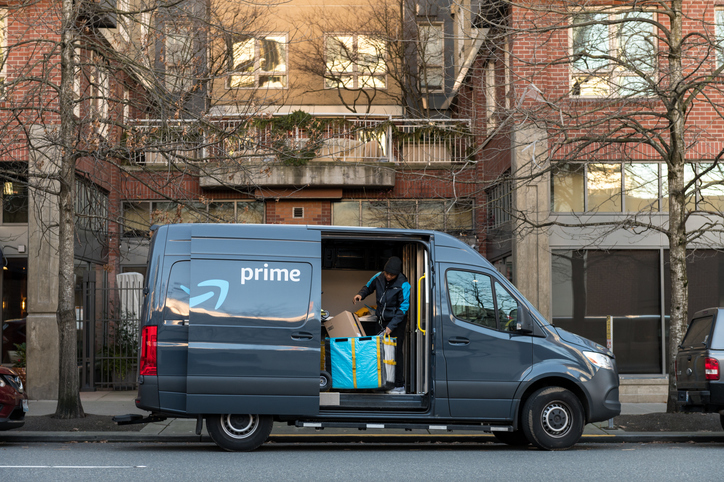
What to Do After an Amazon Driver Accident in Fort Myers
A client calls our office, says a blue Prime van clipped them on Daniels Parkway or on Six Mile Cypress, and the next sentence is “Is this an Amazon claim or a regular car-accident claim?” The answer is that it can be either, both, or neither, depending on three or four facts that nobody at the scene thinks to write down.
The Amazon piece is rarely the hardest part. The hard part is the first 72 hours: knowing which carrier to put on notice, which video system to preserve, and which version of the driver’s employment relationship the defense is going to argue. This post walks you through what Florida law actually says, the patterns we see in our Fort Myers cases, and what to do if the van that hit you had a smile on the side.
What Florida law actually says about Amazon-driver wrecks
There is no special “Amazon statute.” A delivery-van crash is a Florida motor-vehicle negligence case, and the same rules apply that apply to any other collision. Three pieces of Florida law usually do the heavy lifting.
The two-year filing deadline. When the legislature passed HB 837 in March 2023, the statute of limitations for negligence dropped from four years to two. That deadline is codified at Florida Statutes § 95.11. In plain English: from the day of the crash, you have two years to file suit, and that clock does not stop because you are still in treatment, still negotiating, or still waiting on Amazon to identify which DSP employed the driver. Miss it and the case dies.
Modified comparative negligence (the 50-percent bar). The same 2023 reform changed how fault is split. Under § 768.81, if a jury finds you more than 50 percent at fault for the crash, you recover nothing. In plain English: if the Amazon driver ran a red light at Cleveland Avenue and Colonial Boulevard but you were doing ten over, the jury could still let you recover, as long as your share of the blame stays at half or under. The defense’s whole playbook on a delivery-van case is built on pushing your fault percentage above that 50-percent line.
Florida PIP and the fourteen-day rule. Florida is still a no-fault state for medical bills. Your own auto policy’s Personal Injury Protection pays the first ten thousand dollars of medical and lost-wage expenses, no matter who caused the crash. But under § 627.736, you have to be seen by a qualifying provider within fourteen days of the crash or PIP pays nothing. That is the single deadline I see clients miss most often. If your shoulder feels “off” three days after a delivery van rear-ended you on Summerlin Road, that is a fourteen-day-rule problem; get seen.
Four coverage buckets for Fort Myers Amazon crashes
Every Amazon-driver case we handle out of our Fort Myers office sorts into one of four buckets. The bucket determines whose insurance pays.
- Blue Prime van, DSP driver, on a route. This is the most common pattern in town. The van is owned or leased by a Delivery Service Partner, the driver is on the clock delivering packages, and the DSP carries a commercial auto policy that Amazon requires. Coverage is usually generous, often a million dollars, but the named insured is the DSP, not Amazon.
- Personal car, Amazon Flex driver, package in the back. Amazon Flex is the gig program that uses contractors in their own cars. While a package is actively in the vehicle for delivery, Amazon’s contingent commercial policy applies, with up to a million dollars in liability. Once the last package is dropped off, that coverage shuts off and the driver’s personal policy is all that is left.
- Personal car, Amazon Flex driver, off the clock. If the driver was running personal errands or driving home after their last drop, you are dealing with personal auto coverage and Florida minimum limits, which are often inadequate for a serious injury. Underinsured motorist coverage on your own policy becomes the case.
- Branded subcontractor (USPS, OnTrac, third-party freight). Sometimes the van says Amazon but the driver works for a logistics company that subcontracts to Amazon. Layered policies; layered arguments. These are the ones where a preservation letter and a fast records request matter most.
What makes these delivery-van cases hard to settle
From the outside, an Amazon claim sounds simple. Big company, big insurance, deep pockets. Inside the file it is messier. A few of the practical complications we run into every month:
The “who employs the driver” fight. Amazon’s first move on a DSP claim is to argue that the driver works for a contractor, not Amazon, and that Amazon owes nothing. Florida courts look at the actual control: who sets the route, who scores the safety metrics, who fires the driver. The deeper that control runs, the stronger the joint-liability argument. None of that fight happens unless we preserve the right records early.
Video that overwrites itself. Most blue vans run a Netradyne or Lytx system that captures the cabin, the road, and the driver’s eyes. The retention window is short. If we are not retained inside the first week, the footage of the crash on McGregor Boulevard is often already gone. Our first written demand on a DSP case is always a preservation letter that lists, by stop ID, every recording we want held.
Telematics and route data. Every blue van and every Flex car pings GPS data on a one- or two-minute interval. We can usually reconstruct exact speed, exact braking, and exact stops. That data sits on Amazon’s servers and we have to ask for it in writing before it ages off.
Cargo physics. A loaded Prime van can weigh nine to ten thousand pounds. When that mass hits a sedan at thirty miles an hour at the light on Cleveland Avenue, the energy transfer is closer to a commercial truck wreck than a fender bender. Soft-tissue injuries that an insurance adjuster wants to call minor very often turn into cervical disc cases six weeks later. That is not opinion. That is what we see in our case files.
A Bonita Springs truck claim, and what it took to settle it
A Bonita Springs woman was severely injured when a negligent equipment operator ran a piece of heavy machinery over her — the kind of mass and force that resembles what a loaded commercial vehicle can do to a passenger car. The case required documenting the operator’s failure to check the path of travel before moving. We built the negligence argument from the physical evidence and the operator’s own account. The case settled for $1.25 million.
I think of that case when a Fort Myers client describes the weight of a Prime van and says “it was just a delivery truck.” Commercial-vehicle cases move faster, involve better-insured defendants, and get taken more seriously in litigation when the size and weight of the vehicle are front and center in the damages analysis. Get the van’s specs into the file early.
What to do if an Amazon driver hits you on a Fort Myers road
Here is the short list, in the order I would do it myself.
- Call 911 from the scene, even on a low-speed hit. A Fort Myers Police or Florida Highway Patrol report locks in the van’s license plate, the DSP’s name on the side panel (if any), and the driver’s identification. Without the report, finding the right insurance carrier can take weeks.
- Photograph the van from every angle, including the DOT number and any small QR-style sticker near the rear door. Those stickers identify the DSP. I have had cases where the carrier denied the van was ever in Fort Myers, and a single photo of the sticker ended that argument.
- Do not give a recorded statement to anyone but the police. Amazon’s claims office, the DSP’s insurer, and sometimes a third-party adjuster will all call within 48 hours asking for “just a quick recorded summary.” Politely decline until you have talked to a lawyer.
- See a doctor inside 14 days. Whatever the injury, even if you think you are fine, the PIP statute requires it. Walk-in urgent care counts. ER counts. Your primary care physician counts. Not seeing anyone in 14 days zeroes out the no-fault portion of the claim.
- Keep the gear and the parts. If your bumper was replaced, ask the body shop to hold the old one. If your child seat was in the car, do not throw it out, even if it looks fine. Crash forces on a car seat are sometimes the strongest piece of evidence we have about the speed of the hit.
- Pull your own declarations page. Know whether you have UM coverage and how much. If the Amazon driver was off the clock in a personal car with state-minimum limits, your own UM may be the only meaningful coverage in the file.
- Call a lawyer inside the first week. Not because we want the file early, but because the video preservation letter has to go out before Netradyne overwrites the footage. Past about ten days, the recording of the crash on Pine Island Road or I-75 near Alico Road is gone for good.
Key Takeaways
- Florida’s deadline to sue after an Amazon-driver crash is now two years from the date of the wreck, not four.
- Whose insurance pays depends on three facts: was it a blue DSP van or a personal car, was the driver on a route, and was a package in the vehicle.
- PIP requires medical treatment inside 14 days of the crash; miss that and your own no-fault benefits zero out.
- Blue Prime vans run cabin and road cameras that overwrite themselves within days; a preservation letter has to go out fast.
- The 50-percent bar on modified comparative negligence makes early fault investigation matter more than it used to.
Frequently Asked Questions
Whose insurance pays after an Amazon delivery driver hits me in Fort Myers?
It depends on the driver’s status. Amazon Flex drivers using personal cars are covered by Amazon’s commercial policy, which carries one million dollars in liability while a package is in the car. Drivers working for a Delivery Service Partner (those blue Prime vans) fall under the DSP company’s commercial policy. An off-duty driver running personal errands falls back to personal auto coverage. Your own PIP pays the first ten thousand in medical bills regardless of fault.
Can I sue Amazon directly after a delivery van crash?
Sometimes yes, often no. Amazon argues that DSP drivers are employed by an independent contractor, not Amazon, and tries to push the claim onto the DSP’s policy. Florida courts look at the actual relationship: routing software, branded uniforms, route audits, performance metrics. When those factors point to control by Amazon, joint liability becomes a real argument.
What is the deadline to file a claim after an Amazon driver wreck in Florida?
Under the 2023 Florida tort reform, you have two years from the date of the crash to file suit for negligence. Wrongful death is also two years. Property damage claims run four years. Notice letters to the carrier should go out long before any of those deadlines, since commercial insurers move slowly and evidence on a delivery van disappears fast.
Does Amazon really have dash cam footage of the crash?
Most of the blue DSP vans run a multi-camera system called Netradyne that records the road, the cabin, and the driver’s face. Footage is usually retained for a limited window, then overwritten. We send a preservation letter the same week we are retained, asking the DSP and Amazon to hold all video, telematics, and route data tied to that stop.
What if the Amazon driver was using their personal car and was off the clock?
Then you are likely dealing with their personal auto policy, which in Florida often means low minimum limits. That is when underinsured motorist coverage on your own policy carries the case. If you do not know whether you have UM, pull your declarations page or call us and we will read it for you.
Talk to a Fort Myers Attorney Who Has Worked These Cases
If a blue Prime van or an Amazon Flex driver hit you anywhere from McGregor Boulevard to Daniels Parkway to I-75 near Alico Road, our office handles the carrier, the DSP, and the video preservation while you focus on getting better. Call Pittman Law Firm, P.L. at 239-992-8259 for a free consultation. There is no fee unless we recover for you.
About the Author

Pittman Law Firm, P.L., founded by David B. Pittman, Esq., has handled personal injury cases in Fort Myers and across Lee County for more than thirty years, representing injured clients across Lee and Collier Counties, with a particular focus on commercial-vehicle, complex-liability, and serious-injury cases. The firm’s Fort Myers presence handles a steady stream of serious-injury work along the Daniels Parkway, Six Mile Cypress, McGregor Boulevard, Cleveland Avenue, and Summerlin Road corridors, and along I-75 between Estero and Bell Tower.
After The Citadel, The Military College of South Carolina, David took his JD from the University of South Carolina School of Law and built a personal injury practice that now carries AV-Preeminent recognition with Martindale-Hubbell and a membership in the Multi-Million Dollar Advocates Forum.
David has held a Florida real estate broker license for twenty-five years, a credential that shapes how the firm reads the property side of premises cases. The firm handles personal injury cases across Lee and Collier Counties, serving Fort Myers, Bonita Springs, Naples, Cape Coral, Estero, and Lehigh Acres, with offices at Windsor Place in Bonita Springs (main) and Fort Myers (satellite). Call 239-992-8259 for a free consultation.
Attorney advertising. The information on this page is for general informational purposes only and is not legal advice. Reading or contacting our office does not create an attorney-client relationship. Every case turns on its own facts; prior results do not guarantee a similar outcome.