

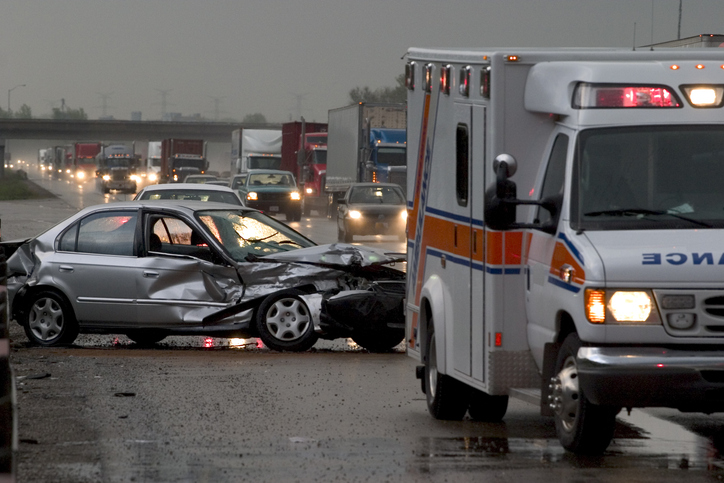
Why Florida Ranks Third in U.S. Highway Fatalities — A Lee County Attorney’s Read on the Numbers
Florida ranks third in the nation for highway deaths. No single thing earns that spot. It is a stack of factors, and most of them are visible from any morning commute on I-75 through Lee and Collier Counties: drivers who never registered insurance, tourists who do not know the roads, distances that invite speed, and a state that keeps adding cars faster than it adds safe road. The question usually reaches me from a family member who has just read a news article and is trying to understand how their loved one ended up in a trauma bay.
I am not interested in reciting headline statistics for their own sake. What matters to a family is what those numbers mean for a claim: who the at-fault driver tends to be, what coverage is actually there to collect, what Florida law lets a family recover, and how a deadline most people have never heard of can quietly close the door. That is what this piece is about.
Behind every number on that list is a family. We represented one after a client was killed in a car accident, the kind of crash that becomes a single tick mark in a state fatality report. The case settled for $1 million. No settlement undoes that loss, but it is the only accountability the civil system can offer.
What Florida law actually says about a fatal or catastrophic highway crash
Before getting into the why, it helps to lay out the legal frame our firm works inside on these cases. Four statutes do most of the heavy lifting.
Modified comparative negligence — §768.81, Florida Statutes. Florida changed this rule in March 2023. If a jury finds the injured driver more than 50% at fault, the claim is barred entirely. Under the old rule, a 70%-at-fault plaintiff could still recover 30% of damages. Under the new rule, that same plaintiff walks away with nothing. In plain English: the fault percentage is no longer just a discount on the verdict. It is now a switch that can shut the case off.
Statute of limitations — §95.11(4)(a). The same 2023 tort reform cut the deadline for negligence claims from four years to two. For any Florida highway crash on or after March 24, 2023, you have two years from the date of the crash to file suit. We have already turned down good cases because a family came to us at month twenty-six and the clock had run.
Personal Injury Protection — §627.736. Florida is a no-fault PIP state. Every Florida-registered private vehicle is required to carry $10,000 in PIP, which pays 80% of reasonable medical bills and 60% of lost wages up to that cap, regardless of fault. In a true catastrophic crash, $10,000 is gone before the ambulance ride is fully billed, but the PIP rules still control how the early medical bills get paid.
Uninsured-motorist coverage — §627.727. Florida does not require most private drivers to carry bodily-injury liability coverage at all. Plenty of cars on I-75 between Estero and Naples carry only PIP and property-damage. When one of those drivers causes a fatal crash, the only meaningful insurance on the injured family’s side is often their own UM policy. That is the single most undervalued line item on a Florida auto policy, and the one we wish more clients had stacked higher before a crash ever happened.
The patterns we actually see on Florida highways
From our case files in Bonita Springs and Fort Myers, the fatal and near-fatal highway crashes tend to fall into a handful of shapes:
- Commercial-truck under-rides and T-bones on the I-75 corridor. Tractor-trailers running between Tampa and Miami make Lee and Collier Counties a heavy-truck pass-through. When a loaded rig fails to brake in time at an exit, the passenger car loses.
- Older-driver left-turns across US-41 / Tamiami Trail. A driver in their late seventies misjudges a gap, an oncoming car at 50 mph cannot stop, and the impact is squarely on the driver’s door. We have worked too many of these.
- Tourist rentals on unfamiliar interchanges. The exit pattern off I-75 onto Daniels Parkway, Alico, or Pine Ridge catches visitors who realize too late they are in the wrong lane. The last-second lane change rarely ends well.
- Rain-event multi-vehicle pileups. A summer cell drops visibility on the interstate to under a hundred feet in a minute. Drivers who do not slow down enter a wall of brake lights at speed.
- Impaired-driving wrong-way collisions. These cluster on divided highways late at night. The damage is consistently catastrophic because both vehicles are at highway speed and head-on.
- Distracted-driving rear-enders at construction-zone slowdowns. I-75 has been under some form of widening or resurfacing in our area for most of the last decade. A driver looking at a phone for three seconds at 70 mph covers a football field blind.
Each of these is its own case shape, with its own investigative path and its own insurance picture. They are not interchangeable, and treating them as one statistical lump is part of why the public-facing data can feel abstract.
Where wrongful-death cases get complicated
From the outside, a fatal highway crash with a clear at-fault driver sounds like a straightforward case. In practice, three things complicate almost every one of them.
First, the fault picture is rarely clean. The 2023 §768.81 change means any percentage we get assigned to our client matters in a way it never did before. Defense carriers know this, and they push hard to attach even a small percentage of fault (failure to brake sooner, following too closely, a seat belt argument) to chip the case toward that 50% line. We have to investigate the scene as if we are the ones being sued, because functionally the comparative-fault analysis runs both directions.
Second, the available coverage often does not match the damages. A traumatic brain injury that needs lifetime care can sit behind a $50,000 bodily-injury policy on the at-fault driver. The case then becomes a coverage-stacking exercise: at-fault liability, UM on the client’s own policy, any resident-relative UM, employer liability if the at-fault driver was on the job, product liability if a vehicle defect contributed. The work is in finding every layer.
Third, the medical proof on serious-injury and catastrophic cases is not what people expect. Orthopedic injuries show up on imaging. Mild and moderate traumatic brain injuries often do not. We routinely coordinate neuropsychological testing, day-in-the-life documentation, and treating-physician narrative reports to put the cognitive decline in front of a jury in a way the defense cannot wave off as subjective complaint.
A truck matter we took on in Naples
A case I think about often involved a client who was struck by a commercial truck on Immokalee Road in Naples. The truck T-boned the passenger side of our client’s vehicle at an intersection, and the impact left her with a traumatic brain injury and several broken ribs. She was the kind of client who could tell you what year she graduated college but could not hold the thread of a conversation for ninety seconds, and her family was the one who first noticed the change.
The carrier’s opening posture was that the cognitive complaints were soft and that any settlement should reflect the rib fractures only. That is a position we hear a lot on brain-injury cases. We put it to rest by building the cognitive picture properly: neuropsychological testing to document the deficits, a treating neurologist to anchor the diagnosis, and her husband and grown daughter to describe in plain terms what she could do before the crash and what she could not do after.
The case settled in the multi-millions just before trial. The settlement does not give the client back the version of herself she was before that intersection on Immokalee Road, and I have never pretended otherwise to a brain-injury client. What it does is fund the care, the home modifications, and the lost-earning-capacity gap for the rest of her life. That is the work.
What to do if you or a family member is in a serious Florida highway crash
The advice that follows is the same advice I give the families who call our office in the first 48 hours. None of it is theoretical. It is what I have watched move cases in the right direction over thirty years.
- Take the ambulance. Adrenaline masks brain and internal injuries for hours. If EMS offers to transport and you decline, the defense will use that record against you for the next two years. Go.
- Get the crash report number before you leave the scene. Under §316.066, the investigating officer must complete a written crash report on any injury or fatality crash. The number lets you and your lawyer pull the full report in ten days.
- Photograph the vehicles, the lane positions, the skid marks, and the weather, in that order. The tow truck arrives faster than anyone expects. After a recent I-75 corridor crash, the only useful liability evidence we had was a passing motorist’s dashcam, because the scene was cleared before our client’s family arrived.
- Write down the name and phone number of every witness who stopped. Troopers do not always get all of them into the report. A witness who was on the shoulder for ten minutes and then drove off is gone from the case forever unless someone wrote down their plate.
- Do not give the at-fault driver’s insurer a recorded statement. You are not required to under Florida law. Whatever you say in the first week (when you are concussed, grieving, or on pain medication) will be quoted back to you at deposition.
- Save the vehicle. Do not let the insurer total it and send it to auction until the black-box data has been downloaded. On a commercial-truck case, the electronic control module on the truck is often the most important piece of liability evidence in the file.
- Call a lawyer inside the first week, not the first month. The 2023 reform cut the deadline to two years, but the practical window for preserving evidence is far shorter than that.
Key Takeaways
- Florida’s third-place ranking on highway fatalities reflects a mix of high tourist traffic, heavy commercial-truck pass-through on I-75, an older driver base, and weather that turns dangerous within minutes; no one factor explains it.
- Since March 24, 2023, you have only two years to file a Florida negligence claim under §95.11(4)(a). The deadline used to be four. Families lose good cases to that change every month.
- Under §768.81, being found more than 50% at fault bars recovery entirely. The early scene investigation now matters more than it ever did.
- Florida does not require most private drivers to carry bodily-injury liability. Your own uninsured-motorist coverage under §627.727 is often the layer that actually pays on a serious crash.
- On catastrophic-injury cases (especially traumatic brain injury), the medical proof has to be built deliberately. Neuropsychological testing and treating-physician narratives are what move these cases past insurer skepticism.
Frequently Asked Questions
Why does Florida rank third in highway fatalities even though we have fewer people than California or Texas?
Florida packs a lot of variables into a small state — heavy seasonal tourist traffic, year-round retirement-age drivers, two interstates (I-75 and I-95) that funnel commercial trucks through population centers, and weather that turns from dry to torrential within an afternoon. The fatality count is a story about who is driving, where, and in what conditions, not just population.
Does Florida’s 2023 comparative-negligence change affect a fatal crash claim?
Yes, and it is one of the first things we look at. Under §768.81, if the injured driver is found more than 50% at fault, the claim is barred. That makes the early fault investigation — police report, scene photos, black-box data, witness statements — far more important than it used to be.
How long do I have to file a wrongful-death or injury claim from a Florida highway crash?
For crashes on or after March 24, 2023, you have two years from the date of the crash under §95.11(4)(a). The window used to be four years. We have already seen good cases lost to that shorter clock — please do not wait.
What is uninsured-motorist coverage and why does it matter on Florida highways?
Under §627.727, uninsured-motorist coverage pays you when the at-fault driver carries no liability insurance or not enough of it. Florida does not require bodily-injury liability for most private drivers, so on any given stretch of I-75 a meaningful share of the cars around you carry only PIP. UM coverage is the layer that protects you when their policy will not.
What should I do at the scene of a serious highway crash in Southwest Florida?
Get out of the travel lane if you can, call 911, accept EMS evaluation even if you feel okay, take photos before vehicles are moved, get the names of every witness who stopped, and ask the trooper for the crash report number under §316.066. Then call a lawyer before you call the other driver’s insurer. The first 72 hours shape the case.
If you have been injured on a Florida highway, talk to our firm
If you or someone in your family was hurt or killed in a crash on I-75, US-41, or any other Southwest Florida road, our office is happy to talk through the case with you. There is no charge for the call, and there is no fee unless we recover for you. Call 239-992-8259 for a free consultation, or reach us through dontgethittwice.com. We answer the phone, and we will tell you straight whether we think you have a case.
About the Author

Pittman Law Firm, P.L. operates across Southwest Florida under the direction of founder David B. Pittman, Esq., who has practiced personal injury law for more than thirty years. The firm represents injured clients across Lee and Collier Counties — from the firm’s main office at Windsor Place on Bonita Beach Road through Fort Myers, Naples, Estero, Cape Coral, and Lehigh Acres — with a particular focus on commercial-vehicle, complex-liability, and serious-injury cases.
Before founding Pittman Law Firm, P.L., David completed his undergraduate work at The Citadel, The Military College of South Carolina, and earned his JD at the University of South Carolina School of Law. He is AV-Preeminent rated at Martindale-Hubbell and a member of the Multi-Million Dollar Advocates Forum.
David has held a Florida real estate broker license for twenty-five years, a credential that shapes how the firm reads the property side of premises cases. The firm handles personal injury cases across Lee and Collier Counties, serving Fort Myers, Bonita Springs, Naples, Cape Coral, Estero, and Lehigh Acres, with offices at Windsor Place in Bonita Springs (main) and Fort Myers (satellite). Call 239-992-8259 for a free consultation.
Disclaimer: This article is for general information about Florida law and is not legal advice. Reading it does not create an attorney-client relationship with Pittman Law Firm, P.L. Every case turns on its own facts. The hiring of a lawyer is an important decision that should not be based solely on advertising. Past results do not guarantee a similar outcome in any future case.