

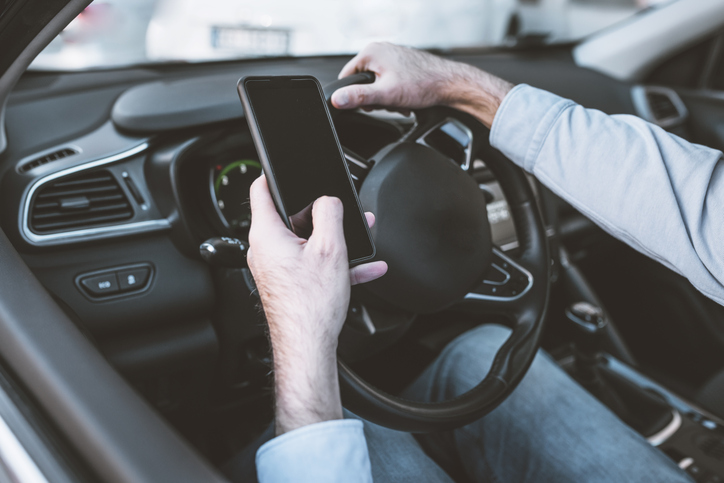
Texting While Driving: The Hidden Danger Threatening Fort Myers Pedestrians
Cleveland Avenue in Fort Myers runs long and straight, with signals spaced out every quarter mile or so. Drivers pick up their phones at red lights and have them back down — mostly — before the green. Mostly. When someone clips a pedestrian stepping off the curb at Colonial Boulevard, the phone tells a story the driver does not want told. The billing record, the app-activity log, the tower data — they reconstruct the seconds before impact with a precision that the driver’s “I didn’t see them” cannot answer.
People want to know whether the driver who hit them was looking at a phone, whether we can ever actually prove it, and whether it matters for their case. Yes, it matters. Yes, we can often prove it. And yes, it changes the shape of the case in ways most folks do not see coming. This piece walks through what Florida law actually requires, the patterns I see in our office, why these cases are harder than they look, and what to do in the days right after a crash.
What Florida law actually says about texting and pedestrian injuries
Three Florida statutes do most of the heavy lifting in a distracted-driving pedestrian case. None of them are complicated once you set the lawyer language aside.
Florida Statute 316.305 is the texting ban. Since 2019 it has been a primary offense, which means an officer can pull a driver over for that alone. Reading, typing, or sending text-based messages on a wireless device behind the wheel is the conduct it forbids. In plain English: a driver who was tapping out a text when they hit you was breaking the law before the crash even happened.
Florida Statute 316.130 is the crosswalk-yield law. Drivers must yield the right-of-way to a pedestrian crossing in a marked or unmarked crosswalk on the driver’s half of the road. Plain English: if you stepped into a crosswalk legally and a driver hit you, the burden in court usually starts on the driver to explain why.
Florida Statute 627.736 is the PIP statute. People are sometimes surprised to learn that the auto policy in their household covers them when they are walking, not just when they are driving. PIP pays up to 10,000 dollars in medical bills and lost wages regardless of who caused the crash. For a pedestrian with a fracture and an emergency-room admission, that money usually moves first.
Two more matter often enough to mention. Florida Statute 627.727 governs Uninsured and Underinsured Motorist coverage. When a distracted driver has only the Florida-standard 10,000-dollar bodily injury limit and your medical bills are five times that, your own UM coverage is often where the real recovery comes from. And under Florida’s modified comparative negligence rule, an injured pedestrian who is found 50 percent or less at fault can still recover, with damages reduced by their share. Plain English: even if a defense lawyer argues you were partly to blame, you are not automatically out.
Five distracted-driver pedestrian patterns we work through our office
Distracted-driving pedestrian cases tend to fall into a handful of recurring patterns. Recognizing the pattern early often determines how we investigate.
- The left-turning driver on a green arrow. A driver turns left through a signal, eyes coming back up from a phone, and clips a pedestrian who already had the walk signal. We see this on Cleveland Avenue and Colonial Boulevard often enough that I treat it as the default scenario until proven otherwise.
- The right-on-red driver looking the wrong way. A driver rolls to a stop, glances left for traffic, never looks right at the sidewalk, and accelerates into a person stepping off the curb. Phone in the lap during the stop is the common thread.
- The mid-block walker on a long corridor. Stretches of Pine Island Road and parts of Cleveland Avenue have city blocks long enough that pedestrians cut across mid-block. A distracted driver doing 45 in a 35 will not see them in time. The case turns on speed, lighting, and what the driver’s phone was doing.
- The parking-lot creep. Hotel and shopping-center lots along Summerlin Road and near the malls produce a steady volume of low-speed pedestrian strikes. People assume parking lots are not serious; a tibia broken at five miles per hour disagrees.
- The highway-shoulder pedestrian. Disabled-vehicle situations on I-75 near Alico Road and on the on-ramps produce some of the worst injuries we handle. A driver scrolling through a podcast app at 70 miles per hour is the recurring fact pattern.
What makes pedestrian texting cases harder than they look
From the outside, a texting-driver pedestrian case looks like the simplest kind of personal-injury matter. The driver was on the phone. The pedestrian had the right-of-way. What is there to argue? Plenty, as it turns out.
First, proving the phone use at the moment of impact is real work. Drivers rarely admit it. We send a preservation letter to the carrier within days, subpoena the billing and tower records, and pull the infotainment system from the vehicle when we can. Surveillance video from a nearby business along Cleveland Avenue or a traffic camera on Colonial Boulevard often supplies the second-by-second timeline. Without that legwork early, the proof evaporates.
Second, the defense almost always argues the pedestrian “darted out.” I have lost count of the number of times an insurance adjuster has used that exact phrase before any investigation has been done. The answer is almost always video, witness statements, and the physical geometry of the crash scene. A pedestrian who is struck on the far side of a four-lane road did not dart from anywhere; they walked, with time and visibility on their side.
Third, the policy limits are often a problem. Florida only requires 10,000 dollars in bodily injury coverage, and many drivers carry the legal minimum. A pedestrian with a fractured leg can easily run 80,000 dollars in medical bills before the first follow-up appointment. The case becomes a hunt for additional coverage — UM on the injured person’s policy, employer coverage if the at-fault driver was working, and sometimes umbrella policies the defendant has not disclosed.
Fourth, the comparative-fault argument never fully goes away. Even with strong liability proof, the defense will try to put 20 or 30 percent of the fault on the injured person for things like dark clothing or earbuds. Anticipating that argument from day one shapes how we document the case.
A case from North Naples
A few years ago we represented a woman who was crossing a North Naples street in a marked crosswalk during the afternoon. A driver making a left turn cut the corner and struck her. The first thing the driver told the responding officer was that she had “darted out” — a story I have heard so many times I now expect it.
Our client was not darting anywhere. She had a fractured tibia and fibula and was lying in the crosswalk. The orthopedic surgeon put a titanium rod down the length of the bone, and she spent months non-weight-bearing in a wheelchair, then on a walker, then on a cane.
The case turned on traffic-camera video. The footage showed our client stepping into the crosswalk with the walk signal, taking a normal walking pace, and getting hit by a driver who never looked up until the last second. We sent the video to the carrier with our demand. They tendered the full bodily-injury policy limits within weeks. We then pursued our client’s Underinsured Motorist coverage and recovered there as well, which is what allowed her to be made whole for the surgery, the lost income, and the long recovery.
The lesson I drew from that case, and the reason I think about it often, is that the early evidence does the work. If we had waited a month before going after the camera footage, it would have been overwritten. The driver’s “darted out” story would have been the only narrative on the table.
What to do if a distracted driver hits you on foot
The minutes and days after a pedestrian crash matter more than most people realize. From what I have observed in our practice, the people who recover the most fully tend to do a handful of things right.
- Stay where you are if you can. Pedestrians sometimes try to walk off a fracture because the adrenaline masks the pain. Wait for EMS. A delayed transport gives the defense room to argue your injuries were not serious.
- Ask the responding officer to note any phone activity. If the driver was holding a phone, or if you saw them looking down right before impact, say so on the record. That detail in the crash report drives the early investigation.
- Photograph the scene before it changes. Crosswalk paint, signal phasing, sight lines from the driver’s approach — these change with weather and construction. A bystander’s phone camera is fine.
- Get the names of witnesses, not just license plates. A neighbor who saw the driver scrolling through a phone before the turn is worth more than any single piece of paper in the file.
- Call your own auto insurer. Yes, even though you were walking. Your PIP and UM coverage live on your auto policy, and the carrier needs notice quickly.
- Save the clothing and shoes you were wearing. I have used this with several clients and noticed that the physical condition of a shoe — the scuff direction, the impact mark — sometimes settles a comparative-fault argument before it starts.
- Call us before you give a recorded statement. The at-fault carrier will call within days asking for one. Almost nothing good comes of those calls without preparation.
Key Takeaways
- Florida Statute 316.305 makes texting while driving a primary offense, and a violation is strong evidence of negligence in a pedestrian-injury claim.
- Under Florida Statute 316.130, drivers must yield to pedestrians in marked and unmarked crosswalks. A texting driver who fails to yield carries the weight of fault.
- PIP under Florida Statute 627.736 covers a pedestrian under their own household auto policy up to 10,000 dollars, even when they were not driving.
- Florida’s modified comparative negligence rule lets an injured pedestrian recover as long as their share of fault is 50 percent or less, though damages are reduced by that share.
- Phone records, infotainment data, and corridor cameras along Cleveland Avenue, Colonial Boulevard, and McGregor Boulevard are time-sensitive. Preserving them early often determines the outcome.
Frequently Asked Questions
What does Florida law say about texting and driving when a pedestrian is hit?
Florida Statute 316.305 makes it a primary offense to type, send, or read text-based messages on a wireless device while driving. In a pedestrian injury case, a violation is strong evidence the driver breached the duty of care owed under Florida Statute 316.130, which requires drivers to yield to pedestrians in crosswalks. Phone records, app data, and crash reports can all be used to prove the driver was distracted.
If I was crossing outside a crosswalk in Fort Myers, can I still recover?
Often yes. Florida uses modified comparative negligence, meaning a pedestrian who is partly at fault can still recover as long as their share of fault is 50 percent or less. A texting driver who was not watching the road carries significant fault, even when the pedestrian was mid-block. We have handled many cases where the driver’s phone use shifted the percentages in the injured person’s favor.
What insurance covers me if I am hit as a pedestrian by a distracted driver?
Under Florida Statute 627.736, Personal Injury Protection from your own household auto policy generally covers you up to 10,000 dollars in medical bills and lost wages even though you were on foot. Beyond that, the at-fault driver’s bodily injury liability applies, and your Uninsured or Underinsured Motorist coverage under Florida Statute 627.727 can fill the gap when their limits are too low.
How do you prove a driver was texting at the moment of the crash?
We move quickly to preserve cell-tower records, carrier billing data, and app activity logs through a subpoena or a preservation letter. We also pull the vehicle’s infotainment data, any nearby business surveillance video, and traffic-camera footage on corridors like Cleveland Avenue or Colonial Boulevard. A timeline that places a text or scroll inside the seconds around impact is often the case-turning piece of evidence.
How long do I have to file a pedestrian-injury claim in Florida?
For crashes occurring on or after March 24, 2023, Florida’s statute of limitations for negligence is two years. Wrongful-death claims also follow a two-year window. The clock generally runs from the date of the crash, with limited exceptions. Waiting risks losing evidence and witnesses, so we recommend calling us within days of a serious pedestrian crash, not months.
Talk to Our Firm
If a distracted driver hit you or someone in your family on a Fort Myers sidewalk, in a crosswalk on Cleveland Avenue, or anywhere across Lee or Collier County, the sooner you call, the more we can do. Phone records expire. Surveillance footage gets overwritten on a 7-to-30-day loop. Witnesses move on. Call 239-992-8259 for a free consultation. There is no fee unless we recover for you.
About the Author

David B. Pittman, Esq. is the founder of Pittman Law Firm, P.L., and has practiced personal injury law in Fort Myers and across Lee County for more than thirty years, with a sustained focus on pedestrian-injury and crosswalk cases. The firm’s Fort Myers presence handles a steady stream of serious-injury work along the Daniels Parkway, Six Mile Cypress, McGregor Boulevard, Cleveland Avenue, and Summerlin Road corridors, and along I-75 between Estero and Bell Tower.
David’s professional credentials include a JD from the University of South Carolina School of Law, an undergraduate degree from The Citadel, The Military College of South Carolina, an AV-Preeminent rating with Martindale-Hubbell, and membership in the Multi-Million Dollar Advocates Forum.
David has held a Florida real estate broker license for twenty-five years, a credential that shapes how the firm reads the property side of premises cases. The firm handles personal injury cases across Lee and Collier Counties, serving Fort Myers, Bonita Springs, Naples, Cape Coral, Estero, and Lehigh Acres, with offices at Windsor Place in Bonita Springs (main) and Fort Myers (satellite). Call 239-992-8259 for a free consultation.
Attorney advertising. The information on this page is for general educational purposes and is not legal advice. Reading this article does not create an attorney-client relationship with Pittman Law Firm, P.L. Past results do not guarantee a similar outcome in any future case. For advice about your particular situation, please contact our office directly.