

Hidden Weather Dangers That Cause Pedestrian Accidents in Fort Myers
Florida drivers are required to drive for the conditions they are actually in. The weather does not erase the duty of care. I can tell you from handling these cases in Lee and Collier Counties that a sudden squall on Cleveland Avenue at 7:45 a.m. is not a legal excuse — and the first thing the at-fault driver’s insurer says in almost every one of these claims, “well, the weather was bad — what could my driver do?”, is exactly the wrong frame. In a lot of storm cases, the weather sharpens the duty rather than diminishing it.
This post walks through what the law really says, the storm-season patterns we see in Fort Myers pedestrian work, why these cases are harder to settle than they look, and the practical steps we tell injured walkers and their families to take in the first week.
What Florida law actually says about weather and pedestrian right-of-way
Two Florida statutes do most of the heavy lifting in a pedestrian case, and the weather does not change either one of them.
The first is §316.130, Florida Statutes — the crosswalk yield duty. In plain English, when a pedestrian is lawfully in a crosswalk on the driver’s half of the road, the driver has to stop. If the pedestrian is close enough on the other half to be in danger, the driver still has to stop. Marked or unmarked, every leg of a normal intersection is a crosswalk under Florida law unless a sign expressly closes it. Rain does not waive that duty. Fog does not waive it. Glare from a low sun on Daniels Parkway at the end of the workday does not waive it.
The second is §627.736, Florida Statutes — the Personal Injury Protection (PIP) statute. If you live in a Florida household with an auto policy, your PIP follows you onto the sidewalk and into the crosswalk. After a pedestrian crash it pays 80 percent of reasonable medical bills up to the $10,000 limit, regardless of who was at fault. PIP is almost always the first money our injured pedestrian clients see, and it is the reason I tell people: get treated, do not wait, do not “tough it out” for two weeks because the policy clock starts ticking the day of the crash.
On top of those two, Florida’s modified comparative fault rule — passed in March 2023 — matters more than people realize in a weather case. If the injured pedestrian is more than 50 percent at fault, recovery is barred. At 50 percent or less, the case still goes forward, with the verdict reduced by the percentage of fault assigned to the pedestrian. That is why every weather-crash claim has to confront the question: was the pedestrian crossing legally, in a visible spot, doing what a careful walker would do?
One more piece worth knowing. Drivers in Florida are required to use their headlights in rain, fog, or smoke. Not optional. Not “if you feel like it.” That requirement comes from the same chapter of the traffic code, and we cite it in almost every storm-season case we open.
Fort Myers storm-season pedestrian patterns we see most
From the front desk to the back office, the storm-season pedestrian files in Fort Myers tend to fall into a handful of patterns. I keep an eye on them because the patterns drive how we investigate.
- The afternoon-squall rear-of-vehicle crossing. A driver pulls out of a strip-center lot off Summerlin Road into a sudden downpour, can barely see the rear window, and backs straight into a person walking behind the bumper. The driver insists “I never saw her.” Of course they didn’t. They were operating a vehicle they couldn’t see out of.
- The morning-fog approach to an unsignalized crosswalk. Heavy river fog along McGregor Boulevard near Edison & Ford Winter Estates can drop visibility to a few car lengths. A pedestrian in the crosswalk has the legal right of way, but a driver doing 40 mph in fog that thick has no way to honor it.
- The west-bound sun-glare crash on Colonial Boulevard or Daniels Parkway. Late afternoon, the sun sits right over the road, the driver’s visor is up, and the pedestrian on the shoulder or in the crosswalk disappears into a sheet of white light. This is one of the most underappreciated patterns we see, and it is the one juries understand the fastest because every juror has driven into a low Florida sun.
- The flooded-shoulder forced-detour. After a hard rain on Six Mile Cypress Parkway or near I-75 and Alico Road, the shoulder fills with standing water. Walkers step out into the active travel lane to get around it. A driver who isn’t expecting a person there strikes them. Whose fault is that? Usually shared — driver, road authority that didn’t maintain drainage, sometimes a property owner whose runoff is the actual source of the flooding.
- The parking-lot backup in a downpour. Big-box and grocery lots become free-for-alls in a storm. Drivers cut through marked walkways, back out without checking, and pedestrians sprint between rows to get out of the rain. Speed is low, but force on a hip or a knee at any speed is enough for a fractured pelvis or a torn meniscus. The case I describe below is one of these.
Each of these scenarios changes the proof we have to gather. A fog case lives or dies on the local weather record and the headlight question. A glare case lives on sun-angle calculations and dash-cam footage. A parking-lot case lives on the property design — striping, signage, speed bumps, drainage, lighting — and the lease language that allocates maintenance duty.
Pedestrian weather cases — why the insurer’s first answer is wrong
If you read the early demand letters we get from insurance carriers, you would think every Florida storm case is the pedestrian’s fault. The arguments are practiced. The driver’s vision was reduced. The pedestrian was wearing dark clothing. There was a closer crosswalk fifty feet away. The weather was “an act of God.”
None of that is the law. Florida courts have said for decades that a driver who chooses to operate a vehicle in conditions where they cannot see has chosen to drive blind. The duty to drive carefully is not suspended by a thunderstorm — it is heightened by one. When we sit across from an adjuster and they lead with the weather, we lead back with §316.130, with the headlight requirement, and with a simple question: at the moment of impact, what was the speed, and was that speed reasonable for what the driver could see?
The harder problem in these cases is evidence decay. Storm cases lose proof fast. The weather record at the nearest National Weather Service station is good but not exact for the corner where the crash happened. Surveillance video from the strip-center camera overwrites in seven to fourteen days. The puddle that forced the pedestrian into the travel lane is gone by sundown. Skid marks vanish in the next rain.
Our office sends a preservation letter — what lawyers call a spoliation letter — within seventy-two hours of being hired on a storm case. We ask the property owner to preserve camera footage. We ask the carrier to preserve the vehicle’s event data recorder. We order the granular weather data for the exact half-mile of road, not the airport four miles away. None of that happens on its own. It is the work we do quietly in the first week that decides a case eighteen months later.
The other thing that makes these cases harder is the comparative-fault posture. A juror sympathetic to the pedestrian still wants an explanation for what the pedestrian was doing. We owe our client the answer to that question — and we owe the carrier a record showing every reasonable thing the pedestrian did right. A statement taken too early, before the client has thought through the facts and before the medical picture is clear, almost always hands the insurer a comparative-fault argument we then have to spend a year clawing back.
One Fort Myers premises case worth noting
A case I think about when this topic comes up involved a woman struck in a high-traffic Fort Myers parking lot. She was walking back to her car in a hard afternoon rain. A driver was backing out of a row of spaces, never turned to look over his shoulder, and rolled straight into her. The impact knocked her down onto her right side on the wet asphalt. She felt her hip give before she hit the ground.
The injury was a fractured hip. She needed a full hip replacement — what the surgeons call an arthroplasty — and then a stretch of inpatient rehabilitation before she could weight-bear on the new joint. For a woman who had walked a couple of miles a day before the crash, that is the kind of injury that resets a life. The driver’s insurer led, predictably, with the rain.
What we did differently was add the property owner to the case. The lot had no marked pedestrian walkway from the storefront to the parking rows. No speed bumps. No signage telling drivers to expect walkers behind them. The drainage was poor enough that puddles forced people to take whatever path they could find. Twenty-five years of working with Florida real estate has given me a good eye for what a reasonably careful property owner is supposed to do on a commercial lot, and this one had not done it.
We resolved the matter for a confidential high-value settlement that covered the surgery, the rehab, the lost income, and a meaningful piece for the way her life had changed. The lesson I take from that file, and the reason I tell it here, is that the rain was not the cause of the crash. The driver and the property were the cause. The rain only made an already unsafe situation worse.
What to do if you have been hit as a pedestrian in bad weather
Some of these steps will sound obvious. Most are not, and they come from cases where I have watched a client either help or hurt their own claim in the first week.
- Get the rescue call on the record. Always call 911 from the scene, even if you think you can walk it off. The dispatcher logs the time, the weather, and the exact location. That log is one of the cleanest pieces of evidence we get.
- Photograph the puddle, the glare, the fog — whatever the weather did to the scene. If you can, have a friend take pictures from the driver’s approach line, not just from where you were standing. Approach-line photos are what win the visibility argument later.
- Save the clothes you were wearing. Do not wash them. If the carrier later argues you were in dark clothing, the actual jacket and shoes — in a paper bag, dry, in a closet — are worth more than any deposition answer.
- See a doctor the same day, even if the pain is “manageable.” Hip and pelvis fractures and TBIs can present quietly for the first twenty-four hours. PIP also requires initial treatment within fourteen days, and missing that window costs real money.
- Do not give a recorded statement to the at-fault driver’s insurer. Not the first day. Not the second. They will call. Be polite. Tell them you are getting your medical care underway and they can speak with your attorney once you have one. That single sentence has saved more cases in our office than I can count.
- Write down what you remember while it is fresh. Where you stepped off. Where you saw the car. Whether the headlights were on. The exact corner. Your own notes the same evening are usable months later.
- Call us before the property’s camera footage overwrites. Most retail systems hold video for seven to fourteen days, and some are shorter. The preservation letter has to go out fast.
Key Takeaways
- Florida drivers have a heightened duty in rain, fog, glare, and storm conditions — the weather is not a defense to negligence.
- PIP under §627.736 follows you on foot if your household has Florida auto insurance, and it pays first regardless of fault.
- Under §316.130, every leg of a normal intersection is a crosswalk unless a sign closes it, and drivers must yield to walkers lawfully crossing.
- Florida’s modified comparative fault rule bars recovery only if the pedestrian is more than 50 percent at fault, so most weather cases still go forward.
- Parking-lot weather cases often involve the property owner alongside the driver, especially where drainage, striping, and walkway design failed.
Frequently Asked Questions
Q1. If I was struck by a car during a Fort Myers rainstorm, is the driver still at fault?
Most of the time, yes. Florida drivers have a duty to adjust speed, following distance, and headlight use to the weather they are actually driving in. A sudden squall is not a free pass. If a driver was going the posted limit but the rain made that speed unsafe, a jury can still find them negligent. The weather is part of the analysis, not the end of it.
Q2. Does Florida’s no-fault PIP cover me as a pedestrian hit in bad weather?
If you live in a household with an auto insurance policy, your PIP under §627.736 follows you when you are on foot. It pays 80 percent of reasonable medical bills up to the policy’s $10,000 limit, and it pays regardless of who caused the crash. PIP is usually the first money in the door while the liability claim against the at-fault driver works its way forward.
Q3. Do I lose my case if I crossed mid-block during a storm?
Not automatically. Under Florida’s modified comparative fault rule, if you are 50 percent or less at fault, you still recover, with your award reduced by your share. Mid-block crossings hurt the case but rarely end it on their own, especially if the driver was speeding, distracted, or had no headlights on in a downpour.
Q4. How long do I have to file a Florida pedestrian-injury lawsuit after a weather crash?
For most pedestrian crashes occurring after March 24, 2023, the statute of limitations is two years from the date of the injury. Wrongful-death claims have their own two-year clock that runs from the date of death. Do not wait. Evidence in weather cases vanishes quickly, including video and the storm record itself.
Q5. Can the property owner be liable if I was struck in a Fort Myers parking lot?
Yes, and we see it often. A property owner who designs a lot with no marked walkways, no speed bumps, poor lighting, and flooded drainage creates conditions a reasonably careful owner would not. When the storm hits and a driver backs into a person who had no safe path through, the property owner can share fault alongside the driver under premises-liability law.
Talk to our office before the storm record disappears
If you or someone in your family was struck by a vehicle on foot — in a downpour off Cleveland Avenue, in a parking lot off Daniels Parkway, on a fogged-in stretch of McGregor Boulevard, or anywhere in Lee or Collier County — call our office. Storm cases reward early work. The weather record, the camera footage, and the scene itself fade within days. We will sit down with you, walk through what happened, and tell you straight whether we think there is a case.
Call Pittman Law Firm, P.L. at 239-992-8259 for a free consultation. There is no fee unless we recover for you.
About the Author
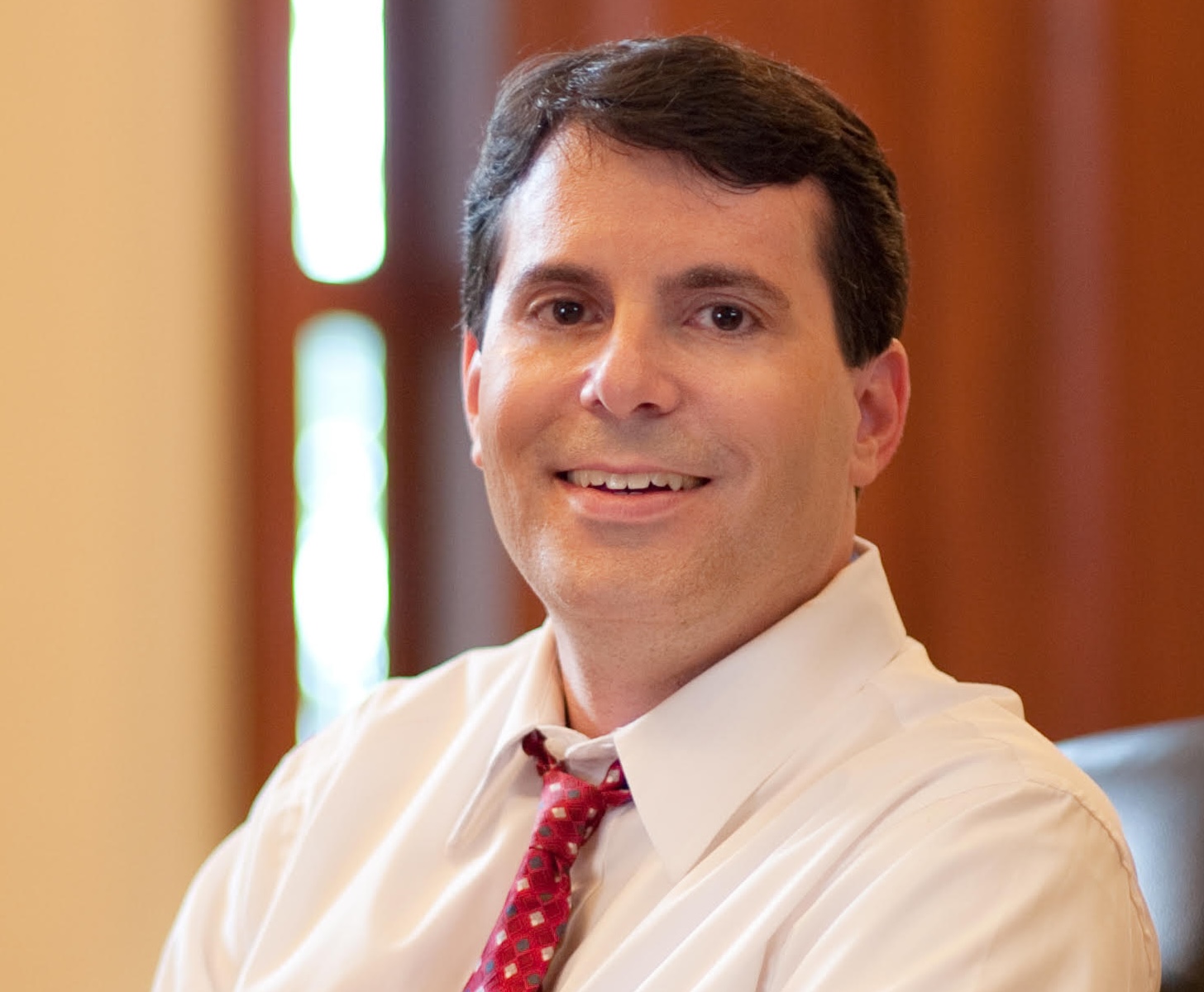
Pittman Law Firm, P.L. is based in Fort Myers and has handled personal injury cases for more than thirty years under founder David B. Pittman, Esq., with a sustained focus on pedestrian-injury and crosswalk cases. The firm’s Fort Myers presence handles a steady stream of serious-injury work along the Daniels Parkway, Six Mile Cypress, McGregor Boulevard, Cleveland Avenue, and Summerlin Road corridors, and along I-75 between Estero and Bell Tower.
David did his undergraduate work at The Citadel, The Military College of South Carolina, and earned his JD at the University of South Carolina School of Law. He has held an AV-Preeminent rating at Martindale-Hubbell for decades and is a member of the Multi-Million Dollar Advocates Forum.
David has held a Florida real estate broker license for twenty-five years, a credential that shapes how the firm reads the property side of premises cases. The firm handles personal injury cases across Lee and Collier Counties, serving Fort Myers, Bonita Springs, Naples, Cape Coral, Estero, and Lehigh Acres, with offices at Windsor Place in Bonita Springs (main) and Fort Myers (satellite). Call 239-992-8259 for a free consultation.
The information in this article is for general informational purposes only and is not legal advice. Reading this article does not create an attorney-client relationship with Pittman Law Firm, P.L. Past results do not guarantee a similar outcome in any future case. This is attorney advertising under the Rules Regulating The Florida Bar. The hiring of a lawyer is an important decision that should not be based solely on advertisements.