

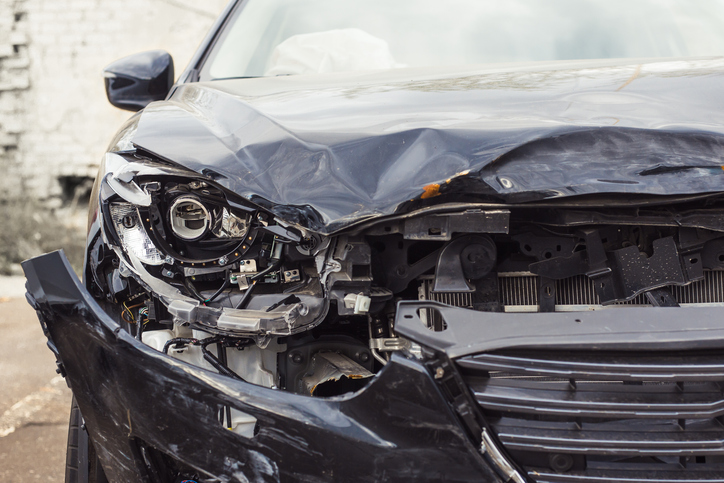
What Are the Most Common Motorcycle Passenger Injuries in Fort Myers Accidents?
The injury list for a motorcycle passenger is not what wins or loses the case. The injuries are roughly what you would guess — head, lower leg, wrist, shoulder, ribs, spine — and the body of literature on that is a mile deep. What actually decides the case is something most clients have never heard about: motorcycles are not covered by Florida’s PIP statute, the helmet question is messier than people think, and the policy that usually pays the medical bills is one nobody has bothered to read.
So this piece is going to spend more time on the law and the insurance map than on the injury catalog. If you came here because someone you love just got rolled off the back of a bike on McGregor Boulevard or Cleveland Avenue, that map is what you actually need.
Passenger injury patterns we see in Fort Myers and Lee County
The injury patterns for a passenger and for the rider are similar, but not identical. The passenger sits higher, has nothing to brace against, and very often gets ejected differently — sometimes straight off the back, sometimes sideways into a guardrail or a curb. In our cases the recurring injuries are these:
- Lower-leg and ankle fractures. The bike falls, the passenger’s leg is the thing under it. Tibia, fibula, ankle. Open Reduction Internal Fixation (ORIF) — meaning a surgeon opens the leg and screws or plates the bone back into place — is common.
- Wrist and forearm fractures. Whatever you ride, whatever you train, you put your hand down. A distal radius or scaphoid fracture is a hand-down injury. ORIF, sometimes followed by months of occupational therapy.
- Road rash and degloving. Skin gets ground off on asphalt. If a passenger wore a t-shirt and shorts, the road rash can require skin grafts and looks like a burn case on paper.
- Closed head injury and concussion. Even with a helmet. The brain still moves inside the skull, and the rotational forces are what cause most of the lasting cognitive problems.
- Thoracic and lumbar spine injuries. Compression fractures from the impact, herniated discs from the twist as the passenger separates from the bike.
- Rib fractures and lung contusion. Quiet on the scene, dangerous overnight.
That list is descriptive, not predictive. Every case is its own injury pattern, and the only way you know what is actually wrong with a passenger is to get them seen — not just at the emergency department on the night of the crash, but a week later when the adrenaline has worn off and the spine and the wrist start to tell the truth.
Florida law that actually determines your case
Here is the law a Fort Myers motorcycle passenger needs to understand, in plain English.
Florida Statute §627.736 — PIP. Personal Injury Protection is the $10,000 in no-fault medical coverage that follows every Florida car. Plain English: it does not apply to motorcycles. The statute defines a motor vehicle in a way that leaves bikes out, and the case law has followed for decades. If you were the passenger on a motorcycle, the rider’s policy does not give you $10,000 of automatic medical coverage. That single fact reshapes the entire claim. The medical bills have to be paid by health insurance first, then by the at-fault driver’s bodily injury coverage, and then — most of the time — by uninsured-motorist coverage on a household auto policy.
Florida Statute §316.211 — Helmet law. Riders and passengers 21 or older can lawfully ride without a helmet in Florida if they carry at least $10,000 in medical benefits. Under 21, helmet is mandatory. Plain English: not wearing a helmet is legal for an adult with the right coverage. It is also a defense item. We will come back to that.
Florida Statute §627.727 — Uninsured-motorist coverage. Florida’s minimum auto bodily-injury liability requirement is famously thin. Plenty of drivers carry $10,000 or $25,000 in BI, which is gone the moment a passenger has an ORIF surgery and three months of therapy. UM is the coverage on your own household auto policy that steps in when the at-fault driver does not have enough. Plain English: for a motorcycle passenger, UM is usually the policy that actually funds the recovery. If you do not carry it, or if you let an agent talk you into a rejection form years ago, you are exposed in a way most riders do not understand until they are hurt.
Florida Statute §768.81 — Modified comparative negligence and the helmet defense. Since the 2023 amendment, a Florida injured person whose own fault is more than 50% recovers nothing. At 50% or less, the recovery is reduced by that percentage. Plain English: if a jury decides you are 30% at fault, you get 70% of the verdict. The defense will also try to use the absence of a helmet under this statute — they will argue your head and neck injuries were worse than they would have been with a helmet, and ask the jury to assign you a share of fault for the no-helmet choice. That is a fight, not a finality. It is winnable.
Why your own UM coverage matters so much
A motorcycle case typically pays from three buckets. The at-fault driver’s bodily injury policy. The rider’s bodily injury policy, if the rider was partly at fault. And the passenger’s own uninsured/underinsured-motorist coverage from a household auto policy. Most clients are surprised by the third one.
UM is not a luxury product. On a motorcycle case it is often the difference between a serious recovery and a thank-you-for-coming-in. Here is why. The at-fault driver who merged into the bike on Six Mile Cypress Parkway may carry $25,000 in BI. The passenger’s ankle ORIF and rehab is $90,000 in medical bills on the low end. The math does not work without UM. UM stacks across vehicles on the same policy, and depending on the policy structure, it can also reach a resident relative’s policy. That is where the recovery comes from.
If you ride or you ever sit on the back, look at your declarations page tonight. The line that says “Uninsured Motorist Bodily Injury” is the one that matters. If it says “Rejected,” that is the line a lot of injured passengers wish they had read sooner.
A passenger case from our practice
A Fort Myers rider, mid-40s, was riding in the right lane of one of the busy north-south Lee County corridors when a driver in the lane to his left looked over his shoulder and merged into him without ever seeing the bike. The rider went down. Road rash from shoulder to hip. Wrist shattered. He needed an ORIF on the wrist and weeks of occupational therapy after the cast came off.
The at-fault driver’s coverage was modest, but he had it. The piece that mattered, though, was that our client carried uninsured-motorist coverage on a household auto policy that he had almost canceled the year before to save fifteen dollars a month. We pulled in a reconstruction witness — not an engineering witnesses with a capital E, just an engineer who has spent his career figuring out how vehicles interact in a lane change — and his diagram of the merge angle did more work in the negotiation than any of the medical records.
The carrier paid the full available insurance on the case. Property damage to the motorcycle, every medical bill, and a recovery on top for the rider’s pain and the months he could not work with his dominant hand in a brace. Two things saved that case: he kept the bike and the gear, and he had not rejected UM.
What to do after a Fort Myers motorcycle crash
I want to give you a list, but I want it grounded in things we have actually watched matter — not generic “stay calm and call the police” advice.
- Get seen, then get seen again. Emergency department on the night of the crash, even if you can walk away. Then a follow-up within a week with an orthopedist or your primary doctor. Adrenaline hides wrist and spine injuries for two or three days. A clean re-examination after that window is what links the injury to the wreck on paper.
- Save the gear. All of it. Helmet, jacket, gloves, boots, pants. Do not wash them. Put them in a box in a closet. The wear pattern on a helmet visor tells a reconstruction witness which way the head moved at impact. The grind on a glove tells the same story for the hand-down.
- Do not authorize the bike to be scrapped. The body shop will offer. The insurer will quietly want it. The bike is evidence. Keep it under tarp at home or at a friend’s shop. Photograph every angle.
- Pull every auto-policy declarations page in the household. Yours, your spouse’s, any resident relative’s. We are looking for the UM line. If you cannot find a copy, request it from the agent in writing.
- Be careful with the at-fault carrier’s first call. They will call within 48 hours, sometimes the next morning. The “recorded statement” they ask for is not for your benefit. Politely decline until you have spoken to a lawyer.
- Write down what you remember while it is fresh. Time of day, weather, lane position, the last three things you remember before the impact. Date the page. Sign it. Put it in a folder.
That is the list. It is short on purpose. Long lists give people the feeling they are doing something. Six concrete moves in the first two weeks does more for the case than two dozen.
Key Takeaways
- Florida PIP under §627.736 does not cover motorcycle riders or passengers. The medical bills run through health insurance, the at-fault driver’s bodily injury coverage, and uninsured-motorist coverage on a household auto policy.
- The helmet law in §316.211 lets adult passengers 21 and older ride without a helmet if they carry $10,000 in medical benefits. The defense can still argue under §768.81 that no-helmet increased the injury.
- Uninsured-motorist coverage is usually the policy that funds a motorcycle passenger recovery. Find your household declarations page and read the UM line tonight.
- The most common passenger injuries we see are lower-leg fractures, wrist ORIFs, road rash, concussion, spinal injuries, and rib and lung trauma. Get seen at the ED and again a week later.
- Save the bike and save every piece of riding gear. Damage patterns on a helmet, glove, or boot often matter more to the case than the police report.
Frequently Asked Questions
Q1. Does my PIP cover me if I’m hurt as a motorcycle passenger in Fort Myers?
No. Florida’s PIP statute, §627.736, leaves motorcycles out of the definition of motor vehicle, so neither the rider nor the passenger gets PIP benefits from a motorcycle policy. Your medical bills will run through health insurance, MedPay if the bike carries it, the at-fault driver’s bodily injury coverage, and uninsured-motorist coverage on any policy you can reach.
Q2. I wasn’t wearing a helmet. Does that wreck my case?
Not on its own. Under §316.211, a rider or passenger 21 or older who carries at least $10,000 in medical benefits can ride without a helmet. The defense can still argue under §768.81 that the absence of a helmet increased head and neck injuries, and a jury can reduce the recovery by that percentage. It does not erase the claim.
Q3. Can I sue the rider if I was the passenger?
Yes, if the rider was at fault, in whole or in part. The rider’s bodily injury liability coverage is one source. The driver of any other vehicle involved is another. And your own uninsured-motorist coverage on a household auto policy may stack on top of both.
Q4. How long do I have to bring a Florida motorcycle injury claim?
For crashes on or after March 24, 2023, the statute of limitations for negligence is two years from the date of the wreck. Wrongful-death claims also run two years. Talk to a lawyer well before that deadline because evidence on a motorcycle case decays fast.
Q5. Should I save the bike and gear after the crash?
Yes. Do not let the body shop scrap the motorcycle, and do not throw out the helmet, jacket, gloves, or boots. The damage patterns on the gear and the bike often tell a reconstruction witness more about how the crash happened than the police report does.
Talk to our office
If you were a passenger on a motorcycle in Fort Myers, or anywhere in Lee or Collier County, and you came home with an ORIF surgery, road rash, a concussion, or a spinal injury — call our office. We will pull every policy declarations page in the household, look at the bike and the gear, and tell you straight what the case is worth.
Call 239-992-8259 for a free consultation. There is no fee unless we recover for you.
About the Author

David B. Pittman, Esq. is the founding attorney of Pittman Law Firm, P.L., handling personal injury cases in Fort Myers and across Lee County since the firm’s founding more than thirty years ago, with a sustained focus on serious-injury and uninsured-motorist motorcycle claims. The firm’s Fort Myers presence handles a steady stream of serious-injury work along the Daniels Parkway, Six Mile Cypress, McGregor Boulevard, Cleveland Avenue, and Summerlin Road corridors, and along I-75 between Estero and Bell Tower.
David’s path to law began at The Citadel, The Military College of South Carolina, and continued at the University of South Carolina School of Law. He carries an AV-Preeminent rating with Martindale-Hubbell and a membership in the Multi-Million Dollar Advocates Forum.
David has held a Florida real estate broker license for twenty-five years, a credential that shapes how the firm reads the property side of premises cases. The firm handles personal injury cases across Lee and Collier Counties, serving Fort Myers, Bonita Springs, Naples, Cape Coral, Estero, and Lehigh Acres, with offices at Windsor Place in Bonita Springs (main) and Fort Myers (satellite). Call 239-992-8259 for a free consultation.
The information in this article is provided for general educational purposes and does not constitute legal advice. Reading it does not create an attorney-client relationship with Pittman Law Firm, P.L. Past results do not guarantee a similar outcome in any future matter. For advice on a specific case, contact our office directly. This is attorney advertising.