

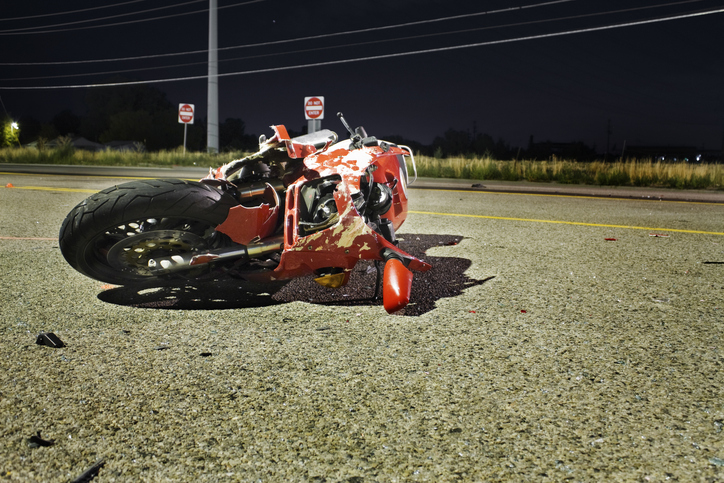
How Target Fixation Causes Deadly Motorcycle Crashes in Fort Myers
A rider calls after a crash on Colonial Boulevard or US-41 and asks whether he caused his own wreck because he stared at the car that pulled out in front of him. The question is almost always pointed in the wrong direction. The car that turned left across your lane is the one that broke the rule. Where your eyes happened to land in the second and a half before impact is a sideshow the insurance company would love to put center stage.
Target fixation is real. Motorcycle steering responds to head and eye position in a way car steering does not, and a rider who locks onto the obstacle can drift into it. I am not denying the physics. What I am saying is that in the cases that come through our office, the legal outcome rides on Florida’s PIP exclusion for motorcycles, your own uninsured-motorist coverage, the police-report findings on who failed to yield, and the comparative-fault math under §768.81 — not on a debate about gaze direction.
What left-turn crash numbers actually show about target fixation
If you go looking, you will find writing about target fixation that traces back to World War II fighter pilots and a handful of motorcycle safety instructors. It is a recognized phenomenon. It is also one of the most overused defense themes I see in motorcycle cases, because it lets a carrier shift the conversation away from their insured’s left turn and onto the rider’s reflexes.
Here is what the numbers I actually care about look like. NHTSA reports riders are about 24 times more likely to die per mile than car occupants, and roughly four in ten fatal motorcycle crashes involve another vehicle turning left across the rider’s path. Those left-turn collisions, the ones on Daniels Parkway, on Cleveland Avenue, on US-41, on Six Mile Cypress Parkway, are overwhelmingly the other driver’s failure to yield. The rider had a fraction of a second to react. Calling that target fixation is a way of blaming a person for not being superhuman.
When an insurer raises target fixation in one of our cases, my response is the same: show me the failure-to-yield violation on the crash report, show me the lane the bike was lawfully in, and let the jury decide whose conduct actually caused the impact.
The Florida law that actually determines your case
Three statutes do more work than any debate about gaze direction. Every Fort Myers rider should know them.
§627.736 — Florida PIP, and the motorcycle exclusion. Florida is a no-fault state for cars. Drivers carry $10,000 in Personal Injury Protection that pays their own medical bills and lost wages no matter who caused the crash. Motorcycles are excluded from the definition of motor vehicle under §627.736. In plain English: if you are hurt riding your motorcycle in Florida, you have no PIP. None. The first $10,000 of medical care that a car driver gets automatically is not there for you. That single fact rewires how a motorcycle case has to be built.
§316.211 — the helmet statute. Florida lets riders 21 or older ride without a helmet as long as they carry at least $10,000 in medical benefits coverage. Riders under 21 must wear one. Read the statute itself here. When clients ask whether the carrier can use a no-helmet fact against them, the answer is: they will try, but Florida law does not let the absence of a helmet wipe out the at-fault driver’s liability. It can come into the comparative-fault calculation on head-injury damages, and that is a different fight than fault for the crash itself.
§627.727 — uninsured and underinsured motorist coverage. Florida’s minimum auto liability limits are among the lowest in the country. A driver who turns left in front of you on McGregor Boulevard may be carrying $10,000 in bodily-injury liability and nothing more. Your hospital bill from a single helicopter flight and an ORIF surgery passes that number before lunch. §627.727 governs how your own UM coverage stacks on top of that. For a motorcycle rider with no PIP and a real chance of catastrophic injury, UM is the actual insurance policy that pays the bills.
§768.81 — comparative negligence. Florida moved to modified comparative negligence in 2023. A plaintiff found more than 50 percent at fault recovers nothing. Below that threshold, the recovery is reduced by the percentage of fault assigned. The text is here. This is where the target-fixation defense actually lives — as an argument to push the rider’s percentage up. That is why how the case is presented matters as much as the underlying facts.
Why your own UM coverage matters so much
I tell riders this in the first meeting and I will tell readers the same thing here. The biggest financial mistake I see Fort Myers motorcyclists make is buying the cheapest auto policy with the lowest UM limits and assuming the at-fault driver’s coverage will be there when they need it. Most of the time it is not.
A typical case from our practice: a rider is hit by a driver carrying state-minimum liability. The carrier tenders the $10,000 policy. The medical bills are $180,000. Without UM, the rider takes the $10,000, pays off lien holders, and walks away with very little. With $250,000 in UM, that same rider has a real recovery, real money to address future surgeries, and a real shot at being made whole.
Stacked UM, where you have more than one vehicle on a policy, can multiply your coverage across vehicles. Florida law also requires a written rejection if you decline UM, and I have lost count of how often we find that the rejection was never properly executed — meaning UM is actually in force even though the rider thought he had none. That is the kind of detail that turns a no-recovery case into a six-figure one.
How we handled a Fort Myers motorcycle case
A case I think about often involved a Fort Myers rider on a weekday commute. He was traveling in his lane when a distracted driver merged across the line and pushed him to the shoulder. He went down hard, slid on the pavement, and ended up with road rash from the hip down and a fractured wrist that required ORIF — open reduction internal fixation, where the surgeon goes in and uses plates and screws to put the bone back together. He spent weeks in occupational therapy learning to use his right hand again.
The driver’s carrier opened with the predictable theme: the rider should have seen the merge coming, should have swerved sooner, should not have fixated. We had the police report showing the failure-to-maintain-a-single-lane violation. We had photographs of the gouge marks on the pavement showing where the rider went down. We kept the helmet, the jacket, and the gloves in the condition they came off the road, because the scuffs on the gear tell the story of a rider who was knocked down, not one who lost control on his own.
We recovered a full insurance payout that covered the medical bills, the occupational therapy, and the property damage to the motorcycle. The target-fixation argument never made it past the opening salvo, because the facts of the merge and the gear preservation made it a non-starter.
What to do after a Fort Myers motorcycle crash
This is the practical part. I have watched riders save and lose their own cases in the first 48 hours.
- Get treated, then keep going back. Skipping the follow-up appointment because you feel okay after a week is a gift to the carrier. Insurance adjusters read every gap in your medical records as proof you were not really hurt.
- Save the gear. Helmet, jacket, gloves, boots, and any electronics that were on the bike. Do not wash them, do not return them, do not throw them out. The scuff pattern on a glove can tell a reconstruction engineer how the rider went down. I have built more than one case on a single helmet.
- Do not let the bike get crushed. If the storage yard wants to dispose of it, get a written hold on the wreckage. Frame angles, fork compression, and damage patterns matter.
- Photograph the scene yourself if you are able. Skid marks, debris fields, the angle of the other vehicle’s tires, sight lines from the intersection. FDOT crews clean up fast on roads like Colonial Boulevard and Daniels Parkway, and that evidence is gone within a day.
- Get every witness name. Not just the ones the trooper interviewed. Riders are often visible from buildings and parking lots that the trooper never walks into.
- Do not give a recorded statement to the other driver’s insurer. Not on day one, not on day two. Talk to a lawyer first.
- Pull your own UM policy out of the glove box. Or your spouse’s. Or your household member’s. UM can stack in ways most riders do not realize, and you want to know your real coverage picture before the first phone call with an adjuster.
Key Takeaways
- Target fixation is a defense theme, not usually a case-deciding fact. The driver who failed to yield is the one who broke the rule.
- Florida motorcycles have no PIP under §627.736. Your own medical coverage and UM are doing the work PIP would have done in a car.
- Riders 21+ with $10,000 in medical coverage may legally ride without a helmet under §316.211; the no-helmet argument is a damages fight, not a fault-for-the-crash fight.
- Florida’s minimum auto liability limits are low and motorcycle injuries are severe. Robustly funded UM coverage under §627.727 is the policy that actually pays.
- Preserve the gear, the bike, and the scene photos. The case is built or lost in the first 48 hours.
Frequently Asked Questions
Q1. Does target fixation actually decide a motorcycle case in Florida?
Rarely. The driver who turned, merged, or pulled out in front of the rider is the one who broke the traffic rule. Target fixation is a defense theme insurers raise to push fault onto the rider, but Florida’s comparative negligence statute, the actual police-report findings, and physical evidence usually carry far more weight than a debate about where the rider’s eyes were pointed.
Q2. Does PIP cover me if I get hurt on my motorcycle in Fort Myers?
No. Florida Statute 627.736 excludes motorcycles from the definition of motor vehicle for PIP purposes, so a Florida motorcycle rider has no $10,000 PIP cushion the way a car driver does. That single rule is the reason your own uninsured-motorist coverage matters so much.
Q3. Can the insurance company blame me for not wearing a helmet?
Florida Statute 316.211 allows riders 21 or older with at least $10,000 in medical coverage to ride without a helmet. If you were legally riding without one, the carrier may still try to argue your head injuries would have been less severe, but Florida law does not let a no-helmet fact wipe out the at-fault driver’s liability.
Q4. What is uninsured-motorist coverage and why does it matter on a motorcycle?
UM coverage is the part of your own policy that pays for your injuries when the at-fault driver has no insurance or not enough insurance. Florida’s minimum auto liability limits are low, motorcycle injuries are routinely catastrophic, and Florida Statute 627.727 governs how UM applies. For a Fort Myers rider, UM is often the difference between a real recovery and nothing.
Q5. What should I do right after a motorcycle crash on a road like Colonial or US-41?
Get treated, then preserve evidence. Keep the bike untouched. Save the helmet, jacket, gloves, and boots in the condition they came off the road. Photograph the lane, skid marks, and any debris field before FDOT cleans it up. Get the names of every witness, not just the ones the trooper writes down. Then call a lawyer before you talk to the other driver’s insurer.
Talk to a Fort Myers motorcycle accident attorney
If you were hurt on your motorcycle in Fort Myers, Cape Coral, Estero, Bonita Springs, Naples, or anywhere in Lee or Collier County, call our office. We will pull your UM policy apart with you, look at the crash report, and tell you straight what your case is worth. Call 239-992-8259 for a free consultation. There is no fee unless we recover for you.
About the Author

Pittman Law Firm, P.L., founded by David B. Pittman, Esq., has built thirty-plus years of personal injury practice in Fort Myers and across Lee County, with a sustained focus on serious-injury and uninsured-motorist motorcycle claims. The firm’s Fort Myers presence handles a steady stream of serious-injury work along the Daniels Parkway, Six Mile Cypress, McGregor Boulevard, Cleveland Avenue, and Summerlin Road corridors, and along I-75 between Estero and Bell Tower.
David trained at The Citadel, The Military College of South Carolina before earning his JD at the University of South Carolina School of Law. He is AV-Preeminent at Martindale-Hubbell and a Multi-Million Dollar Advocates Forum member.
David has held a Florida real estate broker license for twenty-five years, a credential that shapes how the firm reads the property side of premises cases. The firm handles personal injury cases across Lee and Collier Counties, serving Fort Myers, Bonita Springs, Naples, Cape Coral, Estero, and Lehigh Acres, with offices at Windsor Place in Bonita Springs (main) and Fort Myers (satellite). Call 239-992-8259 for a free consultation.
The information on this website is for general information purposes only. Nothing on this site should be taken as legal advice for any individual case or situation. This information is not intended to create, and receipt or viewing does not constitute, an attorney-client relationship.