

Why Florida Leads the Nation in Hit and Run Car Accidents
Florida has led the national rankings for hit-and-run crashes for years. The answer always surprises people when I lay out why. It is not a single thing. It is a stack of small things that line up here in a way they do not line up anywhere else: snowbird traffic, year-round driving weather, a high uninsured-motorist rate, a long tourist coastline on I-75 and US-41, and a court system that treats leaving the scene of an injury crash as a felony but rarely catches the driver in time.
Add in the fact that a lot of fleeing drivers are driving on a suspended license or without insurance, and the math starts to make sense. They are not running because the crash was bad. They are running because of what is sitting in the glove box or what is in their bloodstream. What I want to give you in this post is the part most articles skip: not the statistics, but the statutes that actually decide whether you get paid, the scenarios our office sees on repeat, and what to do in the first week if you were the one who got hit and the other driver took off.
What Florida law actually says about hit-and-run crashes
Three statutes do most of the work in these cases. They are worth knowing by name because every insurance adjuster you talk to is going to know them, and you should too.
Florida Statute 316.027 is the criminal side. Leaving the scene of a crash that caused injury is a third-degree felony in Florida. If the crash caused serious bodily injury it is a second-degree felony. If someone died, it is a first-degree felony and carries a mandatory minimum of four years in prison. In plain English: in Florida, running from an injury crash is treated about the same as the crime that the driver was probably trying to hide by running.
Florida Statute 627.727 is the one that decides whether you get paid. Uninsured Motorist coverage covers you when the at-fault driver has no insurance, when they have too little insurance, or when they cannot be identified at all. That third category is the hit-and-run category. Florida calls it the “phantom vehicle” claim. Plain English: if a car sideswipes you on I-75 and disappears down the next exit, your own UM policy is supposed to step into the shoes of that missing driver and pay what they would have owed you.
Florida Statute 627.736 is PIP. Personal Injury Protection pays the first $10,000 of your medical bills and a portion of your lost wages no matter who caused the crash. PIP does not care whether the other driver is in custody or in Argentina. As long as you got medical care within fourteen days of the crash and your treating doctor documented an emergency medical condition, PIP pays. Plain English: PIP is the layer that keeps the hospital from sending you to collections while the rest of the case gets sorted out.
Four hit-and-run patterns we see repeatedly in Lee and Collier Counties
Across years of practice in Bonita Springs, Fort Myers, and Naples, the same four patterns repeat. If your case fits one of these, you already know more than most adjusters expect you to know:
- The intersection clip. Driver runs a red light at a busy crossing, glances off your front quarter panel, sees the damage to their car, and floors it. We see this most often at US-41 / Tamiami Trail crossings and on the connector roads between I-75 and the beaches. The damage looks minor at the scene and turns into ruptured discs four weeks later.
- The parking-lot scrape. Someone backs into your car at a Publix or a Coconut Point lot and drives off. Property damage looks small. Then your neck stops turning. These get dismissed as nothing and become real cases.
- The freeway sideswipe. A box truck or a pickup drifts into your lane on I-75, makes contact, and keeps going. The other driver may not even realize they hit you. From a recovery standpoint it is still a hit-and-run because the vehicle is gone and unidentified.
- The DUI flight. The hardest pattern. The driver hits you, sees you are hurt, and runs because they are impaired. These are the cases where the police investigation matters most, because if the driver is caught later there is a real chance of a criminal restitution order on top of the civil recovery.
Why your own carrier is across the table from you — not on your side
The first thing every hit-and-run client expects is that the case will be simple because their own insurance company is on their side. It is almost never simple. Your own carrier writes the UM check, which means your own carrier is across the table from you. They are not hostile, but they are not your friend either.
The fight is usually about three things. First, was there really another vehicle, or did you just run off the road and now you are trying to invent a phantom driver. Second, are your injuries as bad as your doctors say they are. Third, how much of the medical treatment was actually caused by this crash versus by something pre-existing. None of these fights are about whether the other driver was a criminal. They are about whether your own insurer has to write a big check.
This is the part where the police report and the early evidence matter the most. A police report that documents physical evidence of another vehicle, an independent witness who saw the other car leave, a 911 call that came in within minutes of the crash, paint transfer on your bumper, debris in the roadway. Those are the items that turn a disputed phantom claim into a paid claim. We have spent years across the table from these carriers, and we know what they are going to ask for before they ask.
A hit-and-run claim we handled in North Fort Myers
A client came to us after a hit-and-run on a North Fort Myers connector road. She was stopped at an intersection when another vehicle clipped her and kept going. No plate, no description beyond a color and a general direction of travel. The police investigated and never identified the driver.
The damage to her car looked moderate. Her injuries did not. Within a week she was in the kind of pain that makes turning your head to check a blind spot impossible. MRI showed ruptured discs in her cervical and lumbar spine. Her neurologist diagnosed a concussion on top of that and ordered weeks of monitoring on the cognitive symptoms. She had been working full time before the crash. She could not sit at a desk for more than twenty minutes after.
Her own UM coverage was the path. Her own carrier opened the claim and immediately took the position that without an identified at-fault driver, there was no way to confirm a phantom vehicle had actually caused the crash. We went to work on the proof. We tracked down two witnesses from a nearby business and locked in their statements before memories faded. We sent her to the right diagnostic providers in the order the carrier respects. By the time the claim was ready for evaluation, the file had a documented phantom vehicle, a documented mechanism of injury, and a documented course of treatment with no pre-existing gaps for the carrier to argue around.
The case settled inside her UM limits. She walked away with her medical bills paid, money for her ongoing care, and enough left over that she was not in the position of being “hit twice” by medical debt on top of the crash itself. She told us at closing that she had thought the case was hopeless the day the police told her they could not find the driver. the answer is, with a UM policy and the right evidence, the case was never hopeless. It was just going to be work.
What to do if you were just hit and the other driver took off
This list is built from cases. Every item here came from a real outcome we have either fixed or watched another lawyer fail to fix.
- Call 911 from the scene before anything else. A 911 timestamp is the single most valuable piece of evidence in a phantom-vehicle claim. The carrier cannot argue you invented the other vehicle days later if dispatch has the call logged in real time.
- Write down everything you can remember about the other vehicle while you are still sitting in your car. Color, body style, partial plate, decals, dents, direction of travel, what lane they came from. Do this before you talk to anyone else, because every minute that passes those details get less reliable.
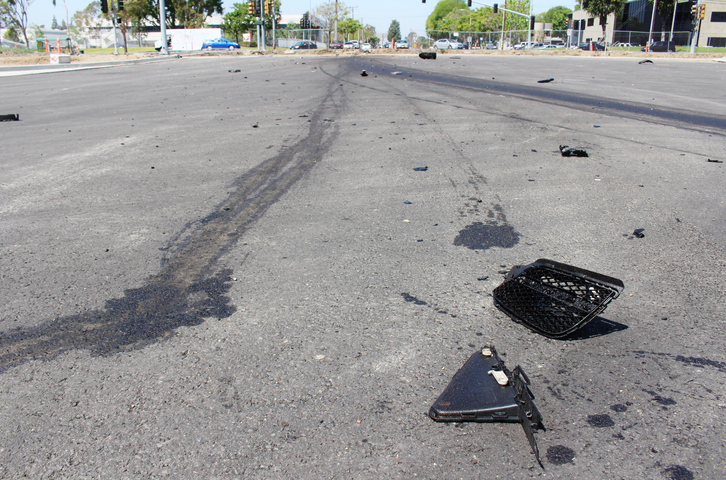
- Photograph the scene before the cars get moved. Skid marks, debris, paint transfer, the position of your vehicle in the lane. I have seen cases turn on a single photograph of a piece of broken trim that fell off the fleeing car.
- Get the names and phone numbers of every witness before they drive away. They do not have to give you a statement on the spot. Just their name and a phone number. We can do the rest.
- Go to a doctor within fourteen days. Florida’s PIP statute has a hard fourteen-day rule. Miss it and PIP is gone. Even if you feel fine, a quick urgent-care visit documenting the crash and a soft-tissue complaint preserves the PIP layer.
- Put your own insurance carrier on notice in writing. Most UM policies have a notice provision. A letter, a fax, or even a documented phone call within the first week protects the claim. Verbal notice that nobody wrote down is a fight you do not want later.
- Do not give a recorded statement to anyone before you have talked to a lawyer. Your own carrier will ask for one. They are allowed to ask. You are not required to give it on the spot, and once it is recorded it is locked in forever.
- Save the damaged vehicle. If your carrier is offering to total it and tow it to auction, slow that down. The paint transfer and damage pattern on your car may be the strongest physical evidence of the other vehicle’s existence.
Key Takeaways
- Florida has led the country in hit-and-run crashes for years because of a stack of overlapping factors: heavy tourist traffic, a high uninsured driver rate, and year-round road usage on I-75 and US-41.
- Leaving the scene of an injury crash is a felony under Florida Statute 316.027, with mandatory prison time if anyone died.
- Your own Uninsured Motorist coverage under 627.727 is usually the primary recovery path when the fleeing driver is never identified.
- PIP under 627.736 pays your first medical bills regardless of whether the other driver is caught, but the fourteen-day treatment rule is unforgiving.
- The case is won or lost in the first week through the police report, the 911 call, witness phone numbers, and photographs of the scene.
Frequently Asked Questions
What should I do right after a hit-and-run in Southwest Florida?
Call 911 from the scene, get medical attention even if you feel fine, write down everything you remember about the other vehicle (color, partial plate, direction of travel, any decals), photograph the damage and the surrounding intersection, and ask any witnesses for their phone numbers before they drive off. Then call your own insurer to put them on notice of an uninsured motorist claim, because in most hit-and-run cases that policy is the one that pays.
Can I still recover money if the other driver is never identified?
Yes. Your own Uninsured Motorist coverage under Florida Statute 627.727 was written for exactly this situation. Your PIP under 627.736 also kicks in regardless of whether the fleeing driver is caught. The hard part is usually proving the phantom vehicle was real and at fault, which is why the police report, witness statements, and physical evidence at the scene matter so much.
Is leaving the scene a felony in Florida?
Under Florida Statute 316.027, leaving the scene of a crash that caused injury is a third-degree felony. If the crash caused serious bodily injury it is a second-degree felony. If it caused a death it is a first-degree felony with a mandatory minimum prison sentence of four years. Property-damage-only hit-and-runs are a second-degree misdemeanor under 316.061.
Does my PIP still apply if I never find the driver who hit me?
Yes. PIP is no-fault, so it does not care who hit you. Your own PIP under 627.736 pays the first $10,000 of medical bills and lost wages at 80% and 60% respectively, subject to the 14-day rule and the emergency-medical-condition limits. After PIP is exhausted, UM is the layer that usually carries the rest of the case.
How long do I have to file a hit-and-run injury claim in Florida?
For crashes that happened on or after March 24, 2023, the statute of limitations for negligence is two years from the date of the crash. UM contract claims usually run on a five-year clock, but your policy may require written notice much sooner. Do not assume you have time. Talk to a lawyer within the first few weeks so evidence does not disappear and the insurer cannot accuse you of late notice.
Hit by a driver who took off? Call our office.
If you or someone in your family was hit by a driver who left the scene anywhere in Lee or Collier County, our office can walk you through the next steps. The first call is free, and we work on a contingency fee — there is no fee unless we recover for you. Call 239-992-8259 or reach us through the contact page. The earlier we are in the file, the more we can do about the evidence problem before it becomes a settlement problem.
About the Author

Pittman Law Firm, P.L. — founded by David B. Pittman, Esq. — has handled personal injury cases across Southwest Florida for more than thirty years. The firm represents injured clients across Lee and Collier Counties — from the firm’s main office at Windsor Place on Bonita Beach Road through Fort Myers, Naples, Estero, Cape Coral, and Lehigh Acres, with a particular focus on commercial-vehicle, complex-liability, and serious-injury cases.
David holds an AV-Preeminent rating from Martindale-Hubbell and belongs to the Multi-Million Dollar Advocates Forum. His undergraduate degree is from The Citadel, The Military College of South Carolina, and his JD is from the University of South Carolina School of Law.
David has held a Florida real estate broker license for twenty-five years, a credential that shapes how the firm reads the property side of premises cases. The firm handles personal injury cases across Lee and Collier Counties, serving Fort Myers, Bonita Springs, Naples, Cape Coral, Estero, and Lehigh Acres, with offices at Windsor Place in Bonita Springs (main) and Fort Myers (satellite). Call 239-992-8259 for a free consultation.
The information on this page is general legal information for the public and is not legal advice for any individual case. Reading this page does not create an attorney-client relationship with Pittman Law Firm, P.L. Past results do not guarantee future outcomes. The hiring of a lawyer is an important decision that should not be based solely on advertising. This is attorney advertising.