

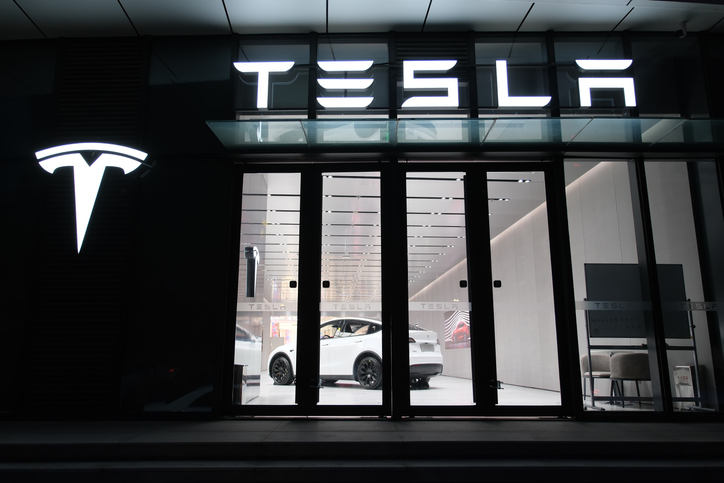
Injured By A Tesla Door Malfunction? Who Is Liable In Florida
Two separate crashes happen in a Tesla door-malfunction case: the impact itself and what the vehicle did — or refused to do — in the seconds after. People walk into our office on Bonita Beach Road with a phone full of news clippings about cars catching fire and occupants who could not get the doors open, and they want to know one thing: if that happens to me in Florida, who pays. The answer is not as tidy as the news makes it sound, and it is worth taking the time to walk through carefully.
The legal framework that decides a Tesla door case is the same framework that decides every other auto and product case in Florida: comparative fault, the two-year filing window, PIP, uninsured motorist coverage, and the rules around product defect claims. What is different is that both stories have to be developed with care — the crash itself and what the vehicle did or did not let occupants do after the crash.
What Florida law actually says about Tesla door malfunction cases
Five statutes do most of the heavy lifting in a case like this. None of them mention Tesla, of course. They were written for ordinary negligence and product claims, and they still control.
Modified comparative negligence, Section 768.81. Under the 2023 reform, if a jury finds you 50% or more at fault for what happened, you recover nothing. Below that line, your award gets reduced by your percentage of fault. That sounds harsh, and it is, but in a door malfunction case the percentage analysis is doing two jobs at once. The crash itself might be 70% the other driver’s fault and 30% yours. Whether the egress system was defective is a separate liability question pointed at Tesla. You can be partly to blame for the wreck and still have a strong product claim against the manufacturer for the part that turned a survivable crash into something worse. Read the full statute.
Two-year filing window, Section 95.11(4)(a). Before the 2023 reform, you had four years to file a negligence claim. Now you have two. Product liability and wrongful death have their own clocks, but the practical point is the same: a Tesla door case cannot sit on a desk. Evidence preservation, ECU data, battery pack data, the doors themselves; all of it has to be locked down inside the first few weeks. Statute text here.
PIP, Section 627.736. Florida is a no-fault state up to ten thousand dollars in medical and wage benefits. PIP pays first, regardless of who caused the crash. In a burn or smoke-inhalation case it gets used up almost immediately. The real recovery comes from the third-party driver and from any product claim against the manufacturer. Statute text.
Uninsured and underinsured motorist coverage, Section 627.727. Florida does not require drivers to carry bodily injury liability coverage, so the at-fault driver is often underinsured for catastrophic injuries. UM coverage on your own policy fills that gap. Anyone who owns a Tesla and does not carry stacked UM is, in my opinion, taking a meaningful and avoidable risk. Statute text.
Crash report, Section 316.066. Florida requires a written report when a crash involves injury, death, or property damage of at least five hundred dollars. The report is not just bureaucracy. It is often the first written account of where the doors were after impact, whether occupants self-rescued, and which fire or rescue unit responded. Statute text.
Five Tesla door-failure patterns our office handles
Almost every Tesla door call our office takes falls into one of these patterns:
- Low-voltage failure with no crash. The twelve-volt accessory battery dies, the retractable handles do not present, and someone, often a child in a car seat, is stuck inside until a window breaks. Property damage and emotional distress claims, sometimes a heat-injury claim.
- Survivable impact, post-crash entrapment. The wreck itself is not catastrophic, but the electronics lose power and the occupants cannot get the doors open from the inside before smoke or fire reaches them. The third-party driver carries crash liability; Tesla faces the product claim.
- First-responder access failure. Lee County or Collier County fire-rescue arrives on scene, finds an unfamiliar handle design, and loses time figuring out how to access the cabin. Documenting that timeline matters more than people realize.
- Passenger who could not find the interior manual release. The release is there, but it is hidden under a speaker grille, a carpet, or a door pocket, and a guest in the car had no way to find it under stress. This is a design-warning case as much as a design-defect case.
- Crash plus battery thermal event. The hardest of the five. Battery pack involvement turns an extraction window of minutes into seconds, and a door system that needs power to open becomes the difference between a hospital visit and a funeral.
Why Tesla door claims are more complicated than a standard auto case
I have been in this practice long enough about what makes these matters difficult. Three things in particular.
Evidence vanishes fast. Tesla service centers and salvage yards are not in the business of preserving evidence for a future lawsuit. The vehicle, the doors, the battery pack, and the event data all need to be secured under a written spoliation hold within days. We have had cases where the vehicle was scrapped before we even got the first call, and the case had to be rebuilt from photographs and the fire-rescue report alone.
Two defendants, two stories. The driver who hit you is one case. The product claim against the manufacturer is another. They overlap, but they require different witnesses, different theories, and different timelines. The carrier for the at-fault driver will sometimes argue that the manufacturer caused the harm. The manufacturer will sometimes argue that the crash itself was the cause. We work both fronts and let the jury sort apportionment under Section 768.81.
The technology is moving while the case is pending. Federal investigations open and close. Software updates change how the doors behave. China’s regulators have proposed banning flush handles outright. International standards are catching up to a design choice the U.S. has tolerated for a decade. By the time a case reaches a jury, the version of the vehicle on the road is often different from the one in the crash. Locking down the as-built configuration at the moment of the wreck is half the work.
What to do if you are in a Tesla crash in Southwest Florida
Some of this is practical and some of it is legal. Here is what I tell people, in order:
- Take care of the people first. Medical care comes before everything. If you are in a Tesla and the doors are not responding, the manual release lever on the front doors is near the window switches. On rear doors it varies by model. Practice finding it in your own car, with the kids, before you ever need it.
- Do not let the vehicle leave. Tell the tow operator to take it to a neutral storage yard, not a Tesla-authorized service center. Once it is in the manufacturer’s chain, you have less control over what gets inspected and what gets overwritten.
- Photograph the doors before anything moves. Closed or open, latched or unlatched, handle deployed or recessed. Photograph the interior release locations and whether they were used.
- Pull the crash report, Section 316.066. The narrative often captures who self-rescued, who needed extraction, and how long it took.
- Get the medical record right. Burn injuries, smoke inhalation, and post-traumatic injuries from extraction need to be documented as distinct from the crash impact injuries. The two have different liability profiles.
- Do not give a recorded statement to Tesla or the insurer. Not yet. Anything you say in the first week becomes the spine of the file.
- Call a lawyer who handles product cases alongside auto cases. The two are not interchangeable, and the deadlines under Section 95.11(4)(a) are not generous anymore.
Key Takeaways
- Florida liability in a Tesla door case usually runs on two tracks at once: the at-fault driver under ordinary negligence, and the manufacturer under product liability.
- The two-year filing window under Section 95.11(4)(a) is shorter than most people expect. Evidence has to be preserved within days, not months.
- Section 768.81 means a jury allocates fault across everyone involved. Being partly at fault for the crash does not erase a defective egress claim against the manufacturer.
- PIP under Section 627.736 covers the first $10,000 in medical and wage losses. Real recovery in a burn or entrapment case comes from third-party and product claims.
- The single most useful thing a Tesla owner in Lee or Collier County can do today is practice the manual door release with every person who rides in the car.
Frequently Asked Questions
Q1. Who can be held responsible if a Tesla door traps me after a crash in Florida?
Liability usually splits across the at-fault driver and the manufacturer. The driver pays for the crash itself. A product liability claim against Tesla can address the design choice that turned an otherwise survivable wreck into a trap. Florida law lets us pursue both tracks in the same case.
Q2. Does Florida PIP cover injuries from a Tesla door failure?
Yes for the first dollars. Section 627.736 provides $10,000 in no-fault medical and lost wage benefits regardless of who caused the crash. PIP gets used up quickly in burn, smoke inhalation, or extraction cases, so the real recovery usually comes from third-party and product liability claims.
Q3. How long do I have to file a Tesla door malfunction lawsuit in Florida?
Two years for negligence under Section 95.11(4)(a) after the 2023 reform. Product liability and wrongful death claims have their own deadlines, and evidence preservation cannot wait that long. We send a spoliation letter within days so the vehicle, battery pack, and door modules are not scrapped.
Q4. What if I was partly at fault for the crash that led to the door failure?
Florida uses modified comparative negligence under Section 768.81. If a jury finds you 50% or more at fault, you recover nothing. Under that line, your award gets reduced by your percentage. The product defect claim against Tesla is a separate question — being partly at fault for the wreck does not erase a defective egress system.
Q5. What should I do right after a Tesla crash with a door malfunction?
Get medical care first. File the crash report required by Section 316.066. Then preserve the vehicle — do not let the insurer salvage or release it to a Tesla-authorized service center without your written conditions. Photograph the handles, the interior releases, and any burn pattern. Call a lawyer before talking to Tesla service or the insurer.
Talk to our office before talking to the insurer
If you or someone in your family was hurt in a Tesla crash anywhere in Southwest Florida, including Bonita Springs, Fort Myers, Naples, Estero, Cape Coral, or Lehigh Acres, call our office at 239-992-8259. The first conversation is a free consultation, and we work on a contingency fee basis. There is no fee unless we recover for you. Do not let the vehicle go to a Tesla service center, and do not give a recorded statement, until we have had that conversation.
About the Author
David B. Pittman, Esq. keeps an active personal injury practice across Southwest Florida as the founder of Pittman Law Firm, P.L., now into his thirty-first year. The firm represents injured clients across Lee and Collier Counties, from the firm’s main office at Windsor Place on Bonita Beach Road through Fort Myers, Naples, Estero, Cape Coral, and Lehigh Acres, with a particular focus on commercial-vehicle, complex-liability, and serious-injury cases.
After undergraduate work at The Citadel, The Military College of South Carolina, David earned his JD at the University of South Carolina School of Law. He is AV-Preeminent at Martindale-Hubbell and a member of the Multi-Million Dollar Advocates Forum.
David has held a Florida real estate broker license for twenty-five years, a credential that shapes how the firm reads the property side of premises cases. The firm handles personal injury cases across Lee and Collier Counties, serving Fort Myers, Bonita Springs, Naples, Cape Coral, Estero, and Lehigh Acres, with offices at Windsor Place in Bonita Springs (main) and Fort Myers (satellite). Call 239-992-8259 for a free consultation.
The information in this article is for general purposes only and is not legal advice. Reading this page does not create an attorney-client relationship with Pittman Law Firm, P.L. Past results do not guarantee similar outcomes. This is attorney advertising.