

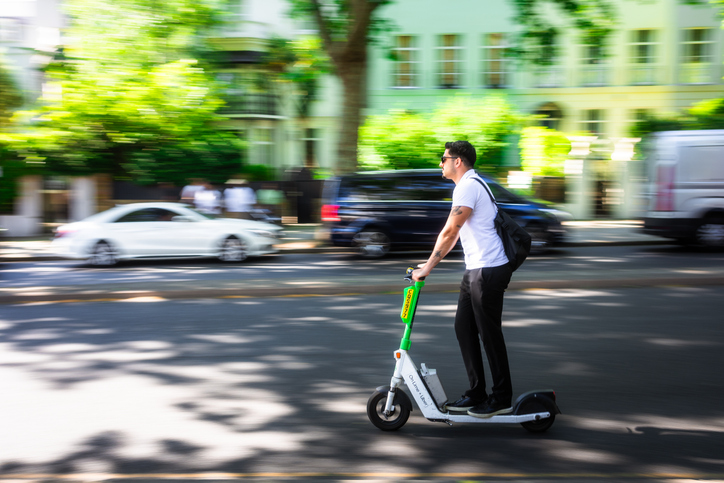
Electric Scooter Accidents in Fort Myers: What You Need to Know About Your Legal Rights
A rider tumbles off a Bird or a Lime somewhere downtown Fort Myers, a hospital bill arrives, and the rental app’s user agreement seems to say the rider signed away every right they ever had. None of that is quite accurate, but I understand why people believe it. The law around stand-up electric scooters in Florida is relatively new, the local ordinances differ block by block, and the rental companies write their fine print to discourage claims. What most riders do not realize is that an e-scooter crash usually has more sources of recovery than they first see.
What follows is a plain-English read on Florida’s e-scooter statute, the patterns we actually see at the firm, and the practical moves that protect a claim from day one.
What Florida law actually says about electric scooters
The controlling statute is Florida Statute 316.2128. It treats a stand-up electric scooter as a “micromobility device,” which is a category Tallahassee added to the traffic code in 2019 and refined since. In plain English: if the device has a floorboard you stand on, no seat, three wheels or fewer, and a top speed of 20 mph on level ground, the law gives the rider the same rights and the same duties as a bicyclist on roads posted 30 mph or less.
That last piece matters. The statute does not require a driver’s license. It does not require registration. It does not require Personal Injury Protection coverage. The only hard requirements are a minimum age of 16, a helmet for anyone under 16, and adherence to the bicycle rules in Chapter 316. The Florida Highway Safety and Motor Vehicles page on bicycle and pedestrian rules is the same rule set that applies to a rider on a Bird.
Three other Florida rules drive almost every scooter case we open:
- Modified comparative negligence (Fla. Stat. § 768.81). Florida went from a pure comparative system to a modified one in 2023. A rider whose share of fault is 50 percent or less can still recover, reduced by that percentage. Cross above 50 percent and the case is barred. In a scooter case where a rider was wearing earbuds or rolled through a stop sign, that bar is the whole ballgame, so the fault percentage gets fought hard.
- Fabre defendants. A defendant can point at empty chairs. If a driver hit the scooter and the city failed to repair a pothole that pitched the rider into the lane, the driver’s lawyer is allowed to put the city’s share of fault on the verdict form even if the city was never sued. We plan for that on day one, which usually means putting the city on notice early.
- Four-year statute of limitations on negligence (Fla. Stat. § 95.11(3), as amended in 2023). The window for filing a negligence suit dropped from four years to two years in March 2023. For an e-scooter crash that happened after that date, you have two years from the crash to file. There are exceptions, but the two-year clock is the rule, and it is the one most riders do not know about.
City and county code sits on top of the statute. The city of Fort Myers runs a downtown e-scooter pilot that allows street riding along Cleveland Avenue and the side streets feeding it, but bans riders from the sidewalks. The town of Fort Myers Beach has gone the other direction and prohibited motorized micromobility devices entirely on streets, sidewalks, and shared paths. Bonita Springs and Naples have their own rules. The local layer is where most people get tripped up, because the device legal at the corner of First and Hendry can be a citation on Estero Boulevard.
Five scooter crash patterns we see repeatedly in Fort Myers
If I sort the scooter calls our office has taken over the past few years, almost every one falls into one of five buckets.
- Solo fall on bad pavement. A rider hits a lip on a sidewalk slab or a pothole at the edge of a bike lane along McGregor Boulevard, and the small front wheel catches it. These do not feel like lawsuits until the X-ray shows a broken wrist. They sometimes are, particularly when the defect was known to the property owner or the city for months.
- Right-hook by a turning car. A driver in a turn lane on Colonial Boulevard cuts across a rider in a bike lane. The rider does everything right. The driver does not see the scooter because drivers are not trained to look for them.
- Left-cross. Same fact pattern, opposite turn. A car at a Six Mile Cypress Parkway intersection turns left across the rider’s path. These are the worst injuries we see, because the rider takes the full impact across the hood.
- Dooring. A parked driver opens a door into the bike lane. Florida treats this as the driver’s fault under § 316.2005, and the driver’s auto policy responds, but only if the rider can document it. Skid marks fade. Witnesses leave. Photos matter.
- Mechanical failure on a rental. A throttle sticks, a brake fails, a folding hinge gives. These cases have the smallest data trail and the largest fight, because the rental operator usually has the scooter back in inventory within an hour and the firmware logs are proprietary. We start preserving evidence the same day we get the call.
The legacy belief that scooter crashes are mostly car-versus-scooter is not quite right. The IIHS sidewalk study found that most e-scooter injuries happen on sidewalks, not in traffic. Falls account for the lion’s share, vehicles cause a smaller slice than people assume, and head injuries show up in roughly a third of emergency department visits per CDC injury surveillance. That is consistent with what we see.
Where scooter cases run into trouble before they reach settlement
A scooter case looks simple on the surface. A rider got hurt, a driver or a rental company or a city did something wrong, the medical bills are real. The complications come in three forms.
No PIP, no first-party coverage. Florida’s no-fault system pays the first $10,000 of medical bills in a car crash without anyone proving fault. That does not apply to a scooter. A rider’s own auto PIP does not extend to a stand-up scooter, and most homeowner and renter policies exclude motorized devices. That means the rider’s health insurance is usually the first payer, and the case has to recover the health insurer’s lien out of any settlement.
The rental user agreement. Every rental scooter unlocks with a click-through arbitration clause and a liability release. The good news is that Florida courts have repeatedly limited the scope of those clauses for gross negligence and product defect. The harder news is that getting a federal court in the Middle District of Florida to keep a rental case out of arbitration takes work, and not every plaintiff’s lawyer is set up to do it.
Local ordinance overlap. When the crash sits at a border, the question of which rule governs is genuinely open. A rider who left downtown Fort Myers on a permitted scooter and rolled out of the pilot zone is not in the same legal posture as a rider in the pilot zone. The defense will argue the rider was operating illegally. The plaintiff will argue the ordinance does not extinguish a duty of care. The right answer is usually in the middle, and it is fact-specific.
Layered onto all of that is comparative negligence. Helmet status, footwear, alcohol, and one-hand-on-the-bar habits all get pulled into the fault analysis. Florida law does not require an adult to wear a helmet on a scooter, but a defense lawyer will still raise it. We address it head-on.
From our case files — the Pelican Landing golf cart case
A case I think about often started as a phone call about a golf cart, not a scooter, but the property-duty issues run almost identically and the case is a useful illustration of how a micromobility injury case takes shape. Our client had been a passenger in a private golf cart inside the Pelican Landing community in Bonita Springs. The driver took a sharp turn too fast on one of the community’s interior roads, and our client was thrown out of the cart onto concrete. The injuries were a pelvic fracture and a subdural hematoma, which is a brain bleed that required an ICU stay and then months of assisted living during recovery.
The defense’s first move was the one I expect every time on a community-cart case: the driver was a friend, the cart was a private cart, the community had no involvement, end of story. We did not accept any of that. Between the personal liability under the driver’s homeowner’s coverage and the community’s own posture on cart operation, there was substantially more standing to negotiate than the carrier’s first offer suggested.
The settlement resolved on personal liability for the driver and on the community’s safety standards for cart operation. Our client used the recovery to cover the ICU bills, the assisted-living months, and the rehabilitation that came after.
An e-scooter case in Fort Myers proceeds the same way. We chase the operator at fault, the property or municipality whose hazard contributed, the rental company if a unit malfunctioned, and the insurance behind each. The mechanics differ; the discipline does not.
What to do if you have been hurt on an e-scooter
If you are reading this from a hospital bed or from your couch the day after a crash, here is the practical sequence I give clients, in the order I want it done.
- Get fully evaluated, not just stitched up. The two injuries that hide on a scooter rider are concussion and a small intracranial bleed. Both look fine in the parking lot and look bad twelve hours later. Tell the ED you hit your head even if you are not sure. A documented evaluation on day one is worth ten times what a delayed visit is worth at claim time.
- Photograph the scene before you leave it, if you safely can. Wide shot of the road, close shot of any pavement defect, the scooter from both sides, the unit ID number, any vehicle involved and its plate, and any visible injury. I have settled cases on a single photo of a pothole that the city patched two weeks later.
- Call 911 and get an official report. Florida requires a report for injury or property damage over $500. The report locks in the location, the time, the parties, and the responding officer’s preliminary fault read. Insurers fight reports they can fight; they almost never fight a clean one.
- Save the device. If you owned the scooter, keep it. If it was a rental, photograph the unit ID and the rental app screen before you close it. Rental operators retrieve damaged units within an hour or two. The firmware logs that show throttle and brake state at the moment of crash are recoverable, but only if your lawyer puts the operator on notice before they overwrite the storage.
- Get the names and numbers of anyone who saw it. Two minutes at the scene saves twenty hours of investigator time later. The driver behind the car that hit you saw the whole thing. So did the person on the corner. Their phone numbers are what we want.
- Do not give a recorded statement. The driver’s insurer, and possibly the rental operator, will call within 24 to 48 hours. They are pleasant. They are also building a record. A short note saying you will call back through counsel is the right answer.
- Call a lawyer before you sign anything. The release the rental operator offers in the first week is almost always a fraction of the case. The driver’s insurer’s first offer is almost always lower than the medical bills. You can usually do better, and the call is free.
Key Takeaways
- Florida classifies stand-up electric scooters as micromobility devices under Fla. Stat. § 316.2128, with the same road rights and duties as bicycles on roads posted 30 mph or less. No license, no registration, no PIP.
- The 2023 tort reform cut the negligence statute of limitations to two years and tightened comparative negligence to a 50-percent bar. Both rules drive how an e-scooter case gets framed.
- The five patterns that account for almost every scooter call we take: solo fall on bad pavement, right-hook, left-cross, dooring, and rental-unit mechanical failure.
- A serious scooter case usually has more than one source of recovery — a driver’s auto policy, a property owner’s premises coverage, a rental operator’s commercial policy, or a municipal claim — and the fight is to keep all of them on the table.
- Photograph the scene, save the unit ID, get the police report, refuse the recorded statement, and call a lawyer before signing a rental release. Those five moves protect the case more than any after-the-fact lawyering can.
Frequently Asked Questions
Q1. Does Florida treat an electric scooter the same as a bicycle?
For most road-use purposes, yes. Florida Statute 316.2128 classifies stand-up electric scooters as micromobility devices and gives riders the same rights and duties as bicyclists on roads with speed limits of 30 mph or less. The scooter must have no seat, no more than three wheels, and a top speed of 20 mph on level ground. A seated scooter with a larger engine is treated as a motorcycle and follows a different rule set entirely.
Q2. Do I need a license, registration, or insurance to ride an e-scooter in Florida?
No driver’s license, no registration, and no PIP insurance are required to ride a stand-up electric scooter in Florida. The statewide minimum age is 16, and riders under 16 must wear a helmet. Rental companies often impose stricter rules of their own, including an age 18 minimum and a valid driver’s license at sign-up. Those are contract terms, not statutory ones.
Q3. Can I still recover money if I was partly at fault for the crash?
Yes, in most situations. Florida uses a modified comparative negligence rule. As long as your share of fault is 50 percent or less, you can still recover, with the award reduced by your fault percentage. Cross above 50 percent and recovery is barred. The 2023 tort reform tightened the old threshold, which is why the fault percentage is fought hard in scooter cases where the defense wants to point at helmet use, earbuds, or alcohol.
Q4. Who can be held responsible besides the driver who hit me?
Depending on the facts, a rental operator like Bird, Lime, or Spin can be on the hook for a defective unit or a maintenance failure; a property owner can be responsible for a hazard on their premises; a municipality can be answerable for a roadway defect; and in a product-defect case the manufacturer or distributor can be brought in. We work each angle because piling several sources of coverage on one case is often how a serious injury gets paid in full.
Q5. Where can I legally ride an e-scooter in Fort Myers and on Fort Myers Beach?
In the city of Fort Myers, e-scooters operate under a downtown pilot program that allows street riding but bars sidewalks. The town of Fort Myers Beach bans motorized micromobility devices on streets, sidewalks, and shared paths. Statewide you may ride in bike lanes and on roads posted 30 mph or less. Local ordinances vary block by block, so the safe move is to check the city or town code before you ride.
If you have been hurt on a scooter in Fort Myers, call us
If you have been injured on an electric scooter in Fort Myers, Bonita Springs, Naples, or anywhere in Lee or Collier County, our office is ready to talk to you. The first consultation is free, we work on a contingency, and there is no fee unless we recover for you. Call 239-992-8259 or send a message through the website. We will take it from there.
About the Author

Pittman Law Firm, P.L. — founded by David B. Pittman, Esq. — has handled personal injury cases in Fort Myers and across Lee County for more than thirty years. The firm’s Fort Myers presence handles a steady stream of serious-injury work along the Daniels Parkway, Six Mile Cypress, McGregor Boulevard, Cleveland Avenue, and Summerlin Road corridors, and along I-75 between Estero and Bell Tower, representing injured clients across Lee and Collier Counties, with a particular focus on commercial-vehicle, complex-liability, and serious-injury cases.
Between undergraduate at The Citadel, The Military College of South Carolina and a JD from the University of South Carolina School of Law, David built the foundation for a personal injury practice that now carries AV-Preeminent status with Martindale-Hubbell and membership in the Multi-Million Dollar Advocates Forum.
David has held a Florida real estate broker license for twenty-five years, a credential that shapes how the firm reads the property side of premises cases. The firm handles personal injury cases across Lee and Collier Counties, serving Fort Myers, Bonita Springs, Naples, Cape Coral, Estero, and Lehigh Acres, with offices at Windsor Place in Bonita Springs (main) and Fort Myers (satellite). Call 239-992-8259 for a free consultation.
Disclaimer: The information on this page is general information about Florida law and is not legal advice for any particular case. Reading this page does not create an attorney-client relationship with Pittman Law Firm, P.L. This is attorney advertising.