

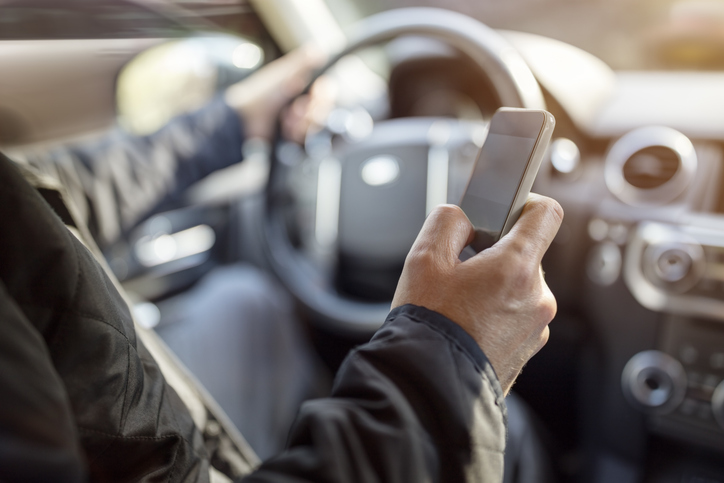
The Dangerous Truth About Distracted Driving in Fort Myers: What Every Driver Needs to Know
Florida phone-use citations on I-75 and on Colonial Boulevard have climbed every year since 2019, when the state’s wireless-communications law took effect. The citations are interesting data. What I care about professionally is different: whether a client can prove what the driver was doing on the phone in the forty-five seconds before impact, and whether the cell records we pull hold up when the carrier’s lawyers start pushing back. Those two questions are what I want to address here.
The answer to “does phone use alone win the case” is that it does not, and after thirty years of handling these files in Lee and Collier Counties, I have watched that misunderstanding cost clients a lot of money and time. What follows is what actually moves the needle — five Florida statutes, a recurring set of local fact patterns, and the work we do in the first thirty days that makes or breaks the file.
What Florida law actually says about distracted-driving cases
Five statutes do most of the work in a Fort Myers distracted-driving claim. I am going to plain-English each one because the statute numbers on their own do not help anyone.
§768.81, Florida Statutes — Modified comparative negligence. In March 2023 the Florida Legislature changed how fault gets split between drivers. If a jury assigns you 50% or more of the blame, you recover zero, even if your damages are significant. That single change is why the defense in a distracted-driving case will try so hard to argue you were also distracted, or speeding, or following too closely. We handle this by getting our own client’s phone records pulled and reviewed before the carrier asks for them, so we know what the file looks like.
§95.11(4)(a), Florida Statutes — Two-year statute of limitations. The same 2023 reform cut the negligence statute of limitations from four years down to two. Two years is the outside window to file suit on most distracted-driving injury claims. If a client comes to us at month twenty-one, we can still work, but we have lost most of the ground that comes with an unhurried investigation. Call early.
§627.736, Florida Statutes — Personal Injury Protection (PIP). Florida is one of the few no-fault states left. Your own auto policy pays the first $10,000 in medical and lost-wage benefits regardless of who caused the crash. PIP runs out quickly on a real injury, and the 14-day rule trips up clients regularly: if you do not see a qualified medical provider within fourteen days of the crash, you lose PIP benefits entirely. We tell every new caller to get to a doctor inside the first week.
§627.727, Florida Statutes — Uninsured and Underinsured Motorist coverage. Florida does not require bodily injury liability coverage on personal auto policies, which is something most drivers do not realize until they are hurt. If the distracted driver who hit you carries only the state-required PIP and property damage, your only meaningful recovery may be your own UM coverage.
§316.066, Florida Statutes — Crash reporting. Any crash with injury, death, or apparent property damage of $500 or more requires a written law-enforcement report. The narrative an officer writes at the scene — including any notation that a driver admitted to looking at their phone — is the single most valuable document in a distracted-driving file. If law enforcement was not called to your wreck, we still have options, but the case is harder.
The federal data picture is consistent with what we see on the ground. The National Highway Traffic Safety Administration reports thousands of distracted-driving deaths every year, and the Insurance Institute for Highway Safety confirms phone use behind the wheel remains a stubborn cause of serious injury. For Florida-specific licensing and crash data, the Florida Highway Safety and Motor Vehicles page is the one I send clients to.
Distracted-driving patterns we see on Lee County roads
Eight years ago I would have said texting was the whole problem. Today the fact pattern is more varied. After running these cases out of our Fort Myers work, here are the recurring patterns that fill our intake calendar:
- The Colonial Boulevard rear-ender. Stop-and-go traffic between US-41 and I-75, a driver looks down to read a text, the car in front brakes, and the wreck happens at about 30 mph. Low speed, but soft-tissue and disc injuries are common at that impact range.
- The Cleveland Avenue left-turn. A driver heading north on Cleveland Avenue is dialing a hands-free call and looks up too late to see oncoming traffic on a permissive left. These cases turn on phone records and intersection camera footage.
- The McGregor Boulevard sideswipe. McGregor narrows in places and the bike traffic is heavy. A driver glances at the screen on the dash and drifts. The cyclist injuries on this corridor are the ones I dread most.
- The Daniels Parkway commercial-vehicle wreck. Box trucks and delivery vans running tight routes through the airport corridor. Driver-facing dash cams are now standard on most fleets, which has changed how we approach commercial defendants.
- The I-75 near Alico Road highway crash. Highway speeds plus a single distracted glance equals a 70-mph rear impact. These are the catastrophic-injury files.
- The Six Mile Cypress Parkway navigation wreck. A driver fumbling with a GPS app or restaurant search. The hand on the phone never returns to the wheel before the impact.
- The Summerlin Road parking-lot pull-out. Lower-speed, but commonly a pedestrian or cyclist case because the driver’s attention was on the screen instead of the side mirror.
- The Pine Island Road bridge wreck. Heavy tourist traffic, unfamiliar drivers, and the temptation to take photos. We have worked more than one of these.
What makes a distracted-driving file harder than it looks
The instinct of every client is the same: the other driver was on the phone, so this case ought to be easy. Here is why it is not.
The phone is not in the report. Most officers do not write phone use into a Florida Traffic Crash Report unless the driver admits it or a witness saw it. Without that notation, we have to subpoena cell records from the carrier, which takes thirty to ninety days, and the carriers are increasingly aggressive about narrowing what they produce.
Hands-free is still distracted. Florida’s 2019 wireless-communications law focuses on texting while driving. A driver on a Bluetooth call is technically compliant with the statute but is cognitively impaired in measurable ways. Juries do not always see hands-free use as wrongdoing the way they see texting, and we have to educate them.
The comparative-negligence pressure. Under the 2023 reform, the defense’s whole strategy is to push you toward 50%. They will pull your phone records too. If you took a call thirty seconds before the wreck, even on speakerphone with both hands on the wheel, that fact will surface and we have to be ready for it.
PIP runs out fast. A serious crash burns through $10,000 of PIP in the first MRI and physical-therapy block. Once PIP is gone and the client is still in treatment, the medical-lien picture gets complicated.
Tesla and other manufacturer-authorized repair networks. When a newer vehicle is involved, the diagnostic data — event data recorder pulls, manufacturer-authorized shop reports, even infotainment logs — can show whether a driver was interacting with a screen at impact. We pull that data within the first forty-five days when we can.
From our files — a South Fort Myers head-on
A South Fort Myers man came to us after a head-on collision with a driver who had crossed the center line. The other driver had been looking at something in the car rather than the road. Our client sustained a fractured wrist and significant facial injuries — the kind of case that looks clear-cut until the carrier starts building a comparative-fault theory. We documented the cell records, the crash reconstruction, and the medical chronology, and the matter resolved for $575,000. What made the difference was moving on the phone data before the carrier could slow-walk the subpoena.
What to do in the first thirty days after a distracted-driving wreck
I have built this list out of what I have actually watched make a difference in our files. It is short on purpose.
- Get the long-form crash report. Even if your wreck felt minor, get law enforcement to the scene and ask the officer to note any admissions about phone use. Statements made at the scene are admissible in ways later statements often are not.
- Photograph the other driver’s hand position if you safely can. Many of our clients have photos of the other vehicle from the scene; what we wish they had is one frame showing the other driver’s phone visible in the cup holder or seat.
- See a doctor inside fourteen days. The §627.736 PIP statute will lock you out otherwise. Urgent care counts. A chiropractor counts. Do not wait to “see if it gets better.”
- Save the phone in the other car — well, save the request. You cannot physically take the other driver’s phone, but your lawyer can send a litigation hold letter within seventy-two hours that puts the at-fault driver on notice not to delete phone data. Carriers will not preserve forever; the hold letter matters.
- Pull your own declarations page. The single most useful document for the first call with a lawyer. It tells us what UM coverage you have, what PIP deductibles apply, and whether stacking is in play.
- But the recorded statement the adjuster wants from you, before you have seen a doctor, is not a tool that helps your case.
- Write down what you remember within forty-eight hours. Not for the file, for yourself. Memory of the wreck degrades fast. A page of notes written two days out will be more accurate than a deposition six months later.
Key Takeaways
- Phone use behind the wheel is strong evidence of negligence in a Florida case, but you still have to prove causation and your damages — and the modified comparative-negligence rule under §768.81 means the defense will be pushing you toward 50% fault.
- The Florida statute of limitations for negligence is now two years under §95.11(4)(a). The clock starts at the crash, and cell records age off carrier servers faster than the statute runs.
- PIP under §627.736 covers your first $10,000 in medical and lost wages no matter who caused the wreck — but the 14-day medical rule will cut you off if you wait.
- If the at-fault driver carries no bodily-injury coverage, your UM coverage under §627.727 may be the only meaningful recovery source. Pull your own declarations page first.
- The Fort Myers corridors that show up in our distracted-driving caseload over and over are Colonial Boulevard, Cleveland Avenue, McGregor Boulevard, Daniels Parkway, Six Mile Cypress Parkway, Summerlin Road, Pine Island Road, and I-75 near Alico Road.
Frequently Asked Questions
Q1. If the at-fault driver was on a phone, does that automatically win my case in Florida? No. Phone use is strong evidence of negligence, but you still have to prove the distraction caused the crash and prove your damages. Florida is a modified comparative negligence state under §768.81 — if a jury puts you at 50% or more at fault, you recover nothing, so the other side will push hard to argue you contributed too. Getting the cell records preserved early is what turns a phone call into a verdict.
Q2. How long do I have to file a distracted driving injury claim in Florida? Two years from the date of the crash for most negligence claims, under §95.11(4)(a). The Florida Legislature cut this from four years to two in the March 2023 tort reform. Two years sounds like a long time, but between PIP exhaustion, medical-records collection, and getting cell carrier subpoenas out before data ages off, it goes faster than people expect.
Q3. Does PIP cover me even if the other driver caused the crash? Yes. Florida is a no-fault state for medical bills under §627.736. Your own auto policy pays the first $10,000 in medical and lost-wage benefits regardless of who caused the crash. PIP is a starting point, not a ceiling. Once it runs out, or if your injury meets the permanency threshold, you can pursue the at-fault driver’s liability coverage for the rest.
Q4. What if the distracted driver only carried the Florida minimum liability coverage? This is one of the most common problems we see in Lee County. Florida does not require bodily injury liability coverage on personal auto policies — only PIP and property damage. If the at-fault driver carries no BI, your uninsured/underinsured motorist coverage under §627.727 becomes the recovery source. Pull your declarations page and check the UM line first.
Q5. Do I have to file a crash report if there was a distracted-driving wreck? Under §316.066, a written report is required when there is injury, death, or apparent property damage of at least $500. Even on a fender-bender that feels minor, get law enforcement on scene and get the long-form report. The officer’s narrative, the driver statements, and any noted phone use are the building blocks of a distracted-driving case six months later.
Talk to our office
If you have been hurt in a distracted-driving wreck anywhere in Lee or Collier County, call our office at 239-992-8259 for a free consultation. There is no fee unless we recover for you. I personally review every new intake. We will tell you straight what we think the case is worth and what the first thirty days should look like.
About the Author

David B. Pittman, Esq. founded Pittman Law Firm, P.L. and has spent more than thirty years handling personal injury cases in Fort Myers and across Lee County. The firm’s Fort Myers presence handles a steady stream of serious-injury work along the Daniels Parkway, Six Mile Cypress, McGregor Boulevard, Cleveland Avenue, and Summerlin Road corridors, and along I-75 between Estero and Bell Tower. Our practice represents injured clients across Lee and Collier Counties, with a particular focus on commercial-vehicle, complex-liability, and serious-injury cases.
David holds an AV-Preeminent rating from Martindale-Hubbell and belongs to the Multi-Million Dollar Advocates Forum. His undergraduate degree is from The Citadel, The Military College of South Carolina, and his JD is from the University of South Carolina School of Law.
David has held a Florida real estate broker license for twenty-five years, a credential that shapes how the firm reads the property side of premises cases. The firm handles personal injury cases across Lee and Collier Counties, serving Fort Myers, Bonita Springs, Naples, Cape Coral, Estero, and Lehigh Acres, with offices at Windsor Place in Bonita Springs (main) and Fort Myers (satellite). Call 239-992-8259 for a free consultation.
The information on this website is for general information purposes only. Nothing on this site should be taken as legal advice for any individual case or situation. This information is not intended to create, and receipt or viewing does not constitute, an attorney-client relationship with Pittman Law Firm, P.L. This is an attorney advertisement.