

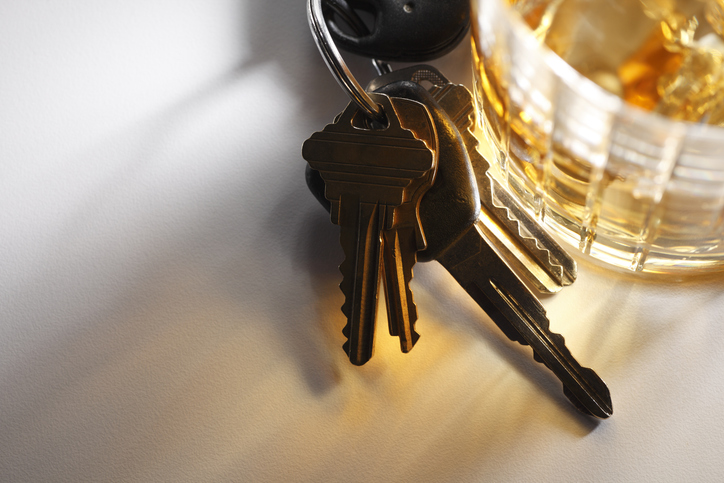
Why Do People Drive Drunk? Insights and Prevention Tips
The CDC’s data on alcohol impairment makes one thing clear: judgment and reaction time are already degraded well before a driver feels drunk. By 0.05 BAC — still below Florida’s legal 0.08 limit — hazard perception slows. By 0.08, divided-attention tasks like watching for a pedestrian while reading a traffic signal become genuinely impaired. By the time a driver registers at 0.15 at the breath test station, the crash has already happened. I have watched this pattern play out across thirty years of DUI case files in Lee and Collier Counties, and the answer to “why did that person get behind the wheel” is almost never a single reason. It is a stack of small bad choices that line up the wrong way.
I am not writing this as a temperance lecture. I am writing it because the people we represent are usually trying to make sense of what happened, and because understanding the patterns matters when you drive the I-75 corridor through Lee and Collier Counties or US-41 / Tamiami Trail on a Friday or Saturday night.
What Florida law actually says about drunk-driving liability
Before the patterns, the law. Drunk driving in Florida is two cases stacked on top of each other — a criminal case the state runs, and a civil case the injured person runs through a firm like ours. The civil side is where most of the recovery happens, and a few statutes do most of the work.
Modified comparative negligence — §768.81, FL Stat. In 2023 the Florida Legislature changed the rule. Today, if a jury finds you 50 percent or more at fault for your own injury, you recover nothing. Anything 49 percent and under, your recovery is reduced by your share of fault. In drunk-driving cases this matters because defense counsel almost always tries to put some fault on the injured driver — speed, lane position, failure to take evasive action. It is our job to keep that number below 50 and, in most clear-impairment cases, well below it.
Statute of limitations — §95.11(4)(a), FL Stat. The same 2023 reform cut the negligence statute of limitations from four years to two. For a crash that happened on March 24, 2023, or later, you have two years to file. That window closes faster than people think, especially when somebody spends six months in physical therapy before they ever call a lawyer.
PIP — §627.736, FL Stat. Florida is a no-fault PIP state. Your own auto policy pays the first $10,000 of medical bills and lost wages regardless of who caused the crash. PIP covers you as a driver, a passenger, a pedestrian, or a cyclist, so long as you live in a household with a Florida-insured car. PIP does not bar you from suing the drunk driver — it just runs alongside.
UM coverage — §627.727, FL Stat. Uninsured and underinsured motorist coverage on your own policy is the single most important line item I want my clients to have. In drunk-driving cases the at-fault driver frequently has the state-minimum policy — meaning no bodily-injury liability at all, only $10K PIP and $10K property damage. UM is what closes the gap.
Crash report — §316.066, FL Stat. The investigating officer’s long-form crash report is the document we build the file around. In a DUI case it will include the driver’s breath result, field-sobriety observations, and any statements made at the scene. Florida’s Department of Highway Safety and Motor Vehicles maintains the statewide crash database; we pull the long-form report on every case.
Five patterns that show up in our DUI case files
Here is the version I give clients. Drunk driving in Southwest Florida does not look like one thing. It looks like five things, and they overlap.
- The “I’m fine” miscalculation. The driver is over the legal 0.08 but feels under it. The CDC data on impairment thresholds is clear that judgment and reaction time are already degraded well before someone feels drunk. This is the most common pattern in our files. The driver swears they had two drinks. Their breath says four.
- The overconfident driver. Someone who has driven home drunk fifty times without incident assumes the fifty-first will be the same. The NHTSA data on repeat-offender crashes lines up with what we see — prior DUI history is one of the strongest predictors of the crash on our intake form.
- The “no other way home” driver. Late shift, no rideshare available, twenty miles from home down a dark stretch of US-41 or a county road in Lehigh Acres. The driver does the math and decides the risk of driving is lower than the cost of figuring out an alternative. They are wrong, but the calculation is real.
- The mixed-substance driver. Alcohol plus a prescription sleep aid, plus a muscle relaxer, plus an antihistamine. We see this in older clients and in clients with back pain or anxiety prescriptions. The legal exposure here is the same as straight alcohol impairment, and sometimes worse, because the toxicology report runs to two pages.
- The hospitality-industry driver. Server, bartender, line cook, valet — getting off at one or two in the morning after drinking on shift. SWFL has a deep hospitality economy, and the pattern is recognizable. The post-shift drive home is when a lot of these crashes happen.
Four things that complicate a drunk-driving case in Florida
People assume a DUI case is a slam dunk on the civil side. It is not. Liability is usually clean, yes. But the practical problems are elsewhere.
The driver is often underinsured. Florida does not require bodily-injury liability coverage at all. A driver can be legal on Florida roads with no BI coverage. We see policy limits of $10,000 or $25,000 on catastrophic-injury cases all the time. Recovery in those cases is built on the injured person’s own UM policy, on a dram-shop claim where the facts support one, and sometimes on the driver’s personal assets if there are any to reach.
Dram-shop is narrow in Florida. Some states let you sue the bar that overserved a drunk driver on a straight negligence theory. Florida does not. Under §768.125, the bar is liable only if it knowingly served someone habitually addicted to alcohol, or served a minor. “Habitually addicted” is a high bar — we have to develop facts the bar actually knew, not facts a reasonable bartender should have spotted. That investigation starts on day one.
Punitive damages have a statutory cap and a procedural gate. Florida allows punitive damages in drunk-driving cases — that is one of the rare situations where the statute explicitly permits them — but the cap is generally three times compensatory damages or $500,000, whichever is greater. And we cannot just plead punitives. We have to make a record and get court permission first.
The medical bills outrun the policy. A serious DUI crash often produces a six-figure medical run before the client is even out of inpatient rehabilitation. The math of recovery is about layering coverages: PIP, then health insurance, then UM, then liability, then any third-party claim. Sequencing matters. Settling one before another is fully developed is how clients lose money.
From our Estero case files
One case that illustrates the coverage problem well: an Estero client was driving home on a weeknight when another driver crossed the center line and struck her head-on. The at-fault driver had been drinking. Our client needed neck surgery — a multi-level cervical fusion — and spent months in rehabilitation before she could return to work.
The drunk driver’s liability policy was thin. The case was built primarily through our client’s own uninsured motorist coverage. The DUI conviction on the criminal side established the driver’s impairment without us having to relitigate it in the civil case. The matter settled for $500,000. The lesson I draw from it: if she had dropped her UM coverage to save a few dollars at renewal, the recovery would have been a fraction of that.
What to do if a drunk driver hits you
The advice I give clients in the first phone call. Not generic — these are the things I have watched matter:
- Get the long-form crash report, not the short citizen copy. The short version often does not include the breath result or the field-sobriety observations. The long-form does. Pull it from the investigating agency about ten days out.
- Photograph the other driver’s vehicle, license plate, and the inside of the cabin if you safely can. Open containers, receipts, food wrappers from the bar — anything visible from outside the car. We have built dram-shop investigations off a photograph of a takeout receipt sitting on a passenger seat.
- Tell the EMTs every place that hurts, even mildly. Adrenaline masks pain for the first six to twelve hours. If it is not on the emergency-room intake, the defense will argue later that it was not caused by the crash.
- Do not give a recorded statement to the at-fault driver’s insurer. You are not required to. Their adjuster is paid to develop facts that hurt your case. Your own PIP carrier is a separate question — talk to a lawyer before that call too.
- Pull your own declarations page and read the UM section. Most clients do not know whether they have UM coverage until they call us and we walk them through the page. If you do have it, that policy is often the most valuable single document in the file.
- Write down what you remember within forty-eight hours. Where you were coming from, what lane you were in, what the other driver did, what you said to the officer. Memory degrades. Write it while it is fresh and put the document in a drawer.
Key Takeaways
- Drunk-driving cases are almost always two-policy cases — the drunk driver’s liability coverage and the injured person’s own uninsured motorist policy. UM is usually where the real money comes from.
- Florida’s two-year statute of limitations under §95.11(4)(a) is unforgiving. Crashes from March 24, 2023, forward have a two-year clock — not the old four.
- Comparative fault under §768.81 matters even when the other driver is plainly drunk. Keeping your share of fault under 50 percent is the threshold between recovery and zero.
- Florida’s dram-shop statute (§768.125) is narrower than most clients expect. Suing the bar is possible, but only on specific facts — knowingly serving a habitual addict or a minor.
- The long-form crash report and the toxicology results drive the file. Get them early and read them with a lawyer.
Frequently Asked Questions
If a drunk driver hits me in Florida, do I sue the driver, the bar that served them, or both?
The driver is the primary defendant. Florida’s dram-shop statute (§768.125) is narrow — a bar or restaurant is only on the hook if it knowingly served someone habitually addicted to alcohol, or served a minor. In most cases the practical answer is the driver and the driver’s insurance, plus any uninsured motorist coverage on your own policy.
How long do I have to file a personal injury lawsuit after a drunk driving crash in Florida?
For crashes on or after March 24, 2023, you have two years from the date of the crash to file suit under §95.11(4)(a). The old four-year window is gone. Wrongful death claims have their own two-year clock running from the date of death.
Does my PIP cover me if I was a passenger in a car with a drunk driver?
Yes. Florida PIP under §627.736 pays the first $10,000 of medical bills and lost wages regardless of who was at fault. If you live in a household with a car insured in Florida, your PIP follows you as a passenger, a pedestrian, or a cyclist. PIP does not bar you from also pursuing the at-fault drunk driver for the rest of your damages.
What if the drunk driver has minimum insurance and my medical bills are six figures?
This is the most common drunk-driving fact pattern we handle. Florida only requires $10,000 of PIP and $10,000 of property damage liability — no bodily injury liability is mandated by the state. The recovery path is your own uninsured/underinsured motorist coverage under §627.727, then potentially a personal asset claim against the driver, then dram-shop if the facts support it.
Will the criminal DUI case help or hurt my civil case?
It usually helps. A DUI conviction or even a plea generally establishes negligence per se in the civil case, which means we do not have to re-prove the drunk driver was impaired. We still have to prove your injuries and damages, but a guilty plea or verdict in the criminal court takes a major argument off the table on the civil side.
If a drunk driver hurt you or someone you love, call us
If you or a family member was hit by an impaired driver anywhere in Lee or Collier County, I would like to hear what happened. The first conversation is free and there is no fee unless we recover for you. Call the firm at 239-992-8259, or stop by the main office at 3525 Bonita Beach Rd, Suite 107, in Bonita Springs. We also have a Fort Myers office for clients on the north end of the county.
About the Author

David B. Pittman, Esq. founded Pittman Law Firm, P.L. and has spent more than thirty years handling personal injury cases across Southwest Florida. The firm represents injured clients across Lee and Collier Counties — Bonita Springs, Fort Myers, Naples, Estero, Cape Coral, and Lehigh Acres — with offices in Bonita Springs and Fort Myers, and a particular focus on commercial-vehicle, complex-liability, and serious-injury cases.
Before founding Pittman Law Firm, P.L., David completed his undergraduate work at The Citadel, The Military College of South Carolina and his JD at the University of South Carolina School of Law. He holds an AV-Preeminent rating at Martindale-Hubbell and is a member of the Multi-Million Dollar Advocates Forum.
David has held a Florida real estate broker license for twenty-five years, a credential that shapes how the firm reads the property side of premises cases. The firm handles personal injury cases across Lee and Collier Counties, serving Fort Myers, Bonita Springs, Naples, Cape Coral, Estero, and Lehigh Acres, with offices at Windsor Place in Bonita Springs (main) and Fort Myers (satellite). Call 239-992-8259 for a free consultation.
The information on this page is for general informational purposes only and is not legal advice. Reading this article does not create an attorney-client relationship with Pittman Law Firm, P.L. Every case turns on its own facts, and prior results do not guarantee a similar outcome. This is attorney advertising.