

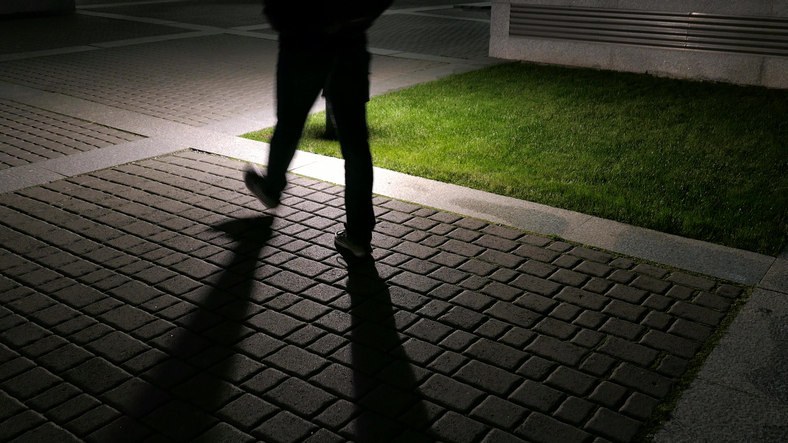
How Inadequate Lighting Leads to Slip and Fall Accidents in Fort Myers
A broken slab in broad daylight is something most people step around. The same broken slab under a burned-out pole light is something nobody sees until they are already on the ground. That difference — between a hazard that is visible and a hazard that is hidden by inadequate lighting — is what separates a near-miss from a serious injury case. Florida law puts the obligation to maintain safe lighting on the property owner, not the person walking through the parking lot at 8 p.m. When a bulb has been out for weeks and management’s own maintenance log shows the complaint sitting unremedied, that is not an accident. That is a documented failure.
For the last twenty-five years, in addition to practicing law, I have held a Florida real estate broker license, and that broker work has shaped how we read property cases. When I look at a lit-poorly walkway or a dark stairwell, I am not just thinking like a personal injury lawyer. I am thinking like someone who has spent twenty-five years watching how commercial property is supposed to be inspected, maintained, and documented — and how often it is not. That perspective shapes the questions we ask, the records we request, and the witnesses we line up.
What follows is what we tell clients who come to our Fort Myers office after a fall on a poorly lit property — what Florida law actually requires of the owner, what a court will care about, and what we have learned about how these cases turn.
What Florida law requires of a property owner
Florida premises liability law turns on two main statutes and a body of older case law about the duty of reasonable care. The duty changes depending on the kind of hazard.
If you slipped on a wet or foreign substance on the floor of a business — water tracked in from the rain, a drink spilled by another customer, condensation under a cooler — the controlling statute is §768.0755, Florida Statutes. That statute puts the burden on the injured person to show the business had actual or constructive knowledge of the substance and a chance to remedy it. Constructive knowledge — the business should have known — usually gets proven with the length of time the spill sat there, or a pattern of similar spills the business never fixed.
If you tripped on a structural problem — a cracked sidewalk, a sunken paver, a missing handrail, a broken section of concrete on a walkway — the analysis shifts to §768.0710 and general premises liability principles under §768.075. The duty owed to an invitee — a customer, a patient walking into a clinic, a hotel guest — is the higher one: keep the property in reasonably safe condition, inspect for hidden hazards, warn about anything dangerous the owner knows or should know about.
Inadequate lighting rarely appears in any of these statutes by name. It shows up as one of the conditions a jury weighs when asking whether the owner acted reasonably. A patch of broken concrete at 11 a.m. in a sunlit courtyard is a different case than the same patch at 8 p.m. under a burned-out parking lot pole, even though the defect is identical.
Factors a court considers
When we evaluate a lighting-related fall, here is what we know the defense, the carrier, and ultimately a jury will weigh:
- What the lighting actually measured at the spot of the fall. If we can get out there with a light meter — or have an engineering witness do it — and document foot-candle readings well below what the property’s own manuals or the applicable building code call for, the case changes.
- How long the lighting condition had existed. A pole light out for one night is a different story than one out for three months with a work order sitting in someone’s inbox.
- Whether there were prior complaints. Tenants, employees, customers — any prior written complaint about a dark area is gold, because it shoots a hole in the “we didn’t know” defense.
- Whether the underlying hazard was open and obvious. Florida law gives the owner an argument that a hazard you could have seen with ordinary care is your problem. Inadequate lighting is often the reason a hazard was not open and obvious. The two issues are linked.
- Whether the property had any system of inspection. A written nightly walkthrough log with a checkbox for “exterior lighting” is the kind of thing a well-run property has. The absence of one tells a story too.
- Whether the lighting deficiency caused the fall. Causation is not assumed. We have to connect the dim light to the missed hazard to the injury, with witness testimony, photographs taken at the time of day the fall occurred, and sometimes a reconstruction.
The trivial-defect doctrine — why it is not as clean as it sounds
Defense lawyers like to argue what is called the trivial defect doctrine. The shorthand version they pitch is that defects under about an inch are not actionable as a matter of law. That overstates it. Florida courts have, in some cases, said that a very minor variation in pavement is not enough by itself to put a reasonable owner on notice that a fix is needed. But it has never been a bright-line “one inch” rule, and Florida courts have repeatedly said the totality of the circumstances matters.
This is where lighting becomes load-bearing. A three-quarter-inch lip on a paver in a brightly lit, foot-trafficked entrance during business hours may well be trivial. The same three-quarter-inch lip on the same paver, in a courtyard where the overhead fixture has been out for two months and the area is in shadow, with two prior complaints in the property manager’s file, is not the same case. The defect did not change. The circumstances did. A jury is entitled to look at all of it.
What we see most in Fort Myers
The Fort Myers walkway, parking lot, and stairwell falls we handle cluster in a few predictable places. Strip-center parking lots along Cleveland Avenue and South Tamiami where pole lights age out and the owners are slow to replace them. Medical plazas off Summerlin Road and Daniels Parkway where the back entrance — the one patients actually use because they parked closer — is darker than the photographed-for-marketing front entrance. Hotel and resort properties along McGregor Boulevard with landscape lighting that looks beautiful in a brochure but leaves the pedestrian walkways underlit. Apartment complex stairwells along Six Mile Cypress Parkway where a bulb has been out so long the residents stopped reporting it. Storefront entries where the threshold is dark because the sun is behind the building and no one thought to add task lighting.
The geography matters because we know who the property managers are, we know which insurers cover which portfolios, and we know which witnesses to track down before they get reassigned.
When a burned-out bulb and a broken walkway compounded each other
One we worked recently is the kind of case that helps explain how lighting and a structural defect compound each other. An older client of ours was walking a connector walkway between a parking area and a medical office at a plaza off Summerlin Road. A section of the concrete had broken jagged at a seam — not a hairline crack, an actual chunk of displaced concrete with raised edges. The walkway was uneven and, in the part of the day she was walking it, badly underlit. She caught a foot, went down hard, and fractured the femoral neck on her right side.
That fracture led to a partial hip replacement, an inpatient rehab stay, and the kind of recovery older adults dread. When we got into the records, the picture was worse than the fall suggested. The walkway had been in that condition for months. Tenants in the plaza had complained in writing to the property manager. A handyman had been told to mark it with cones and never did. The commercial property management company that handled day-to-day maintenance had a written inspection program that no one was actually performing.
We brought claims against the management company and the relevant entities, walked the carrier through every prior complaint, the missed inspections, and the failure to mark or repair, and resolved the case in a six-figure settlement that paid the hospital and rehab bills, the surgical lien, lost income, and a meaningful amount for the permanent reduction in mobility she has lived with since. The lighting did not cause the broken concrete. The broken concrete did not jump out at her because of the lighting. Both of those failings belonged to the same property manager, and once we documented them, the carrier had no real defense.
What a property owner is supposed to be doing
This is where the broker license earns its keep. Having spent twenty-five years as a Florida real estate broker in addition to representing injured Floridians, I have a clear picture of what reasonable property management looks like on the inside — because I have lived inside the systems that are supposed to run it.
A reasonably run commercial property has, at a minimum:
- A written exterior and common-area inspection schedule, with documented walkthroughs at known intervals — typically nightly or weekly depending on the property type.
- A logged work-order system that captures bulb-out and fixture-failure reports with timestamps, and a service-level expectation for how quickly they get fixed.
- A maintenance vendor relationship — usually an outside lighting contractor — with a contact on file and a regular check schedule.
- A reporting line from tenants and customers for hazard complaints, and a paper trail showing what was done in response.
- Cone, sign, or barrier protocols for known hazards that cannot be fixed immediately.
- Building code and lease-required illumination levels documented, not assumed.
When we pull discovery on a defendant property and find none of those, we know what kind of case we have. When we find some of them but a gap in the logs around the time of our client’s fall, we know that too. Property owners who run their portfolios well do not usually end up in our office. The ones who do not are the ones we recognize.
What to do if you fell
If you went down on someone else’s property and you are reading this in the days after, here is the practical advice I give the people who call our Fort Myers number:
- See a doctor today. Hip, back, wrist, and head injuries from falls do not always show their full picture in the first 24 hours. Documented same-day treatment also closes off a defense argument that the injury came from something else.
- Ask for an incident report and keep a copy. Most commercial properties have a form. If they refuse to give you a copy, write down the manager’s name, the date, the time, and what they said.
- Go back and photograph the scene. The same spot, the same time of day, with the same lighting conditions. If you fell at 8 p.m., the daytime photo is not the photo you need.
- Keep your shoes. Bag them, don’t clean them, and don’t throw them out. Defense lawyers ask about footwear in every fall case.
- Write down what you remember while it is fresh. What you were doing, what you noticed, what you didn’t see until you were on the ground.
- Get the names of any witnesses. Other customers, employees, anyone who came over to help.
- Do not give a recorded statement to the property’s insurance adjuster before you talk to a lawyer. Those calls are not friendly fact-finding. They are evidence-gathering for the other side.
- Call us early. Lighting evidence disappears fast — bulbs get replaced, fixtures get repaired, work orders get backdated. The sooner we can send a preservation letter, the more of the truth we get to keep.
Key Takeaways
- Florida premises liability law treats wet-substance falls (§768.0755) and structural-defect falls (§768.0710, §768.075) differently — the proof burden is not the same.
- Inadequate lighting is rarely the whole case on its own, but it is often the reason an otherwise small or visible hazard became dangerous to your client.
- The trivial defect doctrine is not a clean “under one inch” rule — lighting, traffic, prior complaints, and the totality of the surroundings all matter.
- Strong cases are built from prior-complaint records, inspection logs (or their absence), foot-candle readings, and witness accounts captured before the property quietly remediates.
- You generally have two years from the fall to bring suit in Florida — and tighter notice deadlines apply if a government property was involved under §768.28.
Frequently Asked Questions
Does a dimly lit parking lot by itself mean the property owner is liable for my fall?
Dim lighting alone is not automatic liability. Under Florida law, the question is whether the owner knew, or should have known, that the lighting hid a real hazard and whether a reasonable owner would have done something about it. Lighting becomes powerful evidence when it is paired with the underlying defect that actually caused the fall — a broken curb, a pothole, a raised slab — because poor light is what kept you from seeing it.
What Florida statute applies to a slip and fall in a Fort Myers store or restaurant?
If you slipped on a wet substance — water, oil, a spilled drink — the controlling statute is §768.0755, which requires you to show the business had actual or constructive knowledge of the substance. If you tripped on a structural condition like a broken sidewalk, cracked pavement, or a missing handrail, §768.0710 and ordinary premises liability principles apply, and the proof burden is different. Knowing which bucket your fall lands in shapes the entire case.
I tripped on something less than an inch high. Do I still have a case?
Maybe. Florida courts have sometimes treated very small height differences as trivial defects that are not actionable, but it is not a bright-line rule. Lighting, foot traffic, weather, the location of the defect, and whether the owner had prior complaints all factor in. A half-inch lip in a bright, clean lobby may not be actionable. The same half-inch lip on a dim walkway with months of complaints in the file can be.
How long do I have to file a slip and fall claim in Florida?
For falls occurring on or after March 24, 2023, Florida shortened the personal injury statute of limitations from four years to two years. If a government property is involved — a city sidewalk, a county building, a public school — you also have to give written notice to the agency within three years under §768.28, and the agency gets six months to respond before you can sue. Miss either deadline and the case is gone.
What should I do in the first 24 hours after a fall on someone else’s property?
Get medical attention the same day, even if you think you can walk it off — undiagnosed hip and back injuries get worse. Ask the property to write up an incident report and request a copy. Photograph the spot from the angle you were walking, photograph the lighting after dark if that is when it happened, and photograph the shoes you had on. Get names and numbers of anyone who saw it. Then call a lawyer before you talk to the property’s insurance adjuster.
Talk to us before you talk to the property’s insurance company
If you were hurt in a fall on a poorly lit walkway, parking lot, stairwell, or storefront entry in Fort Myers, Bonita Springs, Naples, Estero, Cape Coral, or Lehigh Acres, our office would like to hear what happened before the property does its own quiet cleanup of the scene. The first calls we make in these cases — the preservation letter, the request for inspection logs, the request for prior complaints — are the ones that decide whether the truth is still on file by the time of trial.
Call 239-992-8259 for a free consultation with our firm. There is no fee unless we recover for you.
About the Author

David B. Pittman, Esq. has practiced personal injury law in Fort Myers and across Lee County for more than thirty years, and is the founder of Pittman Law Firm, P.L., with a sustained focus on personal injury and premises-liability cases. The firm’s Fort Myers presence handles a steady stream of serious-injury work along the Daniels Parkway, Six Mile Cypress, McGregor Boulevard, Cleveland Avenue, and Summerlin Road corridors, and along I-75 between Estero and Bell Tower.
David earned his undergraduate degree at The Citadel, The Military College of South Carolina, and his law degree at the University of South Carolina School of Law. He is rated AV-Preeminent by Martindale-Hubbell and belongs to the Multi-Million Dollar Advocates Forum.
David has held a Florida real estate broker license for twenty-five years, a credential that shapes how the firm reads the property side of premises cases. The firm handles personal injury cases across Lee and Collier Counties, serving Fort Myers, Bonita Springs, Naples, Cape Coral, Estero, and Lehigh Acres, with offices at Windsor Place in Bonita Springs (main) and Fort Myers (satellite). Call 239-992-8259 for a free consultation.
The information on this website is for general information purposes only. Nothing on this site should be taken as legal advice for any individual case or situation. This information is not intended to create, and receipt or viewing does not constitute, an attorney-client relationship.