

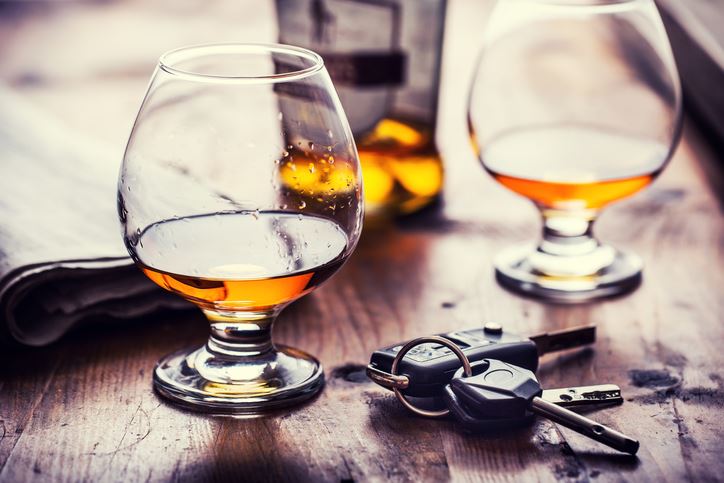
Quick Tips to Help Florida Drivers Spot and Avoid Drunk Drivers
Put four or five car lengths between you and the car that is drifting. That single move — backing off — is what keeps a dangerous driver in front of you instead of on top of you. I know it sounds too simple. I have worked these files for three decades, and the crash photos that come across my desk almost always show the same pattern: a sober driver who closed the gap and could not stop in time when the impaired car in front did something unpredictable.
The Florida Highway Safety and Motor Vehicles data, which you can pull from the state at flhsmv.gov, has shown impaired-driving crashes climbing across the state for several years now. Friday and Saturday nights between 11 p.m. and 3 a.m. remain the worst window. Holiday weekends are worse. The stretch of US-41 between Bonita Beach Road and Pine Ridge in Naples, where the road shifts from six lanes to four and back again, is one of the spots where late-night impaired drivers tend to drift across lanes in our cases.
What Florida law actually says about drunk-driving crashes
Drunk driving is a criminal matter under chapter 316 of the Florida Statutes. The civil side, where our office lives, runs on a different set of rules. Five of those rules matter on almost every drunk-driving case we work, and I want to put them in plain English before the patterns:
PIP (Personal Injury Protection) — under section 627.736, every Florida auto policy carries $10,000 in no-fault medical coverage. It pays first, no matter who hit whom. The catch is the fourteen-day rule. If you do not see a doctor within fourteen days of the crash, you lose PIP entirely. The drunk driver’s status does not matter for this; your own clock is running from the moment of impact.
Modified comparative negligence — under section 768.81, as amended by the 2023 tort reform, a plaintiff who is more than 50% at fault recovers nothing. That changes how defense lawyers handle drunk-driving cases. Even when their driver was three times the legal limit, you will see them try to put 15%, 20%, 30% of the fault on the sober driver for following too close, speeding, distracted driving, whatever they can sell to a jury. We prepare for that fight from day one.
Statute of limitations — under section 95.11(4)(a), the negligence window is two years from the date of the crash for any incident after March 24, 2023. Before 2023 the window was four years. People still call us thinking they have four years. They do not. The shorter window has caught a lot of injured Floridians off guard.
Uninsured/Underinsured Motorist (UM) — under section 627.727, your own policy can carry coverage that pays when the at-fault driver has no insurance or not enough to cover the loss. A meaningful slice of drunk-driving defendants in our cases turn out to be uninsured. UM is the difference between a recovery and an empty file. If you are reading this and you have not checked your declarations page in a year, check it tonight.
Crash-report requirement — under section 316.066, any crash involving injury, death, or apparent damage of $500 or more has to be reported. Always call law enforcement. The traffic homicide investigator’s report in a DUI case is the single most useful document we get; it carries chemical-test results, field sobriety observations, and witness statements that the insurance carrier cannot easily walk back.
Seven driving behaviors that flag an impaired driver on I-75 and US-41
There is a long internet list of “signs of an impaired driver.” Most of it is padded. Here is the shorter version that comes out of three decades of police reports and accident reconstructions we have read:
- Lane drift, not lane change. A drunk driver’s car does not change lanes; it slides into them. Watch for tires touching the lane line, correcting back, and touching again. The pattern is the tell, not any single drift.
- Wrong-speed driving. Either ten over with no apparent reason or fifteen under in the left lane. Speed mismatched to traffic flow, in either direction, is more telling than absolute speed.
- Late braking at intersections. The car gets to the light and stops hard, a second later than it should have. Sometimes the front wheels are over the stop bar.
- Wide turns. A right turn that swings into the far lane. A left turn that crosses the double yellow before straightening out.
- Headlight problems. Driving with headlights off after dark, or with high beams on the interstate and no awareness that traffic is in front of them.
- Stopping in a travel lane. Sitting through a green light, or pulling onto the shoulder of I-75 and stopping for no visible reason.
- Following distance collapsing. The impaired driver tailgates, falls back, tailgates again. Their judgment of distance is the first thing to go.
If you see two of these from the same vehicle inside of a mile, treat the car ahead of you as impaired and act accordingly. You do not have to be right. You have to be safe.
Why DUI crash claims rarely write themselves
People assume a drunk-driving case is a layup. The other driver blew a 0.18, they got arrested at the scene, the criminal case will plead out, and the civil case writes itself. That is rarely the actual shape of the file.
The reasons are practical. The drunk driver is often uninsured, under-insured, or carrying a minimum-limits policy that barely covers an emergency-room visit. The carrier on the other side, knowing the comparative-fault statute changed in 2023, will push hard to assign you some percentage of the blame — for your speed, for your lane position, for not braking sooner. If a third party (a bar, a host, an employer who let the driver leave a work event) had any hand in the impairment, that claim has its own statute and its own short fuse. And the criminal case timeline rarely matches the civil case timeline; the State Attorney’s Office moves on its own schedule, and the civil settlement window can open and close before the criminal plea is entered.
That is why the early evidence work matters more in DUI civil cases than in almost any other type of crash. The dashcam, the bodycam, the bar’s surveillance footage, the receipts from the venue, the cell records that show whether the driver was on the phone — all of that disappears on retention schedules measured in days or weeks if no one sends a preservation letter. Our office sends those letters the same week the file opens.
What to do if you think you are behind a drunk driver right now
Plain steps, in order. I have given this list to family members, to clients’ kids, to the woman who cuts my hair. It is short on purpose.
- Back off. Get four to five car lengths between you and the suspect vehicle. Most drunk-driving collisions are rear-end events because the sober driver behind closed the gap.
- Note the tag, color, make, and direction. Read the tag out loud to yourself until you have it. You will forget it under stress otherwise.
- Call 911 hands-free. Give the dispatcher the road, the nearest exit or cross-street, the direction of travel, and the tag. Florida Highway Patrol takes these calls.
- Stay back. Do not pass. Do not pull alongside to get a look at the driver. Do not flash your lights. Do not honk.
- Exit the road if you can do it safely. If the suspect car is weaving badly, take the next exit and let law enforcement catch up. There is no upside to staying within striking distance.
- If you are hit anyway, do not move the vehicles. Call 911 again. Photograph the scene before tow trucks arrive. Get the names and numbers of any witness who stopped. Then call us.
A DUI civil case that settled in Estero
We represented a client who was hit by an impaired driver in the Estero area. The criminal side moved fast — the driver was arrested at the scene, blew well over the legal limit, and eventually pleaded. The civil side was slower. The driver’s bodily injury coverage was thin and the carrier assigned comparative fault almost immediately, arguing our client had followed too close. We pulled the traffic homicide report, documented the impairment evidence, and made the case for the full value of the injury. The matter resolved for $500,000. The money is not the point of telling that story — what is worth noting is that the carrier’s first argument was fault allocation, not the breath test. That is the standard play now, and it is why the early evidence work matters.
Key Takeaways
- Drunk drivers tend to show patterns, not single mistakes — lane drift that repeats, late braking that repeats, speed mismatched to traffic flow. Two patterns in a mile means treat the vehicle as impaired.
- Florida’s two-year statute of limitations under section 95.11(4)(a) runs while you are still in physical therapy. Do not wait until you feel better to call a lawyer.
- PIP pays the first $10,000 in medical care no matter who hit you, but only if you see a doctor within fourteen days. That clock starts at impact.
- Modified comparative negligence under section 768.81 means defense carriers will work to assign you 51% of the fault even on a DUI case. The early evidence work prevents that.
- Your own Uninsured/Underinsured Motorist coverage is often the only real source of recovery in a drunk-driving wreck. Check your declarations page tonight if you have not in the last year.
Frequently Asked Questions
What should I do if I think the driver next to me on I-75 is drunk?
Back off. Get at least four or five car lengths behind the vehicle, note the tag number, the color, the make, and the exit you last passed, then call 911 from a hands-free setup. Florida Highway Patrol takes these calls seriously and will dispatch a trooper. Do not try to pass the driver, do not pull alongside, and do not flash your lights at them. The single best thing a witness can give law enforcement is a stationary tag number and a direction of travel.
If a drunk driver hits me in Florida, who pays my medical bills first?
Your own Personal Injury Protection coverage pays first under Florida Statute 627.736. PIP covers up to $10,000 in medical care and lost wages no matter who caused the crash, as long as you see a doctor within fourteen days. After PIP is exhausted, we pursue the drunk driver’s bodily injury liability coverage, your Uninsured or Underinsured Motorist coverage if the at-fault driver was uninsured or under-insured, and any third-party claims that apply, such as a bar that over-served the driver.
Can I sue the bar or restaurant that served the drunk driver?
Sometimes. Florida’s dram shop statute, section 768.125, is narrower than people think. You can pursue a vendor if it knowingly served alcohol to a person under 21 or to a person it knew was habitually addicted to alcohol. A bar that served a sober-looking adult who later became impaired is generally outside the statute. That said, we still investigate the venue in every drunk-driving case we take, because the facts sometimes line up with the statute and the recovery picture changes dramatically when they do.
Does the drunk driver’s criminal case affect my civil case?
Yes, in a few ways. A DUI conviction is often admissible in the civil case as evidence of negligence per se. A guilty plea is even stronger. We also coordinate with the State Attorney’s Office on restitution, and we monitor the criminal docket for sentencing because the timing affects insurance negotiations. The criminal case and the civil case are separate proceedings with different burdens of proof, and a not-guilty verdict on the criminal side does not end the civil case.
How long do I have to file a claim against a drunk driver in Florida?
Two years from the date of the crash for negligence claims that arose after March 24, 2023, under section 95.11(4)(a). Before the 2023 reform the window was four years. Wrongful death has its own two-year window. The clock is shorter than most people assume, and it runs while you are still in physical therapy and still arguing with the adjuster. Call us early. We would rather tell you it is not yet time to file than tell you the deadline passed last Tuesday.
Talk to our office
If a drunk driver hit you or a member of your family anywhere in Lee or Collier Counties — on I-75, on US-41, on a side street in Bonita Springs, in a Fort Myers parking lot, on a Naples bridge — call our office at 239-992-8259. The consultation is free. There is no fee unless we recover for you. We will sit down with you, look at the police report, look at your declarations page, and tell you straight what we think your case is worth and what the next two years look like.
About the Author

David B. Pittman, Esq. has practiced personal injury law across Southwest Florida for more than thirty years, and is the founder of Pittman Law Firm, P.L. The firm represents injured clients across Lee and Collier Counties — from the firm’s main office at Windsor Place on Bonita Beach Road through Fort Myers, Naples, Estero, Cape Coral, and Lehigh Acres, with a particular focus on commercial-vehicle, complex-liability, and serious-injury cases.
David’s professional credentials include a JD from the University of South Carolina School of Law, an undergraduate degree from The Citadel, The Military College of South Carolina, an AV-Preeminent rating with Martindale-Hubbell, and membership in the Multi-Million Dollar Advocates Forum.
David has held a Florida real estate broker license for twenty-five years, a credential that shapes how the firm reads the property side of premises cases. The firm handles personal injury cases across Lee and Collier Counties, serving Fort Myers, Bonita Springs, Naples, Cape Coral, Estero, and Lehigh Acres, with offices at Windsor Place in Bonita Springs (main) and Fort Myers (satellite). Call 239-992-8259 for a free consultation.
The information on this page is for general information only and is not legal advice for any individual case. Reading or contacting our office does not by itself create an attorney-client relationship. Past results do not guarantee a similar outcome in any future matter. Pittman Law Firm, P.L., 3525 Bonita Beach Rd, Suite 107, Bonita Springs, FL 34134.