

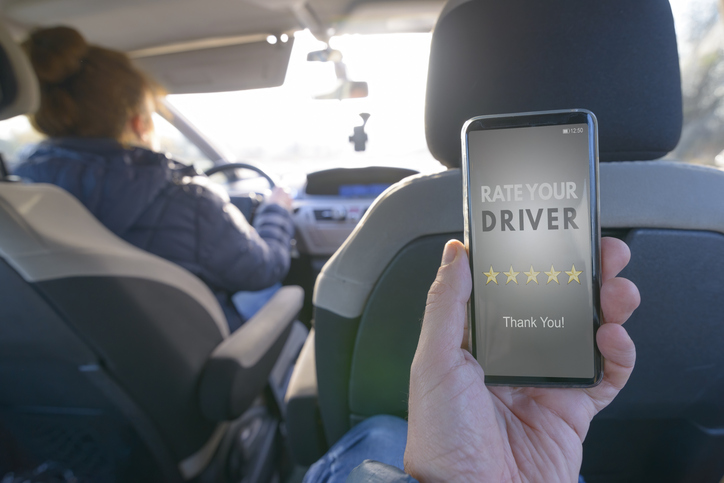
Are Uber Background Checks Really Keeping Florida Passengers Safe?
Florida’s rideshare statute, §627.748, requires Uber and Lyft to run criminal background checks before authorizing a driver and to repeat them every three years. That sounds like a real safety layer. The problem is that the check is name-based, the lookback window is seven years, and there is no FBI fingerprint requirement the way there is for school bus drivers or airport badge holders. I have seen drivers on the platform whose records, under any reasonable reading, should have kept them off it.
What this means practically: the check is a floor, and the floor has gaps. When a passenger is hurt, the legal question is not whether the background check was perfect — it almost never is — but whether the company had enough information to act and chose not to. That is a different argument, and with thirty-plus years of injury practice in Lee and Collier Counties behind me, I can tell you it is often a winnable one.
What Florida law actually says about rideshare driver screening
Florida regulates rideshare under the Transportation Network Company statute, §627.748, Florida Statutes. The statute does two things people in my office care about. First, it tells the rideshare companies what they have to check before letting a driver on the platform. Second, it sets minimum liability coverage that kicks in when a passenger is hurt.
On screening, the statute requires the rideshare company to run a local and national criminal records search and a check against the National Sex Offender Public Website before authorizing a driver, then to repeat the check at least every three years. A driver is disqualified for, among other things, a felony within the prior five years, a DUI, a hit-and-run, or any sexual-offense or violent misdemeanor. Drivers with more than three moving violations in the prior three years are out.
On insurance, the statute requires a $1,000,000 liability policy when the driver is “engaged in a prearranged ride” — meaning they have accepted a trip and are on the way to pick up, or actively carrying, a passenger. When the app is on but no ride has been accepted, the required limits drop to $50,000 per person bodily injury, $100,000 per accident, and $25,000 property damage. That gap between “on app” and “on a ride” matters more than most passengers realize.
Two other statutes round out the passenger picture. §627.736, Florida Statutes, the no-fault PIP statute, applies to you even when you are riding in someone else’s car. Your own household auto PIP pays the first $10,000 in medical and lost wages. And §627.727, Florida Statutes, the uninsured-motorist statute, lets your own UM coverage stack on top of the rideshare company’s policy in the right fact pattern. Most passengers have no idea any of this is in play. That is part of the problem.
Five fact patterns from our rideshare case files
When a rideshare passenger case lands on my desk, it almost always fits one of five fact patterns. After thirty years of doing this, I can usually tell which one we are dealing with by the second phone call.
- Rideshare driver caused the crash. The driver ran a red on US-41, drifted into oncoming traffic on I-75, or attempted a turn they had no business attempting. Liability is on the rideshare driver and the $1M policy is in play if the driver was engaged in a prearranged ride.
- Third-party driver caused the crash. A drunk driver hit the Uber on Daniels Parkway. Now we are looking at the at-fault driver’s liability, the passenger’s PIP, and any UM stacking under §627.727.
- App-on, no-ride crash. The driver was logged in waiting for a ping when they hit somebody. Coverage drops to the lower contingent limits. The rideshare carrier and the driver’s personal carrier fight over which pool applies.
- Driver assault or off-route detour. A driver who never should have been on the platform takes a passenger somewhere the passenger never asked to go. This is where the background-check failures show up worst.
- Identity fraud cases. Someone other than the approved driver is actually behind the wheel because they handed the phone to a friend or family member. The check that did pass does not mean a thing.
The first three are common. The last two are the ones that keep me up.
What makes rideshare passenger claims difficult to resolve
Three things make these cases harder than a standard two-car wreck.
The first is the coverage trigger. Whether the driver was “engaged in a prearranged ride” at the moment of impact is not a question the carrier will answer out of the gate. We have to pull the trip data from the rideshare company, match it against the police timeline, and sometimes file suit just to compel the records. A driver who finished a drop-off thirty seconds before the wreck may or may not still be inside the $1M coverage window depending on how the platform logs the trip end. I have argued that distinction more than once.
The second is the screening question itself. The Florida statute requires a search of the Multi-State/Multi-Jurisdiction Criminal Records Locator and the National Sex Offender Public Website. It does not require a fingerprint-based FBI check the way an airport badge or a school bus driver position would. The check is run on the name the applicant provides. A driver who has used a different surname, moved between counties, or had charges adjudicated without a conviction can present as clean. The seven-year lookback window on most background checks compounds that. Real Florida cases — drivers with prior violent arrest records who passed the check anyway — have made the news. They are not flukes.
The third is PIP and stacking under §627.736 and §627.727. A passenger who never owned the car they were riding in still has their own household PIP and may have their own UM coverage on a separate vehicle they own. That second source of recovery gets missed all the time when a passenger talks to the rideshare carrier directly. We pull every policy in the household before we sit down with an adjuster.
From our case files: a Vanderbilt Beach Road rideshare spine case
A few years back, a client was a passenger in a rideshare car on Vanderbilt Beach Road in Naples. The driver, in the middle of the trip, tried to make a U-turn where one should not have been made. A vehicle in the through lane T-boned them on the rear passenger side. Our client took the worst of it.
The ER cleared her with whiplash and sent her home with a soft collar. Within two weeks she had a dull headache that would not lift and shooting pain down the back of one shoulder. We moved her to a chiropractor who works with our office, and when the pain pattern did not change after a few weeks of conservative care, we had an orthopedist order an MRI. The imaging showed a C5-C6 disc protrusion pressing on the spinal cord. That is the line in the medical record where a case stops being a soft-tissue case and starts being a real spine case. She went through a series of medial branch blocks for the chronic neck pain.
Liability was on the rideshare driver and he was engaged in a prearranged ride at the moment of impact, so the §627.748 $1,000,000 policy was in play. The carrier opened low. We pulled the trip data, the imaging, the orthopedist’s narrative, and a treating-physician opinion tying the disc protrusion to the U-turn. We settled at the policy limits.
Two things I want to flag from that case. One, if our client had walked away from the ER thinking she was fine and never followed up, we would never have caught the disc protrusion in time to document it. Two, the rideshare carrier did not volunteer the policy limits — we had to drive there.
What to do if you were hurt in a rideshare
From watching dozens of these cases unfold, here is what actually moves the needle.
- Screenshot the trip inside the app before you do anything else. Driver name, vehicle, trip start and end timestamps, route map. That data sometimes disappears from a passenger’s app history after a complaint is filed. Save it to your camera roll on the way to the ER.
- Go to the ER, not urgent care, if there is any neck, back, or head symptom. A real ER chart with imaging-ordered notes carries more weight than an urgent-care record three weeks later. I have watched adjusters discount the second one in real time.
- Do not give a recorded statement to the rideshare carrier yet. The first call from the carrier sounds friendly. The questions are not. Give them basic facts and tell them your lawyer will follow up. Then call a lawyer.
- Pull your own auto policy and any household policies. PIP under §627.736 applies even though you were a passenger. UM under §627.727 may stack on top of the rideshare policy. Most passengers have no idea their own coverage is in the picture.
- Keep treating until your treating physician releases you, not when you “feel okay.” Gaps in treatment are the single most reliable way insurance carriers chip away at a case. I have used this approach with clients who wanted to tough it out and noticed that the ones who finished the treatment plan get paid more, almost without exception.
Key Takeaways
- Florida regulates rideshare under §627.748 — driver screening every three years, $1M liability when engaged in a prearranged ride, lower limits when the app is on with no ride accepted.
- The screening is name-based, seven-year lookback, no FBI fingerprint check — real gaps that real bad actors have slipped through.
- Passenger PIP still applies under §627.736 even when you are in someone else’s car.
- Uninsured-motorist coverage under §627.727 can stack on top of the rideshare policy depending on your household policy and whether stacking was waived.
- App data, trip screenshots, and ER documentation in the first 24 hours often decide what a rideshare passenger case is worth.
Frequently Asked Questions
Q1. If I am hurt as a passenger in an Uber in Florida, whose insurance pays first?
Under §627.736, Florida Statutes, your own household PIP is the first $10,000 of medical and lost-wage coverage even though you were riding in someone else’s car. After PIP, the rideshare company’s §627.748 liability policy of up to $1 million covers bodily injury caused by the driver while engaged with a rider. We have settled passenger claims against that policy more than once.
Q2. Are Uber background checks actually catching bad drivers in Florida?
Not as often as the marketing suggests. The check is name-based and looks back seven years. People who changed their name, moved counties, or were arrested without conviction can slip through. After thirty years of practice in Lee and Collier Counties, I have seen drivers on the platform whose records would have raised eyebrows under any reading.
Q3. Do I have to sue the driver personally, or can I bring a claim against Uber’s policy?
In a passenger case where the rideshare driver was on an active trip, the claim runs through the §627.748 liability policy the company is required to carry. The driver’s personal auto insurer almost always denies coverage during rideshare use. We deal directly with the rideshare carrier, not the driver’s wallet.
Q4. Does my uninsured-motorist coverage help if another driver hit the Uber and ran?
Often, yes. Under §627.727, Florida Statutes, UM coverage from your own household policy can stack on top of whatever the rideshare carrier pays, depending on how your policy is written and whether you waived stacking. We pull every policy in the picture before we tell a client what their case is worth.
Q5. What should I do right after a rideshare crash or assault in Southwest Florida?
Call 911, screenshot the trip in your app before the record disappears from your account, get checked at the ER even if you feel okay, and call us before you give any recorded statement to the rideshare carrier. The app data fades fast and the carrier’s first call is rarely on your side.
If you were hurt in a rideshare in Southwest Florida, call us
If you were a passenger in an Uber or Lyft that crashed, or you were hit by a rideshare driver while in your own car, or something happened on a ride that should not have happened — call our office at 239-992-8259. Consultations are free. There is no fee unless we recover for you. We handle rideshare passenger and crash cases across Bonita Springs, Fort Myers, Naples, Estero, Cape Coral, and Lehigh Acres.
About the Author

David B. Pittman, Esq. runs a thirty-year personal injury practice across Southwest Florida as the founder of Pittman Law Firm, P.L., with a sustained focus on rideshare-passenger and commercial-policy cases. The firm represents injured clients across Lee and Collier Counties — from the firm’s main office at Windsor Place on Bonita Beach Road through Fort Myers, Naples, Estero, Cape Coral, and Lehigh Acres.
David is a Citadel grad (The Military College of South Carolina, undergraduate) and a University of South Carolina School of Law grad (JD). Martindale-Hubbell rates him AV-Preeminent; he belongs to the Multi-Million Dollar Advocates Forum.
David has held a Florida real estate broker license for twenty-five years, a credential that shapes how the firm reads the property side of premises cases. The firm handles personal injury cases across Lee and Collier Counties, serving Fort Myers, Bonita Springs, Naples, Cape Coral, Estero, and Lehigh Acres, with offices at Windsor Place in Bonita Springs (main) and Fort Myers (satellite). Call 239-992-8259 for a free consultation.
The information on this website is for general information purposes only. Nothing on this site should be taken as legal advice for any individual case or situation. This information is not intended to create, and receipt or viewing does not constitute, an attorney-client relationship. This is attorney advertising.