

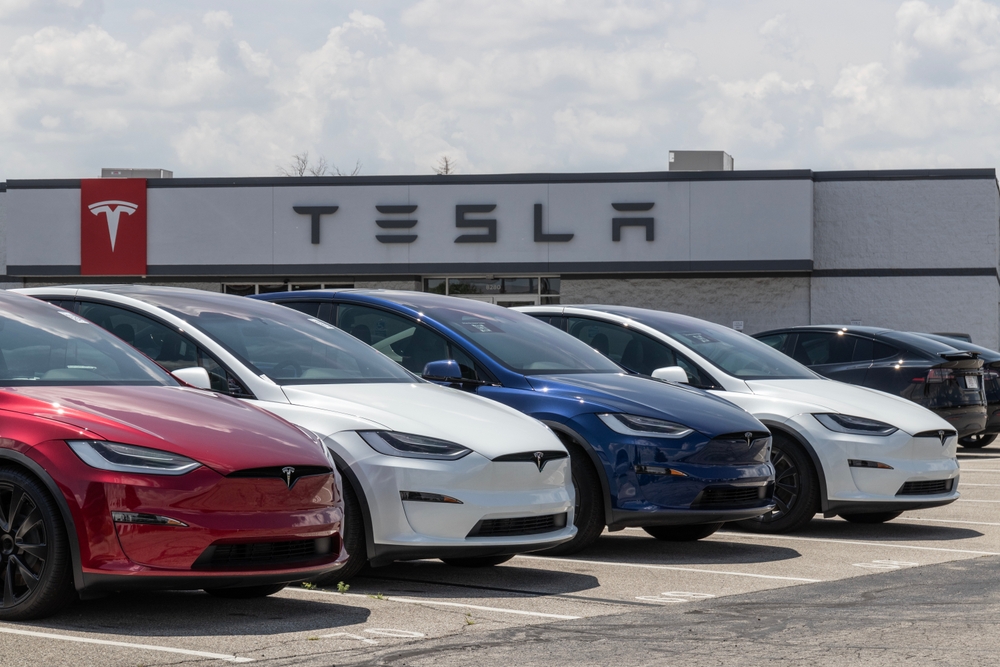
Are Tesla Accidents More Dangerous? A Fort Myers Personal Injury Attorney’s View
The question I get asked about Teslas, and electric vehicles generally, has changed over the last few years. Five years ago, it was “are they safe at all?” Today, after more than thirty years of personal injury practice in Fort Myers and across Lee County, the question is more “I was hit by a Tesla, or I was driving a Tesla and the system did something I didn’t expect — what’s different about my case?” That is a fair question, and the answer is meaningful.
The negligence framework is the same as it has been for a hundred years. A driver has a duty to operate the vehicle safely. A breach of that duty that causes injury creates liability. What is different about Tesla and other EV cases is the evidence, the weight of the vehicles, and the way the manufacturer can sometimes be pulled into the case as a co-defendant. I want to walk through each of those.
The weight of these vehicles matters. We represented a Fort Myers woman whose car accident left her with a permanent leg injury requiring long-term in-patient rehabilitation. The case settled for $1 million. Heavier vehicles transfer more force in a crash, and EVs like Teslas carry hundreds of pounds of battery. That force lands on the human body.
The evidence is different — and there’s a lot more of it
A conventional 2010 sedan, after a crash, gives you the police report, the photographs, and whatever witnesses you can find. A Tesla gives you all of that plus an Event Data Recorder that has logged speed, braking pressure, steering inputs, accelerator position, and the state of every driver-assistance system for the seconds before the collision. In some cases, the vehicle’s onboard cameras have video footage. Tesla itself retains data that can be obtained through a properly worded preservation letter and, if necessary, a subpoena.
What this means in practice is that the case can be reconstructed in much more detail than a conventional crash. If the other driver claims they were going 35 mph when they hit you, the EDR data either supports that or doesn’t. If the Autopilot system was engaged, the data shows that. If the driver overrode the system or ignored its alerts, the data shows that too.
The catch is timing. Vehicles get repaired. Total-loss vehicles get sold at auction. Manufacturers’ data retention policies are not unlimited. In a serious-injury Tesla case, the first move our firm makes (often within twenty-four hours) is a litigation hold letter to every party with custody of the vehicle and the data. Wait two months and the evidence may already be gone.
The weight question
Teslas are heavy. A Model X plaid weighs roughly 5,400 pounds. A Model S is in the 4,800 to 5,200 pound range depending on configuration. By comparison, a Toyota Camry weighs about 3,300 pounds. The additional weight is almost entirely the battery pack, sitting low in the vehicle’s chassis.
In a collision, that mass matters. Two vehicles of equal mass colliding share the kinetic energy roughly evenly. A 5,200 pound vehicle striking a 3,300 pound vehicle delivers a meaningful share of its energy into the lighter car. In serious-injury and wrongful-death cases, we routinely retain accident-reconstruction engineers to quantify the energy transfer, because juries respond to clear numbers. A “high-speed impact” is abstract. “The defendant’s vehicle delivered the kinetic energy equivalent of a fall from a four-story building into the driver’s side door of my client’s vehicle” is not abstract.
The Autopilot and FSD question
Autopilot is a driver-assistance system. Full Self-Driving, despite its name, is also a driver-assistance system. At the time of this writing, no Tesla vehicle is approved by the National Highway Traffic Safety Administration as a fully autonomous vehicle. The driver remains legally responsible for the operation of the car. That is the first-stop answer when someone calls and says “Autopilot was on, so the crash isn’t my fault.”
But that isn’t the only answer. If the system failed to perform as marketed (misreading a stationary fire truck, failing to brake for a clearly-visible pedestrian, disengaging at a critical moment without sufficient warning), a product-liability claim against Tesla becomes a real possibility. Product liability in Florida operates under separate rules from ordinary negligence: there is a twelve-year statute of repose on new vehicles, and the burden involves showing the product was defective, unreasonably dangerous, or breached express warranties.
These cases are hard. Tesla has substantial resources to defend them. But they are not unwinnable, and the NHTSA’s ongoing investigations into Autopilot performance, including several recent recalls, give us regulatory findings we can put in front of a jury.
A Fort Myers wrongful-death crash we worked
A few years ago, our firm handled a wrongful-death case out of the intersection of Daniels Parkway and Six Mile Cypress in Fort Myers. The crash was not a Tesla crash. It was a reckless driver in a conventional vehicle traveling at nearly double the speed limit who ran a red light and broadsided our client’s car. The driver was killed instantly.
What I want to point out about that case is how the technical evidence framed the outcome. We retained accident-reconstruction engineers who used the surviving vehicle data, the skid marks, the impact geometry, and the intersection’s traffic-signal timing to prove the defendant’s gross negligence. The claim focused on loss of consortium for the surviving spouse and children, and the projected lost earnings the family would never see. The case settled at $1.6 million.
The reason I bring it up in a Tesla discussion is this: the technical evidence that drove the outcome of that case (speeds, signal timing, impact angles) would have been laid out for us in real time if either vehicle had been a Tesla. The work we hired engineers to reconstruct, the car would have logged. That is the practical difference modern vehicle technology makes in a serious-injury or fatal-crash case. The data tells the story, and the story is harder for a defendant to dispute.
What to do after a Tesla or EV crash
If you were just in a crash involving a Tesla (driving one, hit by one, or a passenger in one), here is the order I would walk a caller through:
- Get medical attention. Even if you feel fine. EV crashes tend to be high-energy events, and adrenaline masks neck, back, and concussion injuries that show up the next day.
- Preserve the vehicle. Tell your insurance carrier not to total or release the vehicle until your attorney has had a chance to address Event Data Recorder preservation. This is a five-minute call that can save the case.
- Photograph everything. The vehicles. The intersection. The lighting conditions. Any visible damage to road infrastructure (a knocked-down sign, a damaged barrier) helps reconstructionists later.
- Note the time and the driver-assistance state if you can. If you were driving the Tesla and Autopilot was engaged, that matters. If the other driver mentions Autopilot to you at the scene, write down what they said as soon as you can.
- Save the dashcam footage. Tesla vehicles record forward and surround-camera footage by default. Do not let the vehicle’s data overwrite itself by continuing to drive it. If you can, plug in a USB drive and pull the relevant clip yourself.
- Get a lawyer involved early, particularly if injuries are serious. The litigation-hold letter to Tesla, the carrier, and the body shop is time-sensitive. Florida’s two-year statute of limitations on negligence claims runs faster than people realize.
Key takeaways
- The negligence framework for a Tesla crash is the same as for any other auto crash. What is different is the evidence and, in some cases, the potential involvement of the manufacturer.
- Tesla vehicles log detailed Event Data Recorder information; preserving that data through an early litigation-hold letter is often the difference between a winnable and unwinnable case.
- Autopilot and FSD are driver-assistance systems, not autonomous-vehicle systems. The driver is legally responsible, though the manufacturer can become a co-defendant under product-liability law when the system failed to perform as marketed.
- Teslas are meaningfully heavier than comparable conventional vehicles, and that weight differential matters in serious-injury collisions.
- Florida’s 2023 tort reform cut the negligence statute of limitations to two years. The clock starts on the day of the crash.
Frequently Asked Questions
Is a Tesla crash legally different from a regular car crash?
The negligence framework is the same — duty, breach, causation, damages. What’s different is the evidence. Teslas record far more vehicle data than a conventional car, and that data is often the case. The Autopilot question can also pull the manufacturer in as a co-defendant under product-liability law, which a conventional rear-end almost never does.
If Autopilot was on, who’s at fault?
Florida treats the human driver as legally responsible for control of the vehicle even when driver-assistance systems are engaged. That doesn’t end the conversation — the manufacturer can still be a defendant if the system failed to perform as advertised, but the driver is the first stop legally.
What about the Tesla data — can I get it?
Yes, but quickly. Teslas log detailed Event Data Recorder information that includes speed, braking, steering inputs, and system states for the seconds before a crash. The data can be preserved through a litigation hold letter to Tesla and to any other party in possession of the vehicle. The longer you wait, the more risk there is that the vehicle is repaired, totaled, or otherwise out of reach.
Are Teslas heavier than other cars, and does it matter legally?
Yes and yes. A Model X or Model S can weigh 5,000-5,400 pounds — meaningfully more than a comparable sedan. The added weight affects the energy transfer in a collision, which affects the severity of injuries on the other vehicle. In serious-injury and wrongful-death cases, the weight differential is a factor we use to explain why the impact was as severe as it was.
How long do I have to file a claim in Florida?
Two years from the date of the accident for most negligence claims. Florida cut the statute of limitations from four years to two in the 2023 tort reform. Product-liability claims have their own twelve-year statute of repose for newly-manufactured vehicles.
If you were in a Fort Myers Tesla or EV crash
If you were injured in a crash involving a Tesla, another electric vehicle, or any modern vehicle equipped with driver-assistance systems anywhere across Lee or Collier County, call Pittman Law Firm at 239-992-8259 or request a free consultation online. There’s no fee unless we recover compensation for you, and we move fast on vehicle and data preservation.
About the Author
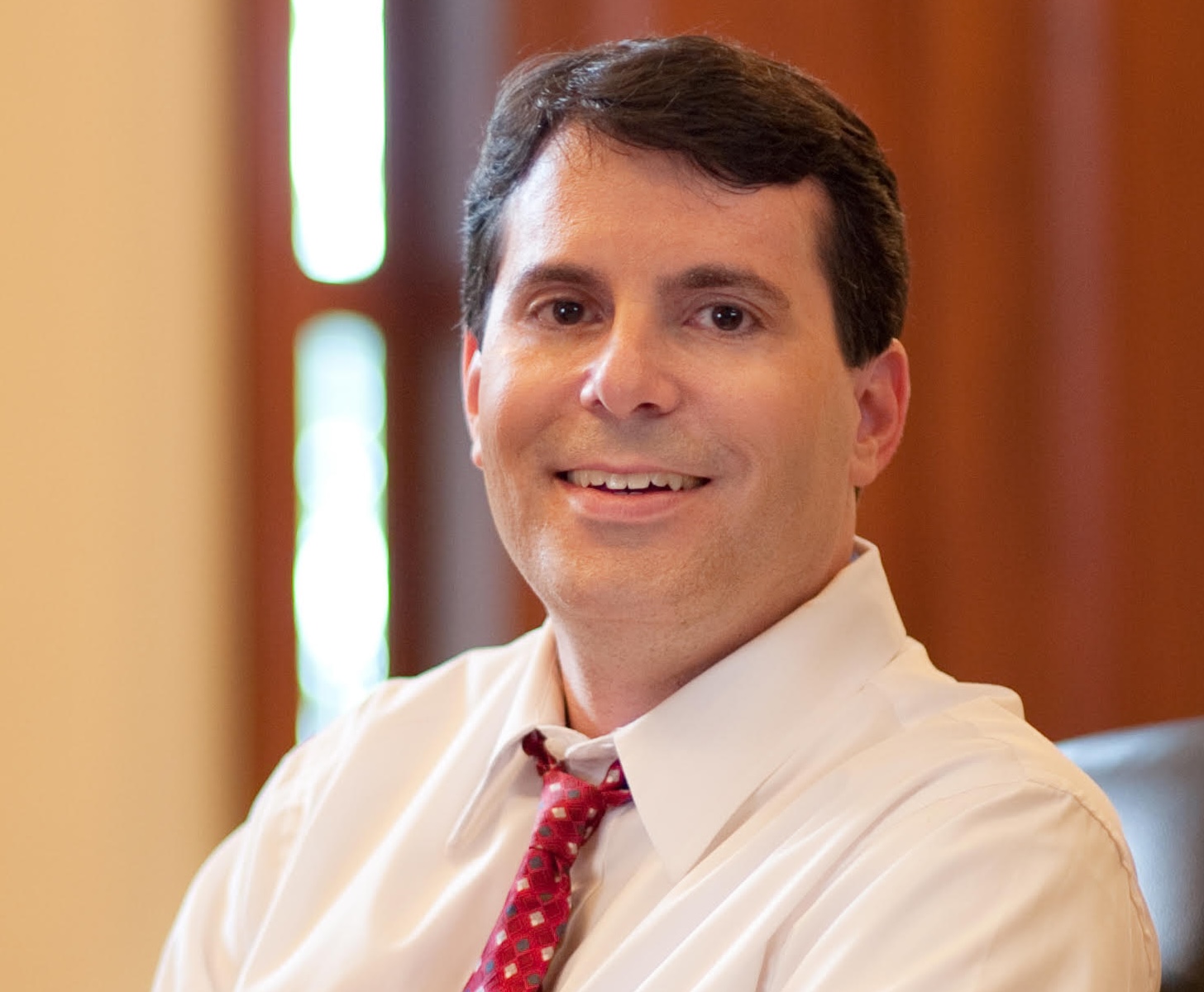
For more than thirty years, David B. Pittman, Esq. has handled personal injury cases out of the firm he founded, Pittman Law Firm, P.L., with a sustained focus on Fort Myers and the rest of Lee County. The firm’s Fort Myers presence handles a steady stream of serious auto-collision work along the Daniels Parkway and Six Mile Cypress corridors, and along I-75 between Estero and Bell Tower — the high-speed routes where modern vehicle dynamics, driver-assistance systems, and event-data preservation matter most.
David has held a Florida real estate broker license for twenty-five years, a credential that shapes how the firm reads the property side of premises cases. The firm handles personal injury cases across Lee and Collier Counties, serving Fort Myers, Bonita Springs, Naples, Cape Coral, Estero, and Lehigh Acres, with offices at Windsor Place in Bonita Springs (main) and Fort Myers (satellite). Call 239-992-8259 for a free consultation.
The firm represents injured clients in Fort Myers, Bonita Springs, Naples, Estero, Cape Coral, and Lehigh Acres, with a sustained focus on serious-injury auto and product-liability cases. Free consultations are available at 239-992-8259.
The information on this page is for general information purposes only. Nothing here should be taken as legal advice for any individual case or situation. This information is not intended to create, and receipt or viewing does not constitute, an attorney-client relationship with Pittman Law Firm, P.L.