

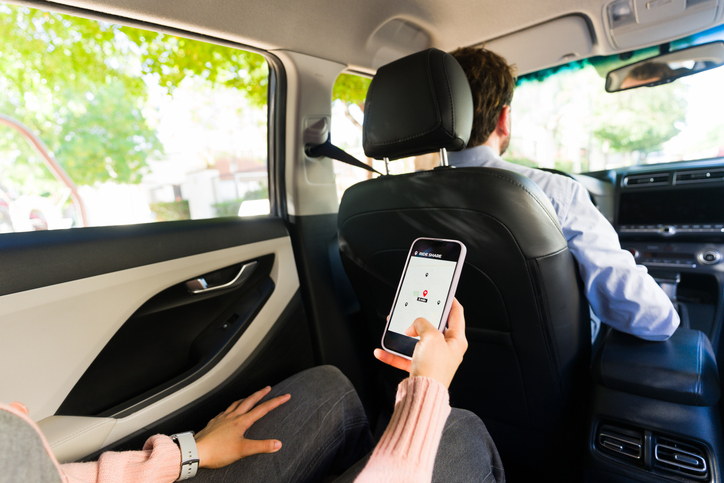
What Every Rideshare Passenger Should Know After a Fort Myers Car Accident
A client calls from a hospital bed and says, “I wasn’t even driving — I was just in the back of an Uber.” They assume that because they did nothing wrong, the insurance side will be simple. It almost never is. Rideshare claims in Florida sit on top of three different statutes, two or three different policies, and a phase-based coverage structure that most passengers have never heard of until the day they need it.
Through thirty years of injury cases across Lee and Collier Counties, I can tell you that the passenger does have stronger footing than most people on the road. You are not the one who has to prove you drove carefully. But “stronger footing” and “easy claim” are not the same thing, and the calls we field from along Daniels Parkway, Six Mile Cypress Parkway, and the I-75 stretch near Alico Road show why.
What Florida law actually says about rideshare passenger claims
Three Florida statutes do almost all of the heavy lifting on these cases. They are worth knowing by name, because adjusters tend to mention only the one that helps them.
Florida Statute §627.748 — the Transportation Network Company statute. This is the one that requires Uber, Lyft, and any similar platform operating in Florida to carry $1 million in liability coverage while a driver is engaged in a prearranged ride. “Engaged” begins when the driver accepts your ride request and continues until you are dropped off. Before that — app on, no ride accepted — the required coverage drops to $50,000 per person and $100,000 per accident for bodily injury, with $25,000 for property damage. When the app is off, the platform owes nothing. Plain English: the platform’s million-dollar policy only matters if the driver had pressed “accept” on your trip.
Florida Statute §627.736 — PIP, also called no-fault. PIP pays the first $10,000 of medical bills and lost wages regardless of who caused the wreck, but only if you see a qualifying provider within fourteen days of the accident. A rideshare passenger usually collects PIP under their own household auto policy, not the rideshare driver’s policy and not the platform’s. If you do not own a car and do not live with someone who does, PIP can come through the rideshare driver’s personal auto policy or, in some situations, a workers’ compensation-style fallback. The fourteen-day deadline is the one that wrecks more claims than any technicality in Florida law. Plain English: if you do not see a doctor in the first two weeks, the no-fault money you paid premiums for is gone.
Florida Statute §627.727 — uninsured and underinsured motorist coverage. Roughly one in five Florida drivers carries no liability insurance at all, and a much larger share carry the bare-minimum policy that runs out by the time the ambulance bill is processed. UM and UIM coverage is the gap-filler. A passenger can stack UM through their own household policy and, depending on the phase the rideshare driver was in, through the platform’s UM policy. Plain English: when the at-fault driver does not have enough insurance, UM is where the real recovery comes from.
The four policy situations that cover Fort Myers rideshare crashes
Most Fort Myers rideshare cases that walk through our door fall into one of four buckets. The bucket determines which policies pay.
- Another driver caused the wreck while you were in the Uber or Lyft. Your driver was doing nothing wrong. Somebody ran a red on Cleveland Avenue and T-boned the car. The at-fault driver’s bodily injury policy is the first source of recovery. If that policy is small, the platform’s $1 million UM/UIM coverage steps in. Your own household PIP pays the first medical bills.
- The rideshare driver caused the wreck while you were a paying passenger. The platform’s $1 million liability policy applies. We have seen everything from rear-end collisions on Summerlin Road to attempted U-turns where the driver simply did not see oncoming traffic.
- Both drivers share fault. Florida is now a modified comparative negligence state — if a jury assigns you, the passenger, more than 50% of the fault, recovery is barred. Passengers almost never end up on the fault side of that ledger. But the two drivers fight about percentages, and the case becomes a multi-policy negotiation.
- The rideshare driver was logged in but had not yet accepted your ride. This is the contingent-coverage gap. $50,000 / $100,000 / $25,000 limits, which on a real injury are gone before the imaging is read. UM stacking under §627.727 becomes the conversation.
Why the platform structure makes rideshare claims harder than a standard car wreck
The structural problem with rideshare claims is that the platform does not own the cars and does not employ the drivers. Uber and Lyft both classify drivers as independent contractors. That classification matters because it pushes the formal claim onto the individual driver, with the platform’s insurance carrier responding behind that driver as the indemnitor. Adjusters know how to use that structure to slow the file down.
The second problem is the phase question. Whether the app was off, on-and-waiting, on-and-accepted, or mid-ride determines which policy is primary. Drivers do not always remember accurately, and the platform’s data does not always match the driver’s recollection. We pull the trip log directly from the platform through a preservation letter the morning we open the file. Waiting weeks to do that is how trip data goes missing.
The third problem is medical. Rear-end and side-impact collisions at city speeds along corridors like McGregor Boulevard or Pine Island Road produce soft-tissue and disc injuries that show up clearly on MRI but do not always show up on the day-one ER report. An adjuster who sees a clean ER discharge and no follow-up for three weeks will argue the injury was not from the wreck. The cure is the same as the cure for losing your PIP — see a doctor inside the fourteen-day window, and keep going.
The Naples rideshare claim behind this
One we handled recently is worth describing because it shows how the policies stack when the rideshare driver is the one at fault. A client was riding in the back of an Uber on Vanderbilt Beach Road in Naples on a Friday afternoon. The driver, trying to swing back toward a missed turn, attempted a U-turn across two lanes of traffic. He did not clear the second lane in time and was T-boned on the driver’s side, which pushed the impact through the cabin and into our client’s seat.
Our client walked out of the wreck and went home. Two days later, the neck pain set in. By the end of the week she could not turn her head far enough to back out of her driveway. The ER cleared her with a soft-collar prescription. Treatment ran through chiropractic care and a series of medial branch blocks at a pain-management clinic. The C5–C6 finding is the kind of imaging an adjuster cannot brush off.
Because the rideshare driver was mid-trip with an accepted fare, the platform’s $1 million liability policy was on the hook. We documented the trip log, the medical course, and a future-care opinion from the treating orthopedist, and we resolved the case at the policy limit. The client is not symptom-free — disc injuries rarely are — but the recovery funded the ongoing pain management and the loss-of-earning-capacity piece that her old employer was never going to accommodate.
What to do if you are hurt as a rideshare passenger
Some of this is the standard car-wreck list. Some of it is rideshare-specific, and the rideshare-specific items are the ones I see passengers skip.
- See a doctor inside fourteen days, even if you feel okay. Adrenaline masks neck and back injuries for two to five days. A primary-care visit is enough to start the PIP clock. If anything is sore, ask for an orthopedic or neurology referral on the spot.
- Screenshot the trip page in the app before you do anything else. The driver’s name, the vehicle, the route, the timestamps, and the fare confirmation are all on that screen. If the app updates or the trip rolls out of your visible history, that evidence gets harder to pull later.
- Take photos from inside the vehicle, not just outside. The position of your seat, the deployment pattern of the airbags if they fired, the location of your phone and bag — those photos answer questions an adjuster will ask six months later.
- Report through the app, but keep the report short. “I was a passenger. There was a collision. I am seeking medical attention.” That is all the platform needs from you in the first hour. Do not type a narrative.
- Do not give a recorded statement to any insurance carrier until you have talked to a lawyer. Not the at-fault driver’s carrier. Not the rideshare platform’s carrier. Not your own carrier beyond the bare-bones first notice of loss. A recorded statement in the first week is almost always used against the passenger by the time the file matures.
- Save the receipts. Pharmacy receipts, parking at the orthopedist, mileage to physical therapy, anything you paid out of pocket. These add up, and they tell the story of how the injury affected your life.
Key Takeaways
- Florida’s Transportation Network Company statute, §627.748, requires a $1 million liability policy while a rideshare driver is engaged in a ride — but that coverage only attaches once the driver has accepted the trip.
- You have fourteen days from the wreck to see a qualifying provider, or your $10,000 in PIP under §627.736 is forfeited.
- If the at-fault driver is underinsured, UM coverage under §627.727 — including stacked household UM and, where applicable, the platform’s UM policy — is often the real source of recovery.
- As the passenger you cannot be assigned fault for causing the wreck, but the two drivers can fight about percentages and use that fight to slow your claim.
- Preserve the trip log, the in-vehicle photos, and your medical course early. The longer you wait, the more those pieces are lost.
Frequently Asked Questions
Whose insurance pays when I am hurt as a passenger in an Uber or Lyft in Fort Myers?
Florida PIP pays first under your own household auto policy if you live with a car owner. The rideshare company’s $1 million liability policy applies once your driver accepted the ride request and was either on the way or carrying you. If another driver caused the wreck, that driver’s bodily injury coverage is in play, and the rideshare company’s UM coverage can step in if the at-fault driver has too little insurance.
Do I really have 14 days to see a doctor after a rideshare crash?
Yes. Florida Statute §627.736 cuts off PIP benefits if you do not receive initial services from a qualifying provider within fourteen days of the accident. Miss the window and you forfeit your $10,000 in PIP. The clock starts on the day of the wreck, not the day you decide your neck is not getting better.
Can I sue the rideshare driver, or does the platform shield them?
You can pursue the driver. Florida’s Transportation Network Company statute, §627.748, requires the rideshare company to provide $1 million in liability coverage during a ride, but that money flows through a claim that names the driver. The platform classifies drivers as independent contractors, so the typical path is a claim against the driver with the $1 million policy responding.
What if the rideshare driver was logged in but had not accepted my ride yet?
That gap period falls under contingent coverage of $50,000 per person, $100,000 per accident for bodily injury and $25,000 for property damage. Those numbers run out fast on a serious injury, which is when stacking your own UM and any household UM policy under §627.727 becomes the practical question.
Should I post anything about the accident on social media?
No. Defense lawyers and adjusters look. A vacation photo, a gym check-in, even a smiling selfie at a birthday dinner gets pulled into the file and used to argue that your injuries are not what you say they are. Tell your family, talk to your doctor, talk to your lawyer, and stay off the feed until the case is resolved.
Talk to our office before you talk to the rideshare carrier
If you were a passenger in an Uber, Lyft, or any other rideshare vehicle and you were hurt anywhere from Fort Myers down through Bonita Springs and into Naples, our office is ready to take the call. I have walked passengers through the phase question, the fourteen-day deadline, and the stacking question for years. Call 239-992-8259 for a free consultation. There is no fee unless we recover for you.
About the Author

More than thirty years of personal injury practice in Fort Myers and across Lee County stand behind every blog on this site. David B. Pittman, Esq. is the founder of Pittman Law Firm, P.L. The firm’s Fort Myers presence handles a steady stream of serious-injury work along the Daniels Parkway, Six Mile Cypress, McGregor Boulevard, Cleveland Avenue, and Summerlin Road corridors, and along I-75 between Estero and Bell Tower, with a sustained focus on rideshare-passenger and commercial-policy cases.
David holds an AV-Preeminent rating from Martindale-Hubbell and belongs to the Multi-Million Dollar Advocates Forum. His undergraduate degree is from The Citadel, The Military College of South Carolina, and his JD is from the University of South Carolina School of Law.
David has held a Florida real estate broker license for twenty-five years, a credential that shapes how the firm reads the property side of premises cases. The firm handles personal injury cases across Lee and Collier Counties, serving Fort Myers, Bonita Springs, Naples, Cape Coral, Estero, and Lehigh Acres, with offices at Windsor Place in Bonita Springs (main) and Fort Myers (satellite). Call 239-992-8259 for a free consultation.
Attorney advertising. The information on this page is general in nature and is not legal advice for any individual case. Prior results do not guarantee a similar outcome. Contacting Pittman Law Firm, P.L. does not create an attorney-client relationship; that relationship is formed only by a signed written agreement.