

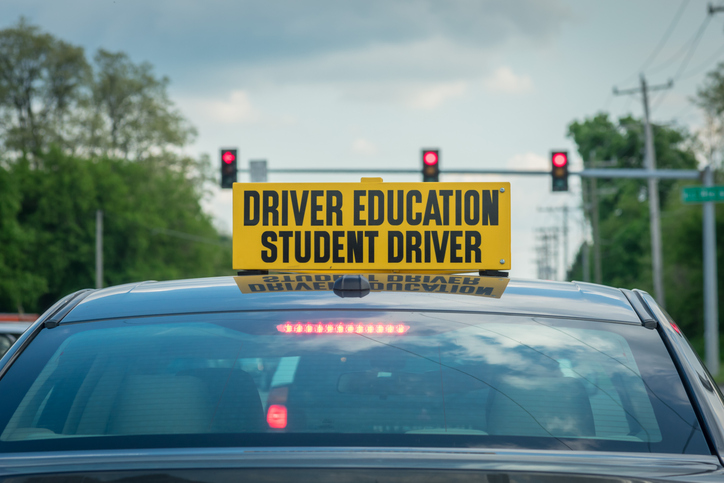
Is Florida Making Driver’s Ed Mandatory? New Law Explained
A parent walked into our Bonita Springs office not long ago with a copy of the Florida DETS course certificate in her hand and a confused look on her face. Her daughter had just turned fifteen. The course was six hours. The old one she remembered was four. She wanted to know what changed, what it meant for the permit process, and — because she had read enough about teenage driving to worry — what happened to her financially if her daughter caused a crash before she turned eighteen.
Florida did change the rules. As of August 1, 2025, a teenager under eighteen who wants a first Florida learner’s permit has to finish a six-hour Driver Education Traffic Safety course (DETS) before the state will issue that permit. The old four-hour TLSAE class is gone for new applicants. That is the headline. The longer answer — the one parents in our office actually want to hear — is what the law does, who it leaves out, and what it means for a family if a teen-driver crash does happen on Florida roads.
What Florida law actually says about the new driver’s-ed rule
Senate Bill 994 was the vehicle. Senator Jay Collins filed it in early 2025, the Governor signed it on May 30, 2025, and the new requirement went live August 1, 2025. The administering agency is the Florida Department of Highway Safety and Motor Vehicles, which posts the current teen-licensing checklist on its site.
Boiled down to what a parent in Bonita Springs actually needs to know:
- A first-time learner’s-permit applicant who is under eighteen must finish a six-hour DETS course before applying.
- The applicant has to pass vision and hearing screening, score 80 percent or better on the Class E knowledge test, and submit a signed (notarized if the parent is not present) parental consent form.
- The permit must be held for at least twelve months before the teen can move up to a regular Class E license.
- Once on the permit, the teen needs fifty hours of supervised behind-the-wheel driving, ten of those at night, and the parent has to sign off on those hours using the state’s Minor Driving Experience attestation form.
- Florida’s age-based curfews stay in place. A sixteen-year-old driver can be on the road from 6 a.m. to 11 p.m. A seventeen-year-old is restricted from 1 a.m. to 5 a.m. Both restrictions yield to work travel or driving with a licensed adult age twenty-one or older.
Two pieces of Florida statutory law sit underneath every teen-crash conversation we have, and parents deserve to know them in plain English before the permit ever issues.
The first is section 768.81, Florida Statutes, the state’s modified comparative negligence rule. After the 2023 tort reform, a person who is found more than 50 percent at fault for a crash cannot recover anything from the other driver. So if your seventeen-year-old runs a stop sign on Old 41 in Bonita Springs and a jury later puts 60 percent of the fault on her, the recovery side of the case is over even if she is badly hurt. The 50-percent line is a hard wall.
The second is section 95.11(4)(a), Florida Statutes, the statute of limitations. For a negligence claim arising from a crash on or after March 24, 2023, the deadline to file suit is two years. Before the reform it was four. Families lose entire cases on this one detail because they spend the first eighteen months focused on medical recovery and assume there is time. There is not the time there used to be.
Two more statutes a parent should know cold:
- Section 627.736, Florida Statutes — Personal Injury Protection, or PIP. Every Florida auto policy carries $10,000 in no-fault medical coverage that pays out regardless of who caused the crash. Teen drivers and teen passengers usually fall under a parent’s PIP. You have fourteen days from the date of the crash to be seen by a qualifying medical provider or PIP starts shrinking on you.
- Section 627.727, Florida Statutes — Uninsured Motorist coverage. UM is the policy provision that pays your family when the at-fault driver has no insurance or not nearly enough. Given how many drivers on I-75 through Lee and Collier Counties carry only the state-minimum limits, UM is often the only meaningful source of recovery in a serious teen-crash case.
Five patterns from our teen-driver case files
After thirty-plus years of personal injury practice in Lee and Collier Counties, you start to see the same fact patterns walk through the door. With teen drivers the patterns are remarkably consistent. Here are the five we see most often:
- Distraction on a familiar road. The teen is driving a route she has driven a hundred times, looks down for a moment, and rear-ends the car ahead at a light on US-41 / Tamiami Trail. Familiarity breeds inattention.
- Speed plus an unfamiliar curve. Most often after dark on a county road in Estero, Lehigh Acres, or eastern Collier. The teen is not impaired, just driving the road like a video game until physics wins.
- Passenger load. A car full of friends raises crash risk for a teen driver by a factor that is not subtle. We have worked more than one case where the driver was sober and competent and the back seat was the problem.
- Left-turn-across-traffic on US-41. The seventeen-year-old turning left across a four-lane highway misjudges the gap. This is the same crash pattern we see with older drivers on the same stretch of road, just with less practice behind the wheel to compensate.
- The 100-deadliest-days summer stretch. Memorial Day to Labor Day. School is out, daylight is long, and unsupervised driving hours spike. Our intake volume on teen-driver crashes climbs every June and July and we plan staffing around it.
None of these are cases the new DETS course will fully solve on its own. But a six-hour curriculum that drills down on distraction, impairment, and real-world decision-making is going to land on more of the right risks than the old four-hour TLSAE class did.
What makes teen-driver files harder to close than they look
Parents sometimes come in thinking a teen-driver crash is going to be a simple insurance call. The reality is that teen-driver cases carry complications most adult cases do not.
Parental financial responsibility. Under Florida law the parent or guardian who signs for the minor’s permit is on the hook for the minor’s negligent driving. That means when your teen is the at-fault driver, the family policy is the target — and if limits are low, the family’s own assets can be exposed.
Comparative negligence cuts both ways. The 50-percent bar in section 768.81 can be the defense’s main lever in any case where the teen’s driving is in question. Defense lawyers know jurors are not always sympathetic to a teen behind the wheel, and they push hard on speed, phone use, and passenger distraction. A 10-percent shift in fault changes a case by tens of thousands of dollars.
Phone records and infotainment data. Modern teen-crash cases live or die on data. Cell-phone activity logs, vehicle event data recorders, infotainment-system pairings — we have to preserve all of it early. A spoliation letter goes out within days, not weeks.
Soft-tissue skepticism in serious cases. Teens heal fast. Insurance carriers know that and routinely undervalue real injuries on the theory that “she’s young, she’ll bounce back.” A documented diagnosis from a treating physician in the first weeks after the crash is what separates a fairly-valued case from a low-ball offer.
Two-year clock from section 95.11(4)(a). The new statute of limitations on negligence claims is the single biggest trap for parents we see. Families spend a year on physical therapy, another year on school and life, and walk into our office on day 715. That is too late.
What to do if your teen is in a crash on Florida roads
This is the section parents call us about most. After thirty years of taking these calls, here is the action list I actually give people — not the generic version, the one that comes from watching cases play out:
- Get the medical evaluation in the first fourteen days. PIP requires it under section 627.736, and more importantly, a treating physician’s record from the first two weeks is the single most useful piece of evidence in the case. Even if your teen says she “feels fine,” get her seen. Whiplash, mild traumatic brain injury, and back injuries often present three or four days out, not at the scene.
- Make sure a crash report gets filed. Under section 316.066, a long-form crash report is required when there is injury, death, or substantial property damage. If law enforcement at the scene only writes a short-form driver-exchange, follow up. We have seen families lose UM claims because there was no formal report on file.
- Save the phone. Do not let your teen factory-reset the phone, delete messages, or trade it in. The phone is evidence. We will image it if needed, but only if it still exists.
- Photograph everything before the car is moved or scrapped. Both vehicles, all four corners, the interior, the airbags if they deployed, the road, any skid marks, the position of debris. Tow yards crush cars faster than you think. Once the vehicle is gone, the event data recorder is gone with it.
- Do not give a recorded statement to the other driver’s insurance company. Not before you have talked to a lawyer. The adjuster sounds friendly. The transcript is forever, and a seventeen-year-old saying “I guess I should have been paying more attention” can shift comparative-fault percentages by twenty points.
- Pull your own policy declarations page. Look at your UM coverage under section 627.727 and your bodily-injury liability limits. If the at-fault driver carries the state minimum, your own UM coverage may be the only real source of recovery for your teen. Now is the time to learn that — not eighteen months in.
- Call a lawyer before the two-year clock starts running out on you. Section 95.11(4)(a) is short, quiet, and unforgiving.
Key Takeaways
- As of August 1, 2025, first-time learner’s-permit applicants in Florida under eighteen must finish a six-hour DETS course before the permit will issue. The old four-hour TLSAE class is retired for new applicants.
- Teens who already held a Florida permit, or who completed TLSAE before August 1, 2025, are grandfathered in (TLSAE certificate valid one year after completion).
- The parent who signs a minor’s consent form is financially responsible for the minor’s negligent driving in Florida.
- Florida’s two-year statute of limitations on negligence under section 95.11(4)(a) is the single biggest deadline trap we see families miss after a teen-driver crash.
- Under the modified comparative negligence rule in section 768.81, a driver found more than 50 percent at fault recovers nothing — which is why fault percentage in a teen-driver case is a fight worth having early.
Frequently Asked Questions
Q1. When does Florida’s mandatory driver’s ed law take effect?
The six-hour Driver Education Traffic Safety course became required for first-time learner’s-permit applicants under eighteen on August 1, 2025. July 2025 ran as a one-month transition window where either the old TLSAE course or the new DETS course was accepted.
Q2. Does the law apply to a teen who already had a learner’s permit before August 1, 2025?
No. Teens who already held a Florida learner’s permit before August 1, 2025 stay on the prior requirements. Teens who completed the old four-hour TLSAE course before that date can still use that certificate for up to one year after completion.
Q3. If my teen has a valid out-of-state driver’s license and we move to Florida, does she still need the DETS course?
Generally no. The new course is aimed at first-time applicants under eighteen. A minor who already holds a valid driver’s license from another state and transfers it to Florida is treated under the out-of-state transfer rules instead. The FLHSMV teen-licensing page is the place to confirm the current exemption details for your child’s situation.
Q4. If my teen causes a crash on a learner’s permit, am I on the hook?
In most situations, yes. The parent or guardian who signs the consent form for a minor’s permit accepts financial responsibility for damages the minor causes while driving. That is one reason we tell parents to look hard at their auto liability limits and Uninsured Motorist coverage under section 627.727 before the permit ever gets issued, not after a crash on I-75.
Q5. What is the deadline to sue after a teen-driver crash in Florida?
For negligence claims arising from a crash on or after March 24, 2023, the deadline to file suit is two years under section 95.11(4)(a), Florida Statutes. Wrongful death actions also run on a two-year clock. Wait too long and the claim is gone, no matter how strong it was on the medical and liability side.
If your teen has been hurt, talk to us before the clock runs
If your son or daughter has been hurt in a crash anywhere in Lee or Collier County — Bonita Springs, Fort Myers, Naples, Estero, Cape Coral, or Lehigh Acres — call our office and we will sit down with you, look at the police report, look at the policy limits on both sides, and tell you straight whether you have a case worth pursuing. There is no charge for the first conversation, and no fee unless we recover for your family.
Call 239-992-8259 for a free consultation.
About the Author

David B. Pittman, Esq., the founder of Pittman Law Firm, P.L., concentrates his practice on personal injury matters across Southwest Florida and has done so for more than thirty years. The firm represents injured clients across Lee and Collier Counties — from the firm’s main office at Windsor Place on Bonita Beach Road through Fort Myers, Naples, Estero, Cape Coral, and Lehigh Acres, with a particular focus on commercial-vehicle, complex-liability, and serious-injury cases.
Between undergraduate at The Citadel, The Military College of South Carolina and a JD from the University of South Carolina School of Law, David built the foundation for a personal injury practice that now carries AV-Preeminent status with Martindale-Hubbell and membership in the Multi-Million Dollar Advocates Forum.
David has held a Florida real estate broker license for twenty-five years, a credential that shapes how the firm reads the property side of premises cases. The firm handles personal injury cases across Lee and Collier Counties, serving Fort Myers, Bonita Springs, Naples, Cape Coral, Estero, and Lehigh Acres, with offices at Windsor Place in Bonita Springs (main) and Fort Myers (satellite). Call 239-992-8259 for a free consultation.
The information on this website is for general information purposes only. Nothing on this site should be taken as legal advice for any individual case or situation. This information is not intended to create, and receipt or viewing does not constitute, an attorney-client relationship with Pittman Law Firm, P.L.