

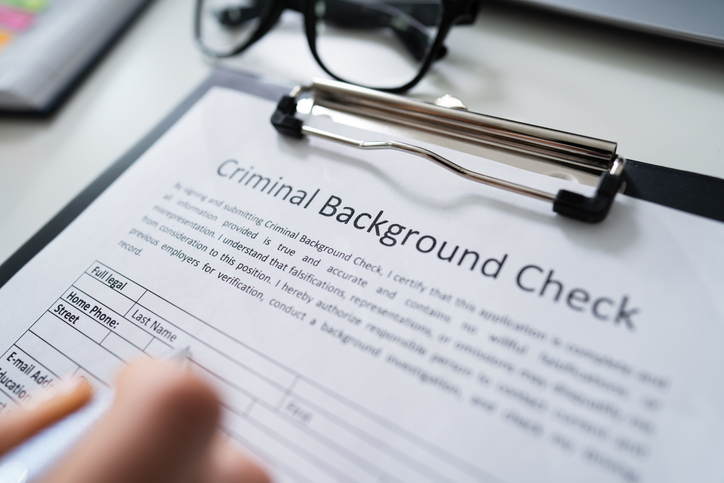
How Negligent Hiring of Employees in Florida Can Make A Business Liable for Injuries
Florida Statute 768.096 gives any business in Lee or Collier County a real legal shield: run a proper background check before you hire, and the presumption against negligent hiring liability works in your favor. Most businesses in the cases that land on our desk never ran one — or they ran one and ignored what came back. That gap between the legal standard and what actually happened in the HR file is where these cases begin.
This piece walks through what Florida law actually requires of a business when it puts a person in a role that puts them in contact with the public, the situations I see most often in our office, why these cases are harder than they look, and what an injured client should do in the days after the harm.
What Florida law actually says about negligent hiring
Negligent hiring in Florida is a recognized cause of action and it has its own statute. Florida Statute 768.096 creates a presumption against employer liability when the business has done a real background investigation before hiring and that investigation did not turn up information suggesting the person was unfit for the job. The investigation has to include a criminal background check, contact with prior employers, a written job application that asks about criminal history, a driver’s-license check if the role involves driving, and a sit-down interview.
Three other Florida statutes show up in nearly every one of these cases. Section 768.81 is Florida’s modified comparative negligence rule. After the 2023 reform, a plaintiff who is more than fifty percent at fault for their own injuries recovers nothing. Zero. Defense attorneys in hiring cases work hard to pin part of the fault on the victim or on a phantom third party, because the math under 768.81 swings the whole case. We push back, hard, and we document why.
The second is Section 95.11(4)(a), the statute of limitations for negligence. For any claim that accrued on or after March 24, 2023, you now have two years from the date of injury to file suit. That window used to be four years. People still think they have four. They do not. In a negligent hiring case where you also need time to investigate the employer’s file, the practical deadline is a lot earlier than the legal one.
The third is Section 627.736, the personal injury protection statute. If the injury involved a motor vehicle, for instance a delivery driver who plowed into someone, or a rideshare driver with a history the company did not check, PIP pays the first ten thousand dollars of medical and lost wages no matter who was at fault, and the negligent hiring claim is layered on top of that for the rest.
To prove negligent hiring under Florida case law, a plaintiff has to show four things. The employer had a duty to the injured person based on the relationship between the job and that person. The employee was not fit for the role. The employer failed to use reasonable care in selecting the employee. And that failure was a direct cause of the injuries. Courts spend most of their time on the second and third elements, because “fit for the role” gets stricter the more public contact the position carries.
The recurring fact patterns we handle
If you grouped the hiring cases that come through our office in any given year, you would land in one of these five buckets every time.
- Commercial drivers with disqualifying records. A trucking company, a delivery outfit, a logistics yard hires a driver with prior DUIs, suspended-license periods, or a string of preventable crashes that a proper Motor Vehicle Record check would have shown. When that driver causes a wreck on the I-75 corridor through Lee and Collier Counties, the hiring file becomes part of the case.
- Apartment-complex and hotel staff with property access. Maintenance, front-desk, security, anyone with a master key or a key fob. The harm often involves theft, assault, or unwanted entry into a unit. The hiring question is whether the employer pulled the criminal history before handing over the access device.
- In-home and facility caregivers serving vulnerable adults or children. Home health aides, nursing-home staff, daycare workers. The Level 2 screening requirements in Chapter 435 of the Florida Statutes are mandatory for a reason. Skipping or shortcutting them is where many of these cases begin.
- Rideshare and on-demand contractors. The “they’re an independent contractor” defense gets raised constantly. Florida courts have allowed negligent hiring and negligent retention claims to move forward against the company that did the screening anyway, particularly where the company controlled the screening standard itself.
- Bouncers, club security, and event staff hired for crowd control. When a worker hired for physical control of a crowd has a documented history of violence and that history was never checked, the prior pattern is usually the entire case.
The common thread is access. Negligent hiring is almost always a story about an employer handing a person, through uniform, key, vehicle, badge, or position of authority, the means to reach the eventual victim.
What makes these cases harder than they first appear
From the outside these cases look straightforward. The employer hired a person with a bad history, that person caused harm, the employer pays. Inside the file, it is rarely that clean.
First, the employer’s file is the case, and the employer controls it. Background-check vendor reports, prior-employer reference notes, driver-history pulls, interview write-ups: all of it sits inside the company’s HR system. You need it preserved, you need it produced, and you need it before someone “cleans up” personnel records. In our office we send a preservation letter the same week we are retained.
Second, the foreseeability fight is real. Florida law does not require the employer to have known the exact harm that occurred. It requires that the harm was a foreseeable consequence of the hiring decision, given what a reasonable check would have shown for that role. A prior battery conviction for a person being hired as a bouncer is foreseeable. The same conviction for a person being hired as a back-office bookkeeper may not be. The role drives the analysis.
Third, Florida Statute 768.096’s presumption cuts both ways. If the employer actually did the criminal check, the reference calls, the driver-history pull, and the formal application, and nothing came back disqualifying, the presumption against liability is strong. Our job is to show either that the check was a paper exercise, with boxes ticked but never actually run, or that the check did surface a red flag the company chose to ignore.
Fourth, fault allocation under Section 768.81 is the quiet killer. The defense will try to put fault on the employee personally (which is largely a recovery dead-end because the employee has no assets), on the victim, on a phantom third party, even on a property owner who is not in the case. Each percentage point of fault assigned somewhere other than the employer reduces the recovery, and crossing the fifty percent threshold against the plaintiff wipes out the case entirely.
Fifth, the statute of limitations under Section 95.11(4)(a) is now two years. By the time most clients realize the harm traces back to a hiring decision rather than a one-off bad act, months have already gone by. We have had to turn down cases that had merit because the file came to us too late.
What to do if you have been hurt and you think a hiring decision is part of the story
This is the practical part of the conversation, and I want to give you advice that comes from watching these cases play out, not from a generic checklist.
- Write down everything you remember about the worker, in your own words, while it is fresh. Uniform color, name on the shirt, vehicle markings, company logo, the time of day, what they said. I have noticed that clients who write a one-page narrative in the first week recall details a year later that they would otherwise have lost.
- Take photos of any company identifier you can. A truck door, an ID badge clipped to a uniform, a receipt with a company name, a parking decal. In a hiring case, identifying the actual employer (not the franchise, not the staffing agency, not the parent corporation) is half the battle.
- Do not give a recorded statement to the company’s insurer before you have spoken with a lawyer. The adjuster’s job is to lock you into a version of events that helps the company. Decline politely. Get treatment, get a written diagnosis, then make decisions.
- Save the receipt, the work order, the appointment confirmation, anything tying the worker to the company. Companies sometimes argue later that a person was not really their employee. A scrap of paper with a logo on it tends to end that argument.
- Get checked medically, even if you feel fine. Adrenaline hides injuries. Tendon, head, and back injuries can take days to show. A contemporaneous medical record is the strongest evidence later that the harm came from this event.
- Call our office before you talk to the company’s lawyer or sign anything. If the file makes sense as a negligent hiring case, the preservation letter has to go out fast. The two-year clock under Section 95.11(4)(a) is unforgiving.
For business owners reading this from the other side, the practical version of compliance is to actually run the checks the statute lists, write down what you found and what you decided, and keep that record for the life of the employment relationship and beyond. The shield Florida Statute 768.096 gives you is real, but only if there is paper behind it.
Key Takeaways
- Florida Statute 768.096 gives a business a presumption against negligent hiring liability when it has actually run a real pre-employment background investigation, meaning criminal history, prior-employer contact, written application, driver record where relevant, and an interview.
- The statute of limitations for negligence claims that accrued on or after March 24, 2023 is two years under Section 95.11(4)(a). Older claims keep the four-year window. Either way, hiring records degrade fast.
- Section 768.81’s modified comparative negligence rule wipes out the case if the plaintiff is found more than fifty percent at fault. Fault allocation is the quiet decider of most hiring cases.
- The five recurring patterns we see are commercial drivers with disqualifying records, apartment and hotel staff with master-key access, caregivers serving vulnerable people, on-demand or rideshare contractors, and venue security staff with prior violence histories.
- If you have been hurt by a worker on the job, document the company, save anything that ties the worker to that company, decline recorded statements, get medical care on record, and call our office before the file gets cold.
Frequently Asked Questions
Q1. What does negligent hiring actually mean in Florida?
Negligent hiring is when a business puts a person in a job where they will deal with the public, even though a reasonable check before hiring would have shown that person was a foreseeable risk to do harm. Under Florida Statute 768.096, an employer who runs a background investigation that turns up nothing disqualifying gets a presumption against liability. Skip the check, miss the obvious warning signs, and that shield is gone.
Q2. How is negligent hiring different from regular vicarious liability against an employer?
Vicarious liability covers what an employee does on the job, inside the scope of work. Negligent hiring covers what the employer did wrong before the employee ever started, by putting a person with a known history of violence, fraud, or substance abuse into a role that gave them access to the victim. The two theories often run side by side in the same lawsuit, but they target different conduct.
Q3. Can I bring a negligent hiring claim if the employee was off the clock?
Often yes, and that is one of the reasons this theory matters. If the employer gave the worker a uniform, a master key, a company vehicle, or a position of trust that allowed access to the victim, Florida courts will look at whether the harm was foreseeable from a proper screening, even when the act itself happened outside normal duties.
Q4. What deadlines apply to a negligent hiring lawsuit in Florida?
For any cause of action that accrued on or after March 24, 2023, the negligence statute of limitations under Florida Statute 95.11(4)(a) is two years. Claims that accrued before that date keep the older four-year window. Either way, evidence in hiring cases (old applications, background-check vendor files, prior-employer notes) disappears fast, so the practical clock is much tighter than the legal one.
Q5. Does Florida’s modified comparative negligence rule affect a negligent hiring case?
Yes. Under Florida Statute 768.81 as amended in 2023, a plaintiff found more than 50 percent at fault recovers nothing. In a negligent hiring case the defense will usually try to push fault onto the victim or onto a third party. Pinning down where the percentages land is one of the most important fights in the case.
Talk to our office before the file gets cold
If you have been hurt at a business, a property, a job site, or by a worker who never should have been hired, call our office at 239-992-8259 for a free consultation. We handle personal injury cases across Bonita Springs, Fort Myers, Naples, Estero, Cape Coral, and Lehigh Acres, and we work hard to get the employer’s hiring file before it disappears. There is no fee unless we recover for you.
About the Author

The case load at Pittman Law Firm, P.L. has been built over more than thirty years of personal injury practice across Southwest Florida under founder David B. Pittman, Esq. The firm represents injured clients across Lee and Collier Counties, from the firm’s main office at Windsor Place on Bonita Beach Road through Fort Myers, Naples, Estero, Cape Coral, and Lehigh Acres, with a particular focus on commercial-vehicle, complex-liability, and serious-injury cases.
David is a Citadel grad (The Military College of South Carolina, undergraduate) and a University of South Carolina School of Law grad (JD). Martindale-Hubbell rates him AV-Preeminent; he belongs to the Multi-Million Dollar Advocates Forum.
David has held a Florida real estate broker license for twenty-five years, a credential that shapes how the firm reads the property side of premises cases. The firm handles personal injury cases across Lee and Collier Counties, serving Fort Myers, Bonita Springs, Naples, Cape Coral, Estero, and Lehigh Acres, with offices at Windsor Place in Bonita Springs (main) and Fort Myers (satellite). Call 239-992-8259 for a free consultation.
The information on this website is for general information purposes only. Nothing on this site should be taken as legal advice for any individual case or situation. This information is not intended to create, and receipt or viewing does not constitute, an attorney-client relationship. Attorney advertising.