

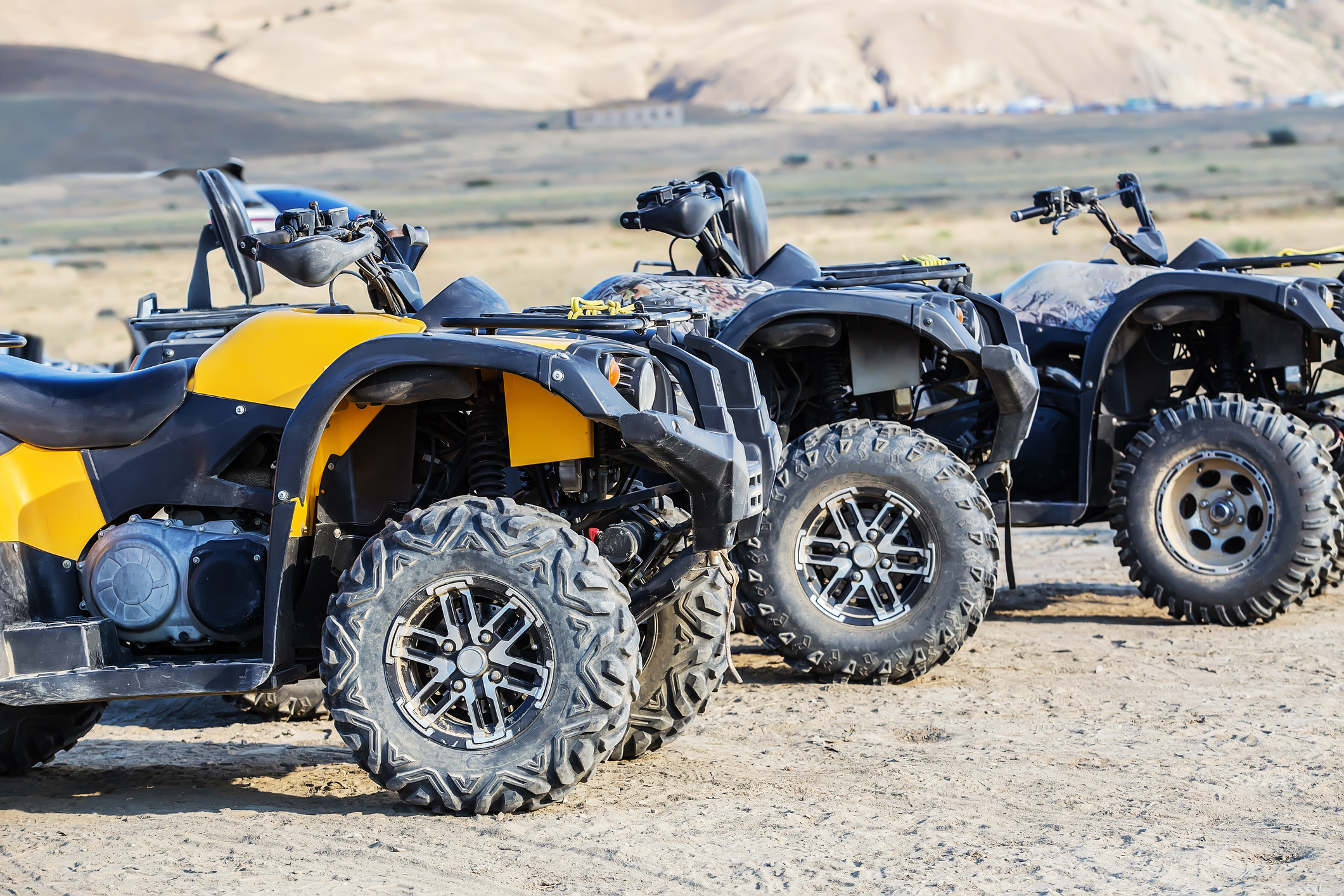
Are ATV’s Street Legal In Florida? Laws, Accidents, and Liability Explained
In Florida, an ATV is not a street vehicle. That is the short answer, and it surprises people who have ridden a short stretch of paved county road for years without incident and assumed they were in the clear. A rider believes a dirt shoulder or a rural road in the back half of Lee or Collier County is fair game, hops a paved stretch to get there, and then a car comes around a bend. After that, the rules suddenly matter a great deal.
I have been practicing personal injury law in Lee and Collier Counties for over thirty years, and I have seen the same pattern repeat. This post walks through what Florida actually says about ATV road use, the liability questions that follow a crash, and why the legal exposure is more complicated than most riders realize.
What Florida law actually says about ATV road use
Start with the baseline rule. In Florida, an ATV is not a street vehicle. Public paved roads, streets, and highways are off-limits to ATVs in almost every case. That covers the roads most riders think about when they think about a quick run to a friend’s pasture or a trail entrance.
The narrow window where an ATV can legally touch a public roadway is built around four conditions that have to be true at the same time. The road has to be unpaved. The posted speed limit has to be 35 mph or less. The ride has to happen during daylight hours. And the county where you are riding has to have affirmatively allowed it, because counties are permitted to tighten or opt out of those rules entirely. Plain English: legal in one county can be a citation a few miles up the road, and the burden is on the rider to know the difference.
A few statutes are worth knowing by number, because they are the ones that decide how a claim plays out after a crash:
- §768.81, Fla. Stat. — Modified comparative negligence. After the 2023 reform, a person found more than 50% at fault recovers nothing. If you are found 30% at fault, your damages are cut by 30%. This is the statute insurance carriers point to first when an ATV rider was operating outside the rules.
- §95.11(4)(a), Fla. Stat. — Two-year statute of limitations on most negligence claims, also a product of the 2023 reform. The old four-year window is gone. Plain English: from the date of the crash, the clock to file is two years, and a missed deadline is a permanent bar.
- §627.736, Fla. Stat. — Personal Injury Protection. PIP gives a Florida driver $10,000 in no-fault medical coverage, but standard auto PIP usually does not follow an ATV. The carrier will read the policy literally; so should the rider.
- §316.066, Fla. Stat. — Crash report requirement. If the ATV crash involves injury, death, or any significant property damage, a written report is required. A missing report makes everything harder later.
If you want a deeper read on how Florida injury claims are put together, our Florida accident claims guide walks through the same statutes in a wider context.
Four ATV crash patterns we see in Lee and Collier Counties
After thirty-plus years, the ATV cases that come through our office tend to fall into one of four patterns. Naming them helps, because each one carries a different liability question.
- The shoulder shortcut. Rider is on private property legally, hops a quarter-mile of paved county road to reach another property, and gets clipped by a car that did not see the ATV against a low sun. The ATV is, on paper, being operated illegally during that short stretch. The question is whether the car was speeding, distracted, or inattentive enough to carry the bulk of the fault anyway.
- The rural-road misread. Rider is on an unpaved road in a county that does not actually allow ATV use, or the road is posted at 40 mph when the rider thought 35. Same crash, same injuries, but now the citation gets pointed to as evidence of comparative fault under §768.81.
- The trail or property crash with another rider. Two ATVs on a marked trail or on a friend’s acreage. One rider is hurt. Liability here turns on speed, lane usage, helmet use for under-16 riders, and whether the host property had hidden defects the owner knew about.
- The defect case. Throttle that sticks, brake that fails, tire that separates. The rider was doing everything right, and the machine itself failed. These are the cases where we end up looking at the manufacturer and not the driver across the trail.
Behind every one of those scenarios sits the same risk: a rider who thought their auto policy would cover them, and a carrier that says it does not. ATV coverage is a separate animal. We have seen riders along the I-75 corridor through Lee and Collier Counties show up with bills in five figures and no benefits to apply to them, simply because the policy excluded off-road vehicles in a line of fine print nobody read.
Why ATV injury claims are more complicated than they look
An ATV claim is not a car claim with smaller fenders. A few practical complications are worth flagging.
Classification matters. Florida treats ATVs, UTVs / ROVs (the side-by-sides with a steering wheel), and Low-Speed Vehicles differently. An LSV that has been properly equipped and registered can be street legal in some neighborhoods. A UTV usually cannot. Misclassifying the machine on a police report or an insurance application has a way of haunting the claim later.
Titling is not optional. Every ATV sold in Florida is supposed to be titled. Many are not, because they were bought used, in cash, on a Saturday. After a crash, an untitled ATV is a problem — for proving ownership, for chain-of-custody on inspection, and for any theft or subrogation issue down the road. The Florida Department of Highway Safety and Motor Vehicles publishes the titling rules at flhsmv.gov, and it is worth ten minutes of any rider’s time.
Comparative fault is now sharper. Before 2023, a Florida injury claim survived even if the plaintiff was 70% at fault — you recovered the remaining 30%. After 2023, the 50% bar means a single contested judgment call by a jury can wipe out the entire recovery. On a borderline ATV-on-roadway case, that math is everything.
Insurance reads policies literally. Standard auto, standard homeowners, and standard umbrella policies all tend to have ATV exclusions. Uninsured-motorist coverage under §627.727 may or may not reach an ATV crash depending on the policy language and where the crash happened. We read these policies for clients before they assume there is no coverage, because there often is — just not where they were looking.
Evidence disappears fast. Skid patterns on dirt last one rainstorm. Helmets and gear get thrown out by emergency rooms. The ATV itself often gets repaired or sold off by a well-meaning relative before anyone has inspected it. The two-year clock under §95.11(4)(a) is the legal deadline; the practical evidence deadline is a lot shorter.
What to do if you have been in an ATV crash in Florida
This is the part where most articles write a generic five-item list. Here is what I actually tell people, drawn from cases we have worked:
- Get the crash report written, even on private land. If there is any injury, get law enforcement on scene. A written report under §316.066 is the spine of every later conversation with the carrier.
- Photograph the machine before anyone touches it. Brakes, throttle, tires, helmet, gear, the trail or roadway, and the position of any other vehicle. Take more photos than feels reasonable. I have used these photos to defeat a sticking-throttle denial more than once.
- Do not let the ATV be repaired or sold. If there is any chance of a defect claim, the machine itself is evidence. Park it. Cover it. Tell the family member who wants to “fix it for you” to leave it alone for ninety days.
- Save the gear. Helmet, gloves, boots, eye protection. The condition of that equipment after the crash tells a story to a jury.
- Pull every policy in the household. Auto, homeowners, umbrella, any standalone ATV policy. Read each declarations page. Coverage often hides in places riders never check.
- Do not give a recorded statement to the other side’s carrier without counsel. The first call from an adjuster is friendly. The second call uses your own words against you. There is no upside to the recorded statement before a lawyer has read the policy.
- Watch the two-year clock. Mark §95.11(4)(a)’s deadline on a calendar. Filing on day 731 is filing too late.
Key Takeaways
- ATVs are not street legal on paved Florida public roads. The exceptions are narrow, daylight-only, 35-mph-or-less, unpaved, and county-permission dependent.
- Auto insurance, including PIP under §627.736, usually does not cover ATV crashes. Coverage is almost always a separate policy.
- Under §768.81 (as amended in 2023), a rider found more than 50% at fault recovers nothing — so the comparative-fault fight in an ATV case is often the whole case.
- The statute of limitations on most Florida negligence claims is now two years under §95.11(4)(a). Evidence loss happens much faster than that.
- Preserve the machine, the gear, and the scene photos before talking to any adjuster. Those three things shape every later number.
Frequently Asked Questions
Can I ride my ATV on a paved road in Florida if traffic is light?
No. Florida law generally bans ATVs from paved public roads regardless of traffic conditions. Limited exceptions exist only for unpaved county roads posted at 35 mph or less, during daylight, and only where the county has affirmatively allowed it. Light traffic is not a defense, and a citation in that situation can also be used against you in any later injury claim.
If I am hurt riding an ATV that was technically being operated illegally, can I still recover?
Often yes, but the illegal operation will likely be argued as comparative fault. Under §768.81 of the Florida Statutes, your recovery is reduced by your share of fault, and if you are found more than 50% at fault, you recover nothing. The other driver, a property owner, or a defective component can still bear most of the blame depending on the facts.
Does my auto insurance cover an ATV crash?
Usually not. Standard Florida auto policies, including the $10,000 PIP no-fault medical benefit under §627.736, typically exclude off-road vehicles. ATV coverage is normally a separate policy or endorsement. Reading the declarations page before you ride is the difference between a covered medical bill and a denied claim.
How long do I have to file a claim after an ATV accident in Florida?
Under the 2023 tort reform, §95.11(4)(a) of the Florida Statutes gives most negligence claims two years from the date of the crash, down from four. Waiting even a few months can cost you witnesses, scene evidence, and the chance to preserve the ATV itself for inspection.
Does my child need a license or training to ride an ATV in Florida?
Florida does not require a driver’s license to ride off-road, but children under 16 are required to wear a DOT-approved helmet and eye protection, complete an approved safety course, and ride under adult supervision. Skipping any of those steps creates a documented argument that the parent or operator was negligent if a crash occurs.
Talk to a Florida ATV Injury Attorney
If you or a family member has been hurt in an ATV crash anywhere in Bonita Springs, Fort Myers, Naples, Estero, Cape Coral, or Lehigh Acres, we will sit down with you, read every policy in the file, and tell you straight what the case looks like. Call our office at 239-992-8259 for a free consultation. There is no fee unless we recover for you.
About the Author

David B. Pittman, Esq., the founder of Pittman Law Firm, P.L., has spent more than three decades representing injured Floridians across Southwest Florida. The firm represents injured clients across Lee and Collier Counties — from the firm’s main office at Windsor Place on Bonita Beach Road through Fort Myers, Naples, Estero, Cape Coral, and Lehigh Acres, with a particular focus on commercial-vehicle, complex-liability, and serious-injury cases.
Before founding Pittman Law Firm, P.L., David completed his undergraduate work at The Citadel, The Military College of South Carolina and his JD at the University of South Carolina School of Law. He is AV-Preeminent at Martindale-Hubbell and a member of the Multi-Million Dollar Advocates Forum.
David has held a Florida real estate broker license for twenty-five years, a credential that shapes how the firm reads the property side of premises cases. The firm handles personal injury cases across Lee and Collier Counties, serving Fort Myers, Bonita Springs, Naples, Cape Coral, Estero, and Lehigh Acres, with offices at Windsor Place in Bonita Springs (main) and Fort Myers (satellite). Call 239-992-8259 for a free consultation.
The information on this website is for general information purposes only. Nothing on this site should be taken as legal advice for any individual case or situation. This information is not intended to create, and receipt or viewing does not constitute, an attorney-client relationship with Pittman Law Firm, P.L. This is attorney advertising.