

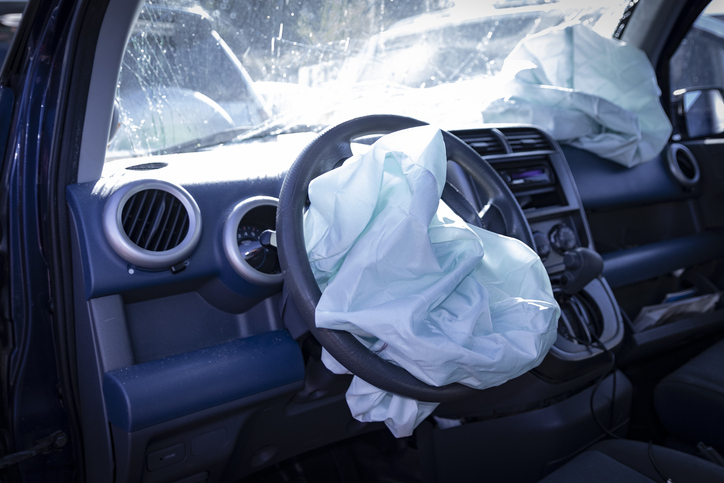
Recent Deadly Car Crashes in Fort Myers Prompt Calls For Improved Road Safety
Fatalities along Daniels Parkway, Colonial Boulevard, and US 41 are up year over year, and if you have been following the Fort Myers news this spring, you already know it. What you may not know is what it means for a family that just got the call. I can tell you the patterns behind those numbers, because through thirty years of injury cases across Lee and Collier Counties, what runs through my caseload now is exactly what was running through it before any of this made the local news.
This blog is for the family member who just got the call, or the driver who keeps reading about another crash at Pine Island Road and wonders what the legal exposure looks like if it happens to them. I will spend most of it on what Florida law actually says, what we see in practice, and the steps I have watched cases turn on. Less talk about awareness campaigns. More about what happens when the wreck has already happened.
What Florida law actually says about a fatal or serious Fort Myers crash
Three statutes drive almost every serious-injury auto case we handle. Read them once, in plain English, and you will understand the legal terrain better than most people who have been through a Fort Myers crash.
§768.81 — Modified comparative negligence. Before 2023, Florida used pure comparative fault. Even if a jury said you were 80 percent at fault, you still recovered 20 percent of your damages. In March 2023, the rule changed. Now, if a jury finds you more than 50 percent responsible for the wreck, you take nothing home. At 50 percent or less, your damages get reduced by your share of fault. Plain English: if you were the speeder who ran the yellow and the other driver was the speeder who ran the left, the question of which of you is at 49 versus 51 will decide whether your family eats or starves on this claim.
§95.11(4)(a) — Two-year statute of limitations. The same 2023 reform cut the negligence filing window in half, from four years to two. Plain English: if you were rear-ended on McGregor Boulevard on April 1, 2024, your lawsuit has to be on file by April 1, 2026. Miss it by a day and the courthouse will not hear you, no matter how strong the case is. We see clients who waited because the insurance adjuster was “still working on it.” The adjuster’s timeline does not stop the clock.
§627.736 — PIP, $10,000 in no-fault medical. Florida is a no-fault state for the first layer of medical care. Your own auto carrier pays up to $10,000 of medical bills and lost wages regardless of who caused the wreck, provided you treat within 14 days. Plain English: do not skip the urgent-care visit on day three because you “feel fine.” Cervical and lumbar strain injuries are notorious for showing up later. If you blow the 14-day window, your PIP carrier walks. We have seen it happen to clients who genuinely thought they were not hurt until day fifteen.
For hit-and-run and underinsured cases, §627.727 (Uninsured Motorist) is the statute that saves the file. And §316.066 is the crash-report statute every serious wreck triggers automatically.
Four crash patterns we see in Fort Myers fatal and serious-injury cases
Newsrooms cover individual wrecks. We see the file shape. Across the last three years of our docket, almost every Fort Myers serious-injury auto case fits one of four patterns:
- The US 41 / Pine Island Road left-turn fatality. Northbound through-driver overrunning a yellow, southbound left-turner who assumes the gap is theirs. The dispute is almost always which light phase governed — protected-only or permissive — and how fast the through-driver was actually going. Event data recorder downloads decide these cases more often than witness statements.
- The Daniels Parkway or Six Mile Cypress rear-end with delayed onset. Driver gets rear-ended at 35 mph, refuses transport from the scene, wakes up two days later unable to turn their head. PIP, cervical MRI, and the 14-day rule run the early phase of the case.
- The I-75 near Alico Road high-speed wreck. Speeds at 75 to 90 mph, multiple vehicles, often a commercial tractor-trailer in the chain. Federal Motor Carrier Safety Administration log data, dashcam, and forward-collision-warning telemetry matter as much as the FHP crash report.
- The hit-and-run on McGregor, Cleveland, or Summerlin. Fled driver, no plate, sometimes a partial vehicle description. The case lives or dies on the client’s own UM coverage and how quickly a written notice of claim hits the carrier.
If you recognize your wreck in one of those four shapes, you already know more about how the case will unfold than the average claimant does on day one.
Fort Myers fatal and serious-injury cases — why they are harder than they look
There is a reputation in some circles that auto cases are paint-by-numbers. Insurance pays, file closes. After thirty years of doing this work, I can tell you that is the easy 30 percent of the docket. The hard 70 percent — and almost every fatal case sits in the hard 70 — has three complications stacked on top of each other.
First, the comparative-fault wall. Defense carriers know §768.81 changed the math in 2023. They are pushing aggressive fault theories at the claimant in cases where, ten years ago, they would have written a check and moved on. We have had three Fort Myers files in the last fourteen months where the carrier’s first move was an opening offer of zero, on the theory the deceased was 51 percent at fault. Two of them, on closer engineering analysis, were at 15 to 20 percent. The early defense narrative is not the final story.
Second, the 14-day PIP wall. We see it more in commercial-driver clients and in older clients than in anyone else. The commercial driver wants to keep working and tells himself the soreness is nothing. The older client does not want to be a complainer. Both of them lose their no-fault medical coverage by day fifteen, and the lien picture for the rest of the case gets uglier.
Third, the two-year clock. The 2023 reform compressed everything. Investigation, treatment, demand, and litigation now have to happen on a schedule that used to span four years. Cases where the client treated for eighteen months and then came in to talk to a lawyer used to be salvageable. Now they are often six months out from being barred.
The Fort Myers rear-end claim behind this
A few years ago, we represented a client who was rear-ended on US 41 in Fort Myers. The driver who hit her did not stop. He took the next side street and was gone. She remembered a partial color and the shape of a pickup bed, and that was about it. The deputies took the report. No suspect, no plate, no follow-up call.
She went to the emergency room that night because her neck and upper back would not stop spasming. By the end of the first week she could not turn her head far enough to back out of her own driveway. She wound up in physical therapy for several months and on pain management for chronic cervical strain that has, even now, never fully cleared.
Because the at-fault driver fled, the recovery had to come out of her own policy through Uninsured Motorist coverage under §627.727. The lesson I take from that file, and I take it into every hit-and-run case we open now, is that UM coverage is not theoretical. It is the entire case when the other driver is gone.
I tell new clients the same thing I told her family at the time. Carry more UM than you think you need. The premium difference between $25,000 and $100,000 of UM coverage is small. The recovery difference, when the at-fault driver has fled or has no insurance, is the rest of someone’s life.
What to do if you have been in a serious Fort Myers crash
None of this is generic. Each item below is something I have watched a case turn on, in our office, more than once.
- Get checked the same day, even if you feel fine. Cervical and lumbar strain injuries hide for 48 to 72 hours. The PIP statute does not care about your subjective sense of how hurt you are. Day fourteen is a hard wall.
- Photograph everything before the cars move. Final rest position, debris field, skid or yaw marks, both bumpers, the inside of your vehicle if airbags deployed. Engineering witnesses can rebuild a crash from those photos. They cannot rebuild it from a tow-yard photo two days later.
- Get the §316.066 crash report number before you leave the scene. The responding deputy or trooper will give it to you. Write it down. The report itself takes 7 to 10 days to clear, but the number opens every door at the carrier and the clerk.
- Do not give a recorded statement to the at-fault carrier on the first call. Your own carrier, yes. The other side’s, no. We have watched recorded statements taken on day two be used to argue comparative fault on day eight hundred. Carriers know what they are doing on those calls. Most claimants do not.
- Write the carriers a letter of representation early, even before you have signed up with a firm. A one-page letter, dated, signed, saying you intend to pursue a claim and asking them to preserve all evidence, freezes a lot of bad behavior.
- Pull your own auto policy out of the file cabinet and read the declarations page. Find your PIP limit, your bodily-injury limits, and your UM limit. If you do not have UM, or if it is at minimum, that is a conversation with your agent to have this week, not next year.
Key Takeaways
- Florida’s 2023 reforms cut the negligence statute of limitations from four years to two under §95.11(4)(a), and built a 50-percent bar into comparative negligence under §768.81. Both rules are hard walls.
- PIP under §627.736 pays the first $10,000 of medical and lost wages no-fault, but only if you treat within 14 days of the crash. Skipping the urgent-care visit on day three is the single most avoidable mistake we see.
- In hit-and-run cases, your own Uninsured Motorist coverage under §627.727 is the case. Carry more UM than minimum limits.
- Fort Myers fatal crashes cluster at US 41 and Pine Island Road, along Daniels Parkway and Six Mile Cypress, and on I-75 near Alico Road. The defense narrative on those corridors is aggressive about comparative fault. Engineering analysis often shifts the percentages.
- Photographs from the scene, an early letter of representation to the carriers, and a careful read of your own declarations page do more for a case in the first 72 hours than almost anything that happens in the next 18 months.
Frequently Asked Questions
What does Florida’s modified comparative negligence rule mean for a Fort Myers crash victim?
Under §768.81, if a jury finds you more than 50 percent at fault for the wreck, you recover nothing. At 50 percent or less, your damages are reduced by your share of fault. After the 2023 reform, the cutoff is a hard wall, not a sliding scale, which is why early defense narratives in Fort Myers cases matter so much.
How long do I have to file a Fort Myers car accident lawsuit?
Two years from the date of the crash for most negligence claims under §95.11(4)(a). The window used to be four years. The 2023 reform cut it in half, and the courts have not been forgiving about it. If your wreck happened on or after March 24, 2023, you are on the two-year clock.
What if the at-fault driver fled the scene of my Fort Myers crash?
Your own Uninsured Motorist coverage under §627.727 becomes the primary path to recovery. Florida treats a phantom or fled driver the same as an uninsured one for UM purposes, provided the crash is reported and there is corroboration. PIP under §627.736 pays the first $10,000 of medical and lost wages regardless of fault.
Do I have to file a crash report after a Fort Myers accident?
Florida §316.066 requires a written report any time there is injury, death, or apparent property damage of at least $500, or any time a vehicle has to be towed. In practice, in a Fort Myers serious-injury wreck the responding deputy or trooper writes the report. Get a copy as soon as it clears — usually 7 to 10 days.
Why are intersections like US 41 and Pine Island Road so dangerous?
Heavy through-volume on US 41, six approach lanes, a high left-turn count, and seasonal driver unfamiliarity. Add aggressive timing of the protected-permissive left phase and the math gets ugly. Most of the fatal crashes I have seen out of that intersection share two ingredients: a left-turner and a speed-over-limit through-driver.
Talk to our firm before the clock runs out
If you or someone in your family has been hurt in a Fort Myers crash, call our office at 239-992-8259 for a free consultation. We will read the crash report, look at the photographs, and tell you straight what the file looks like. There is no fee unless we recover for you, and the two-year window under §95.11(4)(a) is shorter than most people realize.
About the Author

David B. Pittman, Esq. is the founding attorney of Pittman Law Firm, P.L., handling personal injury cases in Fort Myers and across Lee County since the firm’s founding more than thirty years ago, with a sustained focus on serious-injury auto and complex-liability cases. The firm’s Fort Myers presence handles a steady stream of serious-injury work along the Daniels Parkway, Six Mile Cypress, McGregor Boulevard, Cleveland Avenue, and Summerlin Road corridors, and along I-75 between Estero and Bell Tower.
David studied undergraduate at The Citadel, The Military College of South Carolina, then law at the University of South Carolina School of Law. Martindale-Hubbell rates him AV-Preeminent; the Multi-Million Dollar Advocates Forum lists him as a member.
David has held a Florida real estate broker license for twenty-five years, a credential that shapes how the firm reads the property side of premises cases. The firm handles personal injury cases across Lee and Collier Counties, serving Fort Myers, Bonita Springs, Naples, Cape Coral, Estero, and Lehigh Acres, with offices at Windsor Place in Bonita Springs (main) and Fort Myers (satellite). Call 239-992-8259 for a free consultation.
Disclaimer: The information on this page is general in nature and is not legal advice for any individual case. Reading this article does not create an attorney-client relationship with Pittman Law Firm, P.L. For advice about your situation, contact a licensed Florida attorney. Past results do not guarantee a similar outcome in any future matter.