

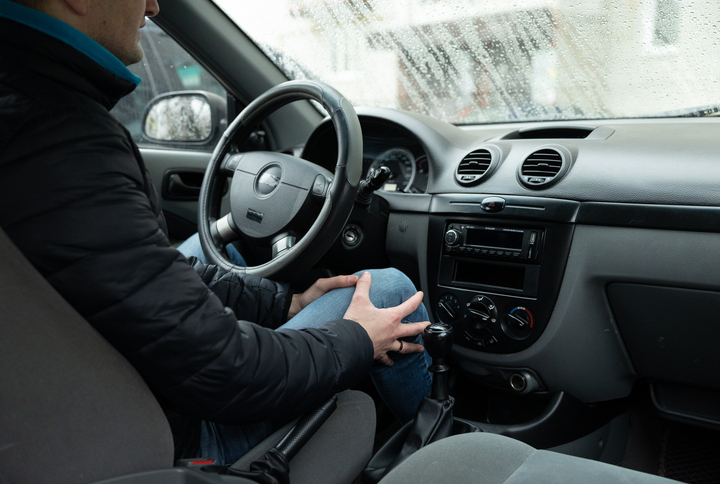
How Dashboard Impacts Cause Knee Injuries in Fort Myers Car Accidents
The ER cleared them for a bruise. Three weeks later, the knee still gives out walking down the steps at home. The MRI comes back showing a posterior cruciate ligament tear — sometimes a fracture of the upper shin — and an eight-to-fourteen-month treatment plan. I see this sequence in our Fort Myers practice often enough that I recognize it from the first phone call, and I want to explain why the emergency room’s read is not the last word on a dashboard knee injury.
What I want to do in this piece is set out what actually happens to a knee when it strikes the dashboard, what Florida law gives you to work with on the recovery side, the scenarios our office sees most often, why these cases are harder to settle than a clean whiplash file, and what you should be doing if you are reading this with an aching knee a few days after a crash.
What Florida law actually says about dashboard knee injury claims
A dashboard knee injury claim in Florida runs through four statutes worth knowing by name. None of them are friendly to wait-and-see decisions, which is part of why I push for early documentation.
Section 627.736 — Personal Injury Protection. Every Florida driver carries PIP, which pays 80 percent of reasonable medical bills and 60 percent of lost wages up to a ten thousand dollar cap. The catch is the fourteen-day rule: you have to see a qualifying provider within fourteen days of the crash, and that provider has to document an emergency medical condition, or the cap drops to twenty-five hundred dollars. A torn PCL almost always meets the threshold, but only if a doctor writes the right words in the chart inside that two-week window.
Section 768.81 — Modified comparative negligence. Florida switched in March 2023 from a pure comparative system to a modified one. In plain English, the jury still gets to assign a percentage of fault to each party, and your recovery still gets reduced by your percentage, but if you end up at 50 percent or more, you take nothing. For a passenger struck from behind, this rule almost never matters. For a driver who was changing lanes at the moment of impact, it can be the entire ballgame.
Section 95.11(4)(a) — Statute of limitations. The 2023 reform also cut the negligence filing deadline from four years to two. If your crash happened on or after March 24, 2023, you have two years from the date of the accident to sue. We have seen people lose the right to recover because they relied on an insurer to keep talking past the deadline. The clock does not care.
Section 627.727 — Uninsured Motorist coverage. If the driver who caused the crash had no insurance, no usable insurance, or fled the scene, your own UM coverage pays as if it were theirs. On a hit-and-run dashboard case, UM is often the only money on the table. I tell every new client to pull their declarations page before the second call so we know what we are working with.
Dashboard knee patterns we see most often in Lee County
In thirty-plus years representing injured people across Lee and Collier Counties, the dashboard knee files in our office break down into five recurring patterns. Knowing which one yours fits helps me predict what the adjuster is going to argue.
- The classic rear-end PCL tear. Stopped at the light at Colonial Boulevard and Six Mile Cypress Parkway, the front of the bent knee strikes the lower dash, and the shin gets pushed backward against the femur. Roughly one in five soft tissue knee injuries from car crashes is a PCL tear, and the rear-end stop is the classic mechanism.
- The frontal-collision ACL plus patella combo. Higher speed, often on Daniels Parkway or I-75 near Alico Road. The knee hyperextends as the body lurches forward, and the kneecap fractures against the dashboard at roughly the same moment. These tend to need surgery within weeks.
- The footwell intrusion fracture. Older sedans, T-bone or angled frontal impact. The dashboard and firewall collapse into the driver’s leg, and the tibial plateau cracks. Even at low speeds, the injury can be career-ending for someone who works on their feet.
- The passenger-side dashboard strike with no seatbelt mark. A passenger riding with their foot on the dash or sitting forward gets a knee injury that the carrier will try to blame on positioning. Florida law still allows recovery, but the adjuster will push the comparative fault number as high as they can get away with.
- The delayed-onset PCL that the ER missed. The most common one we see. The ER does an X-ray, finds no fracture, sends the client home with a brace and a bottle of ibuprofen. Two weeks later the knee is still swollen and giving out, an orthopedist orders an MRI, and the ligament tear shows up. By then the insurer is already trying to use the delay against you.
Why dashboard knee cases are harder than they look
On paper, a rear-end dashboard knee case looks like a textbook recovery. In practice, our office watches three things go wrong over and over.
First, the ER report is almost always thin. Emergency rooms are looking for fractures and head injuries, not torn ligaments. The discharge paperwork says “knee contusion,” and the insurance adjuster then treats every later diagnosis as unrelated. I have read hundreds of ER notes that miss a PCL tear by an inch. We solve this with prompt orthopedic referral and MRI, ideally within the first ten days.
Second, the fourteen-day PIP rule punishes anyone who waits. I have had clients tell me they did not want to bother a doctor over a sore knee, and then watched their PIP cap collapse from ten thousand dollars to twenty-five hundred when the swelling finally drove them in on day sixteen. The statute does not care about your reasons. It is a hard wall.
Third, dashboard knee injuries do not show up on the police crash report. The investigating deputy writes down what the drivers tell them at the scene, and at the scene most people are still running on adrenaline and report nothing worse than a bruise. The adjuster later treats the absence of a knee complaint on the Florida crash report as proof the injury came from somewhere else. We push back on this by getting the client into a documented treatment chain as fast as possible.
A rear-end matter we took on in Fort Myers
A case I think about often involved a client rear-ended on US-41 here in Fort Myers by a driver who never stopped. The runner did not get identified. Our client walked away from the scene believing he was fine, drove home, woke up the next morning unable to put weight on his right leg. The ER ran imaging, found no fracture, and discharged him with a knee brace.
Two weeks later, the orthopedist’s MRI showed a torn ligament and chronic cervical strain layered on top of the knee injury. He needed emergency room care, several months of physical therapy, and a long arc of pain management. The whole time he was watching his PIP cap evaporate and wondering how he was going to pay for the next round of treatment.
Because the at-fault driver was a hit-and-run, the only recovery path was through our client’s own uninsured motorist coverage. I built the demand around the delayed-diagnosis pattern and the treating doctors’ opinions on permanence. We recovered the full policy limits from his own carrier, which is not a result you can guarantee, but it is the kind of result that becomes possible when the medical record is clean and the timing rules get respected.
What to do if you have a sore knee after a Fort Myers crash
This is the part of the conversation I have with new clients on the phone, usually within an hour of their first call. None of it is generic advice. Each item is here because I have watched the opposite hurt a real file.
- See a doctor within fourteen days, even if the knee feels minor. The PIP fourteen-day rule is unforgiving. An urgent care visit on day three is worth more than an orthopedist on day twenty.
- Ask for imaging beyond an X-ray if pain or swelling continues past a week. PCL and ACL tears do not show on X-ray. An MRI is the only diagnostic that will catch them. Adjusters will not pay for what is not documented.
- Photograph the inside of the car, especially the area below the dashboard. Scuffs, paint transfer from a shoe, a cracked dash trim panel — these are the small details that prove the knee made contact. They also vanish the moment the car goes to the body shop.
- Pull your insurance declarations page and look for UM coverage. If the at-fault driver fled or had no policy, UM is your file. If you do not have it, this is the moment you wish you did. Either way, you need to know.
- Write down what you can and cannot do, week by week. Stairs, driving, sleeping on your side, kneeling at church or in the yard. I have used this approach with clients and noticed that the ones who keep a simple weekly list end up with cleaner depositions and a stronger position at mediation.
- Stop talking to the other driver’s insurance adjuster. They are recording. They are trained. They are not your friend. Refer them to your own attorney or stop returning the call. The recorded statement is the single most common way I see a good case get cheaper for the insurer.
Key Takeaways
- PCL tears, ACL tears, and tibial plateau fractures are the three injuries we see most often from dashboard contact in Fort Myers car crashes. None of them reliably show on an ER X-ray.
- Florida’s PIP fourteen-day rule is the deadline that quietly kills more dashboard knee claims than any other. Get to a doctor early, in writing.
- The statute of limitations on Florida negligence claims is now two years, not four, for any crash after March 24, 2023. Section 95.11.
- Modified comparative negligence under section 768.81 means a 50 percent or higher fault finding wipes out your recovery. In a rear-end dashboard case, this rule rarely hurts the injured driver, but it always hurts the unbelted passenger or the lane-changer.
- For hit-and-run dashboard cases on McGregor Boulevard, Cleveland Avenue, or anywhere else in Lee County, your own UM coverage under section 627.727 is often the only money available.
Frequently Asked Questions
How do I know if my knee pain after a Fort Myers crash is a serious dashboard injury?
Swelling that shows up within a few hours, a knee that feels loose when you put weight on it, a popping sound at impact, or pain at the back of the joint instead of the front — those are the markers that point at a torn PCL or ACL rather than a bruise. If you can describe any of those, get imaging, not just an exam, and do it within a day or two.
Can I still recover if my own knee position contributed to the injury?
Yes, with limits. Under Florida’s modified comparative negligence rule the jury can assign you a percentage of fault and reduce your recovery by that percentage, but if your share is 50 percent or more you take nothing. In a rear-end dashboard case the rear driver almost always carries the bulk of the fault, so this rule rarely closes the door on the injured passenger or driver.
Does PIP actually cover a torn ligament from a dashboard impact?
PIP pays 80 percent of reasonable medical bills up to ten thousand dollars, but only if you reach an emergency medical condition diagnosis within the first fourteen days. A ligament tear from a dashboard strike usually qualifies, but the fourteen-day clock is hard. Miss it and PIP drops to twenty-five hundred dollars, which a knee surgery will burn through in a single visit.
How long do I have to file a Fort Myers car accident knee injury claim?
For any crash on or after March 24, 2023, you have two years from the date of the accident to file a negligence lawsuit in Florida. The old four-year window is gone. Two years feels long until you are also recovering from surgery, fighting an adjuster, and waiting on a final MRI read, which is why our office opens a file as early as we can.
What if the driver who hit me was uninsured or fled the scene?
Your own uninsured motorist coverage steps in under section 627.727 and pays as if it were the at-fault driver’s policy. We have closed full-policy recoveries against UM carriers in hit-and-run cases where the runner was never identified. If you do not know whether you have UM on your policy, pull the declarations page or call our office and we will read it for you.
Talk to a Fort Myers car accident attorney
If you struck your knee on the dashboard in a Fort Myers crash on McGregor Boulevard, Cleveland Avenue, Summerlin Road, Daniels Parkway, Six Mile Cypress Parkway, Pine Island Road, Colonial Boulevard, or I-75 near Alico Road, and the pain is not letting up, our office will sit with you, read your declarations page, walk you through the PIP clock, and tell you straight what your case is worth. Call Pittman Law Firm, P.L. at 239-992-8259 for a free consultation. There is no fee unless we recover for you.
About the Author

The case load at Pittman Law Firm, P.L. has been built over more than thirty years of personal injury practice in Fort Myers and across Lee County under founder David B. Pittman, Esq., with a sustained focus on serious-injury auto and complex-liability cases. The firm’s Fort Myers presence handles a steady stream of serious-injury work along the Daniels Parkway, Six Mile Cypress, McGregor Boulevard, Cleveland Avenue, and Summerlin Road corridors, and along I-75 between Estero and Bell Tower.
After undergraduate work at The Citadel, The Military College of South Carolina, David earned his JD at the University of South Carolina School of Law. He is AV-Preeminent at Martindale-Hubbell and a member of the Multi-Million Dollar Advocates Forum.
David has held a Florida real estate broker license for twenty-five years, a credential that shapes how the firm reads the property side of premises cases. The firm handles personal injury cases across Lee and Collier Counties, serving Fort Myers, Bonita Springs, Naples, Cape Coral, Estero, and Lehigh Acres, with offices at Windsor Place in Bonita Springs (main) and Fort Myers (satellite). Call 239-992-8259 for a free consultation.