

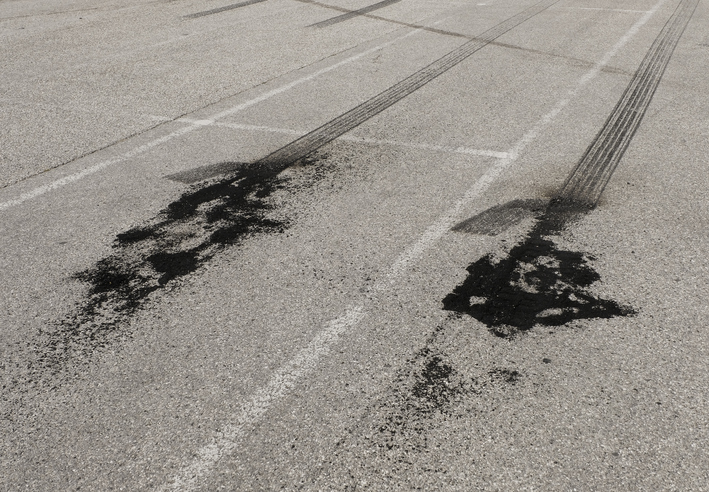
Does Street Racing in Florida Lead to More Car Accidents in Fort Myers?
Yes, it is getting worse — and the injuries are getting more serious. Florida Highway Patrol citations for racing on roads like Daniels Parkway and Colonial Boulevard have climbed sharply, the Legislature has tightened the criminal penalties twice in three years, and the cases we see at our office reflect that. People hear engines winding out at night, they read about a takeover on Six Mile Cypress Parkway, and they want to know: if a racer hits me, what can I actually do?
The civil answer is more involved than most people expect. There is a specific statute governing street racing, a no-fault insurance layer that applies before you can go after the driver directly, and a comparative-fault reform that went into effect in 2023 and changed the math on every claim. Here is how the law actually works in Fort Myers and across Lee County.
What Florida law actually says about street racing
The headline statute is Section 316.191 of the Florida Statutes. It makes street racing a first-degree misdemeanor on the first offense, with up to a year in jail, fines starting at $500, and a one-year license revocation. Second offense within five years pushes the fine into the $1,000 to $3,000 range and doubles the revocation. Third offense within five years is four years without a license and a felony exposure under the 2022 amendments that target organized takeovers.
That is the criminal side. The civil side — your side, if you are the one hit — runs on different rules.
Modified comparative negligence — Section 768.81. Since the 2023 tort reform, Florida is a modified comparative state. If a jury decides you are more than 50 percent at fault for the crash, you recover nothing. At or below 50 percent, your recovery gets reduced by your share. So if a racer blows through a red light on Cleveland Avenue at 95 and clips you, but the defense argues you were rolling a stop sign, the percentage assigned to each of you decides the case.
Statute of limitations — Section 95.11(4)(a). Two years from the date of the crash for negligence claims. Used to be four. The 2023 reform cut it. People still call our office thinking they have years to decide — they do not.
PIP — Section 627.736. Florida is a no-fault state for the first $10,000 in medical bills. Your own carrier pays, regardless of who caused the crash. To break out of no-fault and pursue the racer directly, you have to clear a serious-injury threshold — significant and permanent loss of an important bodily function, permanent injury within reasonable medical probability, significant and permanent scarring, or death.
Uninsured motorist — Section 627.727. If the racer flees, or carries a minimum $10,000 BI policy that does not begin to cover a TBI case, your UM coverage is what makes the math work. I tell every client and every friend who asks: buy UM. Stack it if you can. It is the single most useful piece of insurance most Floridians own, and most of them do not know they have it.
The crash-report rule — Section 316.066. If injuries, death, or apparent property damage of at least $500 are involved, law enforcement has to investigate and a long-form report has to be written. On racing crashes the long-form report is the spine of the civil case, and we pull it within the first week.
Four crash patterns we see repeatedly in racing files
Racing crashes are not all the same. From the files I have worked over the last few years, four patterns repeat:
- The bystander T-bone. Two cars are racing northbound on Six Mile Cypress Parkway, the lead car runs a yellow, the trailing car runs a hard red, and a turning vehicle at the intersection takes the hit. The turning driver did nothing wrong. These cases are the most catastrophic and the most fact-dense, because there are usually two at-fault drivers and a fight over which one owes what.
- The lost-control single-vehicle event. A racer loses traction at speed on a curve near I-75 by Alico Road, leaves the road, and hits a parked car, a sign, a tree, or a pedestrian. The racer’s own passenger is often the one badly hurt — and the passenger has a claim, usually against the racer’s own policy and then against any UM coverage they themselves carry.
- The hit-and-run after impact. Racers know they are committing a crime. After a crash they run. We have pulled in cases where the only path to recovery was the client’s own UM coverage, because the driver was never identified or had no insurance worth chasing.
- The takeover bystander. A coordinated takeover blocks an intersection — Pine Island Road, McGregor Boulevard, Summerlin Road — and someone trying to drive through, or trying to reverse out of the box, gets clipped by a stunt vehicle. The defense often tries to put fault on the bystander for entering the area. Comparative-negligence percentages are the whole ballgame here.
Three things that make racing claims harder than an ordinary crash
Three things make racing crashes harder to work than an ordinary rear-end on Cleveland Avenue.
First, the at-fault driver is often underinsured or uninsured. Florida’s minimum is $10,000 in bodily injury liability — and a lot of racers run minimum policies or none at all. A TBI case with three surgeries and a year of rehab does not get resolved on $10,000.
Second, comparative-fault arguments are aggressive. The defense will dig for any reason to put a percentage on you — phone records, speed estimates from event-data recorders, dash-cam from a third vehicle. We do the same in the other direction. Black-box downloads on racing cars routinely show speeds above 100 miles per hour in the seconds before impact, and that data is gold on liability and on punitive damages.
Third, there are usually multiple defendants and multiple insurance policies. A driver, an owner who lent the car, sometimes the organizer of a takeover. Each has its own policy. Sorting out who pays first, who pays second, and how UM stacks on top is what we do early in the case, and it changes the recovery picture significantly.
A Fort Myers rear-end crash we worked
A case from a couple of years ago still sits with me. Our client was driving home northbound on US-41 in Fort Myers on a weekday evening — nothing unusual, light traffic, the kind of drive most of us make a hundred times a year. She was stopped at a signal when a vehicle behind her rear-ended her at a speed that did not match ordinary traffic. The driver got out, looked at the damage, got back in, and drove off before anyone could write down a tag.
The hit gave her a cervical strain that did not behave the way these usually do. Emergency-room care the same night. Imaging the next week. A course of physical therapy that ran into months. Then pain management. The strain became chronic, and at a certain point her treating doctor told her this was the new baseline.
The at-fault driver was never identified. That meant no defendant to sue in the ordinary sense. What we did have was her own auto policy with uninsured motorist coverage — coverage she had bought without thinking much about it. We made the claim against her own carrier, built the medical record, documented the chronic component carefully, and recovered the full policy limit. She did not have to spend a day in court.
That outcome is not unusual on hit-and-runs. UM is what makes them workable. When people ask me what insurance to carry, that case is one I think about.
What to do if a racer hits you
From what we have seen work and what we have seen fall apart, here is the sequence I give clients:
- Call 911 from the scene if you can. Do not move vehicles before the deputy arrives unless they are blocking active traffic. The long-form crash report under 316.066 is the spine of the case, and the deputy’s measurements and witness interviews are evidence you cannot recreate later.
- If you see a tag, write it down before anything else. Memorize three letters at a time. On hit-and-runs, a partial tag plus a vehicle description is often enough for FHP to identify the driver within 48 hours.
- Photograph everything before vehicles are moved. The position of the cars, the debris pattern, skid marks, and the surrounding signage. Skid length tells an accident-reconstruction engineer the approximate speed at impact. I have used these photos in negotiations more times than I can count.
- Get medical attention the same day, even if you feel okay. Cervical strains and concussions often do not present for 24 to 72 hours. PIP coverage under 627.736 has a 14-day rule — you have to get initial care within 14 days of the crash to use it. Wait three weeks and you have given up $10,000.
- Save any video. If your car has a dash cam, pull the file the same day. If a nearby business has cameras, request the footage in writing within a week. Most systems overwrite on a 7-to-14-day loop.
- Do not give a recorded statement to the other driver’s carrier. You are not required to. They will call within 48 hours and ask politely. Politely decline and refer them to your attorney.
- Look at your own policy for UM coverage. If you do not have it, call your agent about adding it on your next renewal. If you have it and a racer hits you, your own carrier may be your fastest path to a full recovery.
One more piece of practical advice that has nothing to do with law: if you are stopped at a red light and you hear engines coming up behind you fast, leave a car length of space in front of you so you can roll forward out of a rear-end. I started telling clients this twenty years ago after a case we worked on Cleveland Avenue, and I have heard back from at least three people who told me it gave them the inches they needed.
Key Takeaways
- Florida Statute 316.191 makes street racing a first-degree misdemeanor on offense one, with escalating jail, fines, and license revocation through offense three.
- The civil clock under Section 95.11(4)(a) is two years from the date of the crash. The 2023 reform cut the old four-year window in half.
- PIP under 627.736 pays the first $10,000 of medical bills no-fault, but you must get initial care within 14 days of the crash.
- If the racer flees or carries minimum coverage, uninsured motorist coverage under 627.727 is often the only path to a full recovery. Buy UM. Stack it if you can.
- Modified comparative negligence under 768.81 bars recovery if you are found more than 50 percent at fault, so early fact development matters.
Frequently Asked Questions
If a street racer hits me in Fort Myers, who pays my medical bills first?
Florida is a no-fault state, so your own PIP coverage pays the first $10,000 of medical bills regardless of who caused the crash. Section 627.736 sets that floor. If your injuries are serious enough to clear the threshold, then we go after the at-fault driver’s bodily injury liability coverage, your uninsured motorist coverage under 627.727, and any other applicable policy.
What if the racer flees the scene before police arrive?
That is a hit-and-run, and we handle them often. Even if the driver is never identified, you usually still have a path to recover through your own uninsured motorist coverage. File the crash report under 316.066, get medical care started under PIP, and call us before you talk with any insurer. The longer the gap between the crash and the first call, the harder these cases get.
Does it matter if I was speeding too?
It can. Florida uses modified comparative negligence under 768.81 since the 2023 reform. If a jury finds you more than 50 percent at fault, you recover nothing. If you are at or below 50 percent, your recovery is reduced by your share. Going five over the limit when a racer hits you at 110 is a different conversation than driving aggressively yourself, and we work through that proof early.
How long do I have to file a claim after a street-racing crash?
Two years from the date of the crash for most negligence claims, under Section 95.11(4)(a). The 2023 reform cut the old four-year window in half. Wrongful death is also two years, but it runs from the date of death. Do not wait. Evidence on these cases — black-box data, social media posts, traffic-camera footage — gets harder to pull every week.
Can I sue a racer if criminal charges are still pending?
Yes. The civil case runs on its own track. We do not need to wait for the State Attorney to wrap up. A conviction or no-contest plea can help us in the civil case, but it is not a prerequisite. We have moved on civil claims while the criminal case was still working through the Lee County courthouse.
Talk to a Fort Myers Car Accident Attorney
If you or someone in your family has been hit by a street racer in Fort Myers, Bonita Springs, Naples, Estero, Cape Coral, or anywhere in Lee or Collier County, our office wants to hear from you. The earlier we can pull the crash report, secure dash-cam and traffic-camera footage, and start the medical record on the right footing, the better the outcome looks. Call 239-992-8259 for a free consultation. There is no fee unless we recover for you.
About the Author

Personal injury law has been David B. Pittman, Esq.’s focus in Fort Myers and across Lee County for more than thirty years, with a sustained focus on serious-injury auto and complex-liability cases. He founded Pittman Law Firm, P.L. and remains its lead attorney. The firm’s Fort Myers presence handles a steady stream of serious-injury work along the Daniels Parkway, Six Mile Cypress, McGregor Boulevard, Cleveland Avenue, and Summerlin Road corridors, and along I-75 between Estero and Bell Tower.
From The Citadel, The Military College of South Carolina to the University of South Carolina School of Law, David’s preparation has been deliberate. Martindale-Hubbell rates him AV-Preeminent; he is a member of the Multi-Million Dollar Advocates Forum.
David has held a Florida real estate broker license for twenty-five years, a credential that shapes how the firm reads the property side of premises cases. The firm handles personal injury cases across Lee and Collier Counties, serving Fort Myers, Bonita Springs, Naples, Cape Coral, Estero, and Lehigh Acres, with offices at Windsor Place in Bonita Springs (main) and Fort Myers (satellite). Call 239-992-8259 for a free consultation.