

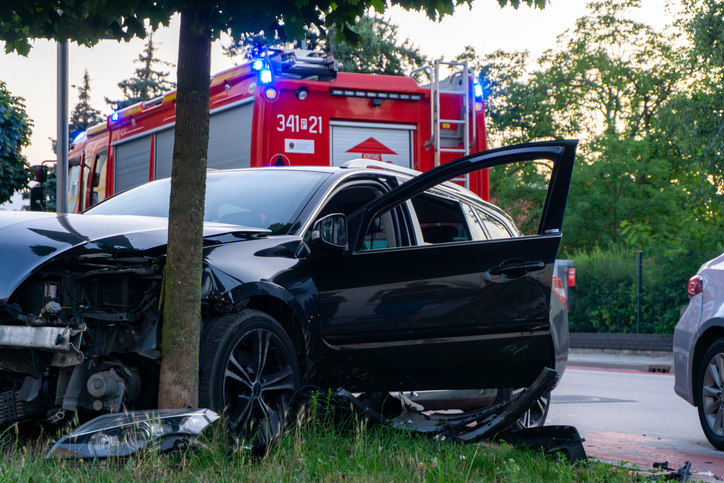
Beyond The Crash: Long-Term Effects Every Fort Myers Accident Victim Should Know
A Daniels Parkway rear-end at 3 p.m. on a Thursday. The other driver is apologetic. The cars are driveable. You go home. You wake up Friday morning and your neck has stiffened overnight. By Sunday the headache will not lift. By Tuesday you are lying on the couch, unable to focus, short on sleep, wondering how this got worse instead of better.
That timeline is the one I see most often in our office — not the dramatic scene-of-the-crash injury, but the slow-burn problems that show up in the days and weeks afterward. After three decades representing injured clients in Lee and Collier Counties, I can tell you the cases that surprise people are not the dramatic ones at the scene. They are the slow-burn injuries, the financial bleed, and the mental fallout that nobody warned them about. This post covers what we actually observe and the steps that keep a real claim from getting written off before the full picture emerges.
What Florida law actually says about car accident claims
Before we get into injury patterns, a few statutes drive almost every conversation we have with a Fort Myers client. They are worth reading once in plain English.
Florida’s two-year deadline — §95.11(4)(a), Florida Statutes. In March 2023 the legislature cut the statute of limitations on negligence claims from four years to two. Plain English: you have two years from the date of the crash to file a lawsuit. If you wait, your claim is gone, regardless of how serious the injury is. We still see people walk in believing they have four years. They do not.
Modified comparative negligence — §768.81, Florida Statutes. Same 2023 reform. Plain English: if a jury finds you more than 50% at fault for the crash, you recover nothing. At 50% or less, your damages are reduced by your share. Before 2023 Florida was a pure comparative state and a 90%-at-fault plaintiff could still get a sliver of recovery. Not anymore. The fault narrative now matters more than it has in my career.
Personal Injury Protection — §627.736, Florida Statutes. Plain English: your own auto policy is supposed to pay 80% of reasonable medical bills and 60% of lost wages up to a $10,000 cap, no matter who caused the crash. There is a catch — you have to be seen by a qualified medical provider within 14 days of the crash, or your PIP benefits can be cut off. We have seen clients lose PIP entirely by waiting two and a half weeks because they thought their soreness would pass.
Uninsured motorist coverage — §627.727, Florida Statutes. Florida does not require drivers to carry bodily injury liability coverage. A lot of them don’t. Uninsured motorist coverage is the policy you buy on your own car that pays when the at-fault driver has no insurance or not enough. In our office, UM is the single most undersold and most useful coverage a Floridian can have.
The crash report — §316.066, Florida Statutes. If the crash involves injury, death, or apparent property damage over $500, a long-form crash report has to be filed. Plain English: the officer’s narrative and diagram are going to be the spine of every insurance fight that follows, and what gets written in the first 48 hours is hard to walk back later. If the report has factual errors — wrong direction of travel, wrong intersection, missing witness — flag them in writing right away.
The injury patterns we actually see
Beyond the obvious broken-bone cases, there are five long-term injury patterns that come up over and over in our Fort Myers practice. None of them are exotic. All of them are commonly missed in the first 48 hours.
- Whiplash and cervical disc injury. The classic Daniels Parkway and Six Mile Cypress Parkway rear-end pattern. Soreness on day one, sharp pain by day three, an MRI on day fourteen showing a bulging or herniated disc. People who try to tough it out with ice and ibuprofen often turn a six-week problem into a six-month problem.
- Concussion and mild traumatic brain injury. A jolted brain inside an intact skull. No ER scan picks it up. What we see is the spouse calling two weeks later because the client cannot focus at work, is sleeping twelve hours a day, has a headache that will not lift, and is short-tempered with the kids. This is the injury that wrecks careers quietly.
- Internal organ injury. Seat-belt bruising over the abdomen is a warning sign people ignore. A lacerated spleen or a slow bleed in the abdomen can take days to declare itself. If a client tells us they have new abdominal pain, lightheadedness, or unusual fatigue a few days after a crash, we send them to the ER the same hour.
- Shoulder and rotator cuff tears. The hand on the wheel at impact is on a lever. Rotator cuff and labrum tears in the driver’s left shoulder are common after a left-front collision and almost always show up after the soreness is supposed to be gone.
- Post-traumatic anxiety and driving avoidance. This is real, it is documentable, and Florida juries take it seriously when a treating professional says it on the record. People who used to drive Colonial Boulevard every day suddenly cannot get on I-75. That is a compensable loss and it deserves treatment, not silence.
Long-term effects — why these cases are harder than they look
Three things make the long-tail Fort Myers crash case harder than the textbook version.
First, the gap problem. If a client has a two-week gap between the crash and the first doctor’s visit, the defense will argue the injury came from something else — lifting a grandchild, mowing the yard, an old gym injury. Once the gap is there, no expensive report fixes it. The single best thing a Fort Myers crash victim can do for a future claim is to be seen by a doctor inside the 14-day PIP window — even if it is only a primary-care visit to put the soreness on record.
Second, the surveillance problem. In any case with real value, the defense carrier hires a private investigator. They will sit on a client’s house with a camera. They will pull social media. They will catch a back-injury plaintiff carrying a cooler out to a boat at the marina and use that thirty-second clip to argue the back is fine. The instruction we give every client is plain: if a doctor has restricted you, live inside those restrictions every day, not just on the days you remember.
Third, the Maximum Medical Improvement problem. MMI is the point at which a doctor decides your condition is as good as it is going to get — either fully healed, or stable with a permanent impairment. Settling before MMI is one of the most expensive mistakes a Floridian can make, because once you take the money you cannot come back for the surgery you didn’t know you needed. The carrier knows this. That is exactly why early settlement offers tend to land while the client is still in pain and worried about the bills.
A Fort Myers DUI injury claim from our files
A Fort Myers family of four was driving home one evening when an impaired driver crossed the centerline and hit them head-on. The husband had multiple fractures and significant internal bruising. His wife and their two children had less severe injuries but were shaken in a way that lasted longer than the bruises.
We pulled them in within a few days of the crash. The husband had several procedures. The kids saw a counselor — that was important, and it is exactly the kind of treatment most families skip because they think they should be over it. Over the months that followed, every member of the family worked back to full function. Not all of these cases end that way, and we never promise they will. This one did.
On the legal side, we went hard at the impaired driver’s carrier. The fact pattern — clear liability, sober victims, documented injuries, and a defendant whose conduct a jury would have punished — gave us a strong position. We resolved the case at the maximum policy limits available, with the medical care fully covered and a real recovery for the family on top of it.
The reason I think about this one is the choice the family made on day three. They got medical attention quickly, they kept records, they did not talk to the at-fault driver’s adjuster, and they let us run the claim while they ran the recovery. That is the order of operations.
What to do if you were just in a Fort Myers crash
This is the action list I give clients in the first phone call. It is short on purpose.
- See a doctor inside 14 days, even if you feel okay. This protects your PIP benefits under §627.736 and creates a contemporaneous medical record. Primary care, urgent care, or the ER — any of them work. What does not work is waiting three weeks.
- Keep a simple symptom log. A pocket notebook is fine. Date, what hurts, what you couldn’t do that day. I have used this approach with clients for years and noticed that the ones who write it down get better treatment from their own doctors, because the doctor finally has a timeline that is not “uh, a few days ago.”
- Photograph the bruising as it develops. Seat-belt bruising and surface bruising often look worse on day three than on day one. Take the picture on day three.
- Save everything from the crash. The police report number, the at-fault driver’s insurance card, your own dashcam if you have one, the photos from the scene, the names of any witnesses, the receipts from the towing company.
- Do not give a recorded statement to the at-fault driver’s carrier. Their adjuster will be polite and will ask twice. The right answer is still no. Tell them to call your lawyer.
- Do not post about the crash on social media. Not the photos, not the rant about the other driver, not the gym selfie six weeks later. Defense lawyers have a folder for that material.
- Wait until you are at Maximum Medical Improvement before you settle. The early-offer letter is almost always an attempt to close the file before the real injury declares itself.
- Call us if you are not sure. An initial conversation costs nothing. It will at least tell you what your two-year clock looks like and whether the insurance you actually have is going to cover what you actually need.
Key Takeaways
- Florida’s negligence statute of limitations is now two years (§95.11(4)(a)) — not four — so the deadline arrives faster than most people expect.
- PIP under §627.736 cuts off if you do not see a qualified medical provider within 14 days of the crash. That deadline drives more value than people realize.
- Under the 2023 changes to §768.81, a plaintiff who is more than 50% at fault recovers nothing. The fault narrative now matters more than ever.
- Most long-term injuries — disc injuries, concussions, internal organ damage, rotator cuff tears, post-traumatic anxiety — declare themselves between day two and day fourteen, not at the scene.
- Do not settle before Maximum Medical Improvement, and do not give the at-fault carrier a recorded statement before you have talked to a lawyer.
Frequently Asked Questions
Q1. How long after a Fort Myers crash can serious injuries actually show up?
In our practice, the most common late-arriving problems show up two to seven days after the crash. Soft-tissue neck and back injuries usually surface 24 to 72 hours later. Concussion symptoms can take a week. Internal injuries can take days to declare themselves. If something new appears in that window, document it and get back in front of a doctor the same day.
Q2. Does Florida PIP really only cover 60% of my lost wages?
Yes. Under §627.736, Florida Statutes, PIP pays 80% of reasonable medical expenses and 60% of lost wages, up to your $10,000 policy limit. Most working people exhaust PIP quickly. The rest of the loss has to come from the at-fault driver’s bodily injury liability coverage, your own uninsured motorist coverage, or both.
Q3. How long do I have to file a personal injury claim in Florida after a Fort Myers car accident?
Two years from the date of the crash. The Florida legislature shortened the negligence statute of limitations from four years to two in March 2023 under §95.11(4)(a). Wrongful-death claims are also two years. People who think they still have four years are losing real cases on this point. Treat the two-year clock as the hard deadline.
Q4. Can I still recover money if I was partly at fault for the Fort Myers crash?
Yes, up to a point. Under §768.81, Florida Statutes (as amended in 2023), Florida is now a modified comparative negligence state. If a jury finds you more than 50% at fault, you recover nothing. If you are 50% or less at fault, your recovery is reduced by your percentage of fault. This change makes the fault narrative more important than it used to be.
Q5. Should I give the other driver’s insurance company a recorded statement?
Not before you talk to a lawyer. The adjuster’s job is to lock you into a version of facts and a description of your injuries before you know what is wrong with you. We routinely see late-onset injuries that contradict whatever the client said on day two. Polite refusal is fine. Refer the adjuster to counsel.
Talk to our office before you talk to the other driver’s adjuster
If you were hurt in a Fort Myers crash — on I-75 near Alico Road, along Daniels Parkway, on Cleveland Avenue, anywhere in Lee County — call our office at 239-992-8259 for a free consultation. We will look at the crash report, the coverage on both sides, the medical picture so far, and the two-year clock under §95.11(4)(a), and we will tell you straight whether this is a case that needs a lawyer. There is no fee unless we recover for you.
About the Author

David B. Pittman, Esq. is the founder of Pittman Law Firm, P.L., and has practiced personal injury law in Fort Myers and across Lee County for more than thirty years, with a sustained focus on serious-injury auto and complex-liability cases. The firm’s Fort Myers presence handles a steady stream of serious-injury work along the Daniels Parkway, Six Mile Cypress, McGregor Boulevard, Cleveland Avenue, and Summerlin Road corridors, and along I-75 between Estero and Bell Tower.
David earned his undergraduate degree at The Citadel, The Military College of South Carolina, and his law degree at the University of South Carolina School of Law. He is rated AV-Preeminent by Martindale-Hubbell and belongs to the Multi-Million Dollar Advocates Forum.
David has held a Florida real estate broker license for twenty-five years, a credential that shapes how the firm reads the property side of premises cases. The firm handles personal injury cases across Lee and Collier Counties, serving Fort Myers, Bonita Springs, Naples, Cape Coral, Estero, and Lehigh Acres, with offices at Windsor Place in Bonita Springs (main) and Fort Myers (satellite). Call 239-992-8259 for a free consultation.
The information on this page is for general informational purposes and is not legal advice. Reading this article does not create an attorney-client relationship with Pittman Law Firm, P.L. Every case turns on its own facts. If you want legal advice about your situation, contact our office directly. This is attorney advertising.