

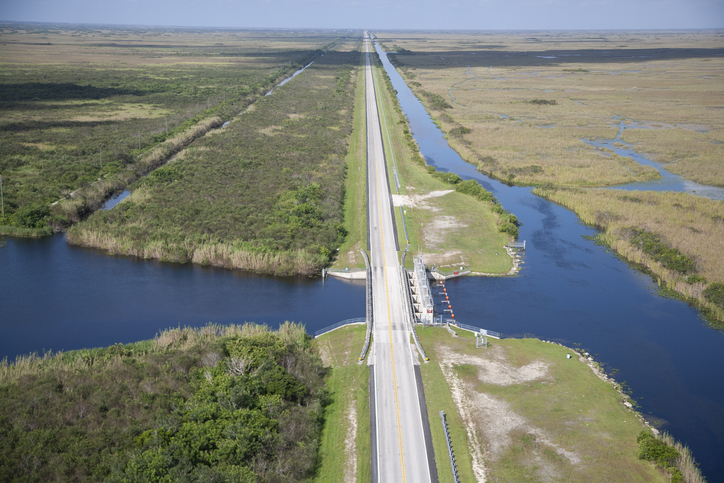
Why Tamiami Trail (US Highway 41) Florida Is the Most Dangerous Road in Lee County And What To Do If You Are Injured In An Accident
US-41 produces a steady share of the serious-injury cases that come through our door, and the pattern has not changed in thirty years of practice. The Trail runs the full length of our service area — from Bonita Springs up through Fort Myers — and it carries roughly 43,000 vehicles a day on its heaviest sections, climbing another 20 to 25 percent in winter season. Intersections like US-41 and Pine Island Road have eight fatal crashes on record. The two-mile stretch of Business 41 through North Fort Myers consistently ranks as the highest fatal-crash count in Southwest Florida. Those numbers are not abstract. They are the context for almost every call our office gets the morning after a serious wreck.
This piece does two things. First, it gives you a plain-English read on what Florida law actually does when you are hurt in a crash on US-41. Second, it walks through the scenarios we see in our office every week, so if it happens to you, you know what the next ninety days are supposed to look like.
What Florida law actually says about a US-41 crash
Florida changed several of the rules that govern these cases in 2023. The reforms favored the insurance side, and they trimmed the window of opportunity for the injured driver. Three statutes do most of the work.
Florida Statute §95.11(4)(a) — the two-year deadline. Before 2023, you had four years to file a negligence lawsuit. Now you have two. Two years is short. In a US-41 case, the first six months are usually swallowed by treatment, the next six by insurance back-and-forth, and the back half by litigation positioning. By the time most injured people realize they need a lawyer, a quarter of the clock has already run.
Florida Statute §768.81 — modified comparative negligence. Florida is a fault-apportionment state. A jury looks at every party who contributed to the crash, including you, and assigns a percentage to each. Under the 2023 reform, if your share is 51 percent or more, you take home nothing. Below that, the recovery is reduced by your share. On a road like Tamiami Trail, with seven lanes of traffic at some intersections and aggressive lane-changers everywhere, insurance carriers fight hard to get the injured driver above the 50 percent line.
Florida Statute §627.736 — Personal Injury Protection. PIP gives you up to $10,000 in no-fault medical and wage-loss coverage, regardless of who caused the wreck. The number has not moved in a long time. For a serious US-41 crash with surgery, imaging, and rehabilitation, $10,000 is a down payment, not a solution. Florida law also requires you to see a doctor within fourteen days of the crash to keep PIP coverage alive. Skip that window and the carrier will look for any reason to deny.
Two other statutes come up in almost every Trail case. Section 627.727 governs Uninsured Motorist coverage, which is your own policy stepping into the at-fault driver’s shoes when that driver has no insurance or not enough of it. Florida does not require most drivers to carry bodily-injury liability, so UM is the single most important coverage you can buy. Section 316.066 requires a written traffic crash report when there is injury, death, or apparent damage of at least $500. On Tamiami Trail, you are almost always over that threshold. Get law enforcement to the scene.
Five crash types that come through our door from the Trail
The legacy crash data on US-41 is well documented. Lee County averages roughly 100 fatal crashes a year. Daily traffic counts on the heaviest sections sit around 43,000 vehicles, and that number climbs another 20 to 25 percent during winter season. The numbers are useful background. The patterns we see in our office are more useful.
- The rear-end at a commercial intersection. Stop-and-go traffic from Edison Mall down through Page Field, paired with drivers checking their phones, produces rear-end crashes at a rate that dwarfs the rest of the route. These are the cases where the carrier opens with a low offer because “soft tissue” is the going insurance code for “we don’t believe you.”
- The seven-lane left turn. US-41 and Pine Island Road is the textbook example. A driver tries to clear seven lanes during a yellow arrow and meets oncoming traffic. These are the cases that produce the eight fatal crashes the intersection has on its record.
- The seasonal-resident T-bone. Drivers unfamiliar with the area misread the merge from Daniels Parkway, or from one of the dozens of shopping-center driveways feeding the Trail. The locals brace for it every winter and it still surprises people.
- The pedestrian hit on a long signal cycle. Tamiami has more than two hundred pedestrian-involved crashes a year. The crossing distances are long, the cycles are short, and the truck and rideshare traffic does not slow for either.
- The chain-reaction multi-vehicle. Heavy season volume on US-41 means a single hard brake at fifty miles per hour cascades. We have handled cases with five and six involved vehicles, each with a different insurance carrier, each pointing at the other.
US-41 cases — why the fight is rarely about liability alone
From the outside, a Tamiami Trail crash looks straightforward. One driver hit another, the police came out, the report has a line for whose fault it was. The actual case is rarely that clean.
Three things make these matters harder than newer clients expect. First, comparative fault. Because §768.81 cuts off recovery at the 51 percent mark, the insurance carrier’s investigation will work overtime to push every percentage point of fault onto the injured driver. They look at speed, lane position, mirror usage, even whether the driver took an “evasive opportunity.” We respond with our own reconstruction work, not theirs.
Second, layered coverage. A US-41 crash often involves a commercial vehicle, a rideshare driver, a seasonal-resident car owned by a relative, or a rental. Each piece of paper has a different carrier and a different policy limit. The order in which those policies pay is where most of the real money sits, and it is not always obvious from the crash report.
Third, the two-year clock under §95.11(4)(a). Pre-2023, we had room to let a complicated injury declare itself before filing. Post-2023, we are filing earlier and amending later. People who wait nine or ten months to call a lawyer have already given up real ground.
What to do if you are hurt on US-41
This is the action list I give people who call our office in the first forty-eight hours after a Tamiami Trail wreck. It is not generic. It comes from the patterns above and from cases where the steps below either saved the claim or, when skipped, sunk it.
- Call law enforcement to the scene. §316.066 makes the crash report your foundation. On US-41, the damage threshold is almost always met. Do not let the other driver talk you into “just exchanging information.”
- Photograph the vehicles before they move. Front, rear, both sides, plate, dashboard mileage, and a wide shot showing the intersection. I have had cases turn on a photograph that showed a turn signal that the police report missed.
- Get the names of two non-involved witnesses, not just one. Witnesses move out of the area, and the seasonal-resident witness is usually gone by April. Two contacts gives you a backup.
- See a doctor within fourteen days. §627.736 makes that window the difference between PIP being there for you and PIP being denied. Urgent care counts. A family doctor counts. Waiting two weeks to “see if it gets better” does not.
- Save the dashcam, ring-camera, and gas-station footage before it overwrites. Most retention windows on commercial footage along Tamiami are seventy-two hours to thirty days. We send preservation letters in the first week of representation.
- Do not give a recorded statement to the at-fault carrier without counsel. The carrier’s job is to build a comparative-fault file against you under §768.81. That is the moment they start.
- Pull your own UM declarations page. Under §627.727, your Uninsured Motorist coverage may be the single largest pool of money in the case. You want to know what you have before the other side does.
Key Takeaways
- Florida’s 2023 reform cut the personal injury filing deadline from four years to two under §95.11(4)(a). Do not wait.
- Under §768.81, a jury that finds you 51 percent or more at fault for a US-41 crash gives you nothing. The fault fight starts the day of the wreck.
- PIP under §627.736 caps no-fault medical at $10,000 and requires a doctor visit within fourteen days of the crash.
- Uninsured Motorist coverage under §627.727 is the single most useful policy line on Tamiami Trail, where many drivers carry no bodily-injury liability.
- The hardest part of a US-41 case is rarely liability — it is comparative-fault pressure, layered coverage, and a shorter clock. The action you take in the first two weeks shapes the result.
Frequently Asked Questions
Q1. How long do I have to file a personal injury lawsuit after a US-41 crash in Lee County?
Under Florida Statute §95.11(4)(a), the 2023 tort reform shortened the negligence filing window from four years to two years. That clock generally starts on the date of the crash. Two years sounds like a long time and it isn’t. Witnesses move, dashcam footage gets overwritten, and the scene at intersections like US-41 and Pine Island Road changes. Talk to a lawyer well before the two-year mark.
Q2. What happens if I was partly at fault for a Tamiami Trail accident?
Florida follows modified comparative negligence under §768.81. After the 2023 reform, if a jury finds you 51 percent or more responsible for the crash, you recover nothing. Below that threshold, your recovery is reduced by your share of fault. On a multi-lane road like US-41, insurers push hard to pin a high fault percentage on the injured driver. That is one of the first fights in the case.
Q3. Will my PIP cover everything if I am hurt on US-41?
Florida’s Personal Injury Protection statute, §627.736, gives you up to $10,000 in no-fault medical and wage-loss benefits regardless of who caused the crash. That number was set decades ago and does not stretch far for a serious injury. You typically need to see a doctor within 14 days to keep PIP eligibility, and a claim against the at-fault driver picks up where PIP ends.
Q4. Do I have to call the police after a crash on Highway 41?
Florida Statute §316.066 requires a written crash report any time there is injury, death, or apparent property damage of at least $500. On US-41 the damage threshold is almost always met. Get law enforcement on the scene. The traffic crash report is the foundation that the insurance carrier, our office, and any future jury all build from.
Q5. What if the driver who hit me on Tamiami Trail had no insurance?
Florida does not require bodily injury liability coverage for most drivers, so uninsured and underinsured drivers on US-41 are common. Your own Uninsured Motorist coverage under §627.727 steps into the at-fault driver’s shoes up to your policy limit. If you turned UM down in writing, we look at every other available policy, including resident-relative policies and any commercial coverage in play.
Talk to our office before you talk to their carrier
If you or someone in your family has been hurt on Tamiami Trail, on the I-75 corridor through Lee or Collier Counties, or on any of the feeder roads that drain into US-41, call our office before you talk to the at-fault driver’s insurance company. We offer a free consultation, and there is no fee unless we recover for you. Call 239-992-8259, or reach us through dontgethittwice.com.
About the Author
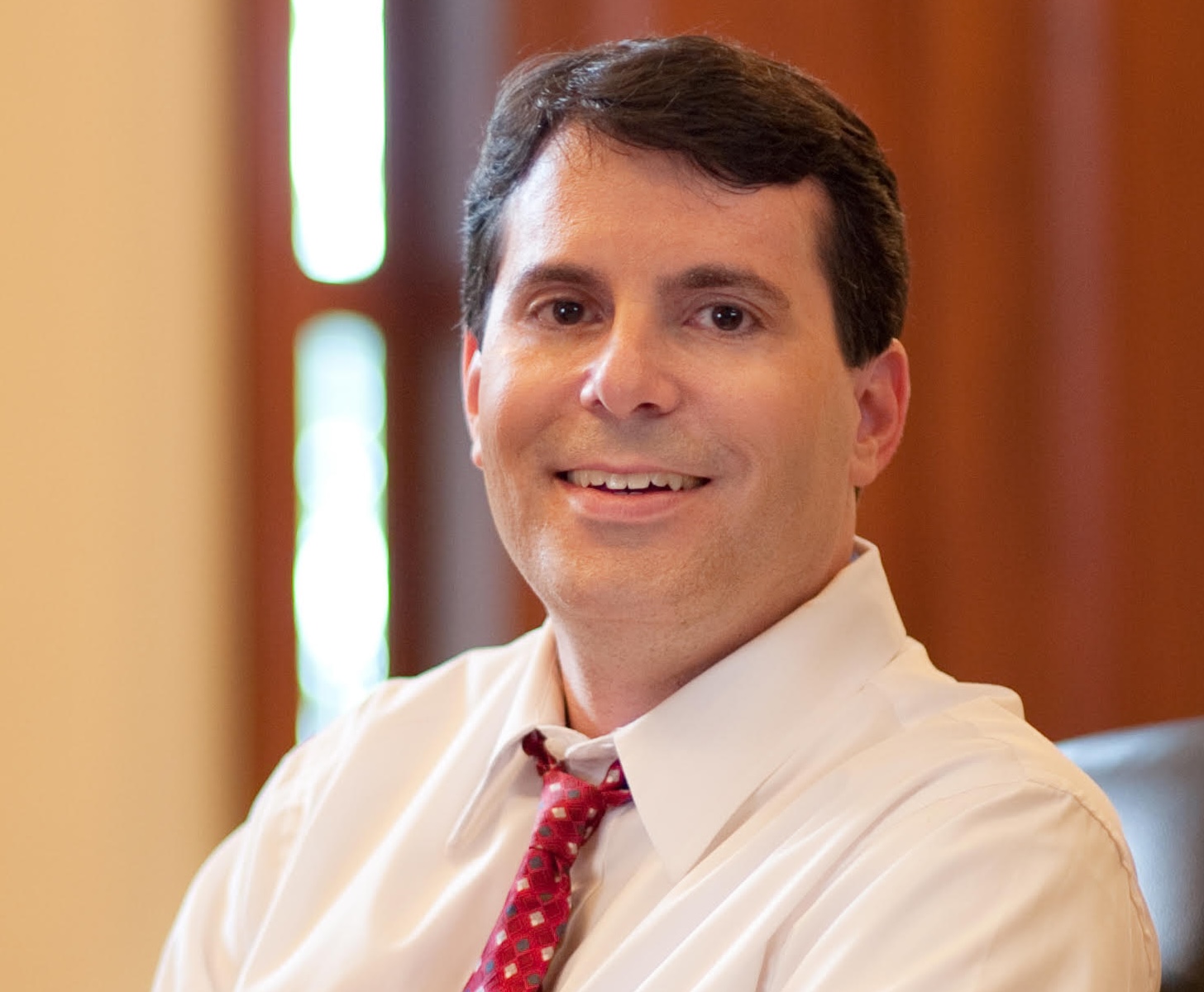
Since founding Pittman Law Firm, P.L., David B. Pittman, Esq. has spent more than thirty years representing injured clients across Southwest Florida, with a particular focus on commercial-vehicle, complex-liability, and serious-injury cases. The firm represents injured clients across Lee and Collier Counties — from the firm’s main office at Windsor Place on Bonita Beach Road through Fort Myers, Naples, Estero, Cape Coral, and Lehigh Acres.
After The Citadel, The Military College of South Carolina, David took his JD from the University of South Carolina School of Law and built a personal injury practice that now carries AV-Preeminent recognition with Martindale-Hubbell and a membership in the Multi-Million Dollar Advocates Forum.
David has held a Florida real estate broker license for twenty-five years, a credential that shapes how the firm reads the property side of premises cases. The firm handles personal injury cases across Lee and Collier Counties, serving Fort Myers, Bonita Springs, Naples, Cape Coral, Estero, and Lehigh Acres, with offices at Windsor Place in Bonita Springs (main) and Fort Myers (satellite). Call 239-992-8259 for a free consultation.