

What to Do When Police Can’t Respond to Your Fort Myers Accident: A Step-by-Step Guide
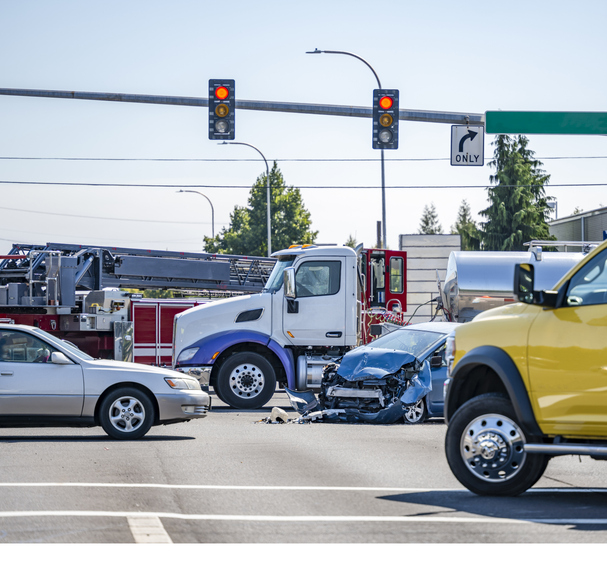
You are sitting on the shoulder of Daniels Parkway. Both cars are drivable, nobody is bleeding, and the 911 dispatcher just told you no officer is coming. Now what? The claim is not dead. But what you do in the next thirty minutes will decide how hard the next six months are going to be.
Fort Myers has more traffic, more rentals, and more part-time residents than the city had even five years ago, and Lee County agencies have responded by triaging. If nobody is bleeding and the cars can be driven, an officer often will not come. That has been the pattern across the Cleveland Avenue and Colonial Boulevard corridors for several years now, and it is the pattern we plan around when a client calls us from the shoulder.
What Florida law actually says about self-reported crashes
Three Florida statutes do most of the work here, and you should know the basic shape of each one.
§316.066, Fla. Stat. — the crash report statute. If an officer investigates, the officer files the long-form report. If no officer investigates, the duty to file shifts to the driver. The form is called the Driver Report of Traffic Crash, it goes to the Florida Department of Highway Safety and Motor Vehicles, and you have ten days. In plain English: if no badge showed up at the scene, you become the one who has to file the paperwork, and you have a little over a week to do it.
§627.736, Fla. Stat. — Personal Injury Protection. Florida is a no-fault state for the first layer of medical bills. Your own auto policy carries $10,000 in PIP, which pays 80 percent of reasonable medical care if you are treated within fourteen days of the crash. Plain English: the fourteen-day clock matters more than the police report. Miss the fourteen days and your own insurer can refuse the PIP benefits you paid for.
§768.81, Fla. Stat. — modified comparative negligence. Florida changed this rule in 2023. If a jury later finds you 50 percent or more responsible for the crash, you recover nothing. Below 50 percent, your recovery is reduced by your percentage of fault. Plain English: when there is no officer to assign initial fault, the percentages get fought over later by the insurers, and the evidence you saved in the first thirty minutes is what tilts that fight.
The other two worth knowing: §95.11(4)(a), Fla. Stat. gives you two years from the date of the crash to file suit for negligence, also a 2023 change from the prior four-year window. And §627.727, Fla. Stat. governs Uninsured Motorist coverage, which becomes the real source of recovery if the other driver has no insurance or not enough, which in Lee County happens more often than people expect.
Five no-response calls we see from Fort Myers crash scenes
From three decades of personal injury work in Lee and Collier Counties, the no-response calls sort themselves into a handful of patterns. If you recognize yours below, the next section will tell you what to do about it.
- The minor parking-lot tap. A bump in a Publix lot off Summerlin Road, both drivers can talk, both cars are drivable. Nobody is coming. People assume that means it does not count. A week later one driver’s neck is locked up and the other driver has told the insurer a completely different story.
- The disputed-fault rear-end. Stopped traffic on I-75 near Alico Road, one driver swears the car ahead reversed, the other swears it did not. No witnesses stayed. No officer was dispatched. Now it is one statement against another, and the carriers split it 50/50, which under §768.81 can wipe out the claim entirely if it slides one point higher.
- The hit-and-run that looked minor. Side-swipe at the Six Mile Cypress Parkway and Colonial Boulevard intersection, the other car kept going. The driver reports it to 911, no officer comes because there is “no one to investigate,” and the driver never files the §316.066 self-report. Eight months later they need it for UM coverage and the carrier denies for lack of timely notice.
- The “I feel fine” crash that turns out not to be fine. Driver tells 911 there are no injuries, no officer is dispatched, driver goes home, wakes up two days later barely able to turn his head. He is now past the cleanest window for documentation and approaching the PIP fourteen-day wall.
- The clear-fault commercial crash. Box truck on Pine Island Road clips a sedan, fault is obvious, driver assumes the trucking company’s insurer will simply pay. No report. No witness names. Three months in, the commercial carrier has decided to fight, and the only documentation is what was on the driver’s phone.
Why a no-report crash is harder to build than it looks
The structural problem with a no-response crash is that everything an officer would have done automatically now has to be done by the driver, on the worst day of that driver’s week, with no training. Officers preserve scene geometry. They note skid marks, vehicle rest positions, debris fields, lane of travel. They record statements from drivers and witnesses while the memory is still fresh and put those statements in a sworn document.
When that does not happen, three things go wrong in roughly this order. First, the witnesses disappear. They had somewhere to be, they gave a thumbs-up, and they drove off. Without their names and phone numbers, they are gone for good. Second, the physical evidence at the scene gets cleaned up within hours: paint chips swept, glass blown to the shoulder, skid marks faded by the next afternoon rain. Third, the other driver’s story changes. The frank version they gave you at the scene gets edited into a more favorable version by the time the insurance adjuster calls them, and you have nothing in writing to hold them to the original.
The insurer on the other side knows all of this. When they see a claim with no crash report attached, the file gets handled differently from the start. They send a reservation-of-rights letter sooner. They ask for a recorded statement earlier. They make a low first offer because they assume you cannot prove what you say happened. None of that means the case is unwinnable. It means the case is winnable on the evidence you preserved, not on the evidence the State of Florida was going to hand you.
What to do when no officer is being dispatched
Specific, in order, based on what I have watched work over thirty years.
- Call 911 anyway, and write down what the dispatcher tells you. The call itself creates a time-stamped record. The dispatcher’s statement that no officer is being sent is itself evidence. Note the time and the dispatcher’s name if they offer it.
- Photograph in this order: license, registration, insurance card of the other driver; then the other driver’s face if they will allow it; then both license plates; then the rest position of the cars before anyone moves them; then the damage from four angles per car; then the debris field and any skid marks; then the intersection or roadway with landmarks visible (a street sign, a storefront) so the location is unmistakable. Most people start with the damage and never get the registration and insurance card. Reverse that order.
- Get a phone number, not a promise, from every witness. “Can I text you so you have my number too?” works. People will not stand around to wait, but most will give you a number if you make it easy.
- Note the other driver’s exact words about what happened. Write them down before they fade. “I didn’t see you” is worth a lot in an insurance file. Two days later it becomes “I think they came out of nowhere.”
- Get seen by a doctor within fourteen days, even if you “feel fine.” The PIP statute is unforgiving on the fourteen-day window. Pain from a soft-tissue injury can take 48 to 72 hours to set in. I have watched a Florida adjuster on the other side of a claim point to a delayed first visit and reduce a settlement by tens of thousands of dollars.
- File the §316.066 Driver Report within ten days. Download the form from flhsmv.gov, fill it out completely, and submit it. Keep a copy. The Fort Myers Police Department and the Lee County Sheriff’s Office will also accept in-person reports if you would rather hand it to a person.
- Notify your own auto carrier promptly, but do not give a recorded statement to the other driver’s carrier without talking to a lawyer first. Your policy requires notice to your own carrier. It does not require you to be interviewed by the other side’s adjuster, and that interview is almost always the moment a clean claim gets damaged.
- Pull camera footage within seven days. Doorbell cameras, gas station cameras, drive-through cameras, business camera systems. Most overwrite on a thirty-day loop, some on a seven-day loop. If you wait two months, it is gone. We send preservation letters out the same day we are retained on a case like this for exactly this reason.
Key Takeaways
- A no-response crash does not kill the claim. It changes who has to build the record. Under §316.066, the driver has ten days to file a self-report with FLHSMV when no officer investigates.
- Florida’s two-year statute of limitations under §95.11(4)(a) and the fourteen-day PIP medical window under §627.736 both run from the crash date, not from when you realize the case got complicated.
- The 2023 modified comparative fault rule in §768.81 means a client found 50 percent or more at fault recovers nothing — making the early evidence you preserve worth real money, not just paperwork.
- Photograph the other driver’s documents and the rest position of the cars before anyone moves them, and get phone numbers (not promises) from witnesses before they leave the scene.
- Camera footage in Fort Myers overwrites quickly. Doorbell, business, and intersection cameras along corridors like Daniels Parkway, Six Mile Cypress, and Cleveland Avenue can decide a fault dispute, but only if the footage is requested within days, not months.
Frequently Asked Questions
Q1. What should I do first if the police won’t come to my Fort Myers accident?
Move your vehicle out of traffic if you can do so safely, turn on your hazards, and dial 911 anyway. Even if a dispatcher tells you no officer is being sent, that call creates a time-stamped record that you tried to report. Then photograph everything, exchange information with every driver, and get names and phone numbers from any witnesses before they leave.
Q2. Is it really legal for police not to respond to a car accident in Florida?
Yes. Florida agencies routinely decline to send an officer to minor crashes with no apparent injuries. The Florida crash report statute, §316.066, shifts the reporting duty to the driver when no officer investigates. You have ten days to submit a Driver Report of Traffic Crash to the Florida Department of Highway Safety and Motor Vehicles.
Q3. Can I still win an injury claim without a police report?
Yes, and our office has done it many times. A police report is helpful evidence, but it is not the only evidence. Photographs of the vehicles, paint transfer, debris patterns, witness statements, 911 audio, doorbell and traffic camera footage, and medical records together can establish fault and damages. The earlier you preserve that material, the stronger the case.
Q4. How long do I have to file a personal injury lawsuit in Florida after a 2023 reform?
Two years from the date of the crash for most negligence claims. Florida cut the statute of limitations from four years to two in 2023 under §95.11(4)(a). Missing the deadline by even a day generally ends the claim, so do not assume you have time.
Q5. What if the other driver and I disagree about who caused the crash and there is no officer to sort it out?
That is the situation where private investigation actually matters. We pull doorbell and business camera footage in the area, locate witnesses, work with a reconstruction engineer where the damage pattern warrants it, and use the 911 audio and statements to the insurers as anchor points. Under Florida’s modified comparative fault rule, §768.81, a client who is 50 percent or more at fault recovers nothing, so the fight over percentages is real money.
Talk to our family about taking care of yours
If you were in a Fort Myers crash and no officer responded, the next move is to preserve what is still there to preserve. The longer you wait, the more witnesses you lose and the more camera footage gets overwritten. I would rather have a five-minute phone call with you on day one than untangle a damaged claim on day ninety.
Call 239-992-8259 for a free consultation. There is no fee unless we recover for you. We handle personal injury cases across Lee and Collier Counties from our main office in Bonita Springs and our satellite office in Fort Myers.
About the Author

A more-than-thirty-year personal injury practice in Fort Myers and across Lee County has been the daily work of David B. Pittman, Esq., founder of Pittman Law Firm, P.L. The firm’s Fort Myers presence handles a steady stream of serious-injury work along the Daniels Parkway, Six Mile Cypress, McGregor Boulevard, Cleveland Avenue, and Summerlin Road corridors, and along I-75 between Estero and Bell Tower, representing injured clients across Lee and Collier Counties with a particular focus on commercial-vehicle, complex-liability, and serious-injury cases.
David completed his undergraduate degree at The Citadel, The Military College of South Carolina, and his JD at the University of South Carolina School of Law. Martindale-Hubbell rates him AV-Preeminent; the Multi-Million Dollar Advocates Forum counts him as a member.
David has held a Florida real estate broker license for twenty-five years, a credential that shapes how the firm reads the property side of premises cases. The firm handles personal injury cases across Lee and Collier Counties, serving Fort Myers, Bonita Springs, Naples, Cape Coral, Estero, and Lehigh Acres, with offices at Windsor Place in Bonita Springs (main) and Fort Myers (satellite). Call 239-992-8259 for a free consultation.
The information in this article is for general educational purposes and is not legal advice. Reading this article does not create an attorney-client relationship with Pittman Law Firm, P.L. Florida law changes, and the application of any statute depends on the facts of a particular case. If you have been hurt, talk to a Florida personal injury attorney about your situation before relying on anything you read here.