

Most Common Injuries From Sideswipe Auto Collisions in Fort Myers
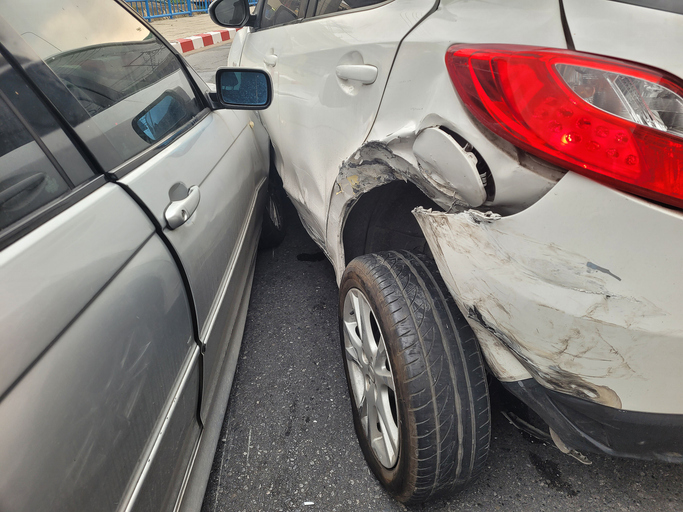
A sideswipe does not look like much from the outside. The bumpers are not crumpled, the airbags usually did not deploy, and the police report sometimes gets written as a property-damage-only event. Then, a week later, the shoulder stops rotating. The headaches start. The neck will not turn left past sixty degrees. I have watched this exact sequence play out dozens of times in thirty years of personal injury practice in Lee and Collier Counties, and the clients who call me in week six are always surprised that what felt like a scrape has turned into a surgical evaluation.
What I want to do here is walk you through what actually happens to a body in a sideswipe, what Florida law lets you do about it, and the things I tell every client who walks into our office after one of these crashes.
What Florida law actually says about sideswipe claims
Three statutes do most of the heavy lifting in a Fort Myers sideswipe case. None of them are intuitive, and all three changed within the last few years.
Modified comparative negligence, §768.81, Fla. Stat.: Florida used to be a pure comparative state. If a jury found you 80% at fault and the other driver 20%, you still recovered 20% of your damages. That changed in March 2023. Under the current rule, if a jury assigns you 51% or more of the fault, you recover nothing. In plain English: a sideswipe is the crash type where insurance carriers fight hardest over that 1%, because pushing you from 49 to 51 changes a six-figure case into a zero. We approach every sideswipe knowing the carrier is going to try to flip the fault number.
Two-year statute of limitations, §95.11(4)(a), Fla. Stat.: For any crash on or after March 24, 2023, you have two years to file suit, not four. In plain English: half the runway you used to have. People still call our office in month thirty assuming they have plenty of time, and we have to tell them the door is already shut.
PIP, §627.736, Fla. Stat., and UM, §627.727, Fla. Stat.: Every Florida driver pays for $10,000 in Personal Injury Protection, which covers 80% of reasonable medical bills and 60% of lost wages regardless of fault. The catch is the 14-day rule. You must see a qualifying provider within 14 days of the crash, or the PIP money disappears. Uninsured/underinsured motorist coverage is the policy that backstops you when the at-fault driver carries Florida’s bare-bones minimum, which is more common than people think. Florida does not require bodily injury liability coverage at all; thousands of cars on Cleveland Avenue are out there with PIP and nothing else.
Crash reports, §316.066, Fla. Stat.: Any crash that produces an injury, a fatality, or property damage that needs a tow requires a long-form report from the responding officer. In plain English: if you got hurt at all, do not let the responding deputy write this up as a self-report exchange of information. Ask for the long-form report.
Six Fort Myers sideswipe patterns we work regularly
Sideswipes in this part of Lee County tend to follow a handful of repeating patterns. We have worked all of these, often more than once:
- Lane drift on I-75 near Alico Road. A driver in the left lane hits cruise control, looks down at a phone for two seconds, drifts right, and clips the door of a car cruising in the center lane. The struck driver overcorrects and ends up in the guardrail. Two crashes, one cause.
- Forced merges where Daniels Parkway meets the I-75 ramps. Heavy ramp traffic, short merge zone, someone runs out of room and pushes into the right lane against a car that was already there.
- Six Mile Cypress Parkway lane changes during snowbird season. Out-of-state plates, hesitation, a half-signal, a half-merge. The Fort Myers driver beside them has nowhere to go.
- McGregor Boulevard parking lane brushes. A parked car door opens, or a parallel-parked SUV pulls out without looking, and the through-traffic vehicle gets clipped along the passenger side.
- Pine Island Road blind-spot merges. A larger pickup or work van does not check the right blind spot and pushes a sedan toward the curb.
- Summerlin Road and Colonial Boulevard rush-hour stop-and-go. Drivers ride the lane line trying to thread between cars; the gap closes; metal meets metal at low speed but high suddenness.
The pattern is the same across all of them: lateral impact, no real warning, occupant body loaded sideways into a structure that was not built for sideways loading.
Why sideswipe injuries are worse than the property damage suggests
People underestimate sideswipes because the damage to the car looks cosmetic. The injuries are not cosmetic. Here is what actually happens to a body in a lateral impact, in the order we tend to see it:
The neck whips sideways, not forward. Headrests are designed for rear-end whiplash. They do almost nothing for side-loading. The cervical spine snaps laterally, and the soft tissue around C4 through C7 takes the brunt. The pain often does not show up for 48 to 72 hours, because adrenaline at the scene masks it.
The shoulder on the impact side absorbs door intrusion. Even an inch of door push is enough to compress the rotator cuff against the seat structure.
Ribs and the chest wall catch the rest. Hairline rib fractures rarely show on an initial x-ray. They show up three weeks later when the patient finally gets a CT. By then the carrier has already offered a low number based on the ER record.
The hip and pelvis take a hit nobody warned you about. The center console and the door frame both push inward in a sideswipe, and the pelvis catches both. Hip pain that radiates down the leg is almost always treated first as sciatica, and only later traced back to a soft-tissue tear at the hip joint.
Secondary impacts do the real damage. The single most dangerous part of a sideswipe is rarely the sideswipe itself. It is the loss-of-control event right after, when the struck vehicle overcorrects into a guardrail, a median, or another car. We have handled cases where the original sideswipe was 15 mph and the secondary impact was 55.
The reason these cases get undervalued is that the property damage photos do not tell the medical story. The insurance adjuster sees a scraped door and offers $4,500. The MRI six weeks later tells a different story. That gap is where most of our work happens.
A North Fort Myers case we handled
A North Fort Myers woman had to have her shoulder replaced after a serious car accident. The case settled for $600,000. The initial property damage on her vehicle was modest, and the carrier’s first offer reflected that. Once we documented the full surgical picture and the permanent range-of-motion loss, the file moved. Sideswipe shoulder injuries are exactly the type that get undersold early and corrected late.
What to do if you have been sideswiped in Fort Myers
I am going to give you the list I give every client who calls our office in the first week. These are the things I have watched make a real difference, not generic crash-scene advice.
- Photograph both cars before either of you moves them, if it is safe. Sideswipes leave paint transfer, and paint transfer is the single best piece of fault evidence you can preserve. Once the cars are moved, the angle of contact is gone.
- Ask the responding officer for the long-form crash report under §316.066. A “driver exchange of information” form is not enough if you are hurting. The long-form report includes the officer’s diagram, the citation determination, and the witness contact list.
- Get a witness’s phone number, not just their name. The police report often misspells names and rarely records contact info accurately. A witness who saw the lane change is worth more than three weeks of arguing with the carrier.
- See a doctor within 14 days, even if you think you are fine. This is the PIP rule under §627.736. I have used this advice with clients who insisted they felt okay and watched them come back six weeks later grateful they went, because the urgent care visit established the date and locked in their PIP coverage.
- Do not give a recorded statement to the other driver’s insurance carrier before you talk to a lawyer. Their adjuster is paid to ask questions in a sequence designed to put you over the 50% line under §768.81. There is no benefit to you in giving that statement in the first week.
- Pull your own UM declarations page. Most Florida drivers do not know whether they have uninsured motorist coverage. If the other driver is uninsured or carries the state minimum, your UM under §627.727 may be the entire case. Find out before you need it.
- Keep a one-page pain journal for the first six weeks. I have used this approach with clients and noticed that the ones who keep a short daily log of pain level, range of motion, and missed activities recover faster and present better when the carrier finally takes the claim seriously. Generic “keep records” advice is useless; a one-page log is not.
Key Takeaways
- Sideswipe injuries are loaded laterally; headrests and seatbelts do almost nothing for that direction, which is why the neck, shoulder, ribs, and hip on the impact side get hurt out of proportion to the property damage.
- Florida’s modified comparative negligence rule under §768.81 makes the fault percentage decisive: 51% on you, and you recover nothing. Sideswipe cases are where carriers fight that number hardest.
- You have two years to file suit under §95.11(4)(a), not four. The 2023 reform cut the timeline in half.
- PIP gives you $10,000 in no-fault medical, but only if you see a qualifying provider within 14 days. Uninsured motorist coverage under §627.727 is the policy that protects you when the other driver carries the minimum.
- The most dangerous part of a sideswipe is usually the secondary impact, when the struck vehicle overcorrects. Document the whole sequence, not just the first contact.
Frequently Asked Questions
Q1. How is a sideswipe crash different from a rear-end or T-bone crash, from an injury standpoint?
Sideswipes load the body sideways. The seatbelt and headrest are built mainly for forward motion, so the neck whips laterally and the shoulder, ribs, and hip on the impact side absorb the door intrusion. We see more shoulder and rib injuries from sideswipes than from a comparable rear-end at the same speed, and we see more loss-of-control secondary impacts when a sideswipe shoves a car into a guardrail or another lane.
Q2. I felt fine at the scene on Daniels Parkway. Do I really need to go to the ER?
Yes, and ideally within 14 days. Florida PIP under §627.736 requires you to be evaluated within 14 days of the crash or you lose access to the $10,000 in no-fault medical coverage you already paid for. We have had clients walk away from the scene, wake up two mornings later with a frozen shoulder or shooting back pain, and call us in week three already shut out of PIP. Get checked early, even if it is just an urgent care visit that documents the date.
Q3. The other driver said I drifted into their lane. I do not think I did. What happens now?
Sideswipes are the crash type where fault gets fought hardest, because the only physical evidence is paint transfer and a debris pattern that gets swept up within a day. Florida switched in 2023 to a modified comparative negligence rule under §768.81, which means if a jury puts you at 51% or more, you recover nothing. That is why we move fast on these — photos of both vehicles, signal timing, dashcam pulls, and witness statements within the first week.
Q4. How long do I have to file a claim after a sideswipe in Fort Myers?
For any crash on or after March 24, 2023, Florida cut the deadline in half. Under §95.11(4)(a), you now have two years from the date of the crash to file a negligence lawsuit, not four. Wrongful death is still two years. Waiting eats medical proof, witness memory, and your own bargaining position with the carrier, so two years is not as long as it sounds.
Q5. The at-fault driver had only the Florida minimum coverage. What happens to my medical bills?
Florida does not require bodily injury liability coverage on every driver, so plenty of cars on Cleveland Avenue and Colonial Boulevard are out there with $10,000 PIP and nothing else. If you carry uninsured/underinsured motorist coverage under §627.727, your own UM policy steps in for medical bills, lost wages, and pain and suffering. UM is the single most useful policy add-on we tell every Florida driver to ask their agent about.
Talk to a Fort Myers Sideswipe Crash Attorney
If you have been hurt in a sideswipe anywhere in Lee or Collier County, the first conversation costs you nothing. Call our office at 239-992-8259 for a free consultation. We will walk through the police report, your PIP and UM coverage, and what your case actually looks like from the inside. There is no fee unless we recover for you.
About the Author

David B. Pittman, Esq. is the lead attorney and founder of Pittman Law Firm, P.L., a personal injury practice based in Fort Myers for more than thirty years. The firm’s Fort Myers presence handles a steady stream of serious-injury work along the Daniels Parkway, Six Mile Cypress, McGregor Boulevard, Cleveland Avenue, and Summerlin Road corridors, and along I-75 between Estero and Bell Tower. David represents injured clients across Lee and Collier Counties, with a particular focus on commercial-vehicle, complex-liability, and serious-injury cases.
His professional background includes a JD from the University of South Carolina School of Law, an undergraduate degree from The Citadel, The Military College of South Carolina, an AV-Preeminent rating with Martindale-Hubbell, and membership in the Multi-Million Dollar Advocates Forum.
David has held a Florida real estate broker license for twenty-five years, a credential that shapes how the firm reads the property side of premises cases. The firm handles personal injury cases across Lee and Collier Counties, serving Fort Myers, Bonita Springs, Naples, Cape Coral, Estero, and Lehigh Acres, with offices at Windsor Place in Bonita Springs (main) and Fort Myers (satellite). Call 239-992-8259 for a free consultation.
The information on this page is for general information purposes only and is not legal advice for any individual case. Reading this page does not create an attorney-client relationship with Pittman Law Firm, P.L. This is attorney advertising.