

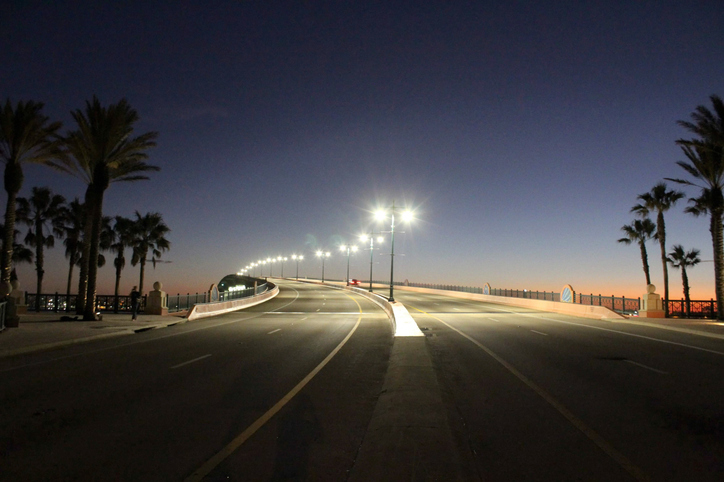
How Does Faulty Or Inadequate Lighting Lead To Accidents and Injuries In Fort Myers?
A dark parking lot is not automatically a lawsuit. But when the fixture went out three weeks ago and the property owner was told and did nothing, and now someone tripped over a curb on Cleveland Avenue and broke their wrist — that is a different picture. The difference between a freak accident and a negligence case almost always comes down to what the property owner knew, when they knew it, and what a reasonable owner would have done about it.
Because I have held a Florida real estate broker license for twenty-five years alongside the law practice, I tend to look at a dim parking lot the way an owner would: who has the lease obligation to keep the lot lit, when was the last lighting inspection, where is the foot-candle survey, what does the common-area maintenance budget actually fund. Those questions are not theoretical. They drive whether you have a case and how much it is worth.
What Florida Law Actually Says About Faulty-Lighting Injuries
People search for one statute and there really are about four that matter on a lighting-injury case. Let me walk through them in plain English.
§95.11(4)(a), Florida Statutes — the deadline. The 2023 reform cut the time to sue for negligence in half. For incidents on or after March 24, 2023, you have two years from the date of injury to file, not four. In plain English, if you slipped in a dark stairwell on a Saturday night, your clock starts running that night, and two years goes faster than you think when there are surgeries and physical therapy in between.
§768.81, Florida Statutes — modified comparative negligence. Florida used to be a pure comparative fault state. You could be 90 percent at fault and still collect 10 percent. That changed in 2023. Now, if a jury puts you at 51 percent or more at fault, you recover nothing. At 50 percent or less, your recovery is reduced by your share. In a lighting case, the defense will argue you should have used your phone flashlight, should have parked closer, should have looked down. Some of that lands with a jury and some of it does not. The percentage is the whole ball game now.
§627.736 — Florida PIP. If a car was involved, your own auto insurance pays the first $10,000 of medical bills and lost wages no matter who caused the wreck. That includes when you were a pedestrian in a dim crosswalk and got hit. PIP follows the person who carries it. We coordinate that first-dollar coverage every single time.
§627.727 — uninsured and underinsured motorist coverage. When a driver with the legal minimum hits you in a poorly lit intersection, the legal minimum will not cover a broken leg, let alone a head injury. Your UM coverage is what fills the gap. Most clients have no idea they paid for it, but it is sitting there on the declarations page.
The premises-liability piece, §768.0755. For a transitory foreign substance in a business establishment, you have to show the business knew or should have known. For a static condition like a burned-out light or a dark stairwell, the analysis is closer to ordinary negligence: did the owner have a reasonable system to inspect and maintain the lighting, and did they follow it.
A case from our premises practice
A Fort Myers man tripped over uneven concrete at a business, sustaining a serious head injury. The property owner had received prior reports about the condition of that walkway. That case settled for $675,000. The head injury was severe; the documentation of what the owner knew and ignored is what made the difference.
Five lighting situations we handle at our Fort Myers office
The fact patterns repeat. Over thirty years of personal injury work in Lee and Collier Counties, I can tell you the lighting cases sort into roughly five buckets:
- The shopping-center parking lot with a known dead pole. The fixture went out months ago. Maintenance was told. Nobody fixed it. A shopper trips on a wheel stop or a curb she could not see. The strongest cases in this bucket have a prior complaint sitting in an email somewhere.
- The apartment-complex stairwell or breezeway. A single bulb is supposed to cover an exterior stair. The bulb has been out, sometimes for weeks. A tenant or guest misses a step. The lease and the building code do a lot of the work here.
- The dim crosswalk on a high-speed road. A pedestrian crosses a five-lane corridor near Cleveland Avenue, Colonial Boulevard, or Summerlin Road in the evening. The streetlight nearest the crosswalk is out. A driver does not see her in time. These cases bring in the municipality or the lighting district as well as the driver.
- The hotel or resort walkway. Decorative landscape lighting fails or never worked, a guest catches a foot on a paver, and the resort’s risk-management department comes in fast. The lighting plan filed with the building permit is usually the document that wins or loses this one.
- The construction-zone lane shift at night. A contractor on a road project along Daniels Parkway or I-75 near Alico Road sets up a lane shift without adequate lighting or proper reflective devices. A driver clips a barrel or misses the taper. The Manual on Uniform Traffic Control Devices and the contractor’s traffic-control plan are what we are looking at first.
Lighting Cases Are Harder Than They Look. Here Is Why.
People assume a dark parking lot equals a lawsuit. It does not, on its own. A few practical reasons these cases get more complicated than the first phone call sounds:
The evidence disappears in days. The minute a property owner gets notice of an injury, the bulb gets replaced. The fixture gets repaired. The maintenance log gets cleaned up. If we are not on the scene quickly with a photographer and a lighting consultant, the case loses its strongest proof. We have learned to send someone out the same night when it matters.
The lease decides who pays. In a multi-tenant building off Pine Island Road or Six Mile Cypress Parkway, the landlord may have the duty over the common-area lighting and the tenant may have the duty over the area within five feet of its own door. The lease is sometimes thirty pages long and sometimes contradicts itself. Until we have it, we do not know who the defendant actually is.
Comparative fault eats into recovery. Under the 2023 changes, the defense puts a lot of energy into showing the injured person had a phone flashlight available, was wearing dark clothing, knew the lot was dim from prior visits. Each one of those nudges the percentage up. Above 50 percent and the case is over.
The “open and obvious” defense. Florida defendants in premises cases love to argue the dim condition was open and obvious, and you should have seen it. That defense does not always win, but it has more traction now than it did before 2023.
Government defendants have shorter notice rules. If a municipal streetlight on Cleveland Avenue caused the wreck and the city or county is involved, §768.28 requires a written notice of claim within three years, and there is sovereign-immunity cap of $200,000 per person and $300,000 per incident absent a legislative claims bill. That changes the math on a serious injury.
What To Do If Poor Lighting Caused Your Injury
Most of what I tell clients on the first call is the same regardless of where the fall happened. Practical steps, in the order they actually matter:
- Get medical attention that night, not the next week. A gap between the injury and the first medical visit is the single most common thing the defense uses against premises clients. If your wrist hurts when you get home, go to the urgent care that evening or the emergency room. Document it.
- Go back and photograph the scene at the same time of night, with the same lighting conditions. A daytime photograph of a parking lot tells a jury nothing about how dark it was at 9:15 p.m. Get back out there with a phone and a camera, and capture the actual visibility. If the bulb has already been replaced, photograph the replacement and the fixture.
- Do not give a recorded statement to anyone’s insurance company before you talk to a lawyer. The adjuster sounds friendly. The adjuster is doing a job, and that job is not on your side.
- Save the shoes you were wearing and the clothes. A premises defense lawyer will ask about footwear in deposition. Having the shoes in a bag in your closet, not laundered, not thrown out, lets us answer that.
- Write down what happened in your own words within forty-eight hours. Sit at your kitchen table and write a one-page account. Memory fades fast on details that matter — which direction you were walking, what you were carrying, what you noticed first.
- Identify witnesses by name and phone number, not just by face. If a stranger helped you up or watched it happen, get a way to reach that person before they leave the property.
- Report the condition in writing to the property owner or manager. A text or email is fine. The goal is to create a record that the owner was told. If the same condition hurts someone else next week, that report becomes evidence of notice.
I have used this approach with clients for years and I can tell you it makes a real difference. The clients who do these seven things tend to have stronger cases six months later than the clients who do not, even when the underlying facts are the same.
Key Takeaways
- Florida’s deadline to sue for a lighting-related negligence injury is now two years under §95.11(4)(a), not the four years older articles still cite.
- Under §768.81, if a jury finds you 51 percent or more at fault, you recover nothing — so the defense’s job is to push your percentage past that line.
- Your own PIP under §627.736 pays the first $10,000 of medical bills if a vehicle was involved, even if you were on foot.
- The lease, the maintenance log, and the lighting plan are usually the three documents that decide who the defendant is and whether you win.
- Evidence in a lighting case disappears in days. Same-night photos, the original shoes, and a written notice to the property owner are worth more than almost anything else you can do.
Frequently Asked Questions
Who is responsible if I am hurt in a dark parking lot in Fort Myers?
Liability usually falls on whoever controls the property. That is often the business tenant for the area right outside its door and the landlord or shopping-center owner for the broader lot. We start by pulling the lease, the maintenance records, and any prior complaints about the lighting.
How long do I have to file a lawsuit in Florida for a lighting-related injury?
Under §95.11(4)(a), Florida shortened the negligence deadline from four years to two years for incidents on or after March 24, 2023. Two years is shorter than people think, and evidence like a burned-out fixture gets repaired quickly, so do not wait.
What if I was partly at fault — like I was looking at my phone when I tripped?
Florida is now a modified comparative fault state under §768.81. If you are found more than 50 percent at fault, you recover nothing. If you are 50 percent or less, your recovery is reduced by your share. Being on your phone does not automatically end your case, but it gets baked into the percentage.
Does my own auto insurance pay if I am hit by a car in a dim crosswalk?
Yes. Under §627.736, your PIP coverage pays the first $10,000 of medical bills and lost wages even though you were on foot, because Florida PIP follows the person who carries it. If the driver had little or no insurance, your uninsured motorist coverage under §627.727 can also respond.
What evidence actually matters in a faulty-lighting case?
Photos of the scene taken at the same time of night, the maintenance log for the fixture, prior incident reports at the property, the property owner’s lighting plan if one exists, and a lighting engineer’s measurements of the foot-candle levels. We move fast on these because bulbs get replaced within days.
Talk To A Fort Myers Personal Injury Attorney
If you were hurt because a parking lot, stairwell, walkway, or crosswalk was not properly lit, our office will look at the facts with you and tell you straight whether there is a case. Call 239-992-8259 for a free consultation. There is no fee unless we recover for you. We handle slip-and-fall, premises-liability, and car-accident matters across Lee and Collier Counties from our Bonita Springs main office and Fort Myers satellite.
About the Author

David B. Pittman, Esq. keeps an active personal injury practice in Fort Myers and across Lee County as the founder of Pittman Law Firm, P.L., now into his thirty-first year representing injured clients across Lee and Collier Counties, with a particular focus on commercial-vehicle, complex-liability, and serious-injury cases. The firm’s Fort Myers presence handles a steady stream of serious-injury work along the Daniels Parkway, Six Mile Cypress, McGregor Boulevard, Cleveland Avenue, and Summerlin Road corridors, and along I-75 between Estero and Bell Tower.
Two schools made the lawyer: The Citadel, The Military College of South Carolina, and the University of South Carolina School of Law. The recognition followed: AV-Preeminent at Martindale-Hubbell, and membership in the Multi-Million Dollar Advocates Forum.
David has held a Florida real estate broker license for twenty-five years, a credential that shapes how the firm reads the property side of premises cases — who is responsible for common-area lighting, what a commercial lease obligates an owner to maintain, and where the duty of care begins and ends. The firm handles personal injury cases across Lee and Collier Counties, serving Fort Myers, Bonita Springs, Naples, Cape Coral, Estero, and Lehigh Acres, with offices at Windsor Place in Bonita Springs (main) and Fort Myers (satellite). Call 239-992-8259 for a free consultation.
The information on this site is for general informational purposes only and is not legal advice for any particular situation. Reading this page does not create an attorney-client relationship with Pittman Law Firm, P.L. Prior results do not guarantee a similar outcome.