

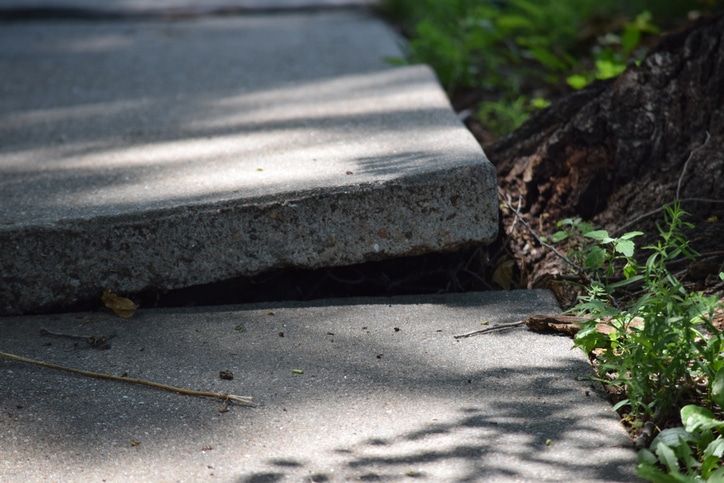
If you trip and fall on a raised or loose brick paver right outside a Fort Myers business, the store owner, the shopping center landlord, the property management company, or even the landscaping crew can be held responsible for your medical bills and lost wages under Florida premises liability law. When the store manager blames the plaza owner and the landlord blames the store, you don’t have to wait for them to sort out their arguments. You have the right to file a claim against everyone who shared responsibility for keeping that walkway safe—as long as you take photos of the uneven brick right away and get checked out by a doctor at a local hospital like Lee Memorial or Gulf Coast Medical Center.
Key Takeaways
- The Finger-Pointing Is Done on Purpose: Store owners and plaza landlords along US-41 (Tamiami Trail), Colonial Boulevard, and Daniels Parkway blame each other after a walkway fall because they hope you will get frustrated and give up.
- The Property Lease Tells the Truth: Who actually pays comes down to the commercial lease and maintenance contracts. Those documents spell out whether the store or the landlord is responsible for the exact spot where you fell.
- Landlords Can’t Hide Behind Maintenance Crews: Under Florida law, a shopping center owner has a “non-delegable duty” to keep shared sidewalks safe. That means they can pay a contractor to fix the bricks, but they can’t pass the buck if the job isn’t done right.
- Why My 25 Years as a Real Estate Broker Matters: Alongside 30+ years of practicing personal injury law, I’ve held an active Florida Real Estate Broker license for 25 years. I read commercial leases and property management contracts myself to find out whose insurance policy covers that exact patch of sidewalk.
- Watch Out for the 50% Blame Game: Under Florida Statute § 768.81, if an insurance adjuster convinces a jury that you were more than 50% at fault—usually by claiming you weren’t watching where you were walking—you get nothing.
- Two-Year Deadline: Under Florida Statute § 95.11(4)(a), you have two years from the day you fell to file a lawsuit in Lee County court.
Why Are Brick Pavers Such a Problem Outside Fort Myers Businesses?
Walk into almost any strip mall, medical office park, or restaurant in Fort Myers—from the brick sidewalks of the Downtown River District on First Street to the busy shopping plazas along Cleveland Avenue (US-41), College Parkway, and Gulf Coast Town Center—and you will walk across interlocking brick pavers. Property owners love them because they look nice.
The problem is that in Southwest Florida’s weather, brick pavers take constant work to keep flat. Unlike a solid poured concrete sidewalk, a paver walkway is made up of thousands of separate bricks sitting on a bed of sand. When property managers get lazy with maintenance, three things happen all the time here in Lee County:
- Summer Rains Wash Out the Sand: Our heavy afternoon storms wash away the sand underneath the bricks. Often, a clogged gutter or downspout dumps roof water right onto the walkway outside the front door. Once the sand washes out, some bricks sink an inch or two while the ones next to them stay high, leaving a sharp edge right where people walk.
- Tree Roots Push the Bricks Up: Plazas love planting Live Oaks, Mahogany trees, and palms right next to sidewalks. Those shallow roots grow under the walkway and push individual bricks up by an inch or more.
- Delivery Trucks Crush the Walkways: At busy restaurants and storefronts near Page Field or Cypress Lake Drive, delivery vans and cars pull right up onto the brick apron outside the front doors. The weight crushes the base and rocks the pavers loose.
Under national safety rules, including the 2010 ADA Standards for Accessible Design (§ 303), any bump or lip on a public walkway over 1/4 of an inch has to be beveled down so people don’t trip. Even a half-inch lip on a brick paver will catch the toe of your shoe and throw you straight to the ground.
Why Is Everyone Blaming Everyone Else?
If you walk back inside the store or restaurant in Fort Myers to report that you just tripped outside their front door, you will almost always hear the exact same excuse: “We only rent the inside of the building. The plaza landlord owns the sidewalk.”
Then, when you call the shopping center’s property manager, their insurance adjuster tells you the exact opposite: “The store is responsible for checking the entrance right outside their doors. And besides, we paid a landscaping company to fix those bricks last month, so talk to them.”
At Pittman Law Firm, we see this every week. It is a deliberate stall tactic. We tell our clients “Don’t Get Hit Twice”™—the first hit was smashing your knee, wrist, or shoulder on the bricks. The second hit is when three different insurance companies pass you around in circles for months, hoping you’ll get tired of the runaround and drop your claim while their security camera footage gets erased.
Who Can You Actually Hold Responsible?
When you get hurt in a slip, trip, or fall accident outside a business in Fort Myers or Bonita Springs, you don’t have to pick just one company and hope you guessed right. Under Florida law, more than one company can share the blame for the exact same broken walkway.
| Who Might Be Responsible | Why They Are on the Hook | How We Prove It |
| 1. The Plaza Landlord / Property Owner | Owns the shopping center and the shared sidewalks. Under Florida law, they cannot pass off their legal duty to keep walkways safe. | The commercial lease, property maintenance budgets, and old repair bills. |
| 2. The Store or Restaurant Tenant | Controls the front entrance, puts out mats or sidewalk signs, and invites customers across that exact path to come spend money. | Storefront lease maps, manager incident reports, and front-door camera footage. |
| 3. The Property Management Company | Paid by the plaza owner to walk the property, spot loose pavers, and hire repair crews. | Management contracts, emails from store managers complaining about the bricks, and old work orders. |
| 4. The Paver or Landscaping Company | Did a bad job installing the bricks, left a lip after fixing a sprinkler line, or ignored obvious sinking pavers. | Service contracts, vendor insurance policies, and repair invoices. |
How My 25 Years as a Florida Real Estate Broker Stops the Runaround
Most injury lawyers only look at your medical records and photos of the sidewalk. Along with practicing personal injury law for over 30 years across Southwest Florida, I have been a licensed Florida Real Estate Broker for 25 years.
When a store and a landlord point fingers at each other over an outdoor fall—whether it’s at a strip center off Metro Parkway, Six Mile Cypress, or down near our Fort Myers office on New Brittany Boulevard—knowing how commercial real estate works is a huge advantage. We demand the property records and look at three things right away:
- The Lease Boundary Map: Every commercial lease has a map showing the exact lines of what the business rents. A lot of restaurants and shops actually lease the patio or entrance area 5 to 15 feet outside their front doors.
- Common Area Maintenance (CAM) Fees: Even if the landlord owns the sidewalk, the businesses inside the plaza pay monthly maintenance fees specifically so the landlord will pressure wash, inspect, and level those pavers.
- Who Insured Whom: Commercial leases almost always force the store and the landlord to list each other on their million-dollar insurance policies. Because I’ve read these real estate contracts for 25 years, we find every insurance policy attached to that property so nobody can play hide-the-ball.
Why Landlords Can’t Just Blame the Maintenance Company
One of the biggest lies an insurance adjuster will tell you is: “The plaza owner hired a property management company and a paver contractor to take care of the sidewalks, so it’s not the owner’s fault.”
Florida law doesn’t let property owners off the hook that easily. In Florida, a commercial property owner has what the courts call a non-delegable duty to keep their property reasonably safe for customers.
In plain English, that means a shopping center owner can pay a maintenance company to do the physical work of leveling the bricks, but the owner still holds the legal responsibility if the walkway isn’t safe. If the contractor does a sloppy job or the property manager ignores a sunken brick for six months, the building owner is still legally responsible for your injuries right alongside them.
And the store inside can’t just wash their hands of it either. If a raised paver is sitting right outside the front door where every single customer has to step to walk in and out, the business has a duty to put out a cone or warning sign and hound the landlord until it gets fixed.
What Happens When They All Turn Around and Blame You?
Once the store, the landlord, and the property manager realize we won’t let them blame each other, they always try the same backup plan: they blame you.
They will claim the uneven brick was “open and obvious” and say that if you had been looking down at your feet, you wouldn’t have tripped. They do this because of Florida’s 50% fault rule under Florida Statute § 768.81. If an insurance company can talk a jury into believing the fall was 51% your fault, they don’t have to pay you a single dime.
Here is why that argument is unfair—and how we beat it:
- Uneven Bricks Blend Together: A raised brick paver isn’t a bright yellow “Wet Floor” cone. When you have thousands of red and tan bricks laid out together in the bright Florida sun—or in the patchy shade under a store awning—a one-inch lip between two bricks is practically invisible from standing height.
- Stores Want You Looking Up, Not Down: Businesses put signs, menus, address numbers, and window displays at eye level on purpose. Normal people walk into a store looking at the front door they are about to open, not staring down at their toes.
- “Visible” Doesn’t Mean “Legal”: Florida courts have ruled time and again that even if a broken walkway could be seen in daylight, that does not excuse a landlord or business from their duty to fix a trip hazard they knew customers would walk across every day.
Serious Injuries We See From Brick Paver Falls
Insurance adjusters love to act like tripping on a sidewalk is no big deal. Anyone who has actually caught their toe on a concrete paver knows how hard you hit the ground.
When you slip on a wet floor, your feet usually go out in front of you. When your toe catches on a raised brick while you are walking forward, your whole body gets thrown forward and face-first onto hard brick. For over 30 years, our firm has helped people across Lee and Collier counties recover from brutal paver fall injuries, including:
- Shattered Wrists and Arms: When you fall forward, you naturally throw your hands out to keep your face from hitting the bricks. That impact regularly breaks the bones in the wrist or forearm, often requiring surgery with metal plates and screws.
- Torn Rotator Cuffs and Broken Shoulders: Landing hard on an outstretched arm or directly on your side frequently tears shoulder tendons or breaks the upper arm bone.
- Cracked Kneecaps: Slamming straight down onto uneven brick edges often fractures the kneecap or tears the meniscus.
- Broken Noses, Teeth, and Concussions: If you don’t get your hands up in time—especially if your hands were full carrying bags or a purse—hitting your head on the bricks can cause facial fractures or a serious traumatic brain injury (TBI).
- Broken Hips: For many of our retirees and seasonal residents here in Fort Myers and Bonita Springs, a hard fall onto brick pavers means an ambulance ride to Gulf Coast Medical Center or HealthPark for emergency hip replacement surgery.
5 Things You Need to Do Right Away After Tripping on a Paver
As soon as someone gets badly hurt outside a business, you can bet a maintenance worker will be out there the next morning with a rubber mallet and a bag of sand trying to fix the bricks before a lawyer can see them. If you or a family member fell, take these steps as soon as you can:
- Take a Side-View Photo With a Coin or Key: If you stand up and take a picture pointing straight down at the ground, the bricks will look completely flat in the photo. Have someone get down on ground level and take a picture from the side. Put a quarter, a car key, or a credit card next to the raised brick edge so anyone looking at the photo can see right away how high it was sticking up.
- Take Pictures of Weeds, Dirt, or Old Patch Jobs: Look closely at the gap around the brick you tripped on. Is there grass or weeds growing in the crack? Is the edge of the brick worn down and chipped from months of people kicking it? Is there old grey mortar from a cheap patch job? Take photos of all of that. Under Florida Statute § 768.0755 and general negligence law, proving that the brick was messed up for a long time shows the owner should have known about it.
- Report It Inside AND Look for Plaza Signs: Tell the manager inside the business what happened and ask for a copy of their incident report. Before you leave the parking lot, take a photo of the main shopping center sign out by the road—it often lists the name of the property management company.
- Go Get Checked Out by a Doctor: Don’t try to tough it out because you felt embarrassed falling in front of people. Adrenaline hides serious pain for hours. Go to an urgent care clinic or emergency room right away so your medical records prove your injury happened the exact day you fell on that property.
- Don’t Give a Recorded Statement Until You Talk to Us: When the store’s insurer or the landlord’s adjuster calls asking to record a “quick statement about where you were looking,” politely decline and call our office. Those questions are traps designed to get you to blame yourself.
Frequently Asked Questions About Outdoor Business Falls in Fort Myers
What if it rained earlier and the pavers were slippery AND uneven?
In Fort Myers, we often see both problems at once: sunken pavers that hold standing water and grow slick green algae because the landlord hasn’t pressure-washed the sidewalk in months. Under Florida Statute § 768.0755, if you slip on a slick substance at a business, we have to show the business knew about it or that it happened regularly. Dark algae stains and sunken puddles on brick pavers are strong proof that the problem had been sitting there for weeks.
Can the store or landlord pay my emergency room copays right away?
Often, yes. Most commercial insurance policies carry a coverage called Medical Payments (MedPay). MedPayusually pays between $1,000 and $10,000 toward your immediate medical bills if you get hurt on their property, regardless of whose fault the fall was. We regularly track down MedPay coverage for our clients to help get early doctor bills paid while we fight the larger injury claim.
What if the shopping center fixed the pavers the day after I fell?
Under Florida evidence rules (Florida Statute § 90.407), a landlord fixing a sidewalk after a fall usually can’t be used in court to prove they were negligent—unless they try to lie and claim they didn’t own or control that sidewalk! When the store and the landlord are blaming each other over whose job it was to fix the pavers, proving which one of them actually sent a crew out to level the bricks the next day is the ultimate smoking gun showing who controlled the walkway.
What if I tripped on a brick sidewalk in Downtown Fort Myers—is the City responsible?
If you fell on a public sidewalk along First Street or Hendry Street in the Downtown River District rather than inside a private shopping plaza, the City of Fort Myers or Lee County might be responsible. However, the adjacent building owner can also share blame if their tree roots or awning runoff ruined the bricks. Suing a city or county in Florida requires following strict notice rules under Florida Statute § 768.28, so you should talk to a lawyer right away.
How much does it cost to hire Pittman Law Firm to find out who is responsible?
It costs you nothing out of pocket. We work on a contingency fee basis, which means we pay for all the investigation, property record searches, and court costs upfront, and we only get paid if we win money for you.
Stop Letting Insurance Companies Give You the Runaround—Call Us Today
You have enough on your plate trying to heal from a bad fall without playing referee between a stubborn store manager and an out-of-state shopping center landlord. At Pittman Law Firm, P.L., we don’t pass you off to a call center or treat you like a file number—We Put A Face To Every Case™.
With offices right here in Fort Myers on New Brittany Boulevard and in Bonita Springs on Bonita Beach Road, we know the local plazas, we know how to pull the commercial property leases, and we know how to make the right insurance companies pay what they owe. If your injuries make it hard to drive, we will gladly come meet you at your home or hospital room.
Call Pittman Law Firm today at 239-992-8259 or contact us online for a free, one-on-one conversation about your case.
About David B. Pittman, Esq.
David B. Pittman is the founder of Pittman Law Firm, P.L., a family-run personal injury firm that has fought for injured people across Fort Myers, Bonita Springs, Naples, Cape Coral, and Estero for more than 30 years. After graduating from The Citadel and the University of South Carolina School of Law, David built a practice focused on personal attention and real courtroom results, earning an AV-Preeminent Rating from Martindale-Hubbell and membership in the Multi-Million Dollar Advocates Forum. He is an active member of The Florida Bar and has also held an active license as a Florida Real Estate Broker for 25 years—giving our clients a rare, insider advantage when untangling commercial property leases and premises liability claims across Southwest Florida.
Legal Disclaimer: The information on this page is for general educational purposes only and is not legal advice for any specific case. Every injury claim depends on its own unique facts, and past results do not guarantee a similar outcome. Reading this blog or reaching out to Pittman Law Firm, P.L. through our website does not create an attorney-client relationship. If you were hurt in an accident in Florida, please speak with an attorney right away to protect your rights before legal deadlines expire.