

By David B. Pittman, Attorney At Law
Yes. When a store employee tells you they already knew the floor was wet, slick, or dangerous before you fell, they are handing you the single hardest piece of evidence to get in a Florida premises liability claim: proof of actual knowledge. Under Florida Statute § 768.0755, simply getting hurt inside a business on Bonita Beach Road or US-41 does not automatically make the store responsible for your medical bills.
To win a claim, you must prove the business knew—or should have known—about the slip hazard and failed to clean it up or block it off. An employee’s verbal admission right after your fall cuts straight through the corporate insurance company’s favorite defense, which is claiming the spill happened seconds before you walked down the aisle.
Over the past 30 years practicing personal injury law and holding an active Florida Real Estate Broker license for 25 years, I have seen firsthand how commercial property managers, retail tenants, and insurance adjusters fight these claims. Securing that employee’s statement before the store manager convinces them to stay quiet can be the difference between a dismissed claim and a full financial recovery.
Key Takeaways
- Direct Proof of Actual Notice: Under Florida Statute § 768.0755, you bear the burden of proving a business had “actual or constructive knowledge” of a transitory foreign substance. An employee saying, “We told someone to mop that up twenty minutes ago,” establishes actual knowledge.
- Admissible in Lee County Courts: Corporate lawyers often try to dismiss what a worker said as “hearsay.” However, under the Florida Evidence Code (Florida Statute § 90.803(18)), statements made by an employee concerning a matter within the scope of their employment are generally admissible against the employer as a party-opponent admission.
- Surveillance Footage Disappears Fast: Retail stores in Southwest Florida routinely overwrite their security camera footage every 7 to 30 days. You need a formal spoliation letter sent to the store’s corporate risk management department immediately to preserve the video showing the spill and the employee’s reaction.
- Modified Comparative Negligence Applies: Since Florida’s March 2023 tort reform (Florida Statute § 768.81), if an insurance company convinces a jury you were more than 50% at fault for not looking down, you recover zero.An employee’s admission keeps the blame squarely on the store where it belongs.
- Strict Filing Deadlines: You have exactly two years from the date of your fall to file a negligence lawsuit in Florida (Florida Statute § 95.11). Waiting even a few weeks makes tracking down hourly store workers much harder.
Why Does Florida Law Make Slip and Fall Cases So Tough to Prove?
Walk into any busy grocery store along Bonita Beach Road, a big-box retailer near Coconut Point in Estero, or a restaurant near Barefoot Beach during peak season, and the floors take a beating. Between tracked-in afternoon rain,leaking display coolers, and dropped drinks, wet floors happen every day.
Most people assume that if you fall on commercial property and break your wrist or tear a rotator cuff, the business’s commercial general liability policy automatically pays your ER bills at NCH Bonita Springs Emergency Department or Lee Memorial Hospital. That is not how Florida law works.
Under Florida Statute § 768.0755 (Premises liability for transitory foreign substances in a business establishment), if you slip and fall on a liquid, grease, food item, or other substance in a store, you must prove that the business establishment had actual or constructive knowledge of the dangerous condition and should have taken action to fix it.
Florida law breaks this down into two distinct paths:
- Constructive Knowledge: Nobody at the store admits they knew the puddle was there. To win, our firm has to prove through circumstantial evidence that the liquid was on the floor for such a length of time that, in the exercise of ordinary care, the store should have known about it—or that the hazard occurred with regularity (like an AC vent that drips every single afternoon) and was therefore foreseeable. We look for cart tracks through the puddle, dirty footprints, drying edges, or thawed ice.
- Actual Knowledge: A manager, cashier, stock clerk, or maintenance worker literally knew the hazard was on the floor before you stepped in it. Either a customer reported it to the customer service desk, an employee walked right past it and ignored it, or an employee created the hazard themselves by mopping without putting up yellow warning cones.
When an employee rushes over to help you off the tile and blurts out, “I’m so sorry, I told the front desk about that leaking cooler an hour ago,” or “We knew the roof was dripping there when it rains,” they have just given you direct evidence of actual knowledge. You no longer have to guess how long the water sat on the floor. The store knew, had a chance to put a cone over it or grab a mop, and failed to protect its customers.
isn’t What the Store Employee Said Considered “Hearsay” in Court?
One of the first tactics an insurance adjuster or corporate defense attorney will use to devalue your claim is telling you that what the store clerk said doesn’t count. They will argue it is “unverified hearsay” or that a part-time stock clerk doesn’t have the authority to speak on behalf of a multi-state corporation.
Do not let an insurance adjuster talk you out of your own memory. Under the Florida Evidence Code, specifically Florida Statute § 90.803(18)(d), a statement offered against a party isn’t barred as hearsay if it is “a statement by the party’s agent or servant concerning a matter within the scope of the agency or employment thereof, made during the existence of the relationship.”
In plain English: if a store employee is on the clock, and part of their job involves keeping aisles safe, stocking shelves,cleaning spills, or reporting floor hazards, what they say about the condition of that floor is admissible against the store in the Lee County or Collier County circuit courts.
Why Commercial Property Experience Matters Here
Having held a Florida Real Estate Broker license for the past 25 years alongside my 30+ years practicing personal injury law, I look at slip and fall cases through both a legal lens and a commercial property management lens. Every major retail chain, shopping plaza landlord, and commercial tenant operating in Southwest Florida has written Standard Operating Procedures (SOPs) and lease agreements governing floor maintenance.
Nearly every retail employee handbook states that all employees—from the store manager down to the teenager bagging groceries—are responsible for floor safety and “clean-as-you-go” policies. Because the store’s own training manuals put floor safety squarely inside every worker’s job duties, an employee’s admission that they knew a floor was slick falls directly inside the scope of their employment under Florida’s evidence rules.
What Happens When the Store Manager Steps In?
Here is what happens behind the scenes after a serious fall in a Bonita Springs store. Within minutes of you hitting the floor, a store manager or shift supervisor takes over. Corporate risk management trains store managers to protect the company from liability the second an injury occurs.
The manager will often:
- Send the chatty employee who admitted fault to the back breakroom immediately.
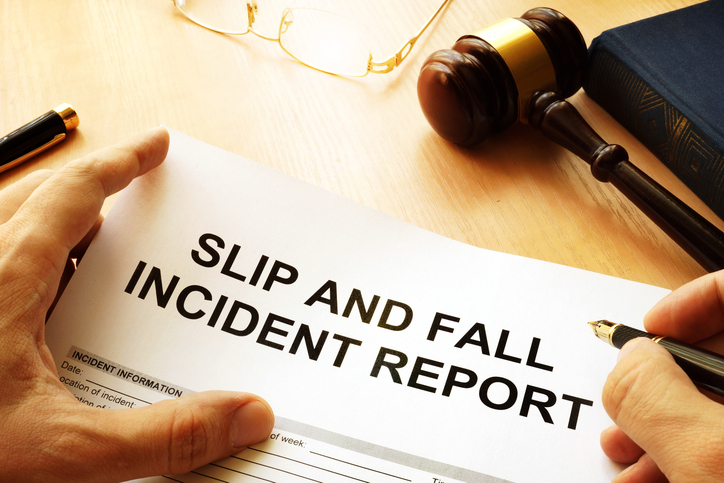
- Fill out an internal “Incident Report” while omitting the fact that an employee already knew about the spill.
- Refuse to give you a copy of the incident report (claiming it is privileged company work product).
- Take photos only after the water has been partially wiped up or cones have been moved into the frame.
- Tell you that “corporate will reach out to take care of your medical bills” so you leave quietly without calling paramedics or taking photos.
Three weeks later, when you call the store’s third-party claims administrator (companies like Sedgwick or Gallagher Bassett handle thousands of retail claims across Florida), the adjuster will flatly deny liability. They will tell you their investigation showed the floor was inspected ten minutes before your fall, and they have no record of any employee saying the floor was wet.
How Do We Prove the Employee Made That Admission If You Didn’t Get Their Name?
When you are lying on a hard terrazzo or tile floor in pain, possibly dealing with a fractured hip, a herniated disc, or a head injury, you aren’t thinking like a private investigator. Most injured clients we talk to at our Bonita Beach Road office tell us the same thing: “A worker in a blue polo shirt helped me up and said the freezer had been leaking all morning, but I was in too much pain to get his name.”
That does not mean the evidence is lost. When our office takes on a premises liability case, we move immediately to lock down the proof before memories fade or employees quit their jobs:
- Immediate Spoliation Letters: We send a formal legal preservation demand via certified mail to the store manager, the corporate registered agent, and the commercial property owner. This legally obligates them to preserve all CCTV surveillance video—not just the 30 seconds of your fall, but the two hours before and one hour after the incident.
- Reading the Video Footage: Even though retail security cameras rarely record audio, the video tells the whole story. If the video shows a store clerk looking down at the puddle twenty minutes before you fell and walking away,or shows the employee pointing toward a leaking cooler while talking to you on the floor, it corroborates your testimony.
- Subpoenaing Timecards and Sweep Logs: During litigation, we demand the complete employee shift roster, time-clock records, and floor inspection (“sweep”) logs for the day of your injury. If you remember that the employee was a tall young man working the produce department at 2:30 PM on a Tuesday, payroll records will give us his exact name and last known address so we can subpoena him for a sworn deposition.
- Prior Work Orders and Maintenance Logs: If an employee said, “That air conditioner unit always leaks,” or “That beverage cooler has been pooling water all week,” there is almost always a paper trail. We demand six months of third-party repair invoices, commercial landlord maintenance emails, and internal work orders.
How Does Florida’s 50% Comparative Fault Rule Affect Your Slip and Fall Claim?
Even when you have an employee admitting the floor was slick, the insurance company has a second line of defense:blaming you.
In March 2023, Florida overhauled its negligence laws under House Bill 837, changing Florida Statute § 768.81 from pure comparative fault to modified comparative fault. Under the current law, if a jury decides you were more than 50% responsible for your own accident, you get nothing. Not a dime for your surgery, physical therapy, or lost wages.
In slip and fall cases, defense lawyers use the “Open and Obvious” doctrine to push your fault past that 50% mark. They will argue:
- You were looking at your phone or reading a shopping list instead of watching where you walked.
- You wore improper footwear (like flip-flops or worn sandals).
- The puddle was large enough that any reasonable person would have walked around it.
An employee’s admission helps defeat this defense too. First, retail stores are specifically designed to pull your eyes uptoward brightly lit shelves and promotional displays—not down at the floor. Second, if a store worker admits, “You couldn’t even see that water because of the glare from the overhead lights,” or “That clear floor wax was way too slick,” it proves the hazard was hidden and that you acted reasonably.
5 Steps to Take Right Now If an Employee Admitted the Floor Was Hazardous
If your fall happened recently, what you do in the next few days will dictate how much leverage you have against the store’s insurance company:
- Write Down Everything Immediately: Grab a notepad or open a notes app on your phone right now. Write down the exact date, time, and aisle where you fell. Write down the exact words the employee used while they are still fresh in your mind, along with what they looked like, what uniform or name badge they wore, and who else was standing nearby when they said it.
- Seek Immediate Medical Evaluation: Do not wait to see if your back, knee, or shoulder “feels better in a few days.” Go to a local urgent care, NCH, Lee Health, or your primary doctor immediately. If there is a two-week gap between your fall at the store and your first doctor’s visit, the insurance company will claim you hurt yourself at home after the fact.
- Keep Your Shoes and Clothing: Place the exact shoes and clothes you were wearing during the fall into a plastic bag and put them in your closet. Do not wash the clothes or keep wearing the shoes. The tread on your shoes and any grease or liquid residue on your clothes are physical evidence.
- Do Not Give a Recorded Statement to the Store’s Insurer: When the store’s insurance adjuster calls asking for a “quick recorded statement just to get your side of the story and set up a medical claim,” politely decline. Adjusters are trained to ask leading questions designed to get you to say you weren’t paying attention or didn’t see anything on the floor.
- Have a Personal Injury Attorney Send a Preservation Notice: Do not wait until you finish physical therapy to talk to a lawyer. If you call a lawyer three months after a fall, the store’s surveillance video will already be recorded over, and the employee who helped you may no longer work there.
Frequently Asked Questions About Bonita Springs Slip and Fall Claims
Can I still have a case if there was a yellow “Wet Floor” sign nearby?
Yes, depending on where the sign was placed and how the hazard was handled. Stores sometimes drop a single yellow cone at the front entrance on a rainy day and assume it gives them immunity for a leaking freezer three aisles away. Other times, an employee pulls a wet floor sign out after you fall and places it next to you before taking photos. If the warning sign was hidden around a corner, too far from the spill, or put out after you hit the ground, the store can still be held liable.
Will the store employee get fired if I report what they said?
Injured people are often reluctant to repeat what a kind store worker said because they don’t want to get a helpful person in trouble. However, your claim is not against the hourly worker—it is against the corporation’s commercial liability insurance policy. Furthermore, once we pull the store’s surveillance video, maintenance logs, and work orders, the physical evidence usually backs up what the employee said without putting the entire case on that worker’s shoulders.
Who is responsible if I fell in a common area of a Bonita Springs shopping plaza?
If your fall happened on a slick walkway, breezeway, or parking lot ramp at a strip mall or plaza—rather than inside a single retail store—liability often involves multiple parties. Depending on how the commercial triple-net (NNN) lease is structured, the property owner, the commercial property management company, the individual store tenant, or a third-party janitorial contractor could share fault. Reviewing the commercial lease and maintenance contracts is the only way to identify every insurance policy covering your injuries.
How long do I have to file a slip and fall claim in Florida?
Under Florida Statute § 95.11(4)(a), the statute of limitations for negligence claims—including slip and falls—is two years from the date of the accident (shortened from four years in March 2023). If your lawsuit is not filed in court before that two-year window closes, your right to recover compensation is permanently barred.
Talk Directly with Our Family-Run Firm in Bonita Springs
When you are hurt in a fall caused by a business cutting corners on safety, you should not be left fighting a corporate claims department on your own while trying to recover from surgery or physical therapy. At Pittman Law Firm, P.L., we treat every client like family—not a case number. When you hire our office, you work directly with our team right here in Southwest Florida, never a call screener in another city.
If you or a loved one slipped and fell in a store, restaurant, shopping plaza, or commercial building in Bonita Springs,Naples, Estero, Fort Myers, or anywhere in Lee and Collier Counties, call us before the store’s surveillance footage disappears.
Call Pittman Law Firm, P.L. today at 239-992-8259 or visit our main office at Windsor Place on Bonita Beach Road for a free, no-obligation consultation. You pay nothing upfront, and we only collect a fee if we recover money for you.
About the Author: David B. Pittman, Esq.
David B. Pittman is the founder of Pittman Law Firm, P.L. in Bonita Springs, Florida. A graduate of The Citadel and the University of South Carolina School of Law, David has spent over 30 years representing injured individuals and families across Southwest Florida. In addition to his three decades of personal injury practice, David has held an active Florida Real Estate Broker license for 25 years—giving him rare, practical insight into commercial property management standards, landlord-tenant maintenance duties, and premises liability insurance coverage. He holds an AV-Preeminent rating from Martindale-Hubbell and is a lifetime member of the Multi-Million Dollar Advocates Forum.
Legal Disclaimer: The information provided in this article is for educational purposes only and does not constitute formal legal advice or establish an attorney-client relationship. Every premises liability claim depends on its own specific facts. If you were injured in a fall in Southwest Florida, contact Pittman Law Firm, P.L. directly at 239-992-8259 for a free consultation regarding your specific situation.