

By David B. Pittman, Attorney and Founder of Pittman Law Firm, P.L.
If you slipped and fell in a Bonita Springs store, filled out an incident report with a manager, and later received a letter from their insurance company denying liability, you are experiencing standard corporate defense strategy. Under Florida law, an incident report only proves that an event occurred on their property; it does not legally assign blame or compel the business to pay for your medical bills. To recover damages, you must prove the store knew or should have known about the hazard and failed to clean it up before you walked down the aisle.
Key Takeaways
- An incident report is not an admission of fault. It is an internal document used by the store to record the event and notify their insurance carrier.
- Florida Statute § 768.0755 protects businesses. You must prove the store had actual or constructive knowledge of the spill or hazard.
- Evidence disappears fast. Surveillance video in commercial retail stores is often overwritten within days.
- The clock is ticking. As of 2023, Florida law strictly limits you to two years to file a negligence lawsuit.
Why Did the Insurance Adjuster Deny My Claim?
I have seen this scenario play out for over thirty years in my practice. You slip on a wet floor at a grocery store off Tamiami Trail. A manager rushes over, asks if you need an ambulance, and writes up a formal incident report. You leave the store assuming they have taken responsibility because they documented the fall. Weeks later, the claims adjuster tells you the store is not liable.
They issue this denial because they know the burden of proof rests entirely on your shoulders. The adjuster is banking on the fact that you do not possess the store’s internal sweep logs, employee training manuals, or the ceiling-mounted surveillance footage that shows exactly how long that spill was on the floor. Without that specific evidence, the store’s insurance company will automatically claim the hazard was created just seconds before you fell, absolving their employees of any failure to act.
The Law Behind the Denial: Florida Statute § 768.0755
In Florida, a commercial business is not automatically responsible just because you get hurt on their premises. Liability is governed by Florida Statute § 768.0755, which deals directly with slips on a “transitory foreign substance.” This legal term refers to any temporary hazard, such as spilled soda, a leaky freezer, tracked-in rainwater, or dropped produce.
To win a premises liability case under this statute, we have to prove the store had either actual knowledge or “constructive knowledge” of the danger.
Actual knowledge means a store employee saw the spill, was told about it, or caused it themselves, yet did nothing. Constructive knowledge is more common. It means the hazard existed for a sufficient length of time that a business exercising ordinary care should have discovered it.
We prove constructive knowledge by looking for physical and temporal clues. If a customer slips on a puddle of water, we ask specific questions: Were there shopping cart tracks running through the puddle? Were the edges of the spill dried and sticky? Were there footprints from other customers? These details show a jury in Lee County that the spill sat ignored for an extended period, meaning the store failed its duty to maintain a safe environment.
The Problem With Relying on the Store’s Incident Report
Many injury victims wait weeks for a copy of the incident report, thinking it will serve as the golden ticket for their claim. It will not. In fact, the store manager is trained to write the report in a way that minimizes the company’s exposure. They will often note that the floor “appeared clean” or that the customer was “wearing improper footwear.”
An incident report is simply an internal administrative task. It flags the event for their corporate risk management department so they can prepare a defense. The moment that report is filed, the store’s legal team begins working to protect their bottom line. If you are sitting at home waiting for them to offer a settlement based on that document alone, you are giving them a head start.
Securing the Evidence You Actually Need
When our firm takes on a slip and fall case, we do not rely on the store’s version of events. We move immediately to force the preservation of real evidence.
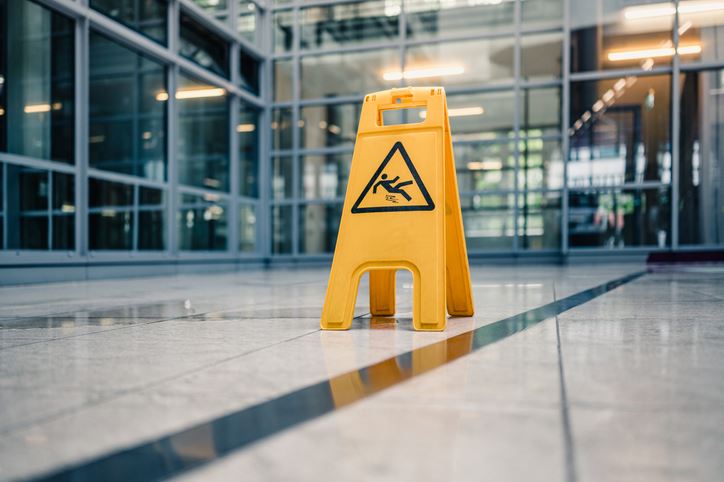
Commercial security cameras operate on a looping system. Depending on the corporate policy of the store, video footage can be automatically deleted or recorded over in as little as 48 to 72 hours. We send a formal spoliation letter to the corporate headquarters demanding they preserve all video footage from the hours leading up to your fall, not just the ten seconds of the incident. We want to see how many employees walked right past the leaking cooler without placing a yellow wet floor sign.
We also demand their maintenance sweeps and inspection logs. Large retail chains have strict internal policies requiring employees to walk the aisles and inspect the floors every hour. If their logs show they skipped the 2:00 PM and 3:00 PM inspections, and you fell at 3:15 PM, we can demonstrate a clear breach of their own safety protocols.
As a licensed Florida Real Estate Broker for 25 years, I understand the property management standards these commercial entities are required to follow. When they cut corners on property maintenance, innocent shoppers get hurt.
A Local Bonita Springs Case Example
A Bonita Springs shopper slipped on a leaking freezer puddle at a grocery store off Bonita Beach Road, fractured her wrist requiring surgery at Lee Health, and recovered $100,000 after our firm secured the surveillance video showing employees ignoring the leak for over an hour.
How Florida’s 2023 Tort Reform Impacts Your Case
If an adjuster is giving you the runaround, they are likely trying to run out the clock on your legal rights. In 2023, the Florida legislature passed House Bill 837, which drastically changed the landscape of personal injury law in our state.
The Two-Year Statute of Limitations Previously, injury victims had four years to file a negligence lawsuit. Now, you have exactly two years from the date of your fall to file suit. If you miss this deadline by a single day, the court will permanently bar your claim, and you will recover nothing. Insurance adjusters know this timeline intimately and will often drag out settlement negotiations, asking for endless rounds of medical records, hoping the two-year window simply expires.
Modified Comparative Negligence The 2023 laws also changed how fault is assigned. Florida now operates under a “modified comparative negligence” system with a 51% bar. The insurance company will inevitably try to blame you for the fall, arguing you were distracted by your phone or that the spill was “open and obvious.”
If a Lee County jury determines you were 20% at fault for not seeing the hazard, your financial recovery is reduced by 20%. However, if the insurance defense lawyers can convince the jury you were more than 50% at fault for the accident, you are legally barred from recovering a single penny. This is why having seasoned legal counsel is not just helpful; it is a necessity to push back against these aggressive defense tactics.
Frequently Asked Questions
Does an incident report guarantee the store will pay my medical bills? No. The report merely acknowledges the fall happened. Businesses only pay medical bills if you can legally prove their negligence caused your injury under Florida’s specific premises liability statutes.
Will the store voluntarily give me a copy of the security camera footage? Almost never. Store managers will refuse to hand over video directly to a customer. It generally requires a formal preservation demand letter or a subpoena filed in court by an attorney to legally force a commercial business to surrender their surveillance recordings.
What should I do immediately after a slip and fall? Take photos of the exact substance you slipped on, capture wide shots of the surrounding aisle to prove there were no warning signs, and get the names and phone numbers of any other customers who witnessed the fall. Then, seek immediate medical attention at a facility like NCH Bonita Springs or an urgent care clinic to document your injuries.
Can I afford an attorney to fight a major retail corporation? Yes. Our office handles premises liability cases on a contingency fee basis. This means you pay nothing up front, and we only collect a fee if we successfully recover financial compensation for your injuries.
About the Author
David B. Pittman, Esq. is the founder of Pittman Law Firm, P.L., an experienced personal injury practice serving Bonita Springs and all of Southwest Florida. A graduate of The Citadel and USC School of Law, David brings 30+ years of experience representing injury victims against major corporations and insurance companies. He is Martindale-Hubbell AV-Preeminent rated and a member of the Multi-Million Dollar Advocates Forum. As a 25-year licensed Florida Real Estate Broker, he possesses a deep understanding of commercial property management standards, giving him a distinct advantage in complex premises liability cases.
If a store is denying your claim after a slip and fall, let our family help yours. Call our Bonita Springs office at 239-992-8259 to schedule a free consultation.
Disclaimer: The information provided in this blog post is for general informational purposes only and does not constitute formal legal advice. Reading this article does not establish an attorney-client relationship. Every personal injury case is based on its own unique facts. If you require legal assistance regarding a specific incident, please contact our office directly.