

By David B. Pittman, Attoreny At Law
You do not need camera footage to win a slip and fall case in Florida. If you fell at a grocery store in Bonita Springs and the manager claims there is no video of the accident, you still have a valid path to recover your medical costs. Store managers regularly claim their cameras were pointing down the wrong aisle, stuck on a blind spot, or that the footage was overwritten. Insurance adjusters want you to believe that without a video, it is just your word against a massive corporate chain. Do not let that stop you.
In 30+ years of practicing personal injury law in Southwest Florida, our firm has built successful premises liability claims across Lee and Collier counties relying on internal store sweep logs, employee statements, and the physical evidence of the hazard itself.
5 Key Takeaways:
- Video is not a requirement: We regularly prove slip and fall cases using alternative evidence, such as store maintenance records and your own photographs.
- The law looks at “knowledge”: Florida grocery stores must maintain safe aisles. We can hold them accountable by proving they knew or should have known about a spill, even without a camera recording the event.
- Footage vanishes fast: Supermarkets routinely delete or overwrite their security footage within days. A formal legal preservation letter stops them from destroying this evidence.
- Take your own photos: Snapping pictures of the puddle, the leaking cooler, and your clothes immediately after the fall is the strongest way to replace missing video.
- See a doctor today: Getting evaluated at a local facility like NCH Bonita or Lee Health creates the medical documentation needed to link your injuries directly to the fall.
The Truth About Missing Store Footage
Supermarkets along Bonita Beach Road and US-41 (Tamiami Trail) are packed with security cameras. When someone gets hurt, it is amazing how often the store suddenly claims the camera was strictly focused on the cash registers to prevent shoplifting.
Other times, the video actually exists, but the store lets the security system overwrite the hard drive. Commercial camera systems often run on a loop, deleting old recordings every seven to fourteen days. If you wait a month to take action, that footage is gone for good.
When you hire our office, we immediately send a spoliation letter. This is a formal legal demand requiring the store to preserve all evidence related to your fall, including any video footage, photographs, and incident reports. If a business receives this letter and deletes the video anyway, a Lee County judge can instruct the jury to assume that the destroyed video would have proven your case.
Understanding Florida Slip and Fall Law (Plain English)
Under Florida law, the burden of proof falls on the injured person. You have to prove the business had either “actual knowledge” or “constructive knowledge” of the hazard and failed to clean it up.
Actual knowledge means an employee knew the spill was there. Maybe a stock clerk dropped a jar of pickles and walked away to get a mop, but left the aisle unguarded.
Constructive knowledge means the spill was on the floor for such a long time that the store should have discovered it if they were doing their jobs properly.
We prove constructive knowledge all the time without video. If you slip on water near the floral department, we look at the water itself. If the puddle is full of shopping cart tracks and dirty footprint smudges from other customers, that physical evidence proves the water was sitting there for a long time. If it was there long enough for three other carts to roll through it, it was there long enough for an employee to see it and wipe it up.
Real Case Profile: Proving Constructive Knowledge
We see these exact scenarios regularly in Southwest Florida. In one recent case, a Bonita Springs shopper slipped on a puddle of clear liquid near a leaking freezer at a local grocery store. The store offered nothing, claiming they had no video of the fall and therefore no proof they did anything wrong.
By demanding the store’s internal maintenance records during the discovery process, we proved the employees had skipped their mandated floor inspections for three consecutive hours. We also found repair requests showing the store knew the freezer had been leaking for weeks but chose not to fix it. Without a single frame of video, we proved the store was negligent. The client, who required physical therapy for a torn meniscus, recovered a $75,000 settlement to cover their medical bills, lost wages, and pain.
The Paper Trail: Sweep Logs
Grocery stores rely on rigid standard operating procedures for safety. Store policy almost always requires employees to walk the aisles every thirty to sixty minutes, checking for dropped produce, spills, or leaking coolers. The employee then signs a “sweep log” to verify the aisle was safe.
When we subpoena these logs, we often find glaring errors. Sometimes the logs show no one checked the aisle all morning. Other times, the logs are suspiciously signed for times after the ambulance already arrived, or the signature belongs to an employee who was clocked out on a lunch break. A falsified or empty sweep log establishes that the store failed to use ordinary care.
Steps to Take Right Now
Because you cannot count on a store’s cameras, what you do immediately after a fall makes or breaks your claim.
1. Photograph the Hazard Do not leave the aisle without taking pictures of what caused your fall. Use your phone to photograph the puddle, the squished fruit, or the broken jar. Take wide shots showing the whole aisle and close-ups of the substance. Photograph your shoes and clothes if they are wet or stained.
2. File an Incident Report Ask for the store manager immediately. Show them the exact spot where you fell and insist they fill out a written incident report. Get the manager’s name. They will likely refuse to hand you a copy of the report, which is standard, but demanding they create one ensures there is an official record of the event.
3. Get Witness Names If another shopper saw you fall, or noticed the puddle before you slipped, ask for their name and phone number. An independent witness from Estero or Naples has no financial stake in your case, which makes their statement incredibly powerful to an insurance adjuster.
4. Go to the Doctor Adrenaline masks pain. A minor ache in your knee or back can turn into severe swelling by the next morning. Go to an urgent care clinic, your regular doctor, or an emergency room like NCH Bonita right away. Tell the doctor exactly how you fell at the grocery store. This creates the medical record we need to tie your injury to the accident.
Frequently Asked Questions
How long do I have to file a slip and fall lawsuit in Florida? Florida law gives you two years from the date of the accident to file a premises liability lawsuit. If you miss this deadline, your claim is permanently barred. Because it takes time to secure sweep logs and negotiate with insurers, you should start the process right away.
Should I give a recorded statement to the store’s insurance adjuster? No. The insurance adjuster is paid to protect the grocery store’s bottom line. They will ask questions designed to make you admit you were looking at your phone or simply being clumsy. Let an experienced attorney handle all communication with the insurance company.
What if I was partially at fault for the fall? Florida uses a modified comparative negligence system. If a jury decides you were partially responsible for the fall, your financial recovery is reduced by your percentage of fault. Under recent changes to Florida law, if you are found to be more than 50% at fault, you recover nothing.
The store manager filled out a report. Can I get a copy? Stores treat these incident reports as internal, confidential documents prepared for litigation. They will not give you a copy just because you ask. Our office acquires these documents through the formal legal discovery process.
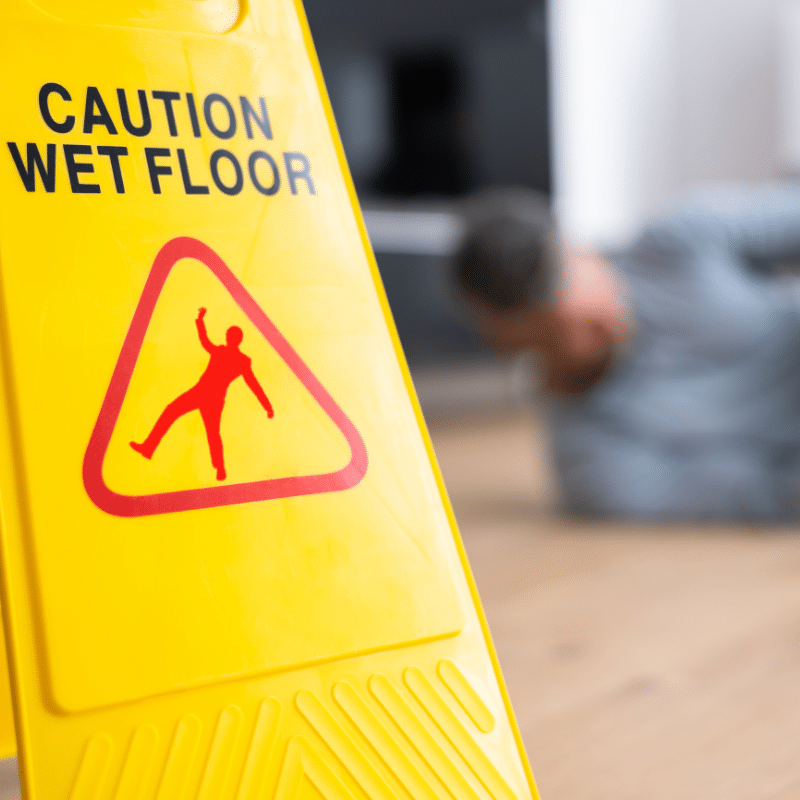
The store put up a yellow wet floor sign. Do I still have a case? Yes, depending on where the sign was. If an employee placed a wet floor sign twenty feet away from the actual spill, or tucked it around a corner where shoppers could not see it, the warning was inadequate. A store cannot drop a sign in an aisle and leave a puddle sitting there for hours.
Do Not Let a Missing Video Stop You
If you suffered a serious injury because a grocery store in Southwest Florida failed to keep their floors safe, you deserve to have your medical bills and lost income covered. We handle the heavy lifting of gathering witness statements, securing maintenance logs, and fighting the insurance adjusters so you can focus on getting better.
Call our office at 239-992-8259 to arrange a free consultation. We will sit down with you, review the facts of your fall, and build a plan to move forward.
David B. Pittman, Esq. Founder, Pittman Law Firm, P.L. David B. Pittman is a graduate of The Citadel and the University of South Carolina School of Law. He has spent 30+ years concentrating on personal injury law in Southwest Florida. He holds an AV-Preeminent rating from Martindale-Hubbell and is a member of the Multi-Million Dollar Advocates Forum. As a 25-year licensed Florida Real Estate Broker, he brings deep, practical insight into commercial property and premises liability claims.
Contact: 239-992-8259 | Main Office: Windsor Place, 3525 Bonita Beach Rd, Suite 107, Bonita Springs, FL 34134
Legal Disclaimer: The information provided in this blog is for general informational purposes only and does not constitute legal advice. Reading this post or contacting our firm does not create an attorney-client relationship. Florida laws change frequently; always consult with a qualified attorney regarding the specific facts of your personal injury case.