

Written by David B. Pittman, Attorney At Law and Founder of Pittman Law Firm, P.L.
In my 30-plus years of practicing personal injury law here in Southwest Florida, I often have to share a tough truth with injured people right out of the gate: simply slipping and falling on a wet floor or tripping over a hazard is not enough to secure a settlement.
Under Florida Statute § 768.0755, the law places the entire burden on you to prove that the business establishment had “actual or constructive knowledge” of the danger and failed to fix it.
To make matters tougher, a law passed a few years ago means that if an insurance company can pin 51% or more of the blame for the fall on you, you are legally barred from recovering a single dollar. That is why I treat these cases like a detailed investigation from day one.
Key Takeaways: My Baseline Realities for Fall Injury Claims
Before I look at the specific legal mechanics, keep these four realities in mind if you or a loved one has been hurt:
- Slipping Is Not Proof: We have to prove the store knew about the hazard, or should have known about it through regular maintenance walks.
- The 51% Cutoff: Shifting the blame to you is the insurance adjuster’s go-to play. If they push your share of fault to 51%, your claim is completely dead.
- The Two-Year Deadline: You have exactly two years from the date of your fall to file a lawsuit under Florida law.
- Evidence Disappears Fast: Corporate properties routinely overwrite security camera loops within days. If we do not demand that footage immediately, it is gone forever.
Real Examples of How I See These Accidents Happen Locally
Premises liability claims are heavily tied to the layout, weather, and seasonal traffic of our area. In my practice, I routinely handle injuries stemming from very specific property management failures:
- Liquid Spills in Supermarkets: A customer drops a container or a refrigeration unit leaks in a crowded aisle at Springs Plaza or Beach Road Plaza along Bonita Beach Road. If liquid pools on high-gloss floors and the staff skips their scheduled sweeps, it creates a trap.
- Slick, Open-Air Courtyards: Sudden Southwest Florida downpours blowing rainwater onto slick natural stone tiles. At open-air spots like the Promenade at Bonita Bay, I look at whether property managers put down proper drainage mats so patrons do not lose traction walking out of a restaurant.
- Abrupt Parking Lot Displacements: Uneven concrete paving, lifting asphalt from tree roots, or unmarked tire stops in high-traffic commercial lots, like the Prado at Spring Creek off South Tamiami Trail (US-41). Failing to apply high-visibility safety paint to a step-down is an invitation for a trip.
- Neglected Pool Decks and Common Areas: Standing water, hidden algae growth, or broken pavers around shared pool decks and clubhouses in master-planned communities like Pelican Landing or local vacation rentals near Barefoot Beach.
My Real Estate Background Changes How I Look at Your Case
My perspective on these cases is different than most injury attorneys you see on television. For 25 years, I have held a license as a Florida Real Estate Broker alongside my law practice. I know exactly how commercial plazas, grocery stores, and corporate landlords are supposed to manage, operate, and inspect their facilities under Florida building standards and commercial lease terms.
When a corporate entity tells me they had no idea a floor was wet or a walkway was broken, I look directly behind the curtain. Our office demands:
- Sweep logs and inspection records: I review time stamps to see if scheduled safety walks were actually performed or just filled out after the fact.
- Property management contracts: I identify which vendor or subcontractor was explicitly hired to handle common-area safety and code compliance.
- Surveillance loop footage: I track the video timeline backward from the moment you fell to prove exactly how many minutes or hours that danger sat unattended.
What I Recommend You Do Immediately After a Fall
Corporate insurance groups train their managers to gather evidence that places the blame on your physical coordination or your shoes. To protect your rights, I advise taking these steps immediately:
- Report it before you leave: Notify the store manager or landlord on-site right away. Demand they fill out a written incident report, and take a photo of it.
- Photograph the specific hazard: Use your phone to take close-up photos and wide videos of the puddle, substance, or structural defect. Capture the surrounding area to prove whether or not they put up warning signs or cones.
- Get witness phone numbers: Look for fellow shoppers, diners, or bystanders who saw you fall or noticed the hazard beforehand. Store employees often change their stories later; independent bystanders do not.
- Get checked out by a doctor: Go to a local facility like NCH Bonita Springs Emergency Room or Lee Health Coconut Point. Adrenaline can mask severe soft-tissue trauma, torn ligaments, or fractures. Immediate medical charting ties the physical injury directly to the incident.
- Bag your shoes and clothing: Put the shoes and clothes you were wearing into a secure bag. Do not wear those shoes again or clean them. If the defense tries to argue your footwear caused the slip, we want that evidence locked down.
How I Fight Back Against the 51% Blame Trap
Insurance defense lawyers for commercial properties routinely use a shared-blame strategy to avoid paying claims. Under Florida’s modified comparative fault law (Florida Statute § 768.81), if an insurance company successfully places 51% or more of the blame for a fall on you, your right to secure a settlement is eliminated completely.
Adjusters will look for any excuse to claim you were distracted by your phone, or argue that the puddle was “open and obvious,” meaning you should have seen it and walked around it.
When I build a case, I focus on the physics and the property standards to keep your baseline fault as close to zero as possible. If a hazard is truly hard to see due to store lighting or the color of the floor, we use expert building inspectors to prove it.
Local Case Example: I handled a case recently where a local visitor tripped and suffered a severe knee injury due to an unlit, broken concrete walkway outside a Bonita Springs commercial property. The property management company blamed our client, claiming she should have been watching her step more carefully. By utilizing public property records and hiring an expert inspector to evaluate the walkway illumination and code violations, we demonstrated that the management team had neglected known structural defects for months. The insurer settled the claim in full before trial.
Speak with Our Office Before You Talk to Their Adjuster
Do not give a recorded statement to a property management insurance adjuster, and do not sign any forms that minimize your injuries. Corporate insurers are trained to collect statements that make it look like you fell due to your own clumsiness.
Call our Bonita Springs office today at 239-992-8259 for a free evaluation of your claim. Let our family team review the property safety standards, protect the evidence, and fight to hold the negligent property owner accountable.
Frequently Asked Questions
What happens if I slip and fall on a wet surface inside a private condo rental?
The same basic legal standard applies under Florida premises liability law, but we must look closely at the short-term rental agreement and the homeowner’s insurance policy provisions. If the leak came from a long-neglected appliance or a broken pipe the landlord knew about but ignored, we can establish liability.
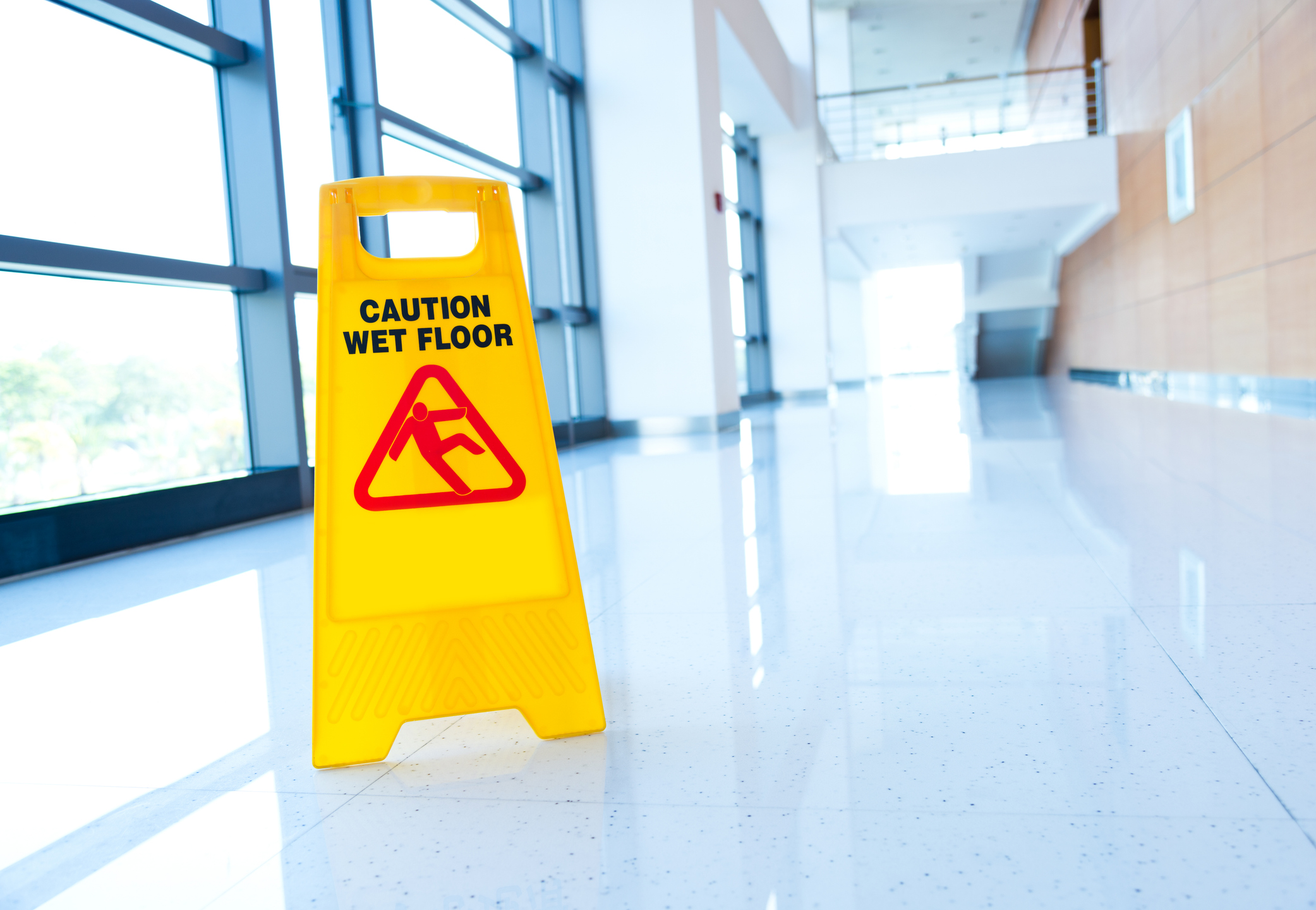
Can I sue if there was a “Wet Floor” sign posted?
Yes, depending on where the sign was placed. Property owners cannot simply place a single yellow warning cone at a store entrance and expect it to cover an entire building for hours. If the sign was hidden, placed far from the active hazard, or if the spill was left for an unreasonable length of time despite the sign, liability can still be established.
Does the 51% rule apply if I tripped on a broken public sidewalk?
Claims against government entities, like Lee County or local municipalities, involve different procedural requirements and strict sovereign immunity damage caps under Florida law. However, the modified comparative fault standard still applies, meaning the defense will still try to blame you for not noticing the broken concrete to clear the 51% threshold.
About David B. Pittman, Esq. David B. Pittman is the founder of Pittman Law Firm, P.L. He is a Citadel graduate and earned his Juris Doctor from the USC School of Law. With over 30 years of continuous personal injury practice in Southwest Florida, David handles complex slip and fall, commercial vehicle collision, and wrongful death claims. He is a 25-year licensed Florida Real Estate Broker, giving him deep insight into property management and commercial safety standards. David holds a Martindale-Hubbell AV-Preeminent rating, representing the highest level of professional excellence and ethical standards, and is a member of the Multi-Million Dollar Advocates Forum.